Loading...
Loading...
Civilian Career Paths & Job Guide
Everything you need to translate your AO experience into a civilian career — salary data, companies hiring, resume examples, and certifications by career path.
Aviation Ordnancemen (AO) are the Navy's aircraft weapons specialists. AOs store, inspect, assemble, transport, and load every type of ordnance carried on naval aircraft — aerial mines, torpedoes, missiles, rockets, bombs, and gun ammunition. They service bomb, missile, and rocket releasing and launching devices, maintain aircraft armament systems, and supervise operation of aviation ordnance shops, armories, and stowage facilities.
The AO training pipeline begins at Recruit Training followed by Aviation Ordnanceman "A" School at Naval Air Technical Training Center (NATTC) in Pensacola, Florida. There, students learn ordnance handling fundamentals, weapons systems theory, electrical circuitry for weapons release systems, and explosive safety procedures. Advanced training covers specific weapons platforms tied to fleet aircraft — including guided missiles, laser-guided munitions, and electronic countermeasures.
AOs serve aboard aircraft carriers, amphibious assault ships, and at naval air stations worldwide. On a carrier flight deck, AOs are the red shirts — easily identifiable by their red jerseys and cranials, working in one of the most dangerous industrial environments on Earth. They move live ordnance across a pitching deck with jet engines running, catapults firing, and aircraft landing — all simultaneously. The precision, safety discipline, and teamwork required to do this without incident translates directly into civilian careers in explosives handling, quality control, logistics, and safety management.
What makes AOs valuable to civilian employers goes beyond ordnance knowledge. The rating builds systematic inspection skills, strict adherence to technical publications, detailed record-keeping for explosives accountability, and the ability to perform under extreme pressure. Many AOs also earn qualifications in forklift operation, crane signals, hazardous materials handling, and quality assurance — all of which have direct civilian equivalents.
AOs bring a skill set that translates into several civilian career paths — some directly related to ordnance and explosives, others leveraging the inspection, safety, and logistics skills developed in the rating. The civilian explosives and ordnance industry actively recruits veterans who already understand safe handling procedures, accountability standards, and the consequences of cutting corners.
According to the Bureau of Labor Statistics (May 2024), the median annual wage for explosives workers, ordnance handling experts, and blasters is $59,110 (O*NET 47-5032.00). Quality control inspectors earn a median of $47,460 (51-9061.00), though specialized inspectors in aerospace and defense earn considerably more. Occupational health and safety specialists earn a median of $83,910 (19-5011.00), and logisticians earn $80,880 (13-1081.00) with 17% projected growth — much faster than average.
For AOs who earned aircraft maintenance qualifications or want to pursue them, aircraft mechanics and service technicians earn a median of $75,400 (49-3011.00) according to BLS. This path requires an FAA Airframe and Powerplant (A&P) certificate, but AOs with hands-on experience working on weapons release systems, pylons, and aircraft electrical components have a head start on the mechanical aptitude required.
The defense industry is the most natural landing spot. Companies like Raytheon, Lockheed Martin, and Northrop Grumman employ former AOs in munitions testing, quality assurance, weapons integration, and technical publications roles. These positions typically require a security clearance — which many AOs already hold.
| Civilian Job Title | Industry | BLS Median Salary | Outlook | Match |
|---|---|---|---|---|
Explosives Worker / Ordnance Handling Expert O*NET: 47-5032.00 | Defense / Mining / Demolition | $59,110 | About as fast as average | strong |
Quality Control Inspector O*NET: 51-9061.00 | Manufacturing / Aerospace / Defense | $47,460 | Declining (-5%) | strong |
Occupational Health & Safety Specialist O*NET: 19-5011.00 | Government / Manufacturing / Construction | $83,910 | About as fast as average (5%) | moderate |
Logistician O*NET: 13-1081.00 | Government / Manufacturing / Transportation | $80,880 | Much faster than average (17%) | moderate |
Aircraft Mechanic & Service Technician O*NET: 49-3011.00 | Aviation / Aerospace / Defense | $75,400 | About as fast as average (6%) | moderate |
Transportation, Storage & Distribution Manager O*NET: 11-3071.00 | Logistics / Transportation / Warehousing | $102,010 | About as fast as average (6%) | moderate |
Occupational Health & Safety Technician O*NET: 19-5012.00 | Government / Construction / Manufacturing | $58,440 | About as fast as average (5%) | moderate |
Industrial Production Manager O*NET: 11-3051.00 | Manufacturing / Defense / Aerospace | $121,440 | About as fast as average (3%) | moderate |
The federal government is one of the largest employers of ordnance and explosives expertise, and AOs are well-positioned for multiple GS series. The most direct match is the GS-6502 (Explosives Safety) series, which covers positions at military installations, ammunition depots, and defense agencies. AOs who supervised ordnance operations or managed magazines and stowage areas already have the experience these positions require.
Beyond explosives safety, AOs should consider these federal career paths:
Key agencies to target: NAVSEA, NAWCWD (Naval Air Weapons Center Weapons Division at China Lake and Point Mugu), NSWC (Naval Surface Warfare Center), Army ammunition depots (McAlester, Crane, Blue Grass), Air Force Materiel Command, and DTRA (Defense Threat Reduction Agency). Create your federal resume on USAJobs at least 6 months before separation — federal hiring moves slowly, and Veterans' Preference is most effective at GS-11 and below.
| GS Series | Federal Job Title | Typical Grades | Match | Explore |
|---|---|---|---|---|
| GS-0017 | Explosives Safety | GS-7, GS-9, GS-11 | View Details → |
Not everyone wants to stay in a related field. These career paths leverage your transferable skills — leadership, risk management, logistics, project planning — in completely different industries.
Senior AOs plan and execute complex weapons loading operations with tight timelines, multi-person crews, and zero tolerance for error. Coordinating bomb build-ups, managing UNREP ordnance transfers, and running armament division operations are all project management — scoped work, resource allocation, timeline execution, and risk mitigation.
AOs operate under some of the strictest safety protocols in the military. Every ordnance handling evolution has formal safety briefs, designated safety observers, and detailed checklists. AOs who served as safety petty officers or managed explosive safety programs have direct experience in hazard identification, incident investigation, and regulatory compliance.
AOs manage complex ordnance supply chains — requisitioning munitions, tracking serial-numbered items, coordinating transfers between ships and shore facilities, and maintaining AVCAL accountability for millions of dollars in ordnance. This is logistics and supply chain management performed under the additional pressure of handling explosives.
Senior AOs — especially Chief Petty Officers and Senior Chiefs — run entire armament divisions with dozens of personnel, multi-million dollar equipment accounts, maintenance schedules, training programs, and operational readiness metrics. That is operations management regardless of the industry label.
AOs train for emergencies constantly — ordnance accidents, hung ordnance, hot gun procedures, fire in the magazine, and mass casualty scenarios on the flight deck. The ability to stay calm under extreme pressure, execute contingency plans, and coordinate multi-team responses is the core of emergency management.
AOs who supervised bomb build-up operations, managed weapons assembly lines, and directed ordnance production workflows have directly relevant production management experience. The emphasis on quality control, safety compliance, and output metrics in ordnance operations maps to any manufacturing environment.
AOs perform detailed inspections of ordnance, weapons systems, and stowage facilities following strict checklists and technical publications. This systematic inspection methodology — document the condition, identify deficiencies, report findings, verify corrections — transfers directly to building and construction inspection.
If you're applying to defense contractors, ammunition depots, or other ordnance-related employers, your terminology translates directly. They know what a bomb build-up is. They know what HERO testing means.
This section is for AOs targeting careers outside the ordnance and weapons industry — quality control, safety management, logistics, warehouse operations, or any corporate role. The hiring manager at a manufacturing plant has no idea what "AVCAL management" means. The translations below reframe your AO experience into language that resonates in non-ordnance industries. These are not just word swaps — they show how to quantify and contextualize your work for a completely different audience.
For more military-to-civilian translation guidance, see our complete military terms glossary and hidden military skills guide.
Which certifications you need depends on where you're headed. Find your target career path below.
SkillBridge Programs: Defense contractors like Raytheon, Lockheed Martin, and BAE Systems participate in DOD SkillBridge, allowing AOs to work in munitions testing, quality assurance, or weapons integration roles during their last 180 days of service. Check the SkillBridge database for current openings. NAWCWD China Lake and other Navy weapons centers have also offered SkillBridge positions.
ISEE (International Society of Explosives Engineers): The ISEE is the primary professional association for explosives professionals. Membership includes networking, continuing education, and access to the Blaster's Handbook. Annual conference is where industry connections are made.
Navy COOL Credentialing: Navy COOL (Credentialing Opportunities On-Line) at cool.osd.mil lists credentials funded for AOs while on active duty — including forklift certification, OSHA cards, and quality assurance credentials. Use this before separation while the Navy pays for it.
Ammunition & Explosives Safety Courses: The Defense Ammunition Center (DAC) at McAlester, OK offers courses in explosives safety, ammunition management, and transportation of hazardous materials. Some are open to transitioning service members and carry civilian certifications.
Safety & EHS Careers: Start with OSHA 30-Hour General Industry or Construction (can take online, ~$150-300). Target the CSP (Certified Safety Professional) from the Board of Certified Safety Professionals for the highest-paying safety roles. Your AO explosive safety background counts toward the experience requirement.
Quality Assurance / Six Sigma: AOs who performed weapons inspections and acceptance checks already think in terms of quality control. ASQ (American Society for Quality) certifications — CQI, CQA, Six Sigma Green Belt — are valued across manufacturing, aerospace, and defense. Visit asq.org for details.
Project Management: The PMP certification (PMI) opens doors in any industry. Senior AOs — especially those who led bomb build-ups, managed ordnance shops, or coordinated weapons loads for deployment — already have documented project hours. Cost: ~$555 (PMI member) for the exam.
Federal Employment (USAJobs): Create your USAJobs profile immediately. Use the "Veterans" filter. Key agencies for AOs: NAVSEA, NAWCWD, NSWC, Army ammunition depots, DTRA, and DLA. Federal resumes are 2 pages max — build yours here.
Veteran Networking: American Corporate Partners (ACP) provides free mentorship from corporate executives. You get paired with someone in your target industry. ACP is legitimate and completely free for veterans.
Clearance Leverage: If you hold an active Secret or higher clearance, that has real market value with defense contractors. ClearanceJobs.com lists positions that require active clearances. Do not let yours lapse during transition.
Education Benefits: GI Bill covers many certification exam fees and prep courses. Check the GI Bill Comparison Tool before enrolling anywhere.
Best Careers for Veterans 2026 | AD Aviation Machinist's Mate Career Guide | AE Aviation Electrician's Mate Career Guide | GM Gunner's Mate Career Guide | 2W0X1 Munitions Systems Career Guide | Build Your Resume Free
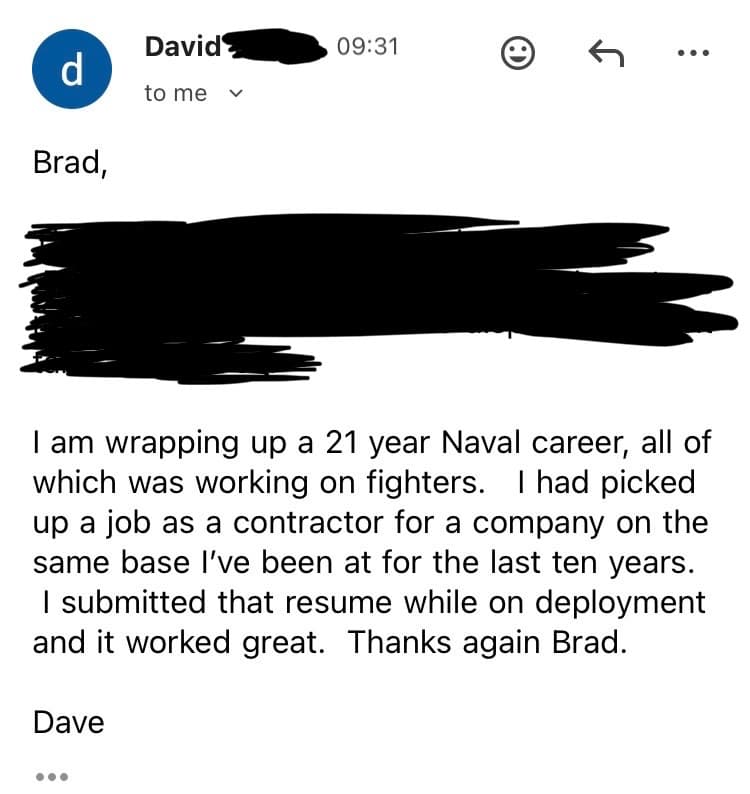
Translate your AO Aviation Ordnanceman experience into a resume that gets interviews.
Build Your Resume →