SBP 2026: Cost, Coverage, and Civilian Career Tradeoff
Michael got only rejections. Then a $100K facilities manager role.
Michael, E-7, Navy, tried a ton of outside help before BMR
The SBP decision is one of the biggest money decisions you will make at retirement. And most retiring service members make it in a hurry. You sit in a TAP class. Someone hands you a form. You have a week or two to choose something that will run for the next 30 years.
The Survivor Benefit Plan is a government annuity. You pay 6.5% of your retired pay each month. If you die, your spouse gets 55% of the base amount you elected for the rest of their life. That is the whole product in one sentence.
The hard part is not the math. It is figuring out how SBP fits with your civilian salary, your spouse's career, your life insurance, and your VA disability rating. When I retired and SBP came up in TAP, I had to make a call before I really understood the moving parts. Most retirees are in the same boat.
This article covers the 2026 rules. The spouse-consent trap. The SBP-DIC offset, now fully repealed. The 25-to-36-month discontinuation window. And how SBP stacks with the civilian paycheck you are about to earn. Plain English. No fluff. The decision lasts 30 years, so let's get it right.
What is the Survivor Benefit Plan?
SBP is a Department of Defense annuity sold to retiring service members. You pay a premium out of your military retired pay each month. If you die first, your beneficiary gets a monthly check for life.
Three things make SBP different from a civilian life insurance product.
One. The premium and the benefit both rise with the retired pay COLA every year. So inflation does not eat the annuity over 30 years.
Two. The premium is paid with pre-tax dollars from your retired pay. That makes the real cost lower than the 6.5% sticker rate.
Three. The benefit pays for the rest of your spouse's life. Not a term. Not a fixed payout. A monthly check until they pass.
Coverage is run by DFAS. Premiums are set in federal law at 10 USC § 1452. The annuity calculation is set at 10 USC § 1451. You will not find a better-priced annuity on the private market for an inflation-protected life payout. Your spouse cannot be denied for health reasons, and there is no medical exam.
How much does SBP cost in 2026?
The premium is 6.5% of the base amount you elect. The base amount can be any number from $300 to your full gross retired pay. Whatever you pick, the premium and the spouse benefit lock to that number.
Most retirees elect coverage on full retired pay. Some elect a reduced base to lower the monthly cost. The trade is real money on both sides.
Here is the math on common 2026 retirement pay levels. The premium and the benefit both grow with the retired pay COLA each year, so these are starting figures.
SBP Premium and Spouse Annuity by Base Amount Elected
| Base Amount Elected (monthly) | SBP Premium (6.5%) | Spouse Annuity (55%) | Annual Annuity |
|---|---|---|---|
| $2,500 | $162.50/mo | $1,375/mo | $16,500 |
| $4,000 | $260.00/mo | $2,200/mo | $26,400 |
| $5,500 | $357.50/mo | $3,025/mo | $36,300 |
| $7,000 | $455.00/mo | $3,850/mo | $46,200 |
The pattern is simple. You give up 6.5% of the base amount each month. Your spouse gets 55% of the base amount each month if you go first. For every dollar of premium you pay, your spouse gets back about $8.46 per month for life if the worst happens.
That is a strong number on paper. The catch is that you only get the payoff if you die first. If you live to 95 and your spouse passes before you, every premium you paid disappears.
When does SBP become paid up?
SBP is not premiums for life. The plan goes paid-up after you have paid premiums for 360 months and you have reached age 70. Both conditions have to be met.
Once you hit paid-up status, your premiums stop. Coverage stays in place at the same base amount, still rising with COLA. Say you retire at 42 and live to 95. You pay premiums for 30 years. Then you ride paid-up coverage for the last 23 years for free.
This is one of the reasons SBP beats most civilian life insurance options for a young retiree. Term policies usually end at 20 or 30 years. SBP keeps paying.
What is the spouse-consent rule at retirement?
If you are married when you retire, the default is automatic enrollment at maximum coverage. You do not have to do anything to opt in. If you do nothing, you are in for full retired pay.
To elect less than the max, you need your spouse to sign a notarized statement of concurrence. The form is the DD Form 2656. The signature has to be notarized. No exceptions.
This rule exists because Congress saw too many cases where a retiring service member declined SBP without telling the spouse, then passed away, and the spouse found out at the worst possible moment that there was no annuity. The consent rule fixes that. Your spouse knows what is being elected because they sign for it.
Do not skip this conversation
If you want to elect less than full coverage, talk to your spouse before you sit down at the retirement counselor's desk. The consent form is not a formality. Your spouse is signing away part of a 30-year benefit they could otherwise count on.
Can you opt out of SBP after retirement?
Yes, but only in a narrow window. Between the 25th and 36th month of receiving retired pay, you can submit DD Form 2656-2 to discontinue SBP. Your spouse has to concur in writing and the form has to be notarized.
Four things to know about this window.
One. You do not get back any premiums you paid in the first two years. They are gone.
Two. Once you opt out, you cannot opt back in. The decision is one-way.
Three. Outside that 12-month window, you are locked in for life.
Four. Congress sometimes passes one-time open seasons for new enrollment or termination. Those are rare and you cannot plan around them.
The 25-36 month window exists for a reason. Congress recognized that retirees usually do not have the full civilian-side financial picture for a year or two after they get out. By month 25 you usually know what your civilian job pays. You know what your VA disability rating looks like in dollars. You know whether your spouse has their own income. That is when you can make a clear-eyed call about whether SBP still makes sense.
The SBP-DIC offset is gone
This is the biggest change for retiring service members in the last five years. Most people still do not know about it.
Before 2023, if a service-connected condition caused your death, your spouse got Dependency and Indemnity Compensation from the VA. But the SBP payment was reduced dollar-for-dollar by the DIC amount. Most spouses ended up with the DIC plus a tiny SBP top-up. The offset was called the widow's tax and it cost a lot of military families a lot of money.
Congress repealed the offset in the 2020 defense bill. The phase-out ran from 2021 to 2023. As of January 1, 2023, surviving spouses receive the full SBP annuity from DFAS and the full DIC payment from the VA. Both. No offset.
For a retiring service member with a service-connected condition, this is a big deal. If you die from that condition, your spouse now gets DIC on top of the full SBP annuity. DIC is about $1,700 a month in 2026 for a base spouse rate. That changes the math on whether SBP is worth the premium. Now it stacks instead of overlapping.
How does civilian pay change the SBP math?
This is where most TAP briefings stop and most retirees get confused. SBP is not a standalone product. It interacts with everything else you are building post-retirement.
Your civilian salary increases your household income while you are alive. But it does not protect your spouse if you die before you stop working. That is the gap SBP closes.
Here is the way to think about it. Imagine you retire at O-5 with 22 years and land a private-sector job at $130,000. Your spouse is used to a household that runs on your retirement pay plus your civilian salary plus VA disability. Call it $200,000 a year total.
If you die in year 8 of that civilian job, the civilian salary stops. The VA disability stops. Your retired pay stops. Without SBP, your spouse drops from $200,000 a year to whatever they earn on their own. If they have not been working, that number could be zero.
With SBP at full retired pay, your spouse still loses the civilian salary and the VA disability. But they keep 55% of your retired pay base for life, growing with COLA. On a $5,000 base, that is $33,000 a year, every year, until they pass.
You die in year 8. Civilian salary stops. Retired pay stops. VA disability stops. Spouse goes from $200K household income to whatever they earn on their own. No floor.
Same death. Civilian and VA payments still stop. But spouse gets 55% of your retired pay base for life, COLA-adjusted. A $5,000 base means $33K a year. That is the floor.
SBP is the floor. Your civilian salary is the income on top of the floor. The mistake retirees make is treating SBP like a choice between life insurance and the annuity. It is not. SBP is the inflation-protected baseline. Civilian income is the variable on top.
When does it make sense to skip or reduce SBP?
There are real cases where lower coverage or no coverage is the right call. Four scenarios where retirees commonly reduce SBP, in order of how often I see them.
Spouse has their own pension or strong income. Maybe your spouse is a federal employee with a FERS pension. Or a state teacher with a defined-benefit retirement. Or a high earner with strong retirement savings. The SBP floor is less critical there. They have their own floor.
You have substantial life insurance already. SGLI converts to VGLI when you retire. VGLI premiums rise sharply with age. But the policy keeps going as long as you pay. There is no maximum age cutoff. If you already carry a large permanent life policy that pays out cleanly, you may not need the SBP annuity as a backup.
Your spouse is much older than you. SBP pays the spouse for the rest of their life. If your spouse is 15 years older and unlikely to outlive you by a large margin, the math gets thinner. Coverage still makes sense for the case where you go first, but the expected payout is lower.
You have no dependents who would need lifetime income. If you are single at retirement with no children, you can decline. If you marry later, you have one year from the marriage to enroll your new spouse.
Notice what is not on this list. Having a civilian job that pays a lot is not a reason to skip SBP. Civilian income stops when you stop. SBP keeps paying.
What about life insurance instead of SBP?
The "buy term and invest the difference" pitch is common in financial-planning circles. The idea is to drop SBP, pocket the 6.5% premium, buy a big term policy, and invest what is left over. On paper it can work. In practice it rarely beats SBP for an early retiree with a long expected life.
Three problems with the term-insurance swap.
One. Term policies end. A 30-year term bought at age 42 runs out at 72. SBP keeps paying for the rest of your spouse's life, even if you die at 92.
Two. No COLA. A $500,000 term policy at age 42 pays $500,000 in nominal dollars if you die at 71. Inflation could cut that in half by then. SBP rises with the retired pay COLA every year, so the real value holds.
Three. Term gets expensive fast as you age, and gets impossible if you develop a health condition. SBP cannot kick you out for health reasons.
Life insurance can be a great supplement to SBP, especially during your peak earning years when your spouse would also lose your civilian income. But it is a weak full replacement.
What you should do at retirement
The cleanest framework I have seen, and the one I wish someone had handed me before I sat down with the counselor, looks like this.
Default to full coverage at retirement
Elect SBP on full retired pay unless you have a clear, written reason not to. You can reduce later. You cannot easily add later.
Land your civilian job before the 24-month mark
Your post-retirement income picture has to be real before you can make a smart SBP discontinuation call. A solid civilian role with a strong salary is the prerequisite.
Re-run the math at month 24
Look at your real take-home, your VA disability dollars, your spouse's income, your other coverage. Then decide whether to keep, reduce, or discontinue.
If you keep SBP, treat it as paid-up math
You are paying for 30 years and then riding free. The premium is not forever. Budget around that and stop thinking of SBP as a monthly bill that runs until you die.
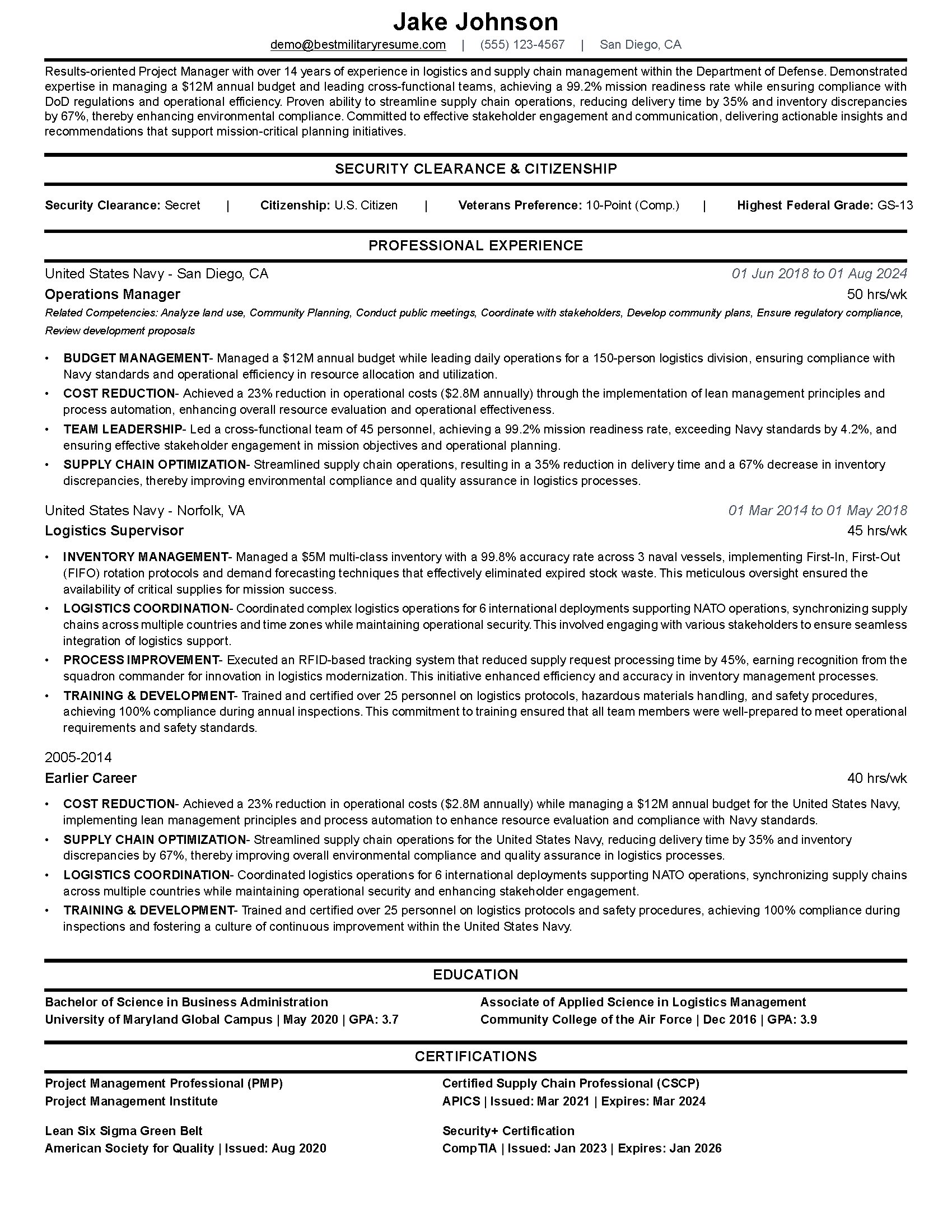
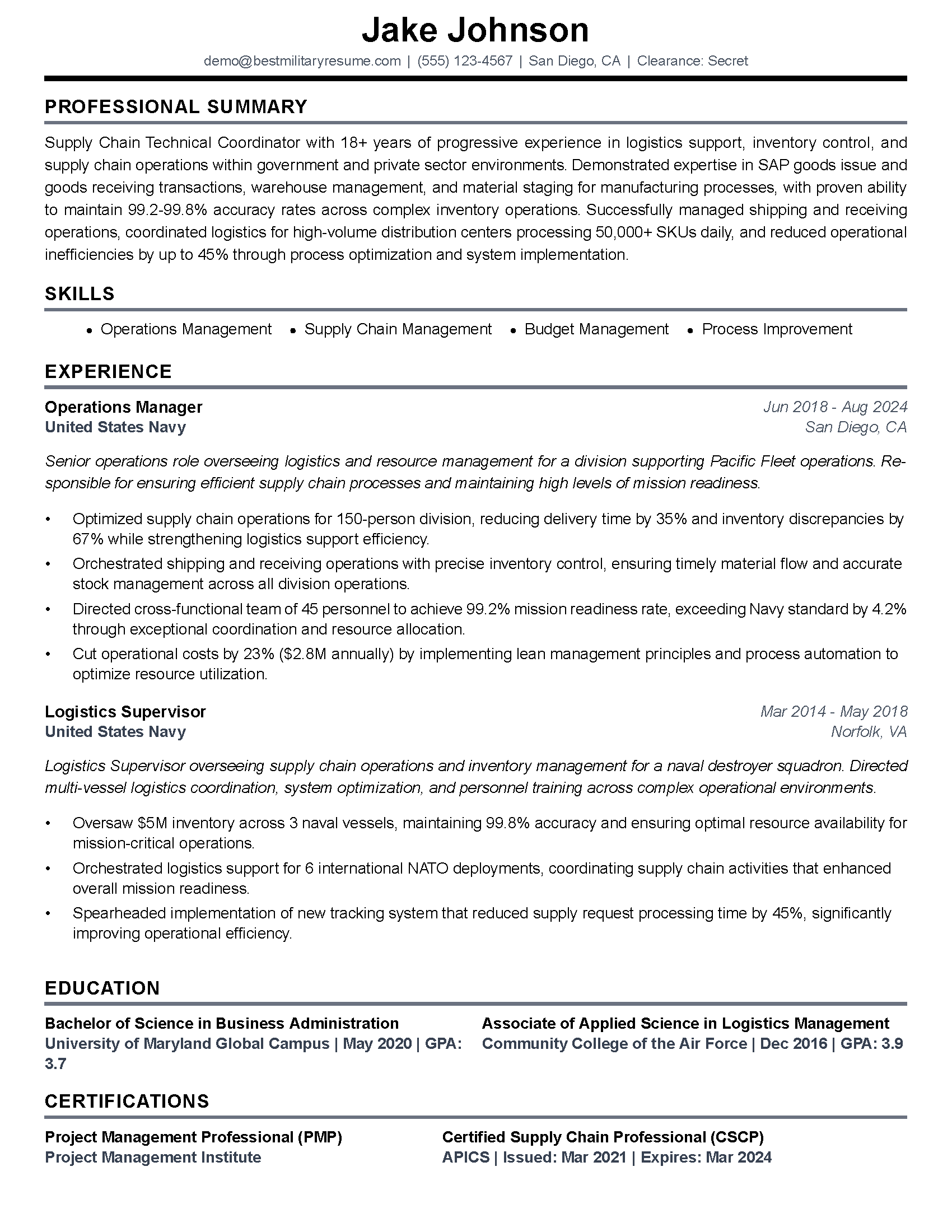
Step 2 is the one most retirees underestimate. The faster you land the civilian job, the more clearly you can see the rest of the picture. If you are getting ready to retire and your civilian resume is still in TAP-template format, that is the first problem to fix. We built the BMR Resume Builder for exactly this reason. Paste a job posting, get a tailored resume back, focus on the SBP decision once your civilian income is real.
For the bigger picture on how military retired pay stacks with a civilian paycheck, see the military retirement and civilian pay walkthrough. If you came in under BRS instead of legacy retirement, the Blended Retirement System civilian pay plan changes some of the math on the front end. Reservists weighing RC-SBP should also read the reserve retirement points guide because the cost structure for RC-SBP differs from active-duty SBP.
If you are early retiring under 50 and worried the consulting-and-contracting path is the only post-military option, see careers after the military for retirees under 50 for civilian roles that pay enough to make the SBP premium a small line item. If the retirement itself is freaking you out, managing the fear of leaving service is a useful read before you start signing forms. And if you are still on active duty trying to land a job before separation, the terminal leave job search playbook covers the timing.
The bottom line on SBP for 2026
SBP is one of the cheapest inflation-protected life annuities you can buy. The premium is 6.5%. The payout is 55% of base for life. The premiums stop at month 360 once you hit 70. The SBP-DIC offset is gone. Your spouse cannot be denied for health.
It is not a perfect product. You only get the payout if you go first. The premium is real money out of your retired pay every month for 30 years. And if your spouse already has a strong pension or income of their own, the floor SBP provides is less valuable.
For most retiring service members with a spouse who depends on the household income, SBP at full retired pay is the right starting point. Lock it in at retirement. Land your civilian job. Reassess at month 24. That sequence gives you the option to change course later. It also keeps the protection in place during the first two years out, when the rest of your financial life is still settling.
If you are between 12 and 24 months from retirement and still building the civilian side, start with the Federal Resume Builder if you are aiming GS, or the civilian resume tools if you are going private sector. A retirement transition with no job lined up at the 30-day mark is hard. SBP gets harder to think about clearly when income is unclear. Sort the income first. The annuity decision gets easier from there.
Frequently Asked Questions
How much does SBP cost per month in 2026?
What does my spouse actually receive if I die?
Can I opt out of SBP after retirement?
Is the SBP-DIC offset still in effect?
When does SBP become paid up?
Does my spouse have to agree if I want to decline SBP?
Is SBP better than just buying term life insurance?
Does my civilian salary change whether I should elect SBP?
About the Author
Brad Tachi is the CEO and founder of Best Military Resume and a 2025 Military Friendly Vetrepreneur of the Year award recipient for overseas excellence. A former U.S. Navy Diver with over 20 years of combined military, private sector, and federal government experience, Brad brings unparalleled expertise to help veterans and military service members successfully transition to rewarding civilian careers. Having personally navigated the military-to-civilian transition, Brad deeply understands the challenges veterans face and specializes in translating military experience into compelling resumes that capture the attention of civilian employers. Through Best Military Resume, Brad has helped thousands of service members land their dream jobs by providing expert resume writing, career coaching, and job search strategies tailored specifically for the veteran community.
