Military to Data Analyst: Career Transition Without a CS Degree
Michael got only rejections. Then a $100K facilities manager role.
Michael, E-7, Navy, tried a ton of outside help before BMR
I spent six years in the Navy. When I got out, I had zero idea what a data analyst was. I knew spreadsheets existed. I knew my chain of command tracked readiness numbers. But "data analytics" sounded like something that required a computer science degree and four years in a college library.
It doesn't. Not even close.
Data analytics is one of the fastest-growing career fields in the country. BLS projects 9% growth through 2033 for operations research analysts. The median salary sits at $83,640 per year. And many of these roles do not require a four-year degree in computer science. Some don't require a four-year degree at all.
If you spent time tracking maintenance schedules, running logistics reports, or briefing commanders on mission data, you were already doing analytics work. You just called it something else. This guide breaks down exactly how to get from where you are now to a paid data analyst role. No CS degree needed.
Why Veterans Already Think Like Data Analysts
Data analysis is about finding patterns in information and turning those patterns into decisions. That is exactly what military operations do every day.
Think about it. Intelligence analysts build target packages from raw data. Logistics NCOs forecast supply needs based on consumption rates. Maintenance supervisors track equipment readiness and predict failures before they happen. Operations planners pull data from multiple sources and build a plan that keeps people alive.
None of those people had a computer science degree. They had training, experience, and a mission that required them to get the numbers right.
"I built BMR after spending 1.5 years applying for government jobs with zero callbacks. The transition gap is real. But your military brain already works the way employers need analysts to think."
The civilian world calls these skills "analytical thinking," "data-driven decision making," and "root cause analysis." You called it "doing your job." The gap between your military experience and a data analyst title is smaller than you think. It is mostly about learning the right tools and getting the right certification on your resume.
What Does a Data Analyst Actually Do?
A data analyst collects information, cleans it up, finds patterns, and presents findings to people who make decisions. That is the whole job at its core.
Day to day, it looks like this:
- Pull data from databases, spreadsheets, or software systems
- Clean the data so it is accurate and complete
- Analyze trends using tools like Excel, SQL, Python, or Tableau
- Build reports and dashboards that show what the numbers mean
- Brief leadership on findings and recommend actions
Sound familiar? It should. Replace "leadership" with "commander" and you have half the jobs in the military.
Entry-level data analyst roles typically pay $50,000 to $65,000. Mid-level analysts earn $70,000 to $90,000. Senior analysts and those with specialties like business intelligence or machine learning can clear $100,000 or more. BLS reports the median for operations research analysts at $83,640 as of May 2023.
Most companies care about what you can do, not where you learned it. A Google Data Analytics Certificate holds the same weight as a CS elective when the hiring manager needs someone who can build a Tableau dashboard by Friday.

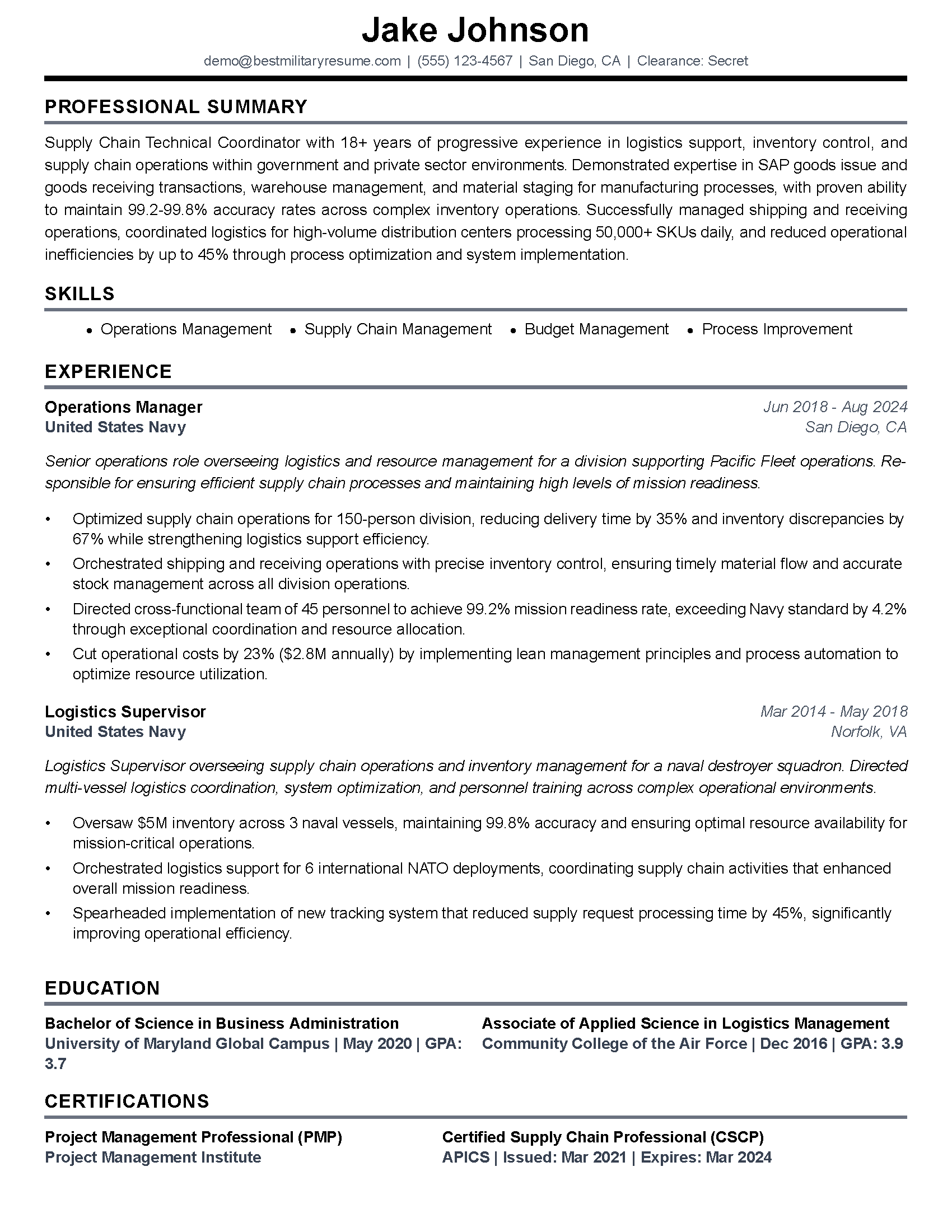
How to Get Hired Without a CS Degree
You do not need a computer science degree to become a data analyst. You need proof that you can do the work. Here is how to build that proof.
Learn the Core Tools
Every data analyst job posting lists some combination of these tools:
- Excel: You probably already know this. Learn pivot tables, VLOOKUP, and basic formulas if you don't
- SQL: The language used to pull data from databases. Free courses everywhere. You can learn the basics in two weeks
- Tableau or Power BI: Visualization tools that turn data into charts and dashboards. Pick one and learn it well
- Python or R: Programming languages for deeper analysis. Python is more common. Start here if you want to stand out
You do not need to master all of these before applying. SQL and Excel are the baseline. Add Tableau or Python and you are ahead of many entry-level applicants.
Get a Certification
Certifications prove you have the skills without requiring a degree. The best ones for breaking into data analytics are covered in the next section. Most can be completed in 2 to 6 months.
Build a Portfolio
Hiring managers want to see what you can do. Build 2 to 4 projects that show your skills. Use public datasets from data.gov, Kaggle, or the Census Bureau. Clean the data, analyze it, build a dashboard, and write up your findings. Post it on GitHub.
A veteran who builds a project analyzing VA claims processing times or military housing costs by duty station is going to stand out. Use what you know.
Target the Right Job Titles
Don't just search for "data analyst." These titles often have the same core requirements:
- Business Analyst
- Operations Analyst
- Reporting Analyst
- Intelligence Analyst (private sector)
- Business Intelligence Analyst
Casting a wider net gives you more opportunities. Many of these roles pay the same and lead to the same career path. Use BMR's career crosswalk tool to find which job titles match your specific MOS or rating.
Four Certifications That Open Doors
These are the certifications that actually move the needle for entry-level data analyst roles. All are available online. All can be completed while you are still on active duty or using your GI Bill.
Top Data Analytics Certifications for Veterans
Google Data Analytics Professional Certificate
Coursera, ~6 months, covers SQL, R, Tableau, spreadsheets. GI Bill eligible through partner schools.
CompTIA Data+
Vendor-neutral data analytics cert. Covers data concepts, analysis, visualization. Recognized by DoD 8140.
IBM Data Analyst Professional Certificate
Coursera, ~5 months. Covers Python, SQL, Excel, and Cognos Analytics. Includes hands-on projects.
Microsoft Power BI Data Analyst (PL-300)
Industry-standard BI tool cert. Strong for corporate and federal roles. Microsoft Learn has free prep materials.
Google Data Analytics Professional Certificate. This is the most popular entry point. It takes about 6 months at 10 hours per week. You learn SQL, R programming, Tableau, and spreadsheets. Coursera hosts it and many community colleges accept it for credit. Employers recognize it because Google built it to hire from their own pipeline. Check whether your GI Bill covers this certification through a partner school.
CompTIA Data+. This is a vendor-neutral certification that covers data concepts, analysis, reporting, and visualization. It is recognized under the DoD 8140 framework, which means it counts if you are still on active duty. It also carries weight with federal employers. Good for veterans who want to keep their options open between private sector and government.
IBM Data Analyst Professional Certificate. Another Coursera option. About 5 months. Covers Python, SQL, Excel, and IBM Cognos Analytics. The projects are hands-on and you finish with portfolio pieces. Pairs well with the Google cert if you want both Python and R on your resume.
Microsoft Power BI Data Analyst (PL-300). Power BI is the dominant dashboard tool in many corporations and federal agencies. This cert proves you can build reports, model data, and create visualizations in the Microsoft ecosystem. Free prep materials are available on Microsoft Learn. Strong choice if you are targeting large companies or government contractor roles.
Many of these are covered under the GI Bill or can be funded through free veteran certification programs. Don't pay out of pocket if you don't have to.
Which Military Backgrounds Translate Best?
Every military job has some data component. But certain backgrounds give you a real head start.
Intelligence analysts (35F, IS, 0231, 1N0). This is the closest match. You spent your career collecting, processing, and briefing data. The tools change. The thinking does not. Employers in defense, finance, and consulting specifically recruit veterans with intelligence backgrounds for analyst roles.
Logistics and supply chain (92A, LS, 0431, 2S0). You tracked inventory across multiple locations, ran reports on consumption rates, and kept supply chains moving. Supply chain analytics is a massive and growing field. Companies like Amazon, FedEx, and Walmart hire for exactly this skill set.
Operations and planning (S3/G3 staff, 0505). If you worked in an operations center, you already know how to pull data from multiple systems and turn it into a briefing that drives decisions. That is literally what a business analyst does.
Communications and IT (25B, IT, 0631, 3D0). You managed networks, tracked system performance, and troubleshot problems using data logs. The technical foundation is there. Add SQL and Python and you are set.
Finance and admin (36B, PS, 0111, 6F0). Budget analysis, pay tracking, personnel data. This maps directly to financial analyst and operations analyst roles.
Don't See Your MOS Listed?
Every military job involves data in some form. Maintenance tracking, personnel reports, readiness dashboards. Use BMR's career crosswalk tool to see how your specific background maps to data analyst roles.
People miss this. Even combat arms veterans (infantry, armor, artillery) collect and use data constantly. Range scores, patrol reports, equipment readiness, casualty tracking. The data is there. You just need to learn the civilian tools and frame your experience the right way.
How to Write a Data Analyst Resume With Military Experience
Your resume is where many veterans lose the opportunity. Not because they lack skills. Because they describe their experience in military terms that hiring managers outside defense don't recognize.
The fix is straightforward. Focus on outcomes and numbers. Show what you analyzed, what tools you used, and what happened because of your work.
Prepared intelligence products for battalion S2 section. Conducted pattern of life analysis for AO using DCGS-A and TIGR systems. Briefed BCT commander on threat assessments.
Analyzed multi-source datasets using proprietary BI platforms. Identified trends across 500+ data points and built visual reports for executive leadership. Briefings drove resource allocation decisions for a 4,000-person organization.
Notice the difference. Same experience. The second version uses language that any hiring manager can understand. It shows scale (500+ data points, 4,000-person organization) and impact (drove resource allocation decisions).
Here are the rules that work for data analyst resumes:
- Lead with numbers. How many records did you manage? How large was the dataset? What was the dollar impact?
- Name the tools. Even if you used military-specific software, add the civilian equivalent. "Proprietary database management system" beats "GCSS-Army" on a resume going to a tech company
- Show the decision. Data analysis is only valuable if it leads to action. End every bullet with what happened because of your analysis
- Keep it to 2 pages. Even for federal resumes on USAJOBS, 2 pages is the standard now
If you are struggling to translate your military experience into data analyst language, BMR's resume builder does the translation for you. Paste the job posting, upload your experience, and the tool matches your background to the specific keywords that job needs.
Federal Data Analyst Jobs for Veterans
The federal government hires thousands of data analysts every year. And veterans have a built-in advantage through Veterans' Preference points on USAJOBS.
Federal data analyst roles fall under several GS job series. Here are the ones to target:
- GS-0343: Management and Program Analyst. The most common federal analyst role. Found in every agency
- GS-1515: Operations Research Analyst. Heavy on data modeling and statistical analysis
- GS-0301: Miscellaneous Administration. Broad series that includes many analyst positions
- GS-0132: Intelligence. If you held a clearance and did intel work, this is your direct match
- GS-2210: Information Technology Management. Data-focused IT roles including database administration
- GS-1529: Mathematical Statistician. For veterans with strong quantitative backgrounds
Federal analyst positions typically start at GS-7 or GS-9 and go up to GS-13 or GS-14 for senior roles. A GS-9 in Washington DC earns about $68,405 in 2026. A GS-13 earns about $117,962. The pay scales are public on OPM.gov.
Your security clearance adds real value here. Many federal data analyst jobs in the intelligence community, DoD, and DHS require a clearance. If you already have one, you skip the 6 to 18 month investigation wait. That makes you immediately more hirable. Read more about how much a clearance is worth in salary.
Key Takeaway
Federal data analyst jobs don't require a CS degree either. OPM qualification standards for GS-0343 accept any bachelor's degree or equivalent experience. Your military service counts toward that experience requirement.
When applying to federal roles, your resume needs to match the job announcement keywords exactly. The system ranks applications based on keyword matches and qualifications. If you are new to USAJOBS, start with the enlisted to civilian transition guide for the full breakdown of how federal hiring works.
Can SkillBridge Get You Into Data Analytics?
Yes. And it is one of the smartest moves you can make if you are still on active duty.
SkillBridge lets service members spend their last 180 days working with a civilian company or training program. Several SkillBridge programs focus specifically on data analytics and tech careers.
Companies like Amazon, Microsoft, Booz Allen Hamilton, and Accenture all run SkillBridge programs that include data analyst tracks. Smaller companies and nonprofits offer them too. The key is to start looking early. Check SkillBridge eligibility and timing here.
You can also use SkillBridge time for a data analytics bootcamp. Programs like General Assembly, Thinkful, and Correlation One (which runs a veteran-specific data analytics program called DS4A) have SkillBridge-approved tracks.
The advantage is obvious. You get trained, build a portfolio, and often get a job offer before you even separate. All while still collecting your military paycheck and benefits.
If you are more than 180 days out, start working on certifications now. The Google Data Analytics cert or CompTIA Data+ can be completed on your own time. Then use SkillBridge for the hands-on experience piece.
What to Do This Week
You don't need to overhaul your entire career plan right now. But you can take real steps this week that move you toward a data analyst role.
Pick One Certification
Google Data Analytics or CompTIA Data+ are the best starting points. Enroll today. Both can be started for free.
Learn SQL Basics
W3Schools SQL tutorial is free. Spend 30 minutes a day. In two weeks, you will know enough to query any database an interviewer puts in front of you.
Update Your Resume
Run your current resume through BMR's resume builder against a real data analyst job posting. See how your military experience maps to what employers want.
Search Broader Job Titles
Search for business analyst, operations analyst, and reporting analyst in addition to data analyst. Same skills, more openings. Check both no-degree tech careers for veterans and USAJOBS.
Check SkillBridge Options
If you are still active duty, search the SkillBridge database for data analytics programs in your area. Start the conversation with your chain of command now.
The data analyst field is growing fast and it rewards people who can think clearly about messy information. You did that every day in uniform. The degree doesn't matter. The skills do. And you already have more of them than you realize.
Start with one certification, build one project, and start your job search before you separate if you can. The transition is real. But so is the opportunity.
Frequently Asked Questions
Do I need a computer science degree to become a data analyst?
What is the best data analytics certification for veterans?
How much do data analysts make?
Which military jobs translate best to data analyst roles?
Can I use SkillBridge for data analytics training?
Does my security clearance help with data analyst jobs?
What GS job series should I target for federal data analyst roles?
Will the GI Bill pay for data analytics certifications?
About the author
Brad Tachi is the CEO and founder of Best Military Resume and a 2025 Military Friendly Vetrepreneur of the Year award recipient for overseas excellence. A former U.S. Navy Diver with over 20 years of combined military, private sector, and federal government experience, Brad brings unparalleled expertise to help veterans and military service members successfully transition to rewarding civilian careers. Having personally navigated the military-to-civilian transition, Brad deeply understands the challenges veterans face and specializes in translating military experience into compelling resumes that capture the attention of civilian employers. Through Best Military Resume, Brad has helped thousands of service members land their dream jobs by providing expert resume writing, career coaching, and job search strategies tailored specifically for the veteran community.
