Terminal Leave vs Permissive TDY: What Each Buys You
Michael got only rejections. Then a $100K facilities manager role.
Michael, E-7, Navy, tried a ton of outside help before BMR
Here is the part nobody at your unit will tell you straight. Most service members hitting their ETS date do not get permissive TDY. Retiring members do. Members being pushed out involuntarily do. Most of the rest of us walk out on terminal leave and that is it.
I had 47 days of leave saved when I separated from the Navy. A job offer landed in my lap about 30 days before my last day in uniform. Terminal leave was the bridge. I did not get PTDY. I did not need to. Once I understood the difference, the math got simple.
This article walks the two leave tools every transitioning service member hears about. What each one is. Who actually gets it. How much. Pay and benefits during each. And how they stack when you do qualify for both. By the end you will know which one your situation gives you.
What is terminal leave and what does it buy you?
Terminal leave is just regular leave. The kind you have been accruing every month since basic. People call it "terminal" or "separation" leave because you take it at the end of your service.
You earn 2.5 days of leave per month under 10 USC § 701. That is 30 days a year. Most members can carry up to 60 days at the start of any fiscal year. Anything above that gets lost. Use-or-lose is real.
When you go on terminal leave, you are still on active duty. You still get paid. You still get BAH. You still get BAS. You still have TRICARE. Your separation date is your separation date. You just do not show up to the unit anymore.
That last point is the magic of it. You can start a civilian job, fly home, sit on the couch, or do nothing at all. The clock keeps running on your pay and benefits until your ETS date.
Terminal leave in one line
You stay on the books. You get paid. You get full benefits. You just do not work.
How much terminal leave will you actually have?
Whatever you have saved up. If you have 45 days on your LES, you can take 45 days of terminal leave. If you have 12, you can take 12.
Senior NCOs and officers walking out with 60 days of leave can skip their last two months. They sign out. They never come back. They get paid the whole time.
If you have been burning leave every block leave for years, your terminal window will be small. Plan around that. Stop taking leave in your last year if you want to maximize it.
Should you sell your leave instead?
Short answer. No. Not unless you have no other use for it.
Under 37 USC § 501, you can sell back up to 60 days of leave in your career. The cap is lifetime, not per separation. Re-enlistment bonuses where you sold leave count against that 60.
The trap is this. Sell leave back and you get base pay only. No BAH. No BAS. No special pays. Take that same leave as terminal leave. Now you get base pay PLUS BAH PLUS BAS on every one of those days.
For most members, that math makes terminal leave worth 30 to 40 percent more per day than selling. Selling only makes sense in two cases. Your paperwork forces you to lose the leave anyway. Or you have a civilian start date that comes before terminal leave could end.
Base pay only. No BAH. No BAS. Lifetime cap of 60 days under 37 USC § 501.
Base pay plus BAH plus BAS. TRICARE stays active. You can work a civilian job in parallel.
What is permissive TDY and who actually qualifies?
Permissive TDY (PTDY) is an administrative absence. Not leave. It does not come out of your leave balance. You stay on duty. You stay on pay. You stay on benefits. You go do specific transition tasks.
The catch is that most transitioning service members never qualify for it.
PTDY for transition was built for two groups. Members being involuntarily separated under honorable conditions. And members retiring. If you are walking out at end of contract, you are in neither group. That makes you ineligible under most service regs.
Here is the breakdown by branch.
Army (AR 600-8-10)
Army PTDY for transition is governed by AR 600-8-10. Retiring soldiers get up to 20 days of PTDY for CONUS, 30 days for OCONUS. Soldiers being involuntarily separated under honorable conditions also qualify. Normal ETS separators usually do not. Some units approve transition absence in different forms, but it is not a guaranteed entitlement at standard ETS.
Navy (MILPERSMAN 1320-220)
Navy PTDY is in MILPERSMAN 1320-220. Retiring sailors get up to 20 days CONUS, 30 days OCONUS. Sailors being involuntarily separated get up to 10 days CONUS, 20 days OCONUS. The reg is explicit. Members separating at the end of their normal active obligated service (EAOS) are not eligible for PTDY.
Air Force and Space Force (DAFI 36-3003)
Air Force rules are in DAFI 36-3003. Retiring members get up to 20 days CONUS, 30 days OCONUS. Voluntary force management separations have qualified at times. Standard separations at the end of service do not.
Marine Corps (MCO 1050.3J)
Marines fall under MCO 1050.3J. Retiring Marines get up to 20 days CONUS, 30 days OCONUS. Involuntary separations under honorable conditions get up to 10 days CONUS, 20 days OCONUS. Same pattern. End of enlistment Marines walking out at the end of contract are generally outside the eligibility window.
The hard truth
If you are ETSing at the end of your enlistment, you probably do not qualify for transition PTDY. Terminal leave is your tool. Plan around that, not around something you cannot count on.
What does PTDY actually authorize you to do?
The reg language says house-hunting and job-hunting. That is it. You are not on leave. You are on duty, performing the official task of relocating and finding work.
You cannot use PTDY to go on vacation. You cannot use it to start a civilian job. You cannot use it for anything outside of relocation and job search. Your command can pull it back if you abuse it.

How do terminal leave and PTDY stack together?
For the small number of members who qualify for both, the order matters.
The standard sequence is PTDY first, then terminal leave. You take your PTDY days while you are still attached to the unit. You job hunt. You house hunt. You report back. Then you final out with personnel and finance. Then you start terminal leave, which carries you straight to your separation date.
Why that order? Because once you final out, you are gone. You cannot start PTDY after you have signed out for terminal leave. The unit has nothing to send you back to. PTDY has to happen while you are still on the books at the unit.
PTDY first (if you qualify)
Take your PTDY days for house and job hunting while still attached to the unit.
Final out with personnel and finance
Complete your clearing checklist. Sign out for the last time. Hand over your CAC at the gate.
Terminal leave runs to your separation date
Pay and benefits keep running. Civilian job can start. You are free and clear of the unit.
Can you stack SkillBridge with both?
Yes. SkillBridge runs first. Then PTDY if you qualify. Then terminal leave last. SkillBridge is its own authority under DoDI 1322.29. It does not consume your leave balance. It does not consume your PTDY entitlement. It is a separate window of up to 180 days. During it, you work a civilian role on full military pay.
For members who qualify for all three, the full chain looks rough like this. Six months of SkillBridge. Plus 20 days of PTDY. Plus whatever terminal leave you saved. That is more than half a year of bridging out without losing a paycheck.
What does the "I have a job offer" scenario look like?
You have an offer. The company wants you to start in 30 days. Your ETS date is 45 days out. What do you do?
This is what terminal leave was built for. Start terminal leave 30 days before your ETS date. You start the civilian job. You collect a civilian paycheck. You also collect your military paycheck because you are still on active duty. You double-dip for 30 days. Legally. Above board. No issue.
The civilian employer does not care that you are on terminal leave. From their side, you are working. You have a start date. You show up. Your leave request paperwork floating in your service record means nothing to them.
The only constraint is your TRICARE and benefits. Those run to your separation date, not your terminal leave start date. So you are still covered while you are working the civilian job.
For the deep dive on the job search side, read Terminal Leave Job Search: How to Land a Job Before You Separate.
What does your pay and benefits look like during each?
This is the part where members get confused. Let me lay it out clean.
During terminal leave: Full pay. Base pay, BAH at your duty station rate, BAS, any special pays you were drawing. TRICARE active. You are on active duty in every legal and financial sense.
During PTDY: Same. Full pay. Full benefits. No per diem and no travel reimbursement. Transition PTDY is the no-cost-to-the-government version.
The day after your separation date: Pay stops. BAH stops. BAS stops. TRICARE active duty coverage ends. You transition to whatever follow-on coverage you arranged. VA health care if you enrolled. Civilian employer coverage if your start date is right. TRICARE Reserve Select if you went Guard or Reserve. COBRA if nothing else.
Key Takeaway
Both terminal leave and PTDY pay full base pay plus BAH plus BAS. The moment your separation date hits, all of it stops. Plan your civilian coverage to bridge that exact day.
What are the most common mistakes that wreck this plan?
Five things blow up transition leave planning. I have watched all five happen. Some of them happened to me.
1. Not finishing TAP before requesting either one. Most commands will not approve transition PTDY or terminal leave to civilian employment until you have completed TAP. SFL-TAP Army Timeline: Month-by-Month From Start to Finish walks the calendar. Same idea applies for the other services. Get TAP done early.
2. Burning leave in your final year. The leave you save in your last 12 months is the leave you take as terminal leave. Block leave looks good at the time. It looks bad when your terminal leave window is 8 days instead of 60.
3. Assuming you get PTDY when you do not. If you are EAOSing at the end of a normal enlistment, you almost certainly do not qualify for transition PTDY. Plan your transition around terminal leave alone. Treat any PTDY as a bonus if it happens.
4. Not clearing the unit before starting terminal leave. Once you start terminal leave, the unit considers you gone. If you have not turned in gear, you are getting calls. If you have not closed out your records, finance can pull pay. Final out before terminal leave starts.
5. Confusing terminal leave with discharge. Your DD-214 is dated your separation date, not the day you signed out. Until that date, you are still active duty. Do not get into legal trouble that has UCMJ jurisdiction during terminal leave. People forget this. Commanders do not.
How does the ETS calendar work around all this?
If you are 12 months out from ETS, your calendar should look something like this.
12 to 9 months out: Start TAP. Pull your leave balance and project where you will be at separation. Decide if SkillBridge fits your plan. Start applying to civilian jobs if you do not need a clearance window.
9 to 6 months out: Finish TAP. Submit SkillBridge packet if going that route. Start job applications in earnest. Get your hard orders dialed in.
6 to 3 months out: SkillBridge starts if approved. Job interviews happen. Decide where you are going to live. Lock down job offer if you can.
3 months to ETS: Submit your branch leave request form for terminal leave. Army uses DA Form 31. Your personnel office will hand you the right form for your service. Submit PTDY request if you qualify. Clear the unit. Hit terminal leave. Start the civilian role. Watch the calendar to your separation date.
The full version of this calendar is here: ETS Transition Timeline: 12 Months Out to Terminal Leave.
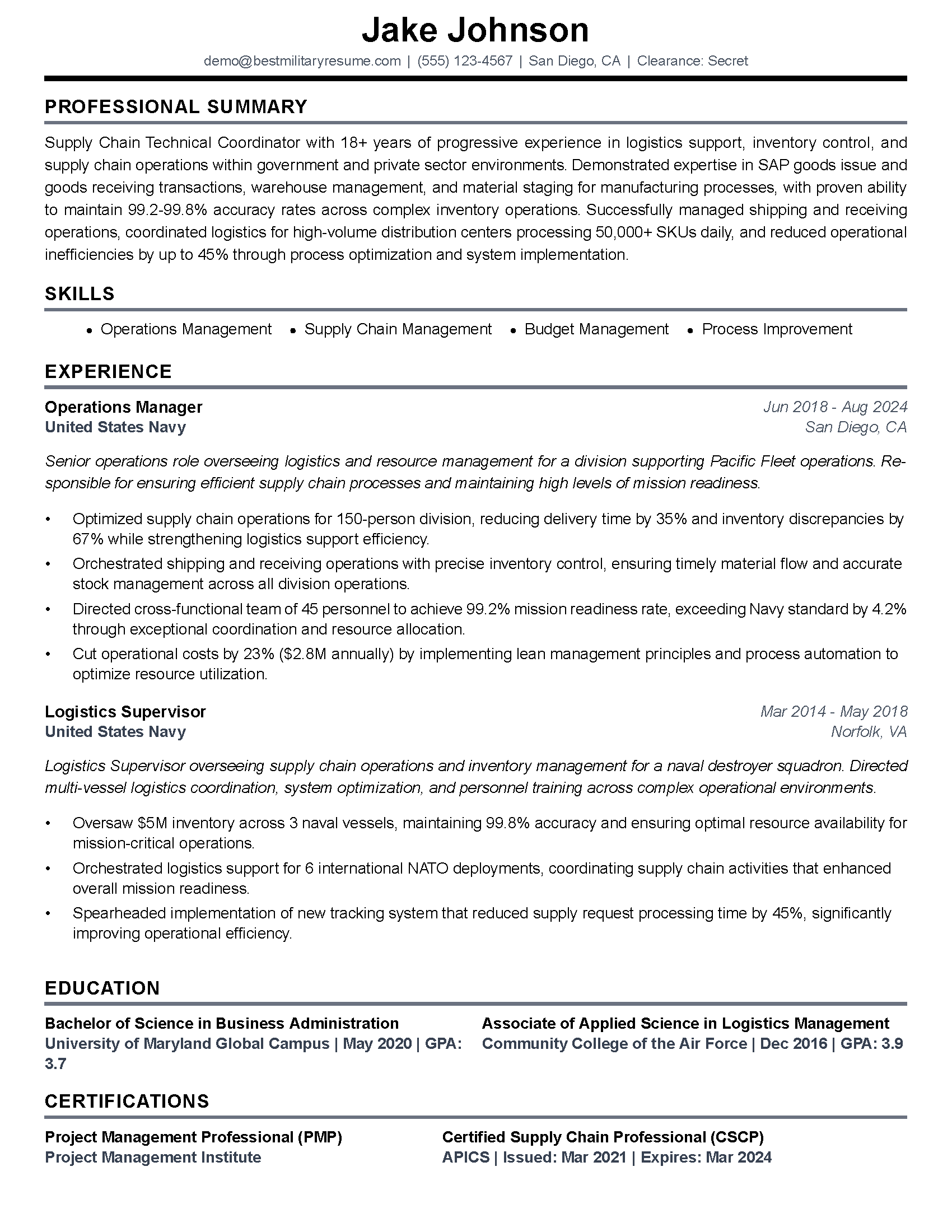
What does this mean for your resume timing?
Most members wait too long to start the civilian resume. If you are bridging into a civilian job on terminal leave, the resume has to be ready early. Think 4 to 6 months out. Not 4 weeks out.
Hiring cycles for any decent civilian role can easily run 6 to 12 weeks. The timeline depends on the role and the employer. Federal roles take longer. Pre-separation counseling covers the paperwork side, but it does not build your resume for you.
BMR's Resume Builder handles the military-to-civilian translation and ATS formatting for you. Free tier covers two tailored resumes, two cover letters, LinkedIn optimization, and the company research reports. It is the tool I wish I had after my own ETS. I burned through 18 months of applications without it.
What if your clearance is part of the plan?
If you are aiming at cleared civilian work, terminal leave timing gets one extra layer. Your clearance access changes the day you separate. Active access converts to inactive. Your underlying investigation stays on file. The clock then starts on a two-year window to land back in cleared work before your investigation ages out.
The full breakdown of what happens to your clearance is here: DoD Security Clearance Status After Separation: Verification Guide.
Line up cleared civilian work so you start during terminal leave. You avoid a clearance gap entirely. The cleared employer takes over your investigation. You stay current without missing a day.
What is the bottom line?
For most ETSing service members reading this, the answer is straight. Terminal leave is your tool. PTDY is not. Plan your transition around the leave you have. Add SkillBridge if it fits. Treat any PTDY as a windfall.
For retirees and members being involuntarily separated, you get both. PTDY first, terminal leave last. That can buy you 50+ days of paid runway between final out and separation date.
Either way, the resume and the job offer have to be ready before you file the paperwork. The tools only work if you have somewhere to land.
For the full breakdown of what your ETS actually means, start with ETS Military Meaning: What Expiration of Term of Service Really Means. If you want to know how long SFL-TAP will eat from your calendar, read How Long Is SFL-TAP? Timeline, Requirements, and What to Expect.
The clock is real. Start now.
Frequently Asked Questions
Can I take terminal leave at the end of my enlistment?
Do EAOS separators get permissive TDY?
How many days of terminal leave can I take?
Should I sell my leave or take it as terminal leave?
Can I start a civilian job during terminal leave?
Do PTDY and terminal leave have to happen in a specific order?
Does SkillBridge use any of my terminal leave or PTDY?
What happens to my TRICARE and BAH when terminal leave ends?
About the Author
Brad Tachi is the CEO and founder of Best Military Resume and a 2025 Military Friendly Vetrepreneur of the Year award recipient for overseas excellence. A former U.S. Navy Diver with over 20 years of combined military, private sector, and federal government experience, Brad brings unparalleled expertise to help veterans and military service members successfully transition to rewarding civilian careers. Having personally navigated the military-to-civilian transition, Brad deeply understands the challenges veterans face and specializes in translating military experience into compelling resumes that capture the attention of civilian employers. Through Best Military Resume, Brad has helped thousands of service members land their dream jobs by providing expert resume writing, career coaching, and job search strategies tailored specifically for the veteran community.
