Overqualified Veteran Interview: How to Address It
Taylor sent 200+ applications for 5 interviews. With BMR, 20 resumes all hit.
Taylor, E-7, Army, defense industry
You crushed the phone screen. Your resume made it through. And now you are sitting across from a hiring manager who tilts their head and says, "Honestly, you seem overqualified for this role."
Your gut reaction is frustration. You spent years leading teams, managing equipment worth millions, and making life-or-death calls. Now someone is telling you that all of that experience is a problem.
This happens to veterans constantly. You bring ten or fifteen years of real leadership into an interview for a mid-level position. The hiring manager sees your background and worries you will get bored. Or leave in six months. Or want their job. Those fears are real to them, even if they sound ridiculous to you.
This article gives you exact scripts and strategies to handle the overqualified question in interviews. Not vague advice. Specific words you can say, mistakes to avoid, and how to turn the concern into a reason to hire you.
Why Do Hiring Managers Call Veterans Overqualified?
Before you can answer the question, you need to understand why they ask it. Hiring managers are not trying to insult you. They have real business concerns behind the question.
The biggest fear is flight risk. They think you will take the job, keep looking, and leave when something bigger comes along. Training a new hire costs money. Losing them in four months is a budget hit and a team morale problem.
The second fear is salary mismatch. If you managed 200 people in the military, they worry you expect a director-level salary for a coordinator role. They may not have the budget to match what they think you want.
The third fear is authority friction. They picture an E-7 or O-4 who will not take direction from a younger, less experienced civilian manager. Nobody wants to hire someone who will challenge every decision.
The fourth fear is boredom. They think the day-to-day work will bore you after the intensity of military operations. Bored employees check out. They do the minimum. That drags the whole team down.
4 Fears Behind the Overqualified Question
Flight risk
They worry you will leave for a bigger role in 6 months
Salary mismatch
They think you expect pay way above their budget
Authority friction
They picture you pushing back on a less experienced boss
Boredom
They think routine tasks will push you to disengage
Every one of these fears has a specific answer. The rest of this article walks you through each one.
What to Say When They Ask "Aren't You Overqualified?"
The worst thing you can do is get defensive. Saying "No, I am not overqualified" just makes you sound like you did not hear the question. And listing all your accomplishments makes their fear worse.
The best answers do two things. They validate the concern. And they redirect to why you actually want this specific role.
Here is a script that works:
"I understand why my background might raise that question. I have done a lot. But I am not looking for the biggest title or the highest salary. I am looking for [specific thing about this role or company]. I researched this company because [specific reason]. This role lets me [specific value you bring]. I am here because I want to be, and I plan to stay."
Notice what that script does. It does not deny the experience. It does not get defensive. It gives a concrete reason for choosing this role. That reason needs to be real. Hiring managers can smell a canned answer.
"I am not overqualified. I led 150 Marines and managed a $40M budget. I can handle anything you throw at me."
"I hear you. My background is strong. But I chose to apply here because your logistics team handles cold chain distribution, and that is exactly where I want to build my civilian career."
The bad answer confirms every fear the hiring manager has. The good answer shows you did your homework and chose this role on purpose.

How to Prove You Will Not Leave in Six Months
Flight risk is the number one concern behind the overqualified label. You have to address it directly. Vague reassurance will not work. You need proof points.
Talk about stability signals in your life. Did you buy a house in the area? Are your kids enrolled in local schools? Is your spouse working nearby? These details matter. They show the hiring manager you are putting down roots.
Talk about your career plan. Explain where you see yourself in two or three years at this company. Be specific. "I want to learn your quality management system and eventually lead a team here" is stronger than "I plan to grow with the company."
If you are job searching during terminal leave, mention that you chose this area to settle. The hiring manager needs to see that you are not treating this job as a placeholder until something better shows up.
Mention what you gave up to be here. You could still be in uniform. You chose to leave. Explain why civilian life in this field matters to you personally. The more specific, the better.
"When I separated as a Navy Diver, I took a role two levels below where my experience would suggest. But I did it on purpose. I needed to learn how the civilian world works before I tried to lead in it. That job turned into a career."
How to Handle the Salary Conversation When You Are Overqualified
The salary question hides inside the overqualified question. The hiring manager is wondering if you will accept their pay range or demand more than they have.
Address it before they ask. Say something like: "I have researched this role and your compensation range. I am comfortable with it. Salary is not the reason I applied. I applied because of the work itself."
Do not lie about your expectations. If you truly cannot take the job at their pay range, this conversation will save you both time. But many veterans are willing to start at a lower level to break into a new field. Say that out loud. It removes the concern instantly.
If you are moving from military to civilian, your total compensation math changed anyway. No BAS. No BAH. No tax-free allowances. You already know your take-home will look different. The hiring manager does not know you already processed that. Tell them.
For a deeper look at what your experience is actually worth on the civilian side, check out our salary negotiation guide for veterans.
Should You Downplay Your Experience in the Interview?
No. And this is where many veterans get bad advice.
Downplaying your experience makes you look dishonest. If you led a 300-person battalion and you pretend you were a mid-level team member, the truth will come out. And when it does, the hiring manager will wonder what else you are hiding.
The fix is not hiding experience. The fix is framing it through the lens of the role you want. Talk about the parts of your military career that connect to this job. Leave the parts that do not fit for follow-up conversations, not the interview.
Example: You were a company commander (O-3) applying for a project coordinator role. You do not need to talk about your command authority over 150 soldiers. You talk about how you managed a $2M equipment fielding project across four locations with a team of 12. That sounds like a project coordinator. Because it was.
Your military rank maps to a civilian title. But the mapping is not always one-to-one. In interviews, focus on the work, not the rank.
Do Not Hide Your Background
Hiding experience feels dishonest when it surfaces later. Frame your experience around what connects to this role. Leave unrelated details out. But never pretend you were less than you were.
How to Reassure a Younger or Less Experienced Boss
This is the part nobody talks about. Many veterans walk into interviews where the hiring manager is ten years younger and has never managed a military operation. The hiring manager is thinking: "Will this person respect me?"
You need to signal that you understand civilian chain of command is different. In the military, rank settles most questions. In the civilian world, the org chart does. Try something like this: "I have reported to people with different backgrounds and experience levels. I learn something from every leader I work with." That kind of answer goes a long way.
Do not bring up your rank at all during this part. Do not compare your military leadership to their civilian management. And definitely do not say "in the military, we did it this way." That phrase will end interviews faster than a bad handshake.
If you have ever worked under someone less experienced in the military, talk about that. Junior officers working under senior enlisted advisors. Cross-functional teams with civilian contractors. Any time you successfully followed someone else's lead, that story has value here.
This connects to a bigger challenge many veterans face. Imposter syndrome can push you to either overstate your qualifications or hide them. Neither works. The goal is honest, accurate framing.
What If They Are Right and You Are Overqualified?
Sometimes the hiring manager has a point. If you spent 20 years as a senior leader and you are applying for an entry-level admin role, the gap is real. You will probably get bored. You will probably leave.
In that case, ask yourself why you applied. If the honest answer is "because I need a paycheck while I figure things out," that is fair. But do not expect the hiring manager to invest in training someone who is already looking past the role.
A better approach is finding roles that actually use your experience, even if the title sounds lower. A "logistics coordinator" at a defense contractor might do work that matches your E-7 or O-4 experience perfectly. The title is just different.
The veteran underemployment problem is real. About one in three veterans end up in jobs below their skill level. The fix is not taking any job. The fix is targeting the right jobs and knowing how to frame your experience for each one.
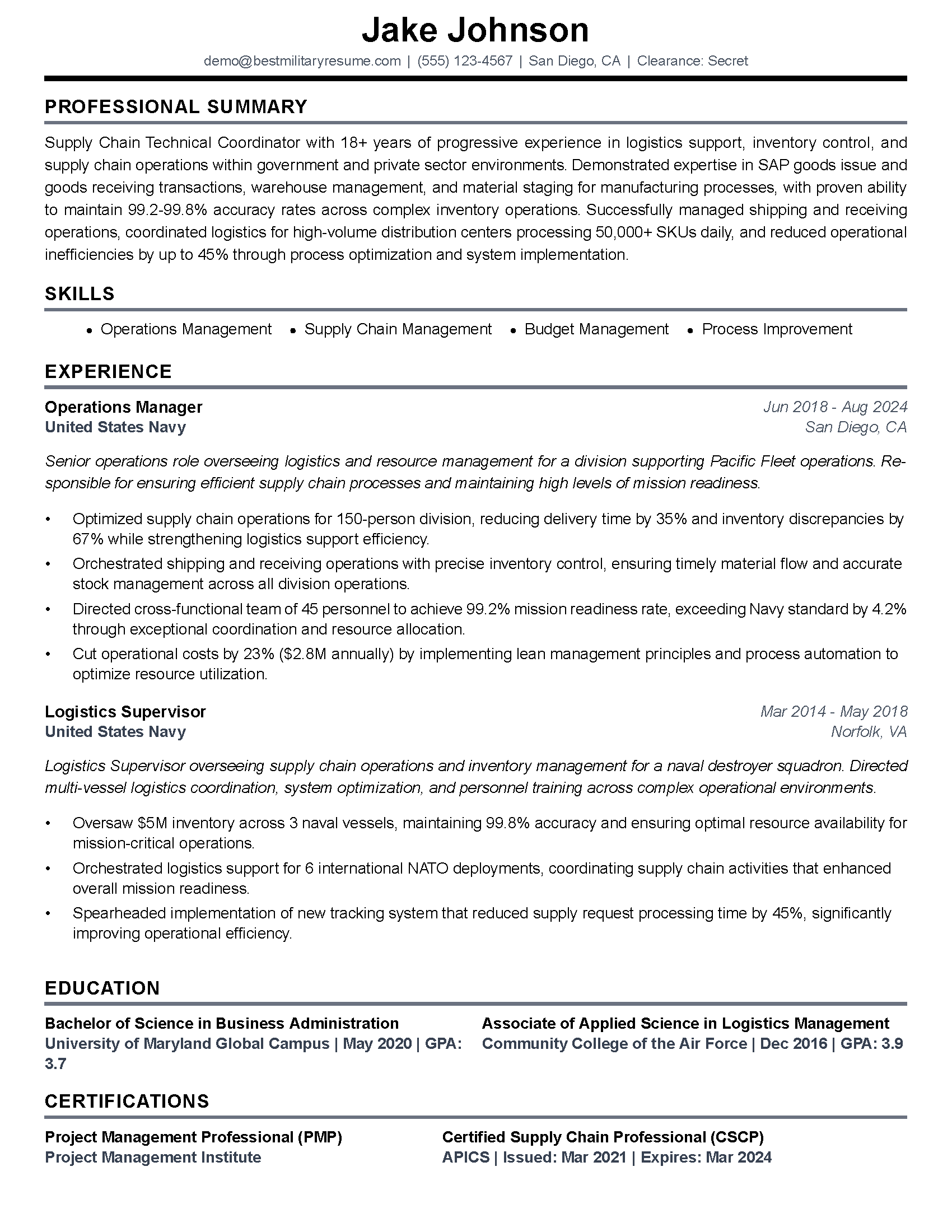
If you are consistently hearing "overqualified" in interviews, your resume may be targeting the wrong level. Our guide on overqualified veteran resumes covers how to adjust your resume before you even get to the interview stage.
Five Things to Never Say When Called Overqualified
Some answers kill the interview on the spot. Here is what to avoid.
"I am willing to take anything right now." This tells the hiring manager you are desperate. Desperate people leave as soon as something better comes along. That confirms their biggest fear.
"I ran teams bigger than this whole company." This is intimidating, not impressive. The hiring manager does not want to feel small. They want to feel confident that you will fit into their team.
"I just need to get my foot in the door." Foot-in-the-door signals that you see this job as a stepping stone. The hiring manager does not want to be your stepping stone. They want someone who wants this specific role.
"I know more than most people here would." Even if true, this makes you sound arrogant. And arrogance is the fastest way to get a "thanks for coming in" handshake with no callback.
"The military prepared me for anything." Generic motivational statements do not answer business questions. The hiring manager asked a specific concern. Give them a specific answer.
How to Prepare for the Overqualified Question Before the Interview
You should not wait for this question to come up. Prepare for it the same way you prepare for "tell me about yourself" or "why did you leave the military?"
Before every interview, write down two or three specific reasons you want this exact role at this exact company. Not generic reasons like "growth opportunity." Specific reasons like "your team handles OCONUS logistics for humanitarian aid, and that is where I want to build my career."
Practice saying your answer out loud. Time it. If your answer runs longer than 45 seconds, cut it down. Long answers sound rehearsed. Short, specific answers sound confident.
Research the company on LinkedIn. Find something specific about the team, the mission, or a recent project. Work that into your answer. When you name something specific, it proves you chose this job on purpose.
1 Write Your Why
2 Frame Your Experience
3 Rehearse Out Loud
4 Research the Company
5 Prepare Stability Signals
Also prepare for the behavioral questions that often follow the overqualified question. Hiring managers will test your claims with "tell me about a time when..." scenarios. Use the STAR method. Keep your answers tied to the level of this role.
When Overqualified Is Actually a Strength
Here is something many veterans miss. Being overqualified can work in your favor if you frame it right.
Hiring managers want people who can hit the ground running. If you have more experience than the role requires, you ramp up faster. You need less training. You bring perspective that someone with exactly the right amount of experience would not have.
You also bring mentorship value. Even in an individual contributor role, you can help junior team members grow. That makes the whole team stronger. Hiring managers who think long-term see that as a win.
And you bring calm under pressure. Veterans have operated in high-stress environments that most civilian workers never see. That stability is worth something in any role. You do not panic when deadlines shift or projects go sideways.
Frame it like this: "My experience means I can contribute from day one. I will not need six months to get up to speed. And I bring perspective from leading teams through situations that most people in this field have not seen. That is not a risk. That is an asset."
For more on how to explain military experience in civilian interviews, check that guide. It covers the jargon-to-civilian translation piece that pairs with the overqualified conversation.
What to Do After an Interview Where Overqualified Came Up
The interview is not over when you walk out the door. If "overqualified" came up, your follow-up matters more than usual.
In your thank-you email, address the concern directly. One sentence is enough. Something like: "I appreciated the honest conversation about my experience level. I want to reiterate that I chose this role because of [specific reason], and I am excited about what I can contribute to [team or project]."
Do not rehash the whole conversation. Do not write a paragraph defending yourself. One clear sentence that restates your intent. That is it.
If you do not hear back within a week, follow up once. After that, move on. If they passed because of the overqualified concern, no amount of follow-up will change their mind. Focus your energy on the next interview.
And if you are getting the overqualified pushback in every interview, the problem is probably upstream. Your resume is signaling a higher level than the jobs you are targeting. Fix the resume first, and the interview conversations change. BMR's Resume Builder helps you tailor your resume to each specific role so your experience matches what the hiring manager expects to see.
Key Takeaway
Being overqualified is not a rejection. It is a question. The hiring manager wants a reason to say yes. Give them a specific, honest answer about why you want this role, and the concern goes away.
Frequently Asked Questions
How do I answer 'aren't you overqualified' in an interview?
Should I downplay my military experience if I am overqualified?
Why do hiring managers call veterans overqualified?
Does being overqualified hurt my chances of getting hired?
What should I never say when called overqualified in an interview?
How do I prove I will not leave the job in six months?
Should I bring up salary when the overqualified question comes up?
About the Author
Brad Tachi is the CEO and founder of Best Military Resume and a 2025 Military Friendly Vetrepreneur of the Year award recipient for overseas excellence. A former U.S. Navy Diver with over 20 years of combined military, private sector, and federal government experience, Brad brings unparalleled expertise to help veterans and military service members successfully transition to rewarding civilian careers. Having personally navigated the military-to-civilian transition, Brad deeply understands the challenges veterans face and specializes in translating military experience into compelling resumes that capture the attention of civilian employers. Through Best Military Resume, Brad has helped thousands of service members land their dream jobs by providing expert resume writing, career coaching, and job search strategies tailored specifically for the veteran community.
