Best SkillBridge Programs for Cybersecurity: 25 That Hire
Justin was hired during terminal leave. "The best resume I have ever seen."
Justin, E-7, Air Force, network engineering, named his number and got it
You want a SkillBridge spot in cyber. So does everyone else with a TS clearance and a CompTIA cert. Cyber happens to be one of the deepest SkillBridge benches in the whole approved provider directory. But "cyber" covers a huge spread of work. SOC analyst. Threat hunter. GRC. Red team. Cloud security. Each one wants a different resume.
This guide is the shortlist. It covers the cyber SkillBridge programs that hire veterans, what they look for, and how to pick one that fits your military background. I sat on hiring panels for cyber-adjacent federal IT positions in my chain. The same five mistakes kept showing up on sharp resumes that still got passed over. We will get to those.
If you do not know what SkillBridge is yet, start with the foundation guide: SkillBridge 2026: Land a Civilian Job Before You Separate. Then come back here for the cyber-specific track.
Why Cyber SkillBridge Is Different From the Rest
Cyber SkillBridge is not like sales or logistics SkillBridge. Three things make it different.
First, the clearance premium. A cleared cyber intern is worth real money to a defense contractor. They can bill you out fast. That changes the math on who gets offers.
Second, the cert filter. Most cyber host companies want to see Security+ at minimum. Many want CySA+, CISSP, or a SANS cert. The DoD 8140 framework spelled this out and most contractors copy that framework into their own hiring filter. If you want the full breakdown, read DoD 8140 cybersecurity certification requirements.
Third, the role fit gap. Cyber covers a dozen different jobs. A SOC analyst job and a cloud security engineer job share almost no day-to-day tasks. Picking the wrong SkillBridge program wastes your one shot.
Key Takeaway
Your clearance and your cert stack decide which SkillBridge cyber programs will even talk to you. Sort by those first. Then sort by which company has a real hire-back history.
What Cyber Host Companies Actually Look For
The patterns that move a cyber resume up the rank are not a secret. Three things matter most.
Clearance status comes first. Active TS/SCI moves you to the top of the stack. Active Secret keeps you in the running for most jobs. No clearance is fine for some private-sector cyber, but it cuts your defense contractor options in half.
Certs come second. Security+ is the floor. After that, the cert that matters most depends on the role. CySA+ for SOC work. CCSP for cloud. CISSP for senior or GRC work. OSCP for offensive roles.
Real hands-on work comes third. This is where most cyber veterans lose points. Your resume says you "supported network defense operations" but never says what tools you touched. Was it Splunk? Sentinel? CrowdStrike Falcon? ELK? Name the tools. Name the playbooks. Name the alert types you triaged.
Supported network defense operations for a tactical unit during deployment.
Triaged 200+ Splunk alerts per shift in a 24/7 SOC. Wrote 14 new SPL detection rules. Cut false positives on phishing alerts by 38%.

25 SkillBridge Cyber Programs Worth Knowing
These are real cyber-track programs and pathways listed in the DoD approved provider directory. Cohort sizes, location options, and offer rates shift quarter to quarter. Confirm details on the official directory before you apply. Do not trust a recruiter pitch over the directory.
Big Defense Primes
These are the safest bets if you already have a clearance. They run cyber SkillBridge cohorts at scale and have the most predictable hire-back history.
- Leidos: Multiple cyber tracks. Strong DISA and intel community pipelines. SOC, threat intel, vulnerability assessment.
- Booz Allen Hamilton: Mission cyber, federal civilian cyber, commercial cyber. Big intern pool. Strong on red team and threat hunting.
- CACI: Cyber operations support. Heavy on intel community work. Likes TS/SCI candidates.
- ManTech: Cyber engineering and SOC roles across federal and DoD. Solid mid-Atlantic footprint.
- Northrop Grumman: Mission cyber and cyber engineering. Tends to convert at higher rates than the industry average.
- SAIC (verify status): Federal cyber hires across civilian agencies. Verify current DoD SkillBridge approval at skillbridge.mil before assuming a specific cyber track is open.
Cloud and Tech-First Cyber
If you want cloud security or product security, these are the ones to chase. They want fewer certs and more demonstrated technical work.
- Microsoft Cybersecurity Apprenticeship (MSSA CSO): The 17-week Cybersecurity Operations track covers Microsoft Azure security, endpoint management, and Windows server security infrastructure. Strong public reputation.
- Amazon AWS Sec/Cloud: AWS-aligned cyber and cloud security paths. Wants AWS certs more than CompTIA.
- Palo Alto Networks (cert prep): PCCSA, PCNSA, and PCNSE product certs carry real resume weight. The Cybersecurity Academy partners with academic institutions, not as a DoD SkillBridge provider. Use as cert prep alongside a SkillBridge program.
- CrowdStrike: Endpoint detection and response work. Falcon platform exposure is a real career multiplier.
- Splunk Work+ (training resource): Free Splunk eLearning for veterans through Work+. Not a DoD SkillBridge placement, but Splunk skills (SPL detection rules, SIEM analysis) are a hiring filter at half the SOCs in the country. Build the skills here, then look for SkillBridge providers like Leidos, ManTech, and Booz Allen that use Splunk operationally.
Cyber Training-to-Hire Programs
These are heavier on training and lighter on direct hire-back. Use them if you need to fill cert and skill gaps before you compete for the big-prime jobs.
- SANS Institute Cybersecurity Academies: Several veteran-focused tracks. The GIAC certs carry serious weight in cleared cyber.
- Cybrary (training resource): Self-paced cyber training with cert prep. Not a DoD SkillBridge program, but a strong free supplement before or alongside your SkillBridge.
- Onward to Opportunity (IVMF, Syracuse University): Free cert training paths for transitioning service members. Cyber is a core lane.
- VetsInTech (training and community): Free cyber and dev training resources plus a hiring network. Use as a supplement to a confirmed SkillBridge program.
- VetSec: Veteran cyber community with mentorship and pathway resources. Pair this with one of the training programs above.
Federal Pipelines and Specialized Tracks
SkillBridge can route into federal cyber work too. The hire conversion is slower because federal hires run on USAJOBS and the cert process. But if you want the long civil-service career, these matter.
- DHS Cyber Talent Management System: Routes cyber-skilled veterans into specialized federal cyber roles outside the GS scale.
- U.S. Cyber Command pathways: A real on-ramp for SIGINT, cyber operators, and 17 series soldiers. Limited cohorts.
- Federal cyber direct-hire authorities: DHS CTMS and OPM 2210 direct-hire authorities are the right federal cyber routes for transitioning veterans. The Federal Cyber Defense Skilling Academy is a separate reskilling program for current federal employees, not military transitions.
- Centers for Excellence partner programs: Some universities run SkillBridge-compatible cyber tracks tied to federal pipelines.
Mid-Tier and Specialty Cyber
These do not run the volume the big primes do. But they often place into stronger roles per intern. Worth a look if you want a focused team and a faster path to billable work.
- Optiv (verify status): Cyber consulting with GRC, advisory, and offensive security work. Verify current DoD SkillBridge status at skillbridge.mil before applying.
- Google Cloud Launchpad for Veterans: Free Cloud Digital Leader certification training for veterans. Threat intel and incident response career paths align with Mandiant work but are best pursued through confirmed SkillBridge providers like Booz Allen and CACI.
- GuidePoint Security: Cyber consulting with strong commercial and federal split.
- Accenture Federal Services: Cyber and digital identity tracks across federal civilian agencies.
- Deloitte (via Hiring Our Heroes CFP): Deloitte hosts SkillBridge fellows through the HOH Corporate Fellowship Program for cyber risk and advisory roles. Apply through HOH and list Deloitte as a preferred host.
Verify the directory before you commit
Program offerings change every quarter. A cyber cohort that ran last spring may not run again until next fall. Always check the official DoD SkillBridge approved provider directory before you tell your command which provider you plan to use.
How to Pick the Right Cyber Program for Your Background
The "best" cyber SkillBridge program is the one that fits the work you have already done. Match your military background to the program track and you will compete much better.
Match your background to the cyber track
SIGINT, 17C, 1N4, IT, 25B background
Aim at SOC, threat hunting, and detection engineering. Big primes plus Splunk and CrowdStrike.
Network ops, comms, 25 series, 3D1X2
Cloud security and network security work. Microsoft, AWS, and Palo Alto Networks fit best.
Officer, senior NCO, staff, or policy background
GRC, cyber strategy, and advisory work. Deloitte, Optiv, SAIC, and Accenture lean into this.
Cyber operator, 17 series, red team, OSINT
Offensive security and incident response. Mandiant, Booz Allen red team, CrowdStrike Services.
Limited cyber background, strong general IT
Start with SANS, Onward to Opportunity, or Cybrary to close the cert gap. Then apply to the primes.
What If You Do Not Have a Degree?
You do not need a degree to land cyber work after the military. You will need certs and you will need to talk about your work in civilian language. Both are fixable.
Cyber is one of the most degree-flexible fields in tech. The federal side opened this lane through the 2210 series and OPM made it official policy. Defense contractors followed. If you want the longer read on this, see is the military recruiting cybersecurity experts without a degree and cybersecurity jobs veterans can land without a degree.
The point for SkillBridge: do not skip a strong program because you do not have a bachelor's. Some host companies will skip you. Plenty will not. The cert stack and the clearance carry more weight than the degree on most cyber slots.
How to Land an Interview With These Programs
Cyber SkillBridge slots are competitive. Sharp candidates with TS clearances get rejected every cohort. Most of them got rejected for the same five reasons.
Reason one: the resume read like a job description. Long generic bullets about "supporting cyber operations" with zero tool names, zero metrics, zero specifics. That resume sinks to the bottom of the stack.
Reason two: no cert listed in the top third of page one. Recruiters scan certs first. If the recruiter has to dig to find Security+, they assume you do not have it.
Reason three: clearance status not stated clearly. Write it plain. "Active TS/SCI with CI poly" or "Active Secret, last investigation 2023." Do not make the recruiter guess.
Reason four: the resume was tuned for a federal application instead of a private-sector one. SkillBridge programs are private-sector hosts. Federal-style resumes with hours per week and supervisor phone numbers do not fit. For the right format, read SkillBridge resume writing guide.
Reason five: no story. You can have the certs and the clearance and still get passed over because you cannot tell a recruiter in two sentences why you want SOC work over GRC work. Pick a track. Own it.
"From the hiring side of the desk on positions in my federal chain, the resumes that moved up shared one thing. They told me what the candidate actually touched. Not what their unit did."
Timing Your SkillBridge Cyber Application
You can apply to SkillBridge programs up to 180 days before your last day of service. Most cyber programs want their interns to start at the 120-day-out mark or later. Apply at least 90 days before that.
That means you want to be researching providers around 8 to 9 months before separation. Apply at 6 to 7 months. Start the program at 4 to 6 months out. Convert to a full-time offer in the last 2 to 4 months.
If you are still working the timeline, the rules are spelled out in SkillBridge requirements 2026 and SkillBridge eligibility.
Command approval is the choke point most candidates underestimate. Your unit has to release you. The cyber world is small. If you burn a cyber officer or senior NCO on the way out by surprising them with your SkillBridge paperwork, that follows you. Talk to your chain first. Then send the paperwork.
Confirm the program is current
Check the official DoD SkillBridge approved provider directory. Cyber cohorts change every quarter.
Tailor your resume to the track
A SOC resume looks different from a GRC resume. Pick a lane before you apply.
Talk to your chain early
Command approval is the part most candidates lose on. Get the conversation started 60 days before you submit paperwork.
Apply to 3 to 5 programs at once
Cyber is competitive. Pick one top choice and four backups. Track each application.
Treat the internship like a 90-day interview
Most cyber SkillBridge slots convert to full offers if you show up and produce. The internship IS the interview.
What About Pay and the Offer After SkillBridge?
SkillBridge does not pay you. Your service pays you while you intern. After the internship ends, you go on the company's normal payroll if they extend a full-time offer.
Cyber cleared roles pay more than most other SkillBridge fields. Entry-level cleared cyber roles often start in the 95K to 130K range depending on clearance, certs, and location. Senior cleared cyber can clear 200K once you have a few years and the right certs.
If the host company is a federal contractor, the offer you get is on a contract labor category. That has its own pay band logic. The federal side has different rules. See cyber excepted service pay for the federal cyber pay structure.
Build Your Cyber SkillBridge Resume in 20 Minutes
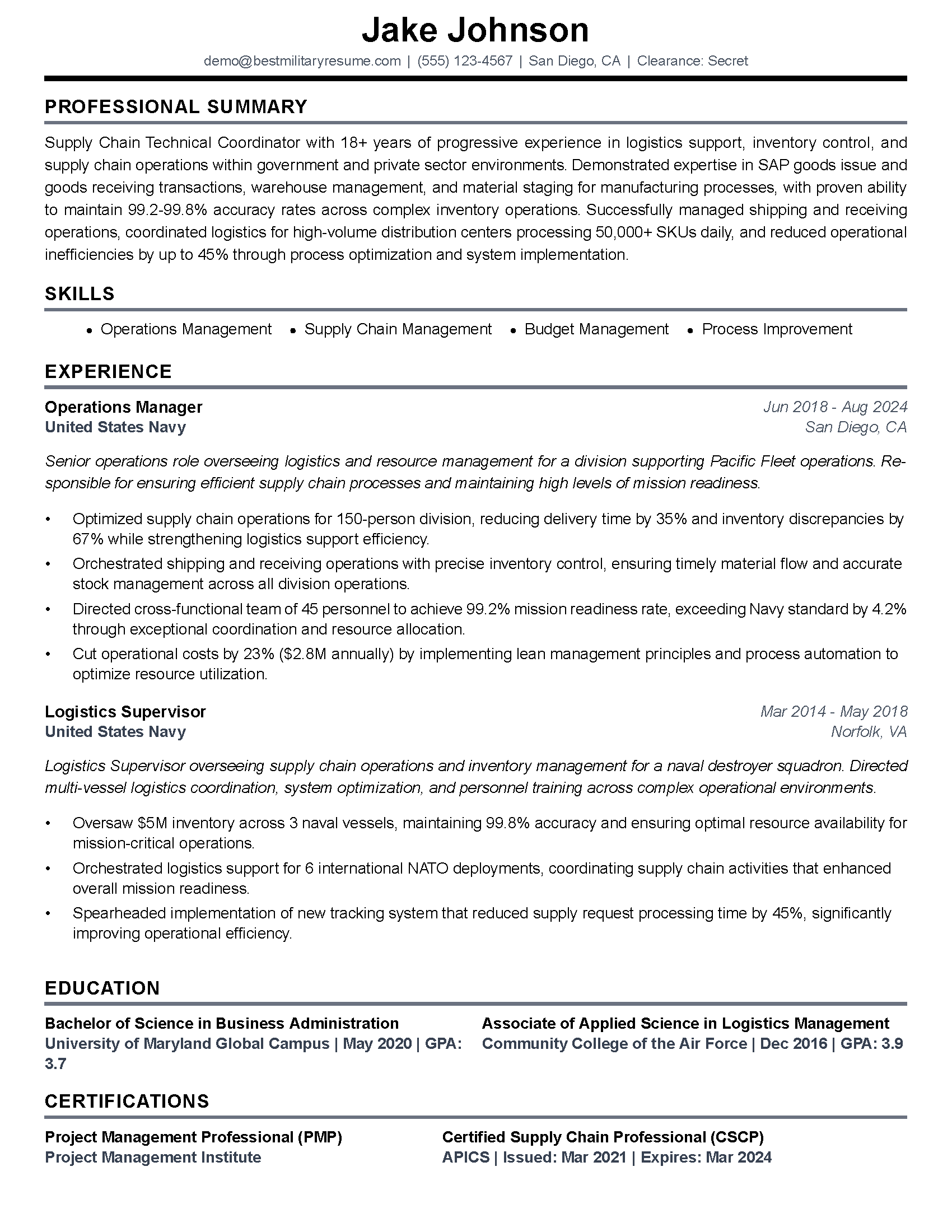
You need a resume that names the tools, names the certs, and stays in private-sector format. BMR's resume builder is free for veterans and military spouses. Paste a SkillBridge program description and it tailors your resume to that role. Two tailored resumes free. Two cover letters free. LinkedIn rewrite free.
Start at the BMR resume builder. The free tier covers everything most veterans need for a SkillBridge application. The only thing it does not do is apply to the program for you.
If you want the broader playbook on which company to chase, the sibling article best SkillBridge programs 2026 ranked by hire rate covers the cross-industry rankings.
How to Run a Clean Cyber SkillBridge Search
Cyber SkillBridge works. It works best when you pick a track that fits your military background, line up the cert stack first, and tailor the resume to the specific role you want.
The 25 programs in this guide are real options. Some will fit you. Some will not. Pick three to five that match your background, your clearance, and your cert stack. Apply to all of them. Run a clean process and you will land at least one good offer.
The internship is the 90-day audition, not the finish line. Show up, name the tools you touch, and convert it into a real offer before your separation date hits.
Frequently Asked Questions
What is the best SkillBridge program for cybersecurity?
Do I need a clearance for cyber SkillBridge?
Can I do SkillBridge cyber without a degree?
How early should I apply to cyber SkillBridge?
What certs do I need for cyber SkillBridge?
Does cyber SkillBridge pay?
What is the offer conversion rate for cyber SkillBridge?
How is a SkillBridge cyber resume different from a federal cyber resume?
About the Author
Brad Tachi is the CEO and founder of Best Military Resume and a 2025 Military Friendly Vetrepreneur of the Year award recipient for overseas excellence. A former U.S. Navy Diver with over 20 years of combined military, private sector, and federal government experience, Brad brings unparalleled expertise to help veterans and military service members successfully transition to rewarding civilian careers. Having personally navigated the military-to-civilian transition, Brad deeply understands the challenges veterans face and specializes in translating military experience into compelling resumes that capture the attention of civilian employers. Through Best Military Resume, Brad has helped thousands of service members land their dream jobs by providing expert resume writing, career coaching, and job search strategies tailored specifically for the veteran community.
