Loading...
Loading...
Civilian Career Paths & Job Guide
Everything you need to translate your 0811 experience into a civilian career — salary data, companies hiring, resume examples, and certifications by career path.
Marine Corps Field Artillery Cannoneers (MOS 0811) serve as the backbone of artillery batteries, responsible for operating and maintaining the M777A2 155mm lightweight towed howitzer. Cannoneers perform every function within a howitzer section — from receiving fire missions and computing firing data to physically loading rounds, setting propellant charges, and pulling the lanyard. The job is physically demanding, technically precise, and operates under strict safety protocols where a single error in charge selection or fuze setting can be catastrophic.
Training begins at Fort Sill, Oklahoma, alongside Army artillerymen — one of the few joint-service MOS schools. Marines learn gunnery tables, deflection and elevation calculations, ammunition identification (HE, WP, illumination, smoke, DPICM), and crew drill timing standards. In the fleet, 0811s serve in artillery batteries within Marine artillery regiments (11th Marines at Pendleton, 10th Marines at Lejeune) and execute fire missions in support of ground combat element operations. Some experienced Cannoneers participate in fire direction center (FDC) operations, computing firing solutions and managing fire mission processing.
The reality for transitioning 0811s: there is no direct civilian equivalent of firing a 155mm howitzer. Unlike some MOSs that map cleanly to civilian jobs, Cannoneers must pivot. The good news is that artillery training develops precision under pressure, strict procedural adherence, team coordination in high-stress environments, and physical endurance — skills that transfer to construction, manufacturing, heavy equipment operations, safety management, and logistics. Many 0811s also develop mechanical aptitude from maintaining the howitzer system, hydraulic components, and fire control equipment.
Cannoneers face a unique transition challenge: the core job — firing artillery — does not exist in the civilian world. But the adjacent skills developed in an artillery battery translate more broadly than many realize. Equipment operation, ammunition logistics, safety compliance, team synchronization, and working in austere field conditions all have civilian analogs.
The strongest private sector matches fall into construction, heavy equipment operations, and industrial safety. According to the Bureau of Labor Statistics (May 2024), construction managers earn a median of $106,980, first-line supervisors of construction trades workers earn $76,060, and operating engineers and equipment operators earn $58,710. The defense contracting sector also hires former artillerymen for roles in weapons testing, range operations, and training support — Cannoneers who worked with fire control systems or targeting computers bring technical skills that defense firms value.
For 0811s with HAZMAT handling experience from working with propellant charges and munitions, hazardous materials removal workers (BLS median $48,490) and occupational health and safety specialists ($83,910) represent accessible paths. The explosives handling and safety procedural knowledge is directly relevant — civilian employers in mining, demolition, and pyrotechnics specifically seek this background.
| Civilian Job Title | Industry | BLS Median Salary | Outlook | Match |
|---|---|---|---|---|
Heavy Equipment Operator O*NET: 47-2073.00 | Construction / Mining | $55,280 | Average (4%) | Strong |
Explosives Worker or Blaster O*NET: 47-5032.00 | Mining / Construction / Demolition | $58,130 | Little or no change (0%) | Strong |
First-Line Supervisor of Construction Trades O*NET: 47-1011.00 | Construction | $76,060 | Average (4%) | Moderate |
Security Guard O*NET: 33-9032.00 | Security Services | $38,370 | Average (3%) | Moderate |
Police Officer O*NET: 33-3051.00 | Law Enforcement | $76,290 | Average (3%) | Moderate |
Occupational Health & Safety Specialist O*NET: 19-5011.00 | Multiple Industries | $83,910 | Faster than average (12%) | Moderate |
Correctional Officer O*NET: 33-3012.00 | Government | $57,870 | Little or no change (-1%) | Moderate |
Truck Driver, Heavy and Tractor-Trailer O*NET: 53-3032.00 | Transportation / Logistics | $57,440 | Average (4%) | Moderate |
Federal agencies offer several paths for former Cannoneers, particularly in safety, emergency management, and administrative roles. The structured environment and familiarity with government procedures give veterans an advantage in navigating the federal hiring process.
GS-0018 Safety Management: Your ammunition handling safety protocols, range safety procedures, and hazardous materials experience map to safety specialist positions across DoD installations, OSHA, and other agencies. GS-7 to GS-12 range depending on education and experience.
GS-0089 Emergency Management: Artillery batteries train extensively for contingency operations and mass casualty response. Emergency management specialist positions at FEMA, DoD, and DHS value this background. Median $86,130 per BLS.
GS-0083 Police: The discipline, weapons proficiency, and high-stress decision-making from artillery operations transfer to federal law enforcement. Agencies include VA Police, DoD Police, USCP, and CBP.
GS-0085 Security Guard: Installation security positions are accessible entry points for veterans. Many DoD facilities and federal buildings hire security specialists at GS-5 through GS-9.
GS-0301 Miscellaneous Administration: The broadest federal series — covers program analysts, management assistants, and administrative officers. Cannoneers with any supervisory or administrative duties qualify. This is often the fastest entry into federal service.
GS-0343 Management and Program Analysis: For NCOs with experience managing training schedules, readiness reporting, personnel actions, and resource allocation. These roles analyze organizational efficiency — exactly what a section chief does daily.
GS-0346 Logistics Management: Ammunition supply chain management, equipment readiness reporting, and deployment logistics are core artillery functions. Logistics management specialist positions at DLA, TRANSCOM, and installation-level logistics offices are strong matches.
GS-1101 General Business and Industry: Procurement and contract oversight experience from managing equipment maintenance contracts or supply requisitions. Available at most federal agencies.
GS-1712 Training Instruction: Senior Cannoneers with instructor duty experience (especially at Fort Sill or as battery training NCOs) qualify for training specialist positions across DoD and other agencies.
Key federal tip: Veterans' Preference gives you 5 or 10 additional points on federal hiring assessments. Start your USAJobs profile 6 months before separation — federal hiring moves slowly. Federal resumes follow different formatting rules than private sector resumes — they are a maximum of 2 pages. Build yours at BMR.
| GS Series | Federal Job Title | Typical Grades | Match | Explore |
|---|---|---|---|---|
| GS-1712 | Training Instruction | GS-7, GS-9, GS-11 | View Details → | |
| GS-0007 | Correctional Officer | GS-5, GS-6, GS-7 | View Details → | |
| GS-0018 | Safety and Occupational Health Management | GS-7, GS-9, GS-11 | View Details → | |
| GS-0083 | Police | GS-5, GS-7, GS-9 | View Details → | |
| GS-0085 | Security Guard | GS-4, GS-5, GS-6 | View Details → | |
| GS-0089 | Emergency Management | GS-7, GS-9, GS-11 | View Details → | |
| GS-0301 | Miscellaneous Administration and Program | GS-7, GS-9, GS-11 | View Details → | |
| GS-1896 | Border Patrol Agent | GL-5, GL-7, GL-9 | View Details → | |
| GS-2001 | General Supply | GS-5, GS-7, GS-9 | View Details → | |
| GS-0017 | Explosives Safety | GS-7, GS-9, GS-11 | View Details → |
Not everyone wants to stay in a related field. These career paths leverage your transferable skills — leadership, risk management, logistics, project planning — in completely different industries.
Artillery sections run on operational discipline — coordinating fire missions requires synchronizing personnel, equipment, timing, and logistics under extreme pressure. This is operations management with live ammunition. Section chiefs and battery-level leaders manage teams, equipment readiness, and execution timelines that translate directly to production floors, distribution centers, and facility operations.
Cannoneers work with explosive ordnance, heavy equipment, and high-risk procedures daily. Safety is embedded in every fire mission — from ammunition handling to firing sequences to equipment maintenance. This constant hazard awareness and procedural discipline translates directly to EHS roles where the stakes are similarly high.
Fire missions are projects with defined objectives, resource requirements, timelines, and success criteria. Artillery leaders plan, coordinate, and execute complex operations involving multiple teams and assets. This project execution discipline — scope, schedule, resources, risk — is the foundation of project management in any industry.
Artillery units consume enormous quantities of ammunition, fuel, and repair parts. Cannoneers — especially at the section chief level and above — manage supply chains, equipment maintenance schedules, and deployment logistics. Tracking ammunition expenditure, maintaining howitzer readiness, and coordinating resupply are logistics operations.
Artillery operations involve coordinating with multiple units, managing communications under stress, and executing rapid response procedures. Cannoneers train extensively in emergency actions for misfires, cook-offs, and equipment failures — high-stakes emergency response is second nature. This background in structured emergency response, chain of command, and multi-agency coordination maps to emergency management.
Artillery units regularly construct fighting positions, build ammunition supply points, and manage field construction projects. The planning, coordination, and execution of these projects — including site preparation, material management, and team supervision — parallels construction management. Senior cannoneers manage multiple work crews simultaneously.
Cannoneers operate in high-stress environments requiring discipline, physical fitness, teamwork, and strict adherence to rules of engagement. Many law enforcement agencies actively recruit military veterans for their composure under pressure, firearms proficiency, and ability to follow and enforce procedures. The structured environment of policing mirrors military service.
If you are applying to defense contractors, range operations, or weapons testing roles, your artillery terminology translates directly — those employers know what a fire mission is. This section is for Cannoneers targeting careers outside the defense and artillery world — construction, manufacturing, logistics, safety, project management, or any role where the hiring manager has never seen a gunnery table.
The key is converting military precision and procedural discipline into business language. A section chief managing crew drills to sub-minute timing standards is running operations management. An ammo handler maintaining accountability for millions of dollars in ordnance is doing inventory and supply chain management. Translate the what you actually did into terms the civilian hiring manager recognizes.
Which certifications you need depends on where you're headed. Find your target career path below.
SkillBridge Programs: Several defense contractors participate in DOD SkillBridge, allowing Marines to work civilian jobs during their last 180 days of service. Search the SkillBridge database for artillery-related opportunities. Companies like General Dynamics, Raytheon, and BAE Systems have historically participated.
Range Operations: Military installations and defense test ranges hire former artillerymen for range safety, range control, and weapons testing support. Check USAJobs for range operations specialist and safety positions at installations like White Sands Missile Range, Yuma Proving Ground, and Aberdeen Proving Ground.
Construction and Heavy Equipment: Many 0811s transition into construction. OSHA 30-Hour Construction certification ($150-300, can take online) is often required on job sites. Operating engineer apprenticeships through local IUOE unions value military equipment experience.
Safety & EHS Careers: Your ammunition safety and hazardous materials handling background gives you a head start. Start with OSHA 30-Hour, then target the CSP (Certified Safety Professional) from BCSP for the long-term career move. Your safety procedural experience counts toward the experience requirement.
Project Management: The PMP certification (PMI) is the gold standard. Senior NCOs with training management and operational planning experience often qualify. Cost: ~$555 (PMI member). GI Bill covers some prep courses.
Federal Employment: Create your USAJobs profile immediately. Apply to positions at or below GS-11 initially where Veterans' Preference is most powerful. Federal resumes are 2 pages max. Build yours here.
Veteran Networking: American Corporate Partners (ACP) provides free mentorship from corporate executives — you get paired with someone in your target industry. ACP is legitimate and completely free for veterans.
Education Benefits: Use your GI Bill strategically. Professional certifications (OSHA, PMP, CSP) often provide faster ROI than a 4-year degree for immediate employment. Check with your local VA education office or use the GI Bill Comparison Tool to verify program approval before enrolling.
Clearance Leverage: If you have an active Secret clearance, that has real market value — especially with defense contractors. Sites like ClearanceJobs.com list positions requiring active clearances. Your clearance stays active up to 24 months after separation if not renewed, so don't let it lapse.
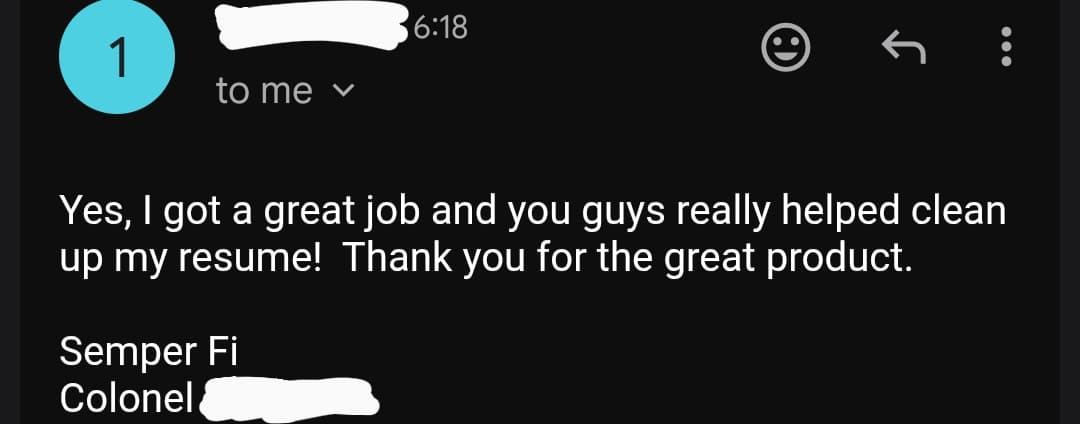
Translate your 0811 Field Artillery Cannoneer experience into a resume that gets interviews.
Build Your Resume →