Loading...
Loading...
Civilian Career Paths & Job Guide
Everything you need to translate your 4341 experience into a civilian career — salary data, companies hiring, resume examples, and certifications by career path.
Marine Corps Combat Correspondents (MOS 4341, now designated Public Affairs Marines) are the Corps' multimedia journalists — trained to write, shoot, edit, and produce content in the most austere and dangerous environments on the planet. Unlike civilian journalists who cover stories from a safe distance, Combat Correspondents go where the Marines go. They embed with infantry units, ride in convoys, and patrol with rifle squads — all while carrying cameras and recorders alongside their weapons.
The 4341 pipeline begins at the Defense Information School (DINFOS) at Fort Meade, Maryland, the same institution that trains communicators across all branches. The curriculum covers AP-style news writing, broadcast journalism, photojournalism, video production, communication planning, and media operations. After DINFOS, Marines report to Division, Wing, or Marine Logistics Group (MLG) public affairs shops, or to higher headquarters at MARFORPAC, MARFORLANT, or Marine Corps Installations Command. Some are assigned to the Combat Camera (ComCam) teams that deploy forward with operational units.
What makes 4341s stand out is the Marine Corps' "every Marine is a rifleman" ethos. Combat Correspondents qualify annually with their rifle, maintain combat fitness, and deploy to the same forward positions as the units they cover. They've documented everything from humanitarian operations in the Pacific to combat operations in the Middle East. The footage, photographs, and stories they produce serve multiple purposes — command information, historical record, FOIA compliance, recruiting material, and strategic communication with the American public.
The technical skill set is unusually broad. 4341s operate DSLR and broadcast-quality video cameras, edit with Adobe Creative Suite (Premiere Pro, Photoshop, Lightroom, After Effects, Audition), publish to the Defense Visual Information Distribution Service (DVIDS), manage command social media accounts, write news articles under deadline, and produce video packages for broadcast. Some develop specializations in photography, videography, or writing — but all are expected to handle the full production cycle from planning through publication.
Combat correspondents have one of the more underrated transitions — they bring journalism, multimedia production, and storytelling under pressure. After my Navy time I pivoted into tech sales and watched communications backgrounds translate to enterprise content marketing, federal communications, and corporate PR at strong rates. The work moves; the resume has to move with it. — Brad Tachi, Navy Diver veteran & BMR founder
According to BLS May 2024 data, public relations specialists earn a median salary of $66,750 (O*NET 27-3031.00) with 6% projected growth. Technical writers earn a median of $80,050 (O*NET 27-3042.00). Film and video editors earn $70,980 (O*NET 27-4032.00), and editors earn $75,260 (O*NET 27-3041.00). At the management level, communications and PR managers earn median salaries above $130,000 (O*NET 11-2032.00). These are aggregate figures — 4341s with specialized portfolios and active security clearances often command higher compensation, particularly in the Washington, D.C., and defense contractor markets.
The occupational landscape for former Combat Correspondents is broader than traditional media. Corporate communications departments at Fortune 500 companies need people who can produce written, visual, and video content — not just write press releases. Defense contractors need cleared communicators who understand operational security. Federal agencies need GS-1035 Public Affairs Specialists who already know how government communication works. And the growing content marketing industry values professionals who can manage the full production cycle from concept to publication across multiple platforms.
Where former 4341s consistently outperform civilian candidates is in the portfolio. A hiring manager reviewing a Combat Correspondent's work sees content produced under actual operational pressure — not mock assignments from a communications program. The DVIDS publication record, Marines.mil clips, and operational photography create a body of work that speaks for itself. Combined with DINFOS credentials and a security clearance, that portfolio opens doors that a degree alone cannot.
For translating your 4341 experience into a civilian resume, BMR's military resume builder can reframe your Marine Corps accomplishments for private sector hiring managers.
| Civilian Job Title | Industry | BLS Median Salary | Outlook | Match |
|---|---|---|---|---|
Public Relations Specialist O*NET: 27-3031.00 | Communications / Corporate / Government | $66,750 | 6% (about as fast as average) | strong |
Technical Writer O*NET: 27-3042.00 | Technology / Government / Defense | $80,050 | 4% (about as fast as average) | strong |
Film and Video Editor O*NET: 27-4032.00 | Media / Entertainment / Corporate | $70,980 | 4% (about as fast as average) | strong |
Editor O*NET: 27-3041.00 | Publishing / Media / Corporate | $75,260 | Little or no change (-5%) | strong |
Reporter / Correspondent O*NET: 27-3023.00 | News Media / Broadcasting | $60,280 | -4% (decline) | strong |
Photographer O*NET: 27-4021.00 | Media / Events / Corporate | $40,760 | -4% (decline) | moderate |
Social Media Manager O*NET: 27-3031.00 | Technology / Corporate / Agency | $66,750 | 6% (about as fast as average) | strong |
Camera Operator (TV/Film) O*NET: 27-4031.00 | Media / Entertainment / Broadcasting | $62,080 | 6% (about as fast as average) | moderate |
Communications Manager O*NET: 11-2032.00 | Corporate / Nonprofit / Government | $138,520 | 6% (about as fast as average) | moderate |
Writer / Author O*NET: 27-3043.00 | Publishing / Media / Content | $72,270 | 4% (about as fast as average) | moderate |
Federal agencies maintain substantial public affairs, visual information, and communications offices — and 4341 veterans are competitive across multiple GS series. The most direct match is the Public Affairs series (GS-1035), which exists at nearly every federal agency. DOD, VA, DHS, FEMA, the intelligence community, and all military branches maintain public affairs shops that value DINFOS-trained communicators with operational experience.
The Visual Information series (GS-1001 and GS-1010) is a strong match for 4341s who specialized in photography or video production. These positions exist at the Defense Media Activity (DMA), individual service media centers, and agencies that produce visual content for public communications or training. The Technical Writing and Editing series (GS-1083) fits 4341s with extensive writing and editorial experience — the ability to produce clean, factual copy under deadline is exactly what federal technical writing requires.
Management and Program Analyst positions (GS-0343) value the strategic communication planning that senior 4341s develop at the MEF, Division, and Wing levels. General Administration (GS-0301) covers a broad range of communication-adjacent roles. IT Specialist (GS-2210) positions with web content management focus are increasingly relevant for 4341s who managed command websites and digital platforms.
Additional GS series to consider: Intelligence (GS-0132) for those with intelligence-adjacent public affairs experience, Miscellaneous Clerk (GS-0303) for entry-level federal positions, Social Science (GS-0101) for research and analysis roles, Education and Training (GS-1712) for instructional positions leveraging DINFOS teaching skills, Equal Employment Opportunity (GS-0260) for communication-focused diversity roles, and Printing Management (GS-1654) for production management positions.
Key agencies to target: Defense Media Activity (DMA), Marine Corps Communication Directorate (HQMC), Defense Visual Information (DVI), Office of the Secretary of Defense (Public Affairs), VA Public Affairs, FEMA External Affairs, and the intelligence community's public affairs offices. Many require an active security clearance — an advantage 4341s already hold. Also consider the Smithsonian Institution, National Park Service, and Government Accountability Office, which maintain communications teams that value journalism training.
Veterans' Preference gives former 4341s a tangible advantage in federal hiring, especially at GS-7 through GS-11 levels. Start your federal resume at bestmilitaryresume.com — federal resumes follow different formatting rules than private sector. For more on the federal application process, see our federal resume guide for veterans.
| GS Series | Federal Job Title | Typical Grades | Match | Explore |
|---|---|---|---|---|
| GS-1035 | Public Affairs | GS-7, GS-9, GS-11, GS-12 | View Details → | |
| GS-1040 | Language Specialist | GS-7, GS-9, GS-11 | View Details → | |
| GS-1130 | Public Affairs | GS-7, GS-9 | View Details → | |
| GS-0090 | Guide | GS-5, GS-7 | View Details → | |
| GS-1015 | Museum Curator | GS-7, GS-9 | View Details → | |
| GS-1083 | Technical Writing and Editing | GS-7, GS-9 | View Details → |
Not everyone wants to stay in a related field. These career paths leverage your transferable skills — leadership, risk management, logistics, project planning — in completely different industries.
Combat Correspondents manage complex multimedia production campaigns with multiple stakeholders, rigid deadlines, and zero-defect deliverables. Coordinating media operations for a MEU deployment is project management — just with cameras and press instead of widgets.
4341s are trained presenters and educators — conducting media training for unit leaders, briefing commanding officers, and developing communication guidance for Marines at all levels. That skill set translates directly to corporate training and instructional design.
4341s analyze audiences, measure campaign effectiveness, produce analytical reports, and provide data-driven recommendations to senior leaders. The advisory role translates to management consulting and operational analysis.
4341s conduct information environment assessments, audience analysis, and message effectiveness tracking — the military version of market research. The analytical framework is the same, just applied to different objectives.
4341s handle crisis communications during real-world emergencies — natural disasters, mass casualty events, and hostile situations. The Public Information Officer (PIO) function during incidents is exactly what emergency management agencies need.
4341s run communication campaigns that require audience targeting, messaging strategy, event coordination, and measurable outcomes. Nonprofit fundraising campaigns follow the same strategic framework.
4341s frequently handle sensitive personnel communications — casualty notifications, command climate messaging, and internal communication campaigns. The interpersonal skills, attention to detail, and policy communication experience transfer to HR.
If you're applying to PR agencies, media companies, or corporate communications departments, your DINFOS training and operational portfolio speak for themselves. Civilian media employers understand what a Combat Correspondent does — they see the published clips, the photography portfolio, and the video work.
This section is for 4341 Marines targeting careers outside of communications — project management, operations, corporate training, government affairs, or any role where the hiring manager won't immediately connect "combat correspondent" to the skills they need. The translations below reframe your Marine PA experience into language that resonates in non-media industries.
| Military Term | Civilian Translation |
|---|---|
| Led a 4-Marine ComCam team during a 7-month deployment | Managed a 4-person multimedia production team across a 7-month project cycle, delivering 200+ content assets under austere field conditions |
| Briefed the Commanding General on communication strategy | Served as primary communications advisor to a senior executive (2-star equivalent) on strategic messaging, reputation management, and stakeholder engagement |
| Managed the Division PA shop's daily operations | Directed daily operations of an 8-person communications department supporting a 20,000-person organization across multiple locations |
| Military Term | Civilian Translation |
|---|---|
| Coordinated media operations for a joint exercise with 5 nations | Managed a multinational communications project involving 5 international stakeholders, 20+ media outlets, and real-time content production across multiple time zones |
| Produced a command video package from concept to DVIDS upload | Led end-to-end video production projects from scripting through final delivery, including stakeholder approval workflows and distribution across digital platforms |
| Managed the unit's communication plan for a MEU deployment | Developed and executed a 7-month strategic communication plan for a 2,200-person organization operating across 3 continents, coordinating messaging with 4 external agencies |
| Military Term | Civilian Translation |
|---|---|
| Shot and edited video packages for Marines.mil and DVIDS | Produced broadcast-quality video content published to national digital platforms, averaging 50,000+ views per piece |
| Managed the command's official social media accounts | Directed digital marketing and social media strategy for an organization with 100,000+ followers, increasing engagement by measurable percentages through content optimization |
| Processed imagery through the DIMS workflow | Managed digital asset management workflows including metadata tagging, quality control, archival, and distribution across enterprise content management systems |
| Military Term | Civilian Translation |
|---|---|
| Served as the unit spokesperson during a crisis response | Managed crisis communications as the official organizational spokesperson, coordinating messaging with legal, operations, and senior leadership under time-critical conditions |
| Drafted talking points for the CO before a press conference | Developed executive messaging and media preparation materials for C-suite-level press engagements, anticipating media inquiries and preparing response frameworks |
Which certifications you need depends on where you're headed. Find your target career path below.
SkillBridge Programs: Several media organizations, PR firms, and defense contractors participate in DOD SkillBridge. Search the SkillBridge database for current openings in public relations, corporate communications, video production, and media operations. Defense contractors with large communications departments (Booz Allen Hamilton, SAIC, Leidos) have historically offered SkillBridge positions. Check with your career planner early — SkillBridge spots fill fast.
DINFOS Alumni Network: The DINFOS alumni network is one of the strongest professional communities in military transition. Connect with former classmates across all branches who've already made the move — many are in hiring positions at media companies, PR agencies, federal communications offices, and defense contractors. The network is informal but powerful.
Professional Associations: The Public Relations Society of America (PRSA) offers student and early-career rates. The Society of Professional Journalists (SPJ) is valuable for newsroom and editorial roles. The National Press Photographers Association (NPPA) connects photojournalists and is particularly relevant for 4341s with strong photo portfolios. All three offer networking events and job boards.
Portfolio Development: Your military work product is your strongest marketing tool. Before separating, compile your best writing samples, photography portfolios, and video packages. Much of your published work is already on DVIDS and Marines.mil — download it before you lose .mil email access. Redact any classified or OPSEC-sensitive content. A strong portfolio often matters more than a degree in communications hiring.
Project Management: The PMP certification (PMI) opens doors across industries. 4341s who managed communication campaigns, coordinated multi-agency media events, or led production teams likely have qualifying project hours toward the 4,500-hour experience requirement. Cost: ~$555 (PMI member). Many employers reimburse. GI Bill covers some prep courses.
Federal Employment (USAJobs): Create your USAJobs profile 6 months before separation. Key agencies: Defense Media Activity (DMA), VA, FEMA, DHS, and any agency with a public affairs office. Federal resumes follow different formatting rules than private sector — build yours here. For a detailed walkthrough, see our USAJobs application guide.
Veteran Networking: American Corporate Partners (ACP) provides free mentorship from corporate executives. Get paired with someone in your target industry — communications, marketing, tech, or otherwise. ACP is legitimate and completely free for veterans.
Education Benefits: GI Bill covers journalism and communications degrees at accredited universities. It also covers professional certifications like APR (Accredited in Public Relations) and various Adobe certifications. Use the GI Bill Comparison Tool to verify program approval before enrolling anywhere.
Clearance Leverage: If you hold an active Secret or higher clearance, defense contractors and intelligence community public affairs offices pay premiums for cleared communicators. Sites like ClearanceJobs.com list positions requiring active clearances. Your clearance stays active for up to 24 months after separation if not renewed — start your job search before it lapses.
Cross-Branch PA Networks: Connect with your counterparts from other branches who share DINFOS roots. Check out the Army 46S Public Affairs Specialist and Coast Guard PA career pages for additional cross-branch perspective and resources.
Combat Veterans Resume Guide | Complete Military Resume Guide | Top Companies Hiring Veterans | Build Your Resume Free | USMC 0111 Admin Specialist Career Guide
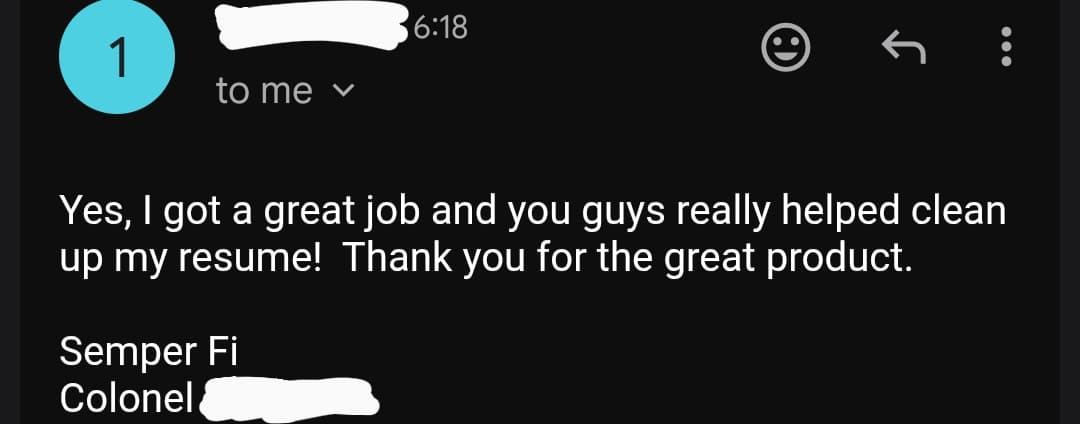
Translate your 4341 Combat Correspondent experience into a resume that gets interviews.
Build Your Resume →