Contractor vs Government: Which Path for Veterans?
Michael got only rejections. Then a $100K facilities manager role.
Michael, E-7, Navy, tried a ton of outside help before BMR
Why Is This the Biggest Career Decision After Separation?
After you leave the military, two career paths sit right in front of you if you want to stay connected to the defense and government world. You can become a federal civilian employee — a GS or equivalent position working directly for a government agency. Or you can go the contractor route — working for a private company that holds government contracts. Both paths use your military experience. Both value your clearance. But they pay differently, promote differently, and feel completely different day to day.
This is not a decision you can undo easily. Federal employees who leave for contractor positions lose their time-in-service for retirement calculations. Contractors who move to federal positions start at the bottom of the GS ladder regardless of their contractor experience. Choosing the wrong path first costs you years, not months.
I have seen both sides. I worked as a federal employee in environmental management, supply, logistics, property management, engineering, and contracting. I was also a hiring manager on the federal side. Later, I moved into private sector tech sales. Each path taught me something different about what veterans actually need to know before they choose. This article lays out the real differences — compensation, benefits, career growth, stability, and culture — so you can make an informed decision instead of defaulting to whichever offer comes first.
Key Takeaway
Contractor positions typically pay 15-30% more in base salary. Federal positions offer better benefits, retirement, and job security. Your best choice depends on your timeline, risk tolerance, and where you are in your career.
How Does Pay Compare Between Contractors and Federal Employees?
The salary difference is the first thing veterans notice, and it is real. Defense contractors almost always pay more in base salary than equivalent GS positions. A GS-12 program analyst in Northern Virginia might earn $90,000 to $110,000 depending on locality pay. The same role at a defense contractor could pay $110,000 to $140,000. At senior levels, the gap widens further.
But base salary is not total compensation, and this is where the comparison gets more complicated. Federal employees receive benefits that have significant monetary value beyond what appears on a pay stub.
Federal Compensation (Beyond Base Pay)
FERS retirement. The Federal Employees Retirement System provides a pension based on years of service and highest average salary. If you work 20 years in federal service, your pension equals roughly 20% of your high-three average salary — paid for life after retirement. Contractors have no equivalent. This pension alone can be worth hundreds of thousands of dollars over a retirement.
TSP matching. The Thrift Savings Plan matches up to 5% of your salary. This is functionally a 5% raise that goes directly into your retirement account. Many contractors offer 401(k) matching, but the match percentages are often lower and vesting schedules may apply.
FEHB health insurance. Federal health insurance through the Federal Employees Health Benefits program continues into retirement if you carry it for at least 5 years. The government pays roughly 70-75% of the premium. Contractor health insurance ends when you leave the company.
Paid leave. Federal employees earn 13-26 days of annual leave per year (depending on years of service) plus 13 days of sick leave. Military service counts toward your leave accrual rate, so a veteran with 8 years of active duty starts earning leave at a higher rate than a civilian new hire.
Contractor Compensation
Contractor compensation is simpler: higher base salary, standard corporate benefits. Most defense contractors offer 401(k) plans, health insurance, and PTO. The quality of these benefits varies widely by company — large primes like Lockheed Martin and Booz Allen Hamilton offer competitive packages, while smaller subcontractors may offer minimal benefits with higher base pay to compensate.
Some contractor roles are hourly or fixed-term, tied to the length of a specific government contract. When the contract ends or is not renewed, the position may end too. This is the trade-off for higher pay: less long-term certainty.
- •Base salary: ~$99K-$105K
- •TSP match (5%): ~$5K/year
- •FERS pension value: significant
- •FEHB insurance: 70-75% covered
- •26 days annual leave + 13 sick
- •Base salary: ~$115K-$140K
- •401(k) match: varies (2-6%)
- •No pension equivalent
- •Health insurance: varies by company
- •PTO: typically 15-20 days

Which Path Offers More Job Security?
Federal employment is famously stable. Government shutdowns grab headlines, but the reality is that federal employees almost always get back pay, and actual layoffs (reductions in force, or RIFs) are rare. The process to fire a federal employee is lengthy and difficult, which is simultaneously the system's strength and weakness depending on your perspective.
Contractor positions are tied to contracts. Government contracts typically run 1-5 years with option periods. When a contract ends, is not renewed, or is won by a different company, your position may disappear. Good contractors plan for this by bidding on new contracts and moving employees between programs, but there is no guarantee. In a contract recompete, you might find yourself working for a new employer doing the same job at the same desk — or you might find yourself looking for a new position entirely.
The 2026 federal landscape adds another variable. Government hiring freezes, budget sequestration risks, and agency reorganizations can affect both federal and contractor hiring. Federal hiring freezes typically do not affect current employees, but they do affect your ability to get hired into a federal position in the first place. Contractor hiring tends to fluctuate with contract award cycles rather than political cycles, though both are connected.
If job security is your top priority, federal employment has a clear edge. If you are comfortable with some uncertainty in exchange for higher pay and more flexibility, contracting works. Many veterans start with a contractor position for the higher pay, then move to federal after a few years when they want more stability — though this path has its own trade-offs.
How Does Career Growth Differ Between the Two Paths?
Career advancement works fundamentally differently in government versus contracting, and this catches a lot of veterans off guard.
Federal Career Progression
Federal careers follow the GS (General Schedule) system. You start at a grade level (GS-7, GS-9, GS-11, etc.) and progress through steps within each grade and promotions to higher grades. Many positions have built-in promotion ladders — a GS-7/9/11/12 position, for example, automatically promotes you through those grades over 2-4 years as long as your performance is satisfactory.
The downside is that advancement can be slow and formulaic. Moving from GS-12 to GS-13 is competitive and often requires applying for a new position. GS-14 and above positions are fewer and harder to reach. The structure is predictable, which some veterans appreciate after the uncertainty of transition, but it can feel rigid if you are used to the faster promotion pace in the military.
Your military service counts toward federal retirement calculations, which is a significant advantage. An E-6 with 10 years of active duty who enters federal service immediately starts with credit toward their federal retirement. That is a head start that contractor positions cannot offer.
Contractor Career Progression
Contractor career growth is less structured but potentially faster. There is no GS ladder. Promotions depend on company policies, individual performance, and available positions. At large defense contractors, there are defined career levels (associate, mid, senior, principal, lead), but the pace depends on you and the opportunities available.
The biggest growth lever in contracting is movement. Changing companies or contracts often produces larger salary jumps than staying at one employer. A veteran who starts at SAIC, moves to Booz Allen after two years, and then moves to a smaller firm for a management role can see salary increases of 15-25% with each move. This mobility is an advantage if you are willing to change employers, but it requires active career management.
Contractors also have more flexibility to move between functional areas. A program analyst at a contractor might move into business development, proposal management, or consulting — roles that do not have direct equivalents in the federal GS structure.
Watch Out: The Federal-to-Contractor Switch
If you leave federal service for a contractor role, you lose your FERS retirement accrual (unless you have 5+ years of creditable service and leave your TSP invested). If you later return to federal service, you can potentially buy back your previous service time, but it comes at a cost. Research this carefully before leaving a federal position.
What Does Daily Work Life Look Like in Each Path?
The day-to-day experience of being a federal employee versus a contractor is different even when you are working on the same project, in the same building, and sometimes at adjacent desks.
Federal employees are the government's workforce. They set policy, manage programs, oversee budgets, and direct the work that contractors execute. There is more bureaucracy — more approvals, more meetings, more documentation requirements. But there is also more authority. Federal employees make decisions. They approve plans, sign off on deliverables, and have a direct stake in mission outcomes. The pace tends to be steadier, with defined work hours and less pressure for overtime (though it varies by agency).
Contractors execute. They build, analyze, write, code, and deliver the products and services that agencies need. The pace is often faster because contracts have deliverables with deadlines. There is less bureaucracy in your daily work but more uncertainty about the future of your position. The culture varies dramatically by company — a small 50-person subcontractor feels nothing like working at Lockheed Martin with 120,000+ employees.
Veterans who enjoyed the operational tempo and mission-focus of military service often find contracting more familiar at first. The project-based, deliverable-driven nature of contract work feels closer to military operations than the steady-state nature of most federal positions. But federal employees who stick around long enough often find deep satisfaction in shaping policy and programs from the inside.
"When I reviewed resumes for federal positions, I could immediately tell which applicants understood the difference between contractor and government work. The ones who framed their experience in terms of programs managed, policies developed, and decisions made — they stood out from candidates who only listed tasks completed."
Can You Switch Between Contractor and Federal Later?
Yes, but the transition is not seamless. Moving between the two paths has real costs and complications that you should understand before you commit to either one.
Contractor to Federal
Moving from a contractor role to a federal position is common, especially for veterans who want the stability and benefits of federal employment after spending a few years in contracting. The challenge is that your contractor experience does not automatically translate to a GS grade level. You apply through USAJobs like any other candidate, and your grade is determined by the position requirements and your qualifications — not your contractor salary.
This often means taking a pay cut. A contractor earning $130,000 might qualify for a GS-12 or GS-13 position paying $95,000-$115,000 in base salary. The benefits make up some of that difference over time, but the initial hit is real. Veterans who make this switch usually do it for the long-term retirement benefits, health insurance that continues past employment, and job stability.
Writing a federal resume that meets OPM requirements is a different skill than writing a contractor resume. Federal resumes need specific details — hours worked per week, supervisor contact information, and detailed duty descriptions — that contractor resumes do not include.
Federal to Contractor
Moving from federal to contractor is usually motivated by salary. The jump is typically significant — 20-40% increases are not uncommon. But you give up your pension accrual (unless you are already vested with 5+ years), your federal health insurance track, and your job security.
There is also a cooling-off period to be aware of. Former federal employees who worked on contracts or acquisitions may face restrictions on working for contractors they previously oversaw. These restrictions are outlined in post-employment ethics rules and vary by position. If you were involved in contract award decisions, consult your agency ethics office before accepting a contractor offer.
Which Path Is Right for You?
There is no universal answer, but there are clear indicators that point toward one path over the other. Here is how to think through the decision.
Choose federal if: You want long-term stability and are willing to accept lower initial pay for superior retirement benefits. You value predictable career progression. You want your military service to count toward retirement. You are planning to work 20+ years and want a pension. You prefer the authority of setting policy over executing deliverables.
Choose contracting if: You need higher income now — mortgage, family expenses, debt from transition. You are comfortable with job changes every few years. You want faster salary growth through company moves. You prefer execution-focused work with clear deliverables. You want more flexibility to change career direction.
Consider doing both (sequentially): Start with contracting for 2-4 years to build savings and civilian experience. Then move to federal for the long-term benefits and stability. This is a common and effective path for veterans, though you will likely take a pay cut when you switch. The reverse — starting federal and moving to contracting — also works if you want to build your retirement foundation first.
Your clearance level matters too. TS/SCI clearances command the biggest contractor salary premiums. If you have one and plan to use it, contractor positions will likely offer the most aggressive compensation packages. Understanding what your clearance is actually worth helps you evaluate offers accurately.
1 Calculate Your Total Compensation
2 Assess Your Financial Timeline
3 Check Your Clearance Value
4 Talk to Veterans on Both Paths
Contractor or Government: Which Should You Choose?
This is not a question of which path is objectively better. It is a question of which path is better for you, right now, given your financial situation, career goals, and risk tolerance. Both paths value your military experience. Both paths value your clearance. Both paths can lead to a successful career. They just get there differently.
Contractors earn more upfront. Federal employees earn more over a full career when you factor in pensions, insurance, and job security. Contractors have faster salary growth through mobility. Federal employees have structured progression and retirement benefits that compound over time. Neither is wrong. The wrong choice is the one you make without understanding the trade-offs.
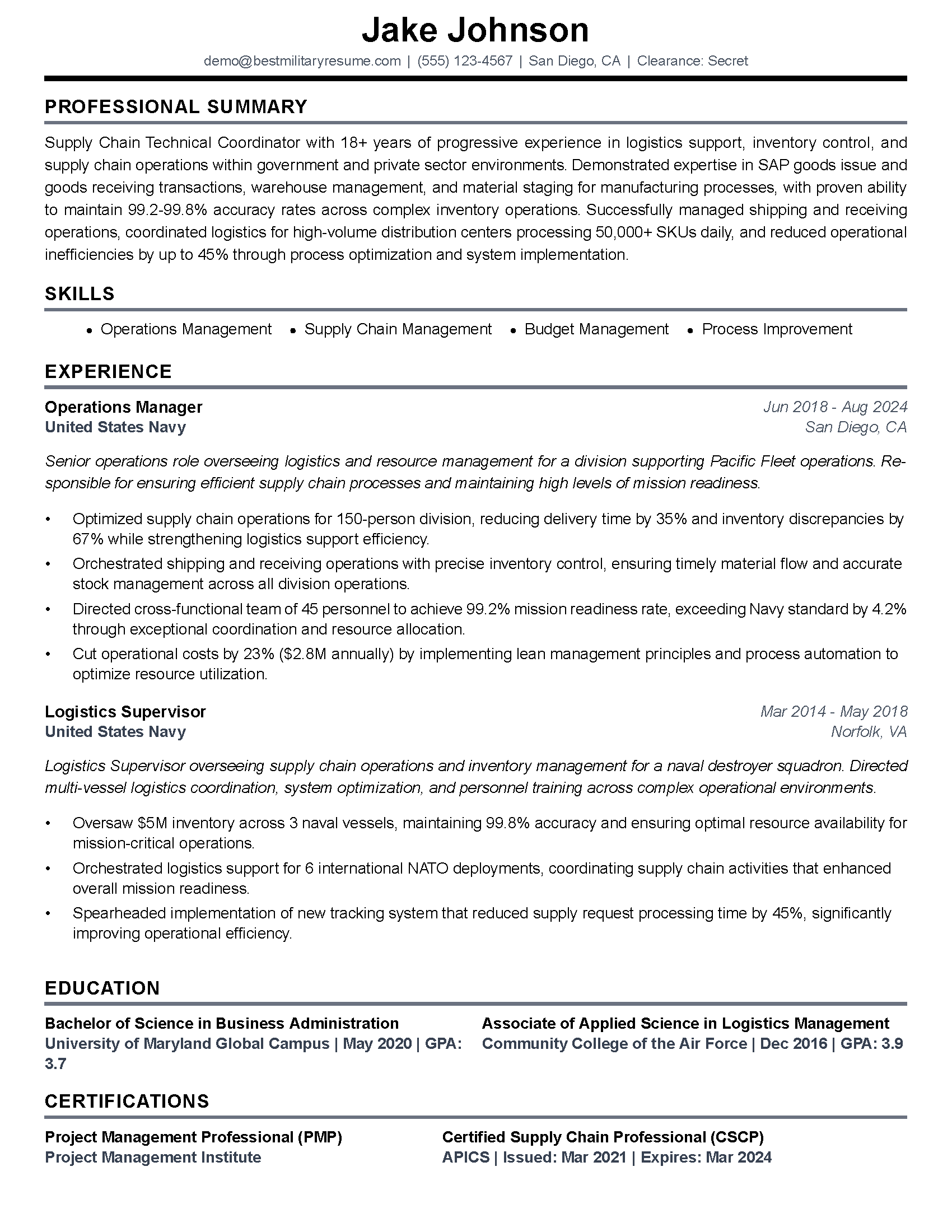
Whether you choose federal or contractor, your resume needs to speak the language of that specific path. BMR's resume builder creates tailored resumes for both — a defense contractor resume formatted for corporate ATS systems, or a federal resume formatted for USAJobs and USA Staffing. The free tier gives you two tailored resumes, so you can create one for each path and apply to both while you decide.
Find your match: Explore 350+ federal job series to see which GS positions match your military experience.
Frequently Asked Questions
Do defense contractors pay more than federal government?
Can military service count toward federal retirement?
Is it hard to switch from contractor to federal?
What happens to my benefits if I leave federal service for a contractor?
Are contractor jobs less stable than federal?
Should I start as a contractor or federal employee?
Do federal employees or contractors have better career growth?
How does clearance level affect the contractor vs federal decision?
About the Author
Brad Tachi is the CEO and founder of Best Military Resume and a 2025 Military Friendly Vetrepreneur of the Year award recipient for overseas excellence. A former U.S. Navy Diver with over 20 years of combined military, private sector, and federal government experience, Brad brings unparalleled expertise to help veterans and military service members successfully transition to rewarding civilian careers. Having personally navigated the military-to-civilian transition, Brad deeply understands the challenges veterans face and specializes in translating military experience into compelling resumes that capture the attention of civilian employers. Through Best Military Resume, Brad has helped thousands of service members land their dream jobs by providing expert resume writing, career coaching, and job search strategies tailored specifically for the veteran community.
