Military OneSource Review 2026: Is It Worth Using?
Michael got only rejections. Then a $100K facilities manager role.
Michael, E-7, Navy, tried a ton of outside help before BMR
You probably got a Military OneSource briefing during your transition. Maybe someone at TAP mentioned it. Maybe your spouse found it while looking up counseling options during a PCS. Either way, you have a login and a vague sense that it does "everything" for military families.
But does it actually help you get hired? Does the resume assistance hold up against what civilian hiring managers expect in 2026? And is it worth building your transition plan around, or should you treat it as one tool among several?
I went through my own transition as a Navy Diver and spent 1.5 years applying for government jobs with zero callbacks. During that stretch, I used every free resource I could find — Military OneSource included. Some of those resources gave me a foundation. Others gave me a false sense of progress. Most military onesource reviews online either love it or hate it. This review breaks down which category Military OneSource falls into for each of its major services, based on what I experienced and what I see from the 24,538 veterans who have come through BMR since we launched.
What Does Military OneSource Actually Offer?
Military OneSource is a DOD-funded program that provides free services to active duty, Guard, Reserve, and recently separated veterans (up to 365 days post-separation). It covers a wide range of support — financial counseling, mental health resources, relocation help, spouse employment assistance, and yes, career transition tools.
The career-related services include:
- Resume review and writing assistance
- Career coaching sessions (typically phone-based)
- Job search guidance
- Financial planning for transition
- Education and credentialing support
- Spouse career assistance (SECO program)
On paper, that looks solid. And for some of those categories — particularly financial counseling, non-medical counseling, and spouse support through SECO — Military OneSource delivers real value. The non-medical counseling benefit alone (up to 12 sessions per issue) is genuinely useful, and many service members underuse it.
The career transition tools are where things get more complicated.
How Good Is Military OneSource Resume Help?
This is the question that matters for anyone reading this site. Military OneSource offers resume review services, and you can connect with a career counselor who will look over your resume and suggest changes.
The quality varies significantly. Some counselors have real hiring experience. Others are working from templates and general career advice that could apply to anyone — not specifically to someone translating 8 years of military logistics into a GS-12 supply chain role, or converting combat medic experience into a civilian healthcare position.
"Use action verbs and quantify your accomplishments. Tailor your resume to the job description."
"Your EKMS custodian experience maps to Information Security Analyst. Lead with 'Managed classified information systems for 200+ personnel' — that is what a GS-2210 hiring panel looks for."
The first type of advice is what you will get from most Military OneSource resume reviews. The second type is what actually gets you referred for federal positions and callbacks from civilian employers. The gap between those two is where many veterans stall out without realizing why.
Military OneSource counselors are generalists. They handle questions about child care, PCS logistics, financial planning, and career help all within the same program. That breadth is a strength for general life support, but it means the resume help often lacks the depth you need when your resume is competing against 200+ applicants for a single position.
Does Military OneSource Help with Federal Resumes?
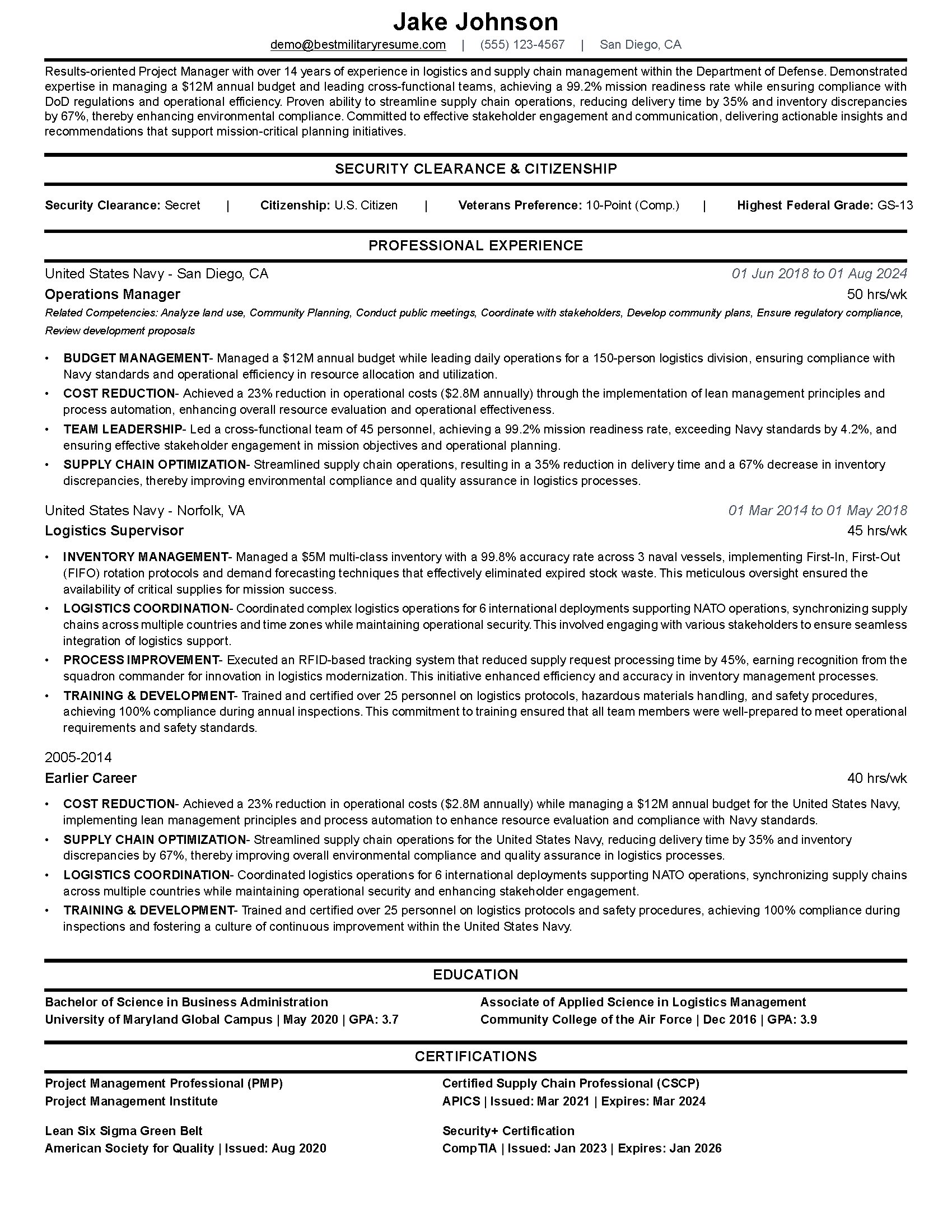
Federal resumes are a different animal from civilian resumes. They require specific formatting — hours per week, supervisor name and phone number, detailed duty descriptions — all within a 2-page format. Getting this wrong does not just hurt your chances. It can keep your resume from even being reviewed by the hiring panel.
Military OneSource does not specialize in federal resume preparation. Their counselors may know that federal resumes exist and that they differ from private sector resumes, but the level of detail required to write one that actually gets referred — matching your experience to OPM qualification standards, targeting the right GS series, structuring duties to match the specialized experience requirements in the job announcement — that is specialized knowledge most generalist career counselors do not have.
If your transition plan includes federal employment, you need help from someone who has been through the federal hiring process. I have been hired into several federal roles — Environmental Management, Supply, Logistics, Property Management, Engineering, and Contracting. The resume that worked for a GS-0301 admin role looked nothing like the one that got me referred for a GS-1102 contracting position. Military OneSource is not built to handle that kind of specificity.
Where Does Military OneSource Actually Shine?
I want to be fair here because Military OneSource gets unfairly lumped in with programs that do not deliver anything. It does deliver — just not always in the areas transitioning service members need most.
Where Military OneSource Delivers Real Value
Non-Medical Counseling
Up to 12 sessions per issue, free, confidential. Covers stress, relationships, adjustment — genuinely useful during transition.
Financial Counseling
Budgeting for the BAH-to-mortgage shift, managing TSP rollovers, planning for the income gap between EAS and first civilian paycheck.
Spouse Employment (SECO)
Career coaching, license portability help, and MyCAA scholarship guidance for military spouses. One of the better spouse-specific programs available.
Relocation and PCS Support
School search tools, housing resources, and community information for your next duty station or post-separation move.
Tax Services
Free tax preparation through MilTax — actually saves money and handles the multi-state filing complications that come with military life.
These are solid, practical benefits that are worth using. If you are not using the non-medical counseling benefit, you are leaving money on the table. Same with MilTax. These programs do what they say, and they do it well.
The problem is when someone treats Military OneSource as a one-stop shop for their entire career transition. It was built to support military families across dozens of life areas. Career transition is one of those areas, but it is not the program's primary focus, and the depth reflects that.
How Does Military OneSource Compare to Dedicated Transition Tools?
This is the comparison that drives most military onesource reviews and searches. So let me lay it out honestly.
Military OneSource gives you access to a human counselor who will talk through your resume and career goals. That is valuable if you have no idea where to start. If you have never written a civilian resume, having someone walk you through the basics is better than staring at a blank page.
But dedicated transition tools — whether that is BMR, a paid resume writer, or even a well-run SFL-TAP workshop — go deeper in specific ways that matter for getting hired.
- •General career counseling by phone
- •One resume review (not rewrite)
- •Broad life support services
- •Available to all branches, free
- •365-day post-separation window
- •Job-specific resume tailoring per application
- •Military-to-civilian language translation
- •Federal resume formatting (hours, supervisor, duties)
- •ATS keyword optimization
- •Multiple resumes for multiple job targets
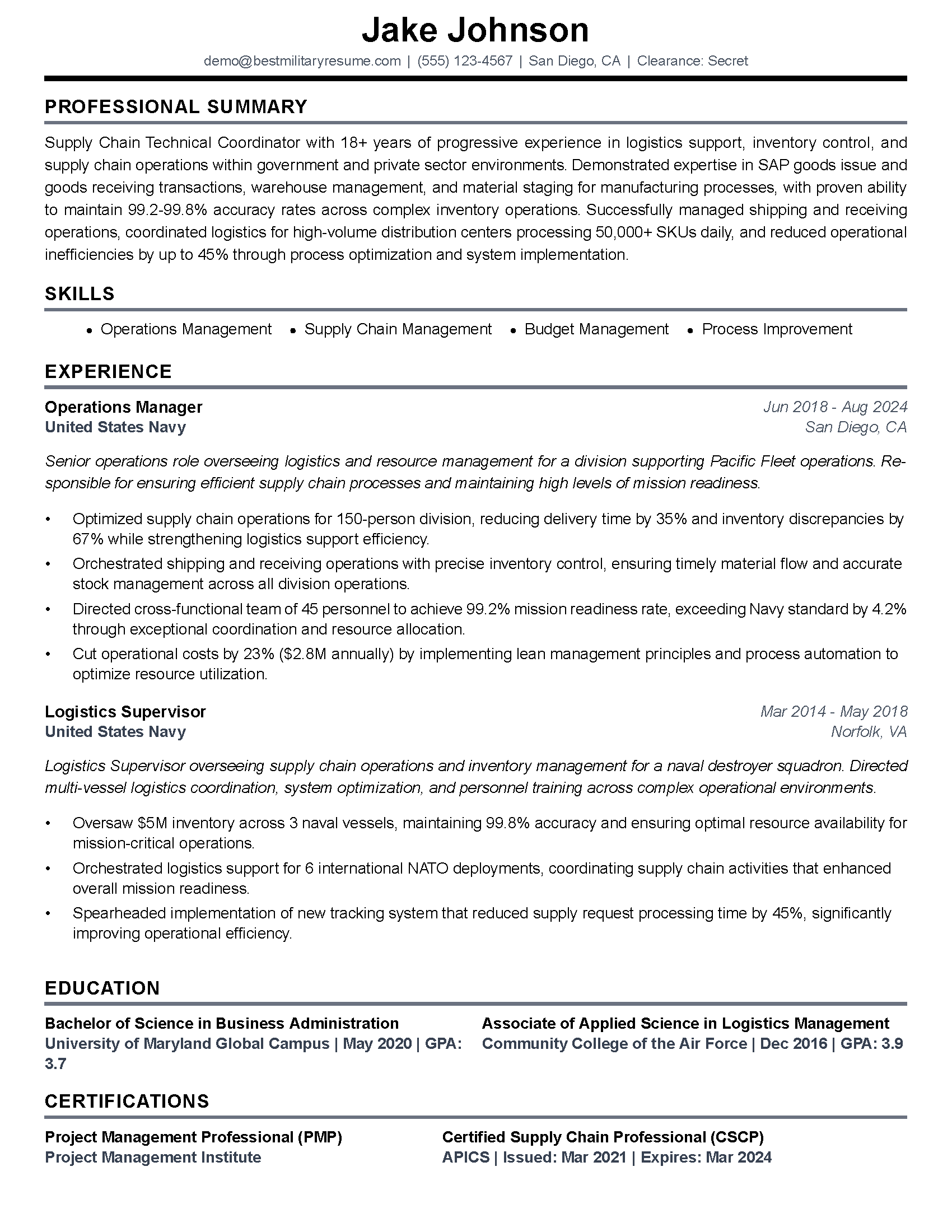
The difference comes down to specificity. Military OneSource will tell you your resume needs work. A dedicated tool will rebuild it for a specific job posting, translate your military experience into the language that hiring manager expects to see, and format it so it ranks well when the ATS sorts the applicant pool.
BMR was built specifically because I went through this exact gap. I used the free resources. I followed the advice. And I spent 18 months getting nothing back. Once I figured out that each application needed a tailored resume — not one generic document I sent everywhere — everything changed. That is the piece Military OneSource does not cover, and it is the piece that matters most.
Should You Use Military OneSource During Your Transition?
Yes. Use it. Just do not use it as your only resource.
Military OneSource is a support system, not a job-getting system. Use the financial counseling. Use the non-medical counseling — transition is stressful, and having someone to talk to who understands military life is worth a lot. If your spouse is navigating their own career challenges during a PCS or post-separation move, the SECO program through Military OneSource is one of the better free resources available.
But for the resume, the job search strategy, and the actual "getting hired" part of transition — you need more targeted help. That might be a resume writing service built for veterans, a tool like BMR that tailors your resume to each job posting, or a mentor who has been through the specific career field you are targeting.
"Military OneSource kept me sane during transition. But it did not get me hired. The resume advice was too generic to compete against 200 other applicants for the same GS-11 position."
What About Military OneSource for Military Spouses?
This is actually where Military OneSource earns its highest marks from the people I talk to. The Spouse Education and Career Opportunities (SECO) program is well-structured and provides genuinely useful support.
SECO offers career coaching, help with LinkedIn profiles, guidance on portable careers, and connections to the MyCAA scholarship for qualifying spouses. For spouses who have been dealing with career disruptions from multiple PCS moves, having a dedicated program that understands those specific challenges is meaningful.
That said, the same resume gap applies. SECO counselors can help with career direction and general resume advice, but if a spouse is applying for competitive positions — federal or private sector — they need the same level of job-specific resume tailoring that any applicant does. A career coach who helps you identify what field to pursue and a tool that builds you a competitive resume for that field are two different things, and you likely need both.
Is Military OneSource Free After Separation?
Yes, with a time limit. You can access Military OneSource services for up to 365 days after your separation date. After that, most services become unavailable. This includes the career counseling, financial planning, and non-medical counseling benefits.
This 365-day window is important for your transition timeline. If you separate and spend six months settling in before you start seriously job hunting, you have already burned half your eligibility window. Plan accordingly.
Do Not Wait to Use Your Benefits
Your Military OneSource access expires 365 days after separation. Schedule your financial counseling, non-medical counseling, and tax prep sessions early. These are the highest-value services, and you do not get them back once the window closes.
Some veterans do not realize the clock is ticking until they are eight or nine months post-separation and suddenly need help. If you are still within your 365-day window, use the services now — especially the ones that have nothing to do with resumes. The financial planning and counseling benefits are too good to leave unused.
For career tools that do not have an expiration date, look at resources that remain available regardless of your separation date. BMR, for example, gives every veteran 2 free tailored resumes, 2 cover letters, LinkedIn optimization, and a job tracker — no time limit, no eligibility window.
What Are the Biggest Gaps in Military OneSource Career Support?
The biggest gaps in military onesource reviews come down to the career tools. After talking with thousands of veterans through BMR and going through my own transition, those gaps fall into a few specific areas.
No job-specific resume tailoring. Military OneSource will review your resume as a document. They will not rebuild it to match a specific job posting. In 2026, when hiring managers see 200+ applications per opening and ATS platforms rank resumes by keyword match, a generic resume sinks to the bottom of the pile where nobody scrolls. You need a resume tailored to each position you apply for.
Limited federal hiring expertise. Federal resumes in 2026 require a 2-page format with very specific information — hours worked per week, supervisor contact information, detailed duty descriptions tied to OPM qualification standards. Military OneSource counselors are not federal HR specialists. If you are targeting USAJOBS, you need help from someone who understands how USA Staffing evaluates applications.
No job search strategy beyond basics. The career coaching tends to cover general topics — networking, interview tips, how to use job boards. What it does not cover is how to identify which of your military skills translate to the highest-paying civilian roles, how to target specific GS series if you are going federal, or how to build a SkillBridge application that positions you for a specific industry.
No ongoing support after one session. You get a counseling appointment, some feedback, and then you are back on your own. There is no iterative process where you apply, get feedback on what is not working, adjust your resume, and try again. The transition job search is a grind that takes weeks or months, and a single touchpoint early in the process rarely carries you through it.
What Should Your Transition Resource Stack Look Like?
The veterans I see getting hired fastest are the ones who layer their resources. They do not rely on one program for everything. They build a stack that covers different needs.
Start with the free institutional resources while they are available. Military OneSource for financial counseling and mental health support. SFL-TAP or your branch equivalent for the foundation — understanding your benefits, getting your paperwork straight, writing a first-draft resume.
Then add targeted tools for the job search itself. Use a career crosswalk tool to see which civilian and federal roles your MOS or rating maps to, with real salary data. Use a resume builder that tailors each resume to a specific job posting — not just once, but for every application you submit. Build your LinkedIn presence so recruiters can find you while you are actively applying.
The free resources give you a floor. The targeted tools build the ceiling. Using Military OneSource without anything else is like going to the range but only shooting from the 7-yard line. You will hit something eventually, but you are limiting yourself for no reason.
What to Do Next
If you are still within your 365-day window, log into Military OneSource today and schedule your financial counseling and non-medical counseling sessions. Those are the services worth using immediately.
For your resume and job search, use a tool built specifically for military-to-civilian translation. BMR gives you 2 free tailored resumes — paste in a job posting, and it builds a resume matched to that specific role with your military experience translated into civilian language. No appointment needed, no eligibility window, no 365-day expiration.
Check what careers are in demand for veterans in 2026, build your resume for the ones that fit, and start applying with documents that actually compete. Military OneSource can support your transition. Getting hired takes more specific tools.
Frequently Asked Questions
Is Military OneSource free for veterans?
Does Military OneSource help with federal resumes?
How does Military OneSource compare to BMR for resume help?
What is the SECO program through Military OneSource?
Can I use Military OneSource after I separate from the military?
Does Military OneSource replace SFL-TAP?
What are the best free transition resources for veterans in 2026?
About the Author
Brad Tachi is the CEO and founder of Best Military Resume and a 2025 Military Friendly Vetrepreneur of the Year award recipient for overseas excellence. A former U.S. Navy Diver with over 20 years of combined military, private sector, and federal government experience, Brad brings unparalleled expertise to help veterans and military service members successfully transition to rewarding civilian careers. Having personally navigated the military-to-civilian transition, Brad deeply understands the challenges veterans face and specializes in translating military experience into compelling resumes that capture the attention of civilian employers. Through Best Military Resume, Brad has helped thousands of service members land their dream jobs by providing expert resume writing, career coaching, and job search strategies tailored specifically for the veteran community.
