Loading...
Loading...
The civilian and federal jobs that hire Air Force Airfield Managements — with real salaries and the resume that gets callbacks.
Every 1C7X1 has more options than a Google search will tell you. Below: career paths, BLS salary data, federal GS series, certifications by target career, and how to translate your experience without losing what made you valuable to the Air Force in the first place.
Free · No credit card · Tailored resume in under 5 minutes
After the Navy I got hired into 6 federal career fields and tech sales, and sat on federal hiring panels along the way. I spent the last 2 years rebuilding everything I learned into BMR, tuned for how AI actually screens resumes today. This is the system I wish I'd had on day one.
One page, built in our template, with your military experience translated into civilian terms hiring managers and ATS systems read. Use it as a reference for your own. Drop your email and we'll send you the download link.
Free. We'll also send occasional job-search tips. Unsubscribe anytime.
You ran the airfield. Notices to Airmen (NOTAMs) processed and disseminated, daily airfield inspections walked, runway and taxiway condition reports issued, airfield waivers tracked, flight-planning support delivered to aircrews, and the Bird/Wildlife Aircraft Strike Hazard (BASH) program executed so a flock did not put a jet into the dirt. As a 1C7X1 you held the line between safe flight operations and a closed airfield, working out of base operations and coordinating with the control tower, weather, civil engineers, airfield management operations, and command post every single shift.
The training pipeline starts after Basic Military Training with the Airfield Management Apprentice Course at Keesler AFB, Mississippi, where Airmen learn flight data processing, NOTAM management, airfield inspection standards, and emergency response actions before moving to a base operations job site for upgrade training. The work is governed by Air Force publications such as AFMAN 13-204 (Airfield Operations), and you spent your career inside Quick Reaction Checklists, Operating Instructions, and the airfield driving program that every vehicle operator on the movement area answers to.
Here is what civilian employers should understand and usually do not until it is translated: airfield management is a regulatory-compliance and real-time-coordination job. You inspected a federally regulated operating environment against published standards, logged time-critical decisions, ran a documented safety program, and kept a half-dozen separate agencies synchronized while aircraft were moving. That is the exact skeleton of airport operations, transportation safety, regulatory inspection, and operations-control work in the civilian world. If you want to see how your background maps across branches and into specific civilian roles, start with the military career crosswalk. Aviation-adjacent Air Force jobs like 1C1X1 Air Traffic Control and 2T2X1 Air Transportation share parts of your operating picture, though airfield management is its own discipline.
When I left the Navy I spent 18 months sending out applications and hearing nothing back. The work was never the problem. The way it read on paper was. Airfield management has that problem worse than most, because "processed NOTAMs and ran the BASH program" lands as noise to a civilian recruiter who has never set foot on a flight line. The translation is what costs you callbacks, not the experience. Once a 1C7X1 resume says "inspected a federally regulated facility daily against published safety standards and coordinated multi-agency operations in real time," the same career suddenly reads as airport operations and safety compliance. — Brad Tachi, Navy Diver veteran & BMR founder
The number that matters when you're deciding what's next: how does civilian pay compare to what you make now?
Military comp is approximate (varies by location/dependents). Civilian is BLS median. Federal includes locality pay. Your real number depends on duty station, family status, GS step, and overtime.
Your most direct civilian landing spot is airport operations. The Bureau of Labor Statistics tracks Airfield Operations Specialists (SOC 53-2022) with a median annual wage of $56,750 per BLS OEWS May 2024 data. These are the people who do at a civilian airport almost exactly what you did in uniform: inspect movement areas, coordinate with the tower, manage NOTAMs, and keep the field safe and open. Regional and general-aviation airports hire from this background steadily, and larger commercial airports run full operations-control centers staffed by people who think the way airfield management trained you to think.
From there the ladder runs up into management. Transportation, Storage, and Distribution Managers (SOC 11-3071) earned a median of $102,010 (BLS OEWS May 2024), and airport operations supervisors and managers frequently sit in this category. The inspection side of your job translates cleanly to Construction and Building Inspectors (SOC 47-4011) at a median of $72,120, where your habit of checking a facility against a written standard and documenting deficiencies is the core of the work.
Two more honest matches: the operations-console and dispatch instincts you built map to Public Safety Telecommunicators (SOC 43-5031), median $50,730, who coordinate emergency response under time pressure the same way you ran a Quick Reaction Checklist. And the planning and accountability layer of base operations lines up with Logisticians (SOC 13-1081) at a median of $80,880. Property and facility oversight of a movement area also reads as Property, Real Estate, and Community Association Managers (SOC 11-9141), median $66,700.
Be realistic about geography. Airport operations jobs cluster around airports, so the strongest markets are metros with significant commercial or general-aviation traffic. Pay rises fastest at large hub airports and slower at small fields, and many roles run shift work because airfields do not close at 5 p.m. Veterans who share parts of this picture include Navy Air Traffic Controllers and Marine Corps Aviation Operations Specialists. To turn the experience above into language a hiring manager acts on, our military resume builder is built for exactly this, and when you are ready you can build your resume now.
| Civilian Job Title | Industry | BLS Median Salary | Outlook | Match |
|---|---|---|---|---|
Airfield Operations Specialist O*NET: 53-2022.00 | Aviation / Airport Operations | $56,750 | Average | strong |
Airport Operations Manager O*NET: 11-3071.00 | Aviation / Airport Operations | $102,010 | Average | strong |
Construction and Building Inspector O*NET: 47-4011.00 | Construction / Inspection | $72,120 | Average | moderate |
Public Safety Telecommunicator O*NET: 43-5031.00 | Emergency Services | $50,730 | Average | moderate |
Logistician O*NET: 13-1081.00 | Logistics / Operations | $80,880 | Average | moderate |
Facilities / Property Operations Manager O*NET: 11-9141.00 | Facilities Management | $66,700 | Average | moderate |
BMR rewrites your 1C7X1 experience for any of the civilian roles above — keywords, achievements, and language hiring managers actually scan for.
Free · No credit card · 2 tailored resumes included
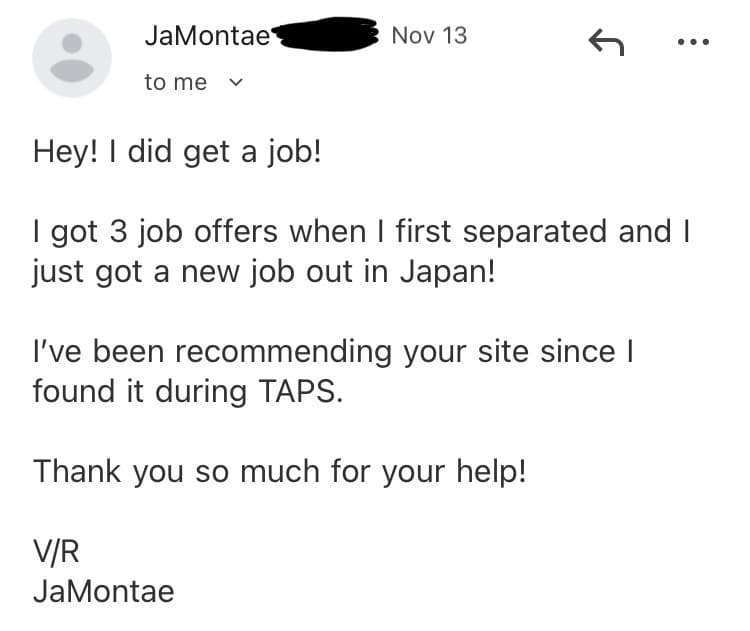
“Hey! I did get a job! I got 3 job offers when I first separated and I just got a new job out in Japan! I’ve been recommending your site since I found it during TAPS. Thank you so much for your help! V/R JaMontae ”
Federal service is one of the cleaner translations a 1C7X1 has, because the federal government runs airfields too. The Federal Aviation Administration, the military services as civilian-staffed installations, and agencies like the Bureau of Land Management and the Department of the Interior all operate aviation facilities that need people who already know NOTAMs, airfield inspections, and movement-area control.
The most aligned series is GS-2150 Transportation Operations, which covers airfield and airport operations work directly. Airport operations and airfield manager positions on military installations and at federal airfields are frequently classified here, and your base operations experience qualifies you against the specialized-experience standard without a long detour. Adjacent to it, GS-2101 Transportation Specialist and GS-2102 Transportation Clerk and Assistant capture broader transportation-program roles.
The inspection and compliance core of your job opens GS-1801 General Inspection, Investigation, Enforcement and Compliance, where documenting a regulated facility against published standards is the whole job. Your BASH and SMS background maps to GS-0018 Safety and Occupational Health Management and GS-0019 Safety Technician, and the emergency-response side of base operations supports GS-0089 Emergency Management. Program and administrative anchors include GS-0301 Miscellaneous Administration and Program and GS-0340 Program Management for the supervisory and operations-management billets a senior 1C7X1 is ready for.
Veterans' Preference applies to these announcements, and your time in grade plus an associate degree can put you at GS-7 or GS-9 entry depending on the position. Read the qualifications and specialized-experience block on each USAJOBS announcement closely, because federal screening is about matching your described experience to the standard, not about how impressive the job sounds. Our federal resume builder formats to OPM expectations, and the specialized experience guide and 2026 federal resume format guide walk through the details. When you are set, you can start your federal resume.
| GS Series | Federal Job Title | Typical Grades | Match | Explore |
|---|---|---|---|---|
| GS-2150 | Transportation Operations | GS-7, GS-9, GS-11 | View Details → | |
| GS-1801 | General Inspection, Investigation, Enforcement | GS-7, GS-9, GS-11 | View Details → | |
| GS-2101 | Transportation Specialist | GS-7, GS-9, GS-11 | View Details → | |
| GS-0089 | Emergency Management | GS-7, GS-9 | View Details → | |
| GS-0018 | Safety and Occupational Health Management | GS-7, GS-9, GS-11 | View Details → | |
| GS-0340 | Program Management | GS-11, GS-12 | View Details → | |
| GS-0301 | Miscellaneous Administration and Program | GS-9, GS-11 | View Details → |
Federal hiring uses keyword-matching and structured experience. BMR builds federal-format resumes (USAJobs-ready) with the right keywords, hours/week, and supervisor info — for any GS series above.
Free · No credit card · Federal + civilian resume formats included
Not everyone wants to stay in a related field. These career paths leverage your transferable skills — leadership, risk management, logistics, project planning — in completely different industries.
Airfield management is a safety-management-system job in disguise. You inspected a regulated facility daily, ran a documented hazard program, and logged corrective actions, which is the daily reality of a plant or jobsite safety specialist.
Your whole career was checking operations against a federal rulebook and documenting where they did and did not comply. That is the core of corporate and regulatory compliance work, just with a different rulebook.
Running the BASH program means you already assessed wildlife behavior, surveyed habitat near operations, and built mitigation plans. That field-biology instinct transfers to wildlife management once paired with the credential.
Airfield surveys, obstruction evaluations, and waiver measurements trained you to capture precise field data and verify it against standards, which is the daily work of a survey crew.
Airfields carry heavy environmental compliance load, and the monitoring and documentation discipline you built there maps to environmental consulting and compliance work in the private sector.
Managing movement-area conditions and BASH habitat near the field gave you a real feel for land and resource management, which conservation science formalizes.
The skills that made you a good Marine, Sailor, Airman, or Soldier transfer further than you think. BMR rewrites your bullets for any of the pivot careers above — without making you sound like you've never done the work.
Free · No credit card · Try unlimited career angles
If you are staying in airport operations or aviation, your terminology already lands. Airport ops directors know what a NOTAM is and what a movement-area inspection means, so do not water down your language for them. This section is for the 1C7X1 targeting careers outside aviation, where the hiring manager has never heard of base operations and will skim past anything that sounds like jargon.
The move is to name the underlying skill in civilian business language. "Processed and disseminated NOTAMs" becomes "issued and distributed time-critical operational advisories to keep a regulated facility safe." "Daily airfield inspection" becomes "daily compliance inspection of a federally regulated facility against published safety standards." "Ran the BASH program" becomes "administered a documented hazard-mitigation program reducing operational risk." "Airfield driving program" becomes "managed a credentialing and access-control program for personnel operating in a restricted area."
Here is a before-and-after for a safety or compliance role. Before: "Performed airfield inspections and processed airfield waivers IAW AFMAN 13-204." After: "Conducted daily facility safety inspections against federal standards, documented deficiencies, and processed deviation requests with risk justification, supporting zero safety incidents across the reporting period." The work is identical. The second version is the one a civilian hiring manager can act on.
For more side-by-side examples, the 50 military terms translated to civilian language glossary and the guide on explaining military experience without jargon are good starting points. Our military resume builder does this translation for you bullet by bullet, and you can get started here.
BMR turns your 1C7X1 duties and accomplishments into civilian bullets that match the job you're applying for — no manual translation, no rewriting.
Free · No credit card · Tailored to each job posting
Which certifications you need depends on where you're headed. Find your target career path below.
The wrong placement can sink an otherwise strong application. BMR knows where each cert ranks, what to call it, and how to frame it for ATS keyword matching and hiring manager attention.
Free · No credit card · Built around your real certs and clearance
For staying in airport operations and aviation: The American Association of Airport Executives (AAAE) runs the Airport Operations and Airport Certified Employee (ACE) credential programs that civilian airport employers recognize, and AAAE is the central professional body for the field. SkillBridge can place you with an airport authority or aviation-services company during your final months of service, which is the cleanest on-ramp into civilian airport ops. The SkillBridge to federal career guide covers how to line that up. For a feel of how aviation-ops roles read across the services, see Army 15Q Air Traffic Control Operator and Marine Corps 5953 Air Traffic Controller.
For careers outside aviation: If you are aiming at safety, the Board of Certified Safety Professionals offers the Associate Safety Professional and Certified Safety Professional credentials, and an OSHA 30-hour card is an inexpensive first step. For project and operations management, the Project Management Institute's CAPM and PMP are the recognized standards. For federal work, build your USAJOBS profile early and use Veterans' Preference deliberately. American Corporate Partners (ACP) provides free one-on-one mentorship that helps with networking into civilian industries. For transition basics, the SFL-TAP resource hub is a solid baseline.
BMR tools: Use the military resume builder for private-sector roles, the federal resume builder for GS positions, and the career crosswalk to explore other paths. When you are ready to move, build your resume now. See also the federal hiring picture in the federal agencies with the highest veteran hire rate guide.
Most veterans do this backwards — they wait until terminal leave to start, then panic. Here's the actual sequence that works.
Print this. Tape it to your monitor. Veterans who treat the transition like a 90-day op get hired faster than the ones who treat it like an emergency.
Stop rewriting from scratch every time you apply. BMR turns your military experience into civilian and federal resumes — tailored to each job.