Loading...
Loading...
The civilian and federal jobs that hire Marines Refrigeration and Air Conditioning Technicians — with real salaries and the resume that gets callbacks.
Every 1161 has more options than a Google search will tell you. Below: career paths, BLS salary data, federal GS series, certifications by target career, and how to translate your experience without losing what made you valuable to the Marines in the first place.
Free · No credit card · Tailored resume in under 5 minutes
After the Navy I got hired into 6 federal career fields and tech sales, and sat on federal hiring panels along the way. I spent the last 2 years rebuilding everything I learned into BMR, tuned for how AI actually screens resumes today. This is the system I wish I'd had on day one.
As a 1161 Refrigeration and Air Conditioning Technician, you kept the Marine Corps cool, dry, and operational. You installed, maintained, and repaired refrigeration units, air conditioning systems, and environmental control units (ECUs) across barracks, mess halls, medical spaces, ammunition magazines, and field command posts. You charged and recovered refrigerant, brazed copper lines, diagnosed compressor and capacitor failures, and read electrical schematics to chase down a fault in a 480-volt rooftop unit. When a reefer container holding rations failed in a humid forward environment, or an ECU went down in a SCIF that had to stay climate-controlled, you were the Marine who got it running again.
Your training started at Marine Corps Engineer School aboard Camp Lejeune, where the basic refrigeration and HVAC course built the foundation: the refrigeration cycle, the EPA Section 608 rules that govern every pound of refrigerant you touch, electrical theory, and hands-on troubleshooting. From there you worked in utilities platoons, Marine Wing Support Squadrons, and base facilities shops at installations like Camp Pendleton, Marine Corps Air Station Cherry Point, and Okinawa. You held equipment accountable, logged refrigerant usage to meet federal environmental reporting, and kept mission-critical cooling alive in places where a failed unit was not an inconvenience but a real problem.
Civilian employers value this background because the skills transfer cleanly and the demand is real. The same EPA 608 certification you used in uniform is the legal gate for civilian refrigerant work. The electrical troubleshooting, the controls knowledge, and the discipline of working on pressurized systems map directly to commercial HVAC, building automation, and federal facilities work. If you want to see how this fits the wider field, the military career crosswalk tool shows the civilian and federal paths side by side, and the Marine 1141 Electrician and 1142 Engineer Equipment Mechanic pages cover adjacent Marine utilities trades. For a deeper look at how the trades hire vets, the Military to HVAC Technician career guide walks through licensing and pay.
I spent years on the federal environmental and engineering side after the Navy, and the 1161 is one of the cleaner trade-to-career translations I see. Your EPA 608 card is already the same credential a civilian shop or a federal installation requires, and refrigerant tracking is exactly the compliance discipline facilities employers are scrambling to find. The work you did keeping ECUs and reefers alive is the work that keeps hospitals, data centers, and federal buildings running. — Brad Tachi, Navy Diver veteran & BMR founder
The number that matters when you're deciding what's next: how does civilian pay compare to what you make now?
Military comp is approximate (varies by location/dependents). Civilian is BLS median. Federal includes locality pay. Your real number depends on duty station, family status, GS step, and overtime.
The civilian HVAC and refrigeration trade is one of the most stable destinations for a 1161, and the labor market backs that up. BLS OEWS (May 2024) reports the median wage for Heating, Air Conditioning, and Refrigeration Mechanics and Installers (O*NET 49-9021.00) at $59,810, with the field projected to grow about 9 percent through 2033, faster than the average for all occupations. The growth is driven by aging building stock, tighter refrigerant regulations under the AIM Act phasedown, and the construction of data centers and warehouses that all need climate control.
Be honest with yourself about the market geography. Commercial and industrial refrigeration pays more than residential, and metro areas with heavy data-center, grocery-distribution, or pharmaceutical-cold-chain footprints (Northern Virginia, Dallas, Phoenix, Atlanta) pay above the national median. Residential service work is steadier but often commission-influenced and seasonal in heating-dominant climates. Refrigeration Mechanics and Installers tied to industrial systems (O*NET 49-9021.00 overlaps here) and Industrial Machinery Mechanics (O*NET 49-9041.00, BLS median $62,150) reward the electrical and controls depth you already built in uniform.
Building automation is where the trade is heading, and your controls exposure gives you a head start. As building systems move to networked controls, technicians who can troubleshoot both the mechanical refrigeration loop and the digital control layer command a premium. If you want to leave the wrenches behind eventually, the cooling knowledge still anchors roles like HVAC estimator and field service supervisor. Several Marine trades share these civilian paths, so it is worth reviewing the Navy UT Utilitiesman page, which feeds the same civilian field. For the broader trade landscape, the Military to Trade Careers guide covers HVAC alongside the other licensed trades. When you are ready to put this on paper, you can build your resume now.
| Civilian Job Title | Industry | BLS Median Salary | Outlook | Match |
|---|---|---|---|---|
HVAC and Refrigeration Mechanic O*NET: 49-9021.00 | Building Services | $59,810 | 9% (Faster than average) | strong |
Commercial Refrigeration Technician O*NET: 49-9021.00 | Commercial & Industrial | $59,810 | 9% (Faster than average) | strong |
Industrial Machinery Mechanic O*NET: 49-9041.00 | Manufacturing | $62,150 | 13% (Much faster than average) | strong |
Building Automation / Controls Technician O*NET: 49-9021.00 | Facilities Technology | $59,810 | 9% (Faster than average) | strong |
Maintenance and Repair Worker, General (Facilities) O*NET: 49-9071.00 | Facilities Management | $46,700 | 6% (Faster than average) | strong |
Stationary Engineer and Boiler Operator O*NET: 51-8021.00 | Facilities Operations | $72,330 | 1% (Little or no change) | moderate |
HVAC Service Manager / Field Supervisor O*NET: 49-9021.00 | Building Services | $59,810 | 9% (Faster than average) | moderate |
Data Center Critical Facilities Technician O*NET: 49-9021.00 | Data Centers | $59,810 | 9% (Faster than average) | strong |
BMR rewrites your 1161 experience for any of the civilian roles above — keywords, achievements, and language hiring managers actually scan for.
Free · No credit card · 2 tailored resumes included
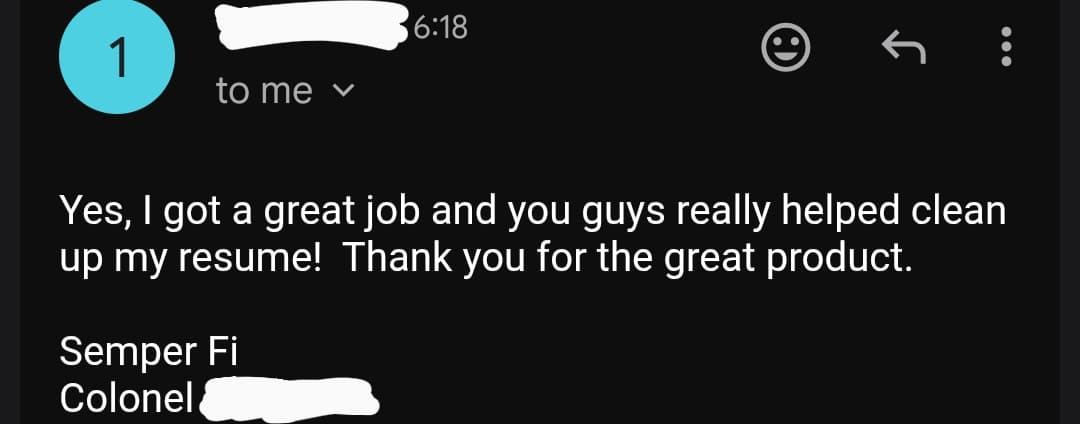
“Hey Brad, Just wanted to send out a quick thank you. You've created something amazing with BMR and your continued advocacy for transitioning service members does not go unnoticed. It was the most effective resource I used in my transition and I know it played a key role in landing a six figure…”
Federal facilities work is the strongest non-trade lane for a 1161, and the federal government runs the largest building portfolio in the country. The most direct match is the Wage Grade trade series WG-5306 Air Conditioning Equipment Mechanic, the federal classification for exactly the work you did in uniform. Agencies from the VA to the Army Corps of Engineers to the GSA staff these positions at hospitals, military installations, and federal buildings, and your EPA 608 certification plus hands-on military experience qualifies you without a civilian apprenticeship in many cases.
Beyond the direct trade slot, several adjacent series fit. WG-4749 Maintenance Mechanic covers multi-craft building maintenance where HVAC is one of several systems you keep running. WG-5309 Heating and Boiler Plant Equipment Mechanic and WG-4742 Utility Systems Repair and Operating map to the heating and utility side of your background. As you move up, the GS-1601 General Facilities and Equipment series and GS-0802 Engineering Technician series open supervisory and technical-management roles, and the safety-minded discipline of refrigerant handling translates into GS-0018 Safety and Occupational Health Management and GS-0803 Safety Engineering work.
Veterans' Preference applies across all of these. The 5-point preference for qualifying service, and 10-point for those with a compensable service-connected disability, moves you up in category rating and can be the difference on a Wage Grade trade certificate. Wage Grade pay is set by local prevailing-rate surveys, so a WG-5306 in a high-cost locality can out-earn the GS equivalent. Other branches feed these same federal facilities series, so the Army 91C Utilities Equipment Repairer page is worth a look for shared facilities GS series. For the application mechanics, read the federal resume guide for veterans and the breakdown of WG vs GS federal pay. When you are ready, you can start your federal resume.
| GS Series | Federal Job Title | Typical Grades | Match | Explore |
|---|---|---|---|---|
| GS-5306 | Air Conditioning Equipment Mechanic | WG-8, WG-9, WG-10 | View Details → | |
| GS-4749 | Maintenance Mechanic | WG-8, WG-9, WG-10 | View Details → | |
| GS-5309 | Heating and Boiler Plant Equipment Mechanic | WG-8, WG-9, WG-10 | View Details → | |
| GS-0802 | Engineering Technician | GS-7, GS-9, GS-11 | View Details → | |
| GS-4742 | Utility Systems Repair and Operating | WG-7, WG-8, WG-9 | View Details → | |
| GS-1601 | General Facilities and Equipment | GS-7, GS-9, GS-11 | View Details → | |
| GS-0018 | Safety and Occupational Health Management | GS-7, GS-9, GS-11 | View Details → |
Federal hiring uses keyword-matching and structured experience. BMR builds federal-format resumes (USAJobs-ready) with the right keywords, hours/week, and supervisor info — for any GS series above.
Free · No credit card · Federal + civilian resume formats included
Not everyone wants to stay in a related field. These career paths leverage your transferable skills — leadership, risk management, logistics, project planning — in completely different industries.
The thermodynamics, gas-handling, and pressurized-system fluency you built on refrigeration loops translate directly to ventilators and oxygen-delivery equipment, and the calm diagnostic mindset under pressure is the same.
Running a treatment plant is regulated-process reliability work; your habit of operating mechanical systems within strict environmental limits and documenting compliance transfers cleanly.
You can explain why a system fails and what it takes to fix it, which is exactly what wins technical sales for HVAC, refrigeration, and industrial equipment. The credibility of having turned the wrenches closes deals.
The electrical and controls troubleshooting you did on HVAC equipment is the same discipline applied to imaging, monitoring, and lab devices. Hospitals value techs who can diagnose complex electromechanical systems methodically.
Years of installing and repairing systems gives you a feel for what jobs actually cost in parts, labor, and time, which is the core of estimating for mechanical and construction contractors.
Adjusting property claims means assessing why equipment or a building system failed and what repair it needs. Your ability to diagnose HVAC and electrical failures makes you faster and more accurate than a generalist.
Handling refrigerant under EPA 608 and working safely around high voltage and pressurized systems gave you a working knowledge of the exact hazards EHS specialists manage. That field credibility is rare in the safety profession.
The skills that made you a good Marine, Sailor, Airman, or Soldier transfer further than you think. BMR rewrites your bullets for any of the pivot careers above — without making you sound like you've never done the work.
Free · No credit card · Try unlimited career angles
If you are staying in HVAC, refrigeration, or facilities, your terminology already matches what those employers use. A commercial mechanical contractor knows what a TXV, a head-pressure problem, and a 608 Universal card mean. This section is for the 1161 who wants to move into a career OUTSIDE the trade, where a hiring manager has never read a Marine Corps utilities billet and needs your experience in plain business language.
The pattern is the same in every case: name the system, name the scale, name the result. Drop the Marine Corps jargon and the equipment nomenclature, and lead with the measurable outcome.
For roles outside the trade, the transferable story is regulated-system reliability, electrical diagnostics, and compliance under federal standards. That language travels into quality, safety, operations, and field-service-management roles. The 50 Military Terms Translated to Civilian Language glossary helps with the rest of your bullets, and the hidden military skills article surfaces experience you may be underselling. A military resume builder built for veterans handles the formatting so you can focus on the content.
BMR turns your 1161 duties and accomplishments into civilian bullets that match the job you're applying for — no manual translation, no rewriting.
Free · No credit card · Tailored to each job posting
Which certifications you need depends on where you're headed. Find your target career path below.
The wrong placement can sink an otherwise strong application. BMR knows where each cert ranks, what to call it, and how to frame it for ATS keyword matching and hiring manager attention.
Free · No credit card · Built around your real certs and clearance
Your fastest moves are credential-driven. Confirm your EPA Section 608 Universal certification is current, since it is the legal requirement for any refrigerant work. Add NATE (North American Technician Excellence) certification to signal competence to commercial employers, and look at HVAC Excellence and RSES (Refrigeration Service Engineers Society) credentials for the refrigeration specialty. SkillBridge can place you with a commercial mechanical contractor or a building-automation firm before you separate. Industry associations worth joining include RSES, ASHRAE, and the local chapter of the Mechanical Contractors Association. Many states require a contractor or journeyman license, so check the requirements where you plan to land. The free SkillBridge and trade-training options and the best certifications by career field cover the credentialing maze in detail.
If you want a different path, lean on the transferable skills: regulated-system compliance, electrical diagnostics, and operations reliability. The OSHA 30 card and a Six Sigma or project-management credential open safety, quality, and operations roles. For federal work, study how Veterans' Preference and the Wage Grade certificate process work before you apply. American Corporate Partners (ACP) offers free one-on-one mentorship with civilian professionals, which is the right resource for figuring out a non-trade pivot. Use the jobs by MOS crosswalk to explore options, the SFL-TAP transition resources for the official timeline, and the federal resume builder for USAJobs applications.
Related trades and next steps: Air Force 3E1X1 HVAC/R, Coast Guard MK Machinery Technician, and the SkillBridge guide to landing a job before you separate. When you are ready, you can get started here.
Most veterans do this backwards — they wait until terminal leave to start, then panic. Here's the actual sequence that works.
Print this. Tape it to your monitor. Veterans who treat the transition like a 90-day op get hired faster than the ones who treat it like an emergency.
Stop rewriting from scratch every time you apply. BMR turns your military experience into civilian and federal resumes — tailored to each job.