Loading...
Loading...
The civilian and federal jobs that hire Marines Towed Artillery Systems Technicians — with real salaries and the resume that gets callbacks.
Every 2131 has more options than a Google search will tell you. Below: career paths, BLS salary data, federal GS series, certifications by target career, and how to translate your experience without losing what made you valuable to the Marines in the first place.
Free · No credit card · Tailored resume in under 5 minutes
After the Navy I got hired into 6 federal career fields and tech sales, and sat on federal hiring panels along the way. I spent the last 2 years rebuilding everything I learned into BMR, tuned for how AI actually screens resumes today. This is the system I wish I'd had on day one.
If you held MOS 2131, you kept the Marine Corps' towed artillery firing. You worked the M777 lightweight 155mm howitzer down to the component level: the recoil mechanism, the hydraulic equilibrators and elevating system, the breech and firing assemblies, the structural cradle and trail legs, and the mechanical side of the digital fire-control system. When a gun came back from a fire mission with a fault, you diagnosed it against the technical manual, tore down the assembly, replaced or repaired the part, and put a weapon back in service that fires a 95-pound projectile with zero tolerance for a missed step. That is precision heavy-mechanical work under field conditions and a clock.
The pipeline runs through the Towed Artillery Repairer Course at the Marine Corps Detachment, Ordnance School. The MOS requires a mechanical maintenance (MM) ASVAB line score of 95 or higher, and it carries no security clearance requirement. The training is hydraulics, recoil theory, structural inspection, torque and alignment standards, and shop maintenance management. By the time you make NCO you are not just turning wrenches. You are running a maintenance program, managing parts and records, and signing off that a weapon system is safe to fire.
Civilian employers in heavy industry value this background because the work maps cleanly. A hydraulic system on an excavator, a press in a manufacturing plant, or a recoil-style damper on heavy equipment follows the same physics you already troubleshoot. Industrial and heavy-equipment maintenance is hiring, and the diagnostic discipline you built on the gun line is exactly what those shops are short on. Explore related Marine maintenance paths like the 2146 Heavy Ordnance Vehicle Repairer and 1341 Engineer Equipment Mechanic, or start from the full military-to-civilian career crosswalk. If you want the language side first, the 50 military terms translated to civilian language guide is a fast win.
When I got out of the Navy it took me 16 months to land work, and the thing that finally turned it was proving what I actually did instead of listing a code nobody could parse. A 2131 has that proof on the gun line: you diagnosed real hydraulic and structural systems, you did not just swap parts. Your job is to write the resume so a maintenance superintendent sees an industrial mechanic, not an artillery MOS they have to look up. — Brad Tachi, Navy Diver veteran & BMR founder
The number that matters when you're deciding what's next: how does civilian pay compare to what you make now?
Military comp is approximate (varies by location/dependents). Civilian is BLS median. Federal includes locality pay. Your real number depends on duty station, family status, GS step, and overtime.
The civilian roles that hire a 2131 background sit in heavy industry, not the armory. Pay figures below are BLS Occupational Employment and Wage Statistics, May 2024.
Industrial machinery mechanics are the closest fit. BLS reports a median wage of $63,510 for industrial machinery mechanics, machinery maintenance workers, and millwrights, with employment projected to grow 13 percent through 2034, much faster than average. Plants run hydraulics, presses, conveyors, and rotating equipment, and they cannot find enough people who can read a schematic and fix the machine instead of waiting on a contractor.
Mobile heavy equipment mechanics repair the hydraulics, undercarriage, and powertrains on excavators, dozers, cranes, and loaders. BLS puts the median for heavy vehicle and mobile equipment service technicians at $62,740, growing 6 percent. The hydraulic diagnostics you ran on a howitzer elevating and equilibrator system carry over almost directly.
Hydraulic systems technicians and millwrights install, align, and maintain industrial machinery in factories, refineries, and power plants. Millwright work pays inside that $63,510 group and is heavy on precision alignment and structural assembly, the same torque-and-tolerance discipline the gun line demanded.
The market is geographic. Manufacturing and heavy-equipment work clusters in the Midwest, the Gulf Coast, and industrial corridors of the Southeast and Texas; mining and energy regions pay a premium for mobile-equipment techs. This is cyclical work tied to construction and industrial output, so be honest with yourself about the local market before you commit to one trade. Marines from related fields land in the same shops, so look at how the Army handles it on the 91H Track Vehicle Repairer and 91L Construction Equipment Repairer pages, and how the Navy translates it on the MR Machinery Repairman page. For the trades path specifically, the military to trade careers guide breaks down apprenticeships and licensing. Translate your gun-line history into civilian bullets with the military resume builder, or build your resume now.
| Civilian Job Title | Industry | BLS Median Salary | Outlook | Match |
|---|---|---|---|---|
Industrial Machinery Mechanic O*NET: 49-9041.00 | Manufacturing | $63,510 | 13% (Much faster than average) | strong |
Mobile Heavy Equipment Mechanic O*NET: 49-3042.00 | Heavy Equipment | $62,740 | 6% (Faster than average) | strong |
Millwright O*NET: 49-9044.00 | Industrial Construction | $63,510 | 13% (Much faster than average) | strong |
Hydraulic Systems Technician O*NET: 49-9041.00 | Industrial Maintenance | $63,510 | 13% (Much faster than average) | strong |
Diesel Service Technician O*NET: 49-3031.00 | Transportation Equipment | $60,640 | 3% (As fast as average) | moderate |
Machinist O*NET: 51-4041.00 | Precision Manufacturing | $56,150 | -2% (Decline) | moderate |
Mechanical Engineering Technician O*NET: 17-3027.00 | Engineering Services | $68,730 | 4% (As fast as average) | moderate |
BMR rewrites your 2131 experience for any of the civilian roles above — keywords, achievements, and language hiring managers actually scan for.
Free · No credit card · 2 tailored resumes included
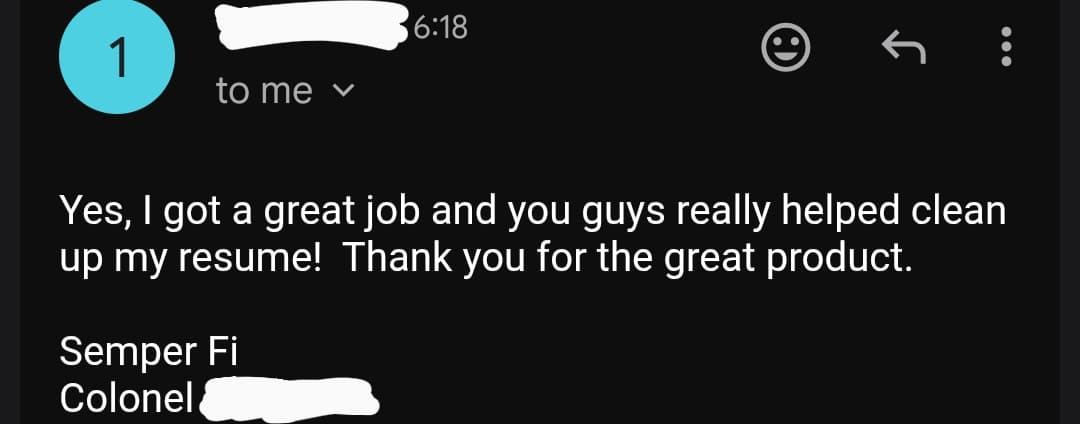
“Hey Brad, Just wanted to send out a quick thank you. You've created something amazing with BMR and your continued advocacy for transitioning service members does not go unnoticed. It was the most effective resource I used in my transition and I know it played a key role in landing a six figure…”
Federal hands-on maintenance work runs mostly on the Wage Grade (WG) trades schedule, not the GS scale, and that is good news for a 2131. WG jobs pay by locality and trade skill, and depot, arsenal, shipyard, and base maintenance shops hire heavily for the exact systems you already know.
WG-5803 Heavy Mobile Equipment Mechanic is the direct line. These positions repair hydraulics, drivetrains, and structural assemblies on heavy equipment across DoD depots, Army arsenals, and federal motor pools. WG-5350 Production Machinery Mechanic and WG-5352 Industrial Equipment Mechanic cover the plant-machinery side at depots and ammunition plants. WG-3414 Machining fits if you want the fabrication and precision-parts side of the house.
On the GS side, two series reward the technician who moves toward planning and inspection. GS-0802 Engineering Technician supports engineers on equipment design, testing, and maintenance engineering, a natural step up from the bench. GS-1910 Quality Assurance handles inspection and acceptance of repaired or manufactured items, where your eye for torque, tolerance, and a safe-to-fire signature is the whole job.
Veterans' Preference adds 5 or 10 points to your federal application score and can move you up a referral list, and disabled-veteran preference can qualify you for special hiring authorities. Learn how the points actually work in the veterans preference points guide, and match your experience to a series with how to find your military job series equivalent. The federal resume is its own format, longer and more detailed than a civilian one. The 2026 OPM federal resume format walks the structure, and the federal resume builder handles the layout for you. Air Force hydraulic and Army track-vehicle maintainers chase the same WG and GS series, so compare the Air Force 2A6X5 Aircraft Hydraulic Systems page.
| GS Series | Federal Job Title | Typical Grades | Match | Explore |
|---|---|---|---|---|
| GS-5803 | Heavy Mobile Equipment Mechanic | WG-8, WG-10 | View Details → | |
| GS-5350 | Production Machinery Mechanic | WG-8, WG-10 | View Details → | |
| GS-5352 | Industrial Equipment Mechanic | WG-8, WG-10 | View Details → | |
| GS-0856 | Electronics Technician | GS-9, GS-11, GS-12 | View Details → | |
| GS-3414 | Machining | WG-8, WG-10 | View Details → | |
| GS-1910 | Quality Assurance | GS-7, GS-9, GS-11 | View Details → | |
| GS-0802 | Engineering Technician | GS-7, GS-9, GS-11 | View Details → |
Federal hiring uses keyword-matching and structured experience. BMR builds federal-format resumes (USAJobs-ready) with the right keywords, hours/week, and supervisor info — for any GS series above.
Free · No credit card · Federal + civilian resume formats included
Not everyone wants to stay in a related field. These career paths leverage your transferable skills — leadership, risk management, logistics, project planning — in completely different industries.
Diagnosing the hydraulic and mechanical interplay in a howitzer is the same reasoning automated production lines and robotics cells require. The systems are electromechanical instead of artillery, but the troubleshooting logic carries over.
Treatment plants run on pumps, valves, and pressure systems monitored against strict standards, the same disciplined process control you applied to artillery hydraulics and safe-to-fire checks.
Running a shop maintenance program taught you to find where a process loses time and fix it. Industrial engineering technologists do exactly that across factory operations, off the bench and into process improvement.
Certifying a weapon safe to fire is an inspection job with zero margin for error. Construction inspectors apply that same standards-against-code judgment to buildings, structures, and systems.
The safe-to-fire sign-off translates straight into manufacturing quality control, where your job is to catch the defect before a product ships. Your eye for tolerance is the entire skill.
Keeping a battery of guns mission-ready meant forecasting parts, tracking work orders, and coordinating supply, which is the core of civilian logistics planning in a completely different setting.
The skills that made you a good Marine, Sailor, Airman, or Soldier transfer further than you think. BMR rewrites your bullets for any of the pivot careers above — without making you sound like you've never done the work.
Free · No credit card · Try unlimited career angles
If you are staying in heavy-equipment or industrial maintenance, your terminology already matches the shop. A maintenance superintendent at a CAT dealership knows what hydraulics and recoil dampers are. This section is for the 2131 who is targeting a role OUTSIDE artillery and ordnance repair, where "towed artillery" on a resume reads as a code nobody can score.
The fix is to translate the system, not the weapon. Lead with the engineering verbs that civilian maintenance managers screen for: diagnosed, calibrated, aligned, overhauled, certified. Here is how the gun-line work converts.
| Military term | Civilian term |
|---|---|
| Howitzer recoil and equilibrator system | High-pressure hydraulic and damping system |
| Technical manual (TM) fault isolation | Schematic-based diagnostic troubleshooting |
| Breech and firing mechanism overhaul | Precision mechanical assembly and rebuild |
| Safe-to-fire inspection and sign-off | Quality inspection and equipment certification |
| Shop maintenance management program | Preventive maintenance and work-order management |
Before and after, for a role outside the field:
Before: "Performed organizational maintenance on M777 towed howitzers and maintained TM-directed PM schedule."
After: "Diagnosed and overhauled high-pressure hydraulic and recoil-damping systems using schematic-based fault isolation, then certified each unit safe for operation under a zero-defect inspection standard."
That second version gets read by a hiring manager who has never heard of a 2131. For the full method, see converting your evaluations into resume bullets and the military resume keywords by industry breakdown. The military resume builder applies these translations automatically.
BMR turns your 2131 duties and accomplishments into civilian bullets that match the job you're applying for — no manual translation, no rewriting.
Free · No credit card · Tailored to each job posting
Which certifications you need depends on where you're headed. Find your target career path below.
The wrong placement can sink an otherwise strong application. BMR knows where each cert ranks, what to call it, and how to frame it for ATS keyword matching and hiring manager attention.
Free · No credit card · Built around your real certs and clearance
Cross-qualify your hands-on experience into civilian credentials. SkillBridge can place you in a CAT, John Deere, or industrial-maintenance employer during your last months of service, which is the cleanest bridge from the gun line to a civilian shop, see the SkillBridge programs by industry list and how to get command approval. The trades-apprenticeship route is mapped in Helmets to Hardhats, and the military to trade careers guide covers licensing. Use your GI Bill on a certificate where it counts via GI Bill trade school programs.
For federal work, lean on Veterans' Preference and the WG trades pipeline, and consider American Corporate Partners (ACP) for one-on-one mentorship as you switch industries. If you want to move toward engineering support or quality, the free OPM-compliant federal resume template gets you started. Sharpen interview answers for a civilian audience with how to explain military experience in a civilian interview, and plan the first months on the job with your first 90 days in a civilian job.
See also related maintenance paths: the 2147 Light Armored Vehicle Repairer and 1142 Engineer Equipment Mechanic pages, plus the full career crosswalk and TAP resources at SFL-TAP. When you are ready, build your resume now or start with the military resume builder.
Most veterans do this backwards — they wait until terminal leave to start, then panic. Here's the actual sequence that works.
Print this. Tape it to your monitor. Veterans who treat the transition like a 90-day op get hired faster than the ones who treat it like an emergency.
Stop rewriting from scratch every time you apply. BMR turns your military experience into civilian and federal resumes — tailored to each job.