Loading...
Loading...
The civilian and federal jobs that hire Air Force Aircraft Hydraulic Systemss — with real salaries and the resume that gets callbacks.
Every 2A6X5 has more options than a Google search will tell you. Below: career paths, BLS salary data, federal GS series, certifications by target career, and how to translate your experience without losing what made you valuable to the Air Force in the first place.
Free · No credit card · Tailored resume in under 5 minutes
After the Navy I got hired into 6 federal career fields and tech sales, and sat on federal hiring panels along the way. I spent the last 2 years rebuilding everything I learned into BMR, tuned for how AI actually screens resumes today. This is the system I wish I'd had on day one.
One page, built in our template, with your military experience translated into civilian terms hiring managers and ATS systems read. Use it as a reference for your own. Drop your email and we'll send you the download link.
Free. We'll also send occasional job-search tips. Unsubscribe anytime.
As a 2A6X5, your specialty was fluid power. You troubleshot, removed, overhauled, inspected, and tested the high-pressure hydraulic systems that move an aircraft: landing gear and brakes, flight-control actuators, nose-wheel steering, flaps and slats, speed brakes, and the in-flight refueling (IFR) systems that pass fuel between aircraft in the air. You worked with systems running at 3,000 to 5,000 PSI, where a pinhole leak or a contaminated reservoir is a safety-of-flight problem, not a write-up you defer. Contamination control was the daily discipline. A single particle of debris in a servo valve can hang a flight control, so you sampled fluid, ran particle counts, flushed lines, and kept hydraulic test stands and mule carts calibrated and clean.
The pipeline starts with 7.5 weeks of Basic Military Training, then technical school at Sheppard AFB, Texas, run by the 82nd Training Wing. Coursework covers hydraulic principles, schematic reading, component removal and bench overhaul, pressure and leak testing, and troubleshooting on actual airframes. At the 3-skill level you work supervised tasks. At 5-skill you sign off your own work and run complex diagnostics. At 7-skill you take on inspection authority, training, and shift supervision. At the senior NCO level the field merges into the 2A690 Aircraft Systems superintendent role. The minimum ASVAB Mechanical score is 56.
Civilian employers value this background because hydraulic troubleshooting is a reasoning skill, not a parts-swap. You learned to read a system from a schematic, isolate a fault between a pump, a valve, an actuator, and an accumulator, and prove the fix under pressure before you signed it off. That exact discipline carries into civilian aviation maintenance, industrial fluid-power repair, and federal equipment and engineering-technician work. If you want to see how the skill set maps across fields, the military career crosswalk lays out the options. Related Air Force fields like 2A6X4 Aircraft Fuel Systems and 2A5X1 Aerospace Maintenance share many of the same civilian destinations.
My own path out of the Navy ran through federal environmental and engineering work, and that is exactly why I rate 2A6X5 as one of the stronger technical translations. Aircraft hydraulics is fluid-power diagnosis plus contamination control plus safety-critical sign-off, and that combination is what depot aircraft-mechanic shops, FAA technical roles, and the federal pneudraulic and engineering-technician series are actually built around. The work is real and it is verifiable. The only thing that costs people interviews is a resume that hides the system behind a checklist. — Brad Tachi, Navy Diver veteran & BMR founder
The number that matters when you're deciding what's next: how does civilian pay compare to what you make now?
Military comp is approximate (varies by location/dependents). Civilian is BLS median. Federal includes locality pay. Your real number depends on duty station, family status, GS step, and overtime.
The most direct civilian path is commercial and depot aircraft maintenance. Aircraft mechanics and service technicians earned a median of $78,680 per year (BLS OEWS, May 2024), and avionics-adjacent technicians who work integrated systems earned a median of $81,390. Airlines, MRO (maintenance, repair, and overhaul) shops, and OEM depots all run dedicated hydraulic and landing-gear lines, and your 2A6X5 component-overhaul experience maps to those benches with little retraining. The market here is geographically concentrated around major airline hubs, OEM plants, and military depot towns, and many of the better-paying roles want or will help you earn an FAA Airframe and Powerplant (A&P) certificate.
Outside aviation, the same fluid-power skill set is in demand in heavy industry. Industrial machinery mechanics, who maintain hydraulic presses, injection-molding machines, and automated production equipment, earned a median of $63,510 (BLS OEWS, May 2024). Mobile heavy-equipment service technicians, who keep the hydraulics on cranes, excavators, and material handlers running, earned a median of $62,740. These roles reward exactly what you did in the Air Force: reading a hydraulic schematic, diagnosing a pressure or actuation fault, and proving the repair. Manufacturing and construction demand is steadier and less hub-dependent than airline work, which matters if you are not relocating to an aviation market.
If you are weighing aviation maintenance against an industrial fluid-power role, the cross-branch pages for Navy Aviation Structural Mechanic and Army UH-60 Helicopter Repairer cover the same civilian markets from a different airframe angle. For the resume itself, our military resume builder is built to turn maintenance experience into civilian-readable bullets, and you can build your resume now to get started.
| Civilian Job Title | Industry | BLS Median Salary | Outlook | Match |
|---|---|---|---|---|
Aircraft Mechanic / Service Technician O*NET: 49-3011.00 | Aviation Maintenance | $78,680 | 5% (Faster than average) | strong |
Avionics / Integrated Systems Technician O*NET: 49-2091.00 | Aviation Maintenance | $81,390 | 5% (Faster than average) | moderate |
Industrial Machinery Mechanic O*NET: 49-9041.00 | Manufacturing | $63,510 | 13% (Much faster than average) | strong |
Mobile Heavy-Equipment Service Technician O*NET: 49-3042.00 | Construction & Heavy Equipment | $62,740 | 4% (As fast as average) | strong |
Maintenance and Repair Worker, General (Facilities) O*NET: 49-9071.00 | Facilities | $48,620 | 7% (Faster than average) | moderate |
Electro-Mechanical / Mechatronics Technician O*NET: 17-3024.00 | Automation & Robotics | $70,760 | 2% (As fast as average) | moderate |
Aircraft Pneudraulic Systems Mechanic (Federal WG) O*NET: 49-3011.00 | Federal / Depot | $78,680 | Varies by area wage schedule | strong |
BMR rewrites your 2A6X5 experience for any of the civilian roles above — keywords, achievements, and language hiring managers actually scan for.
Free · No credit card · 2 tailored resumes included
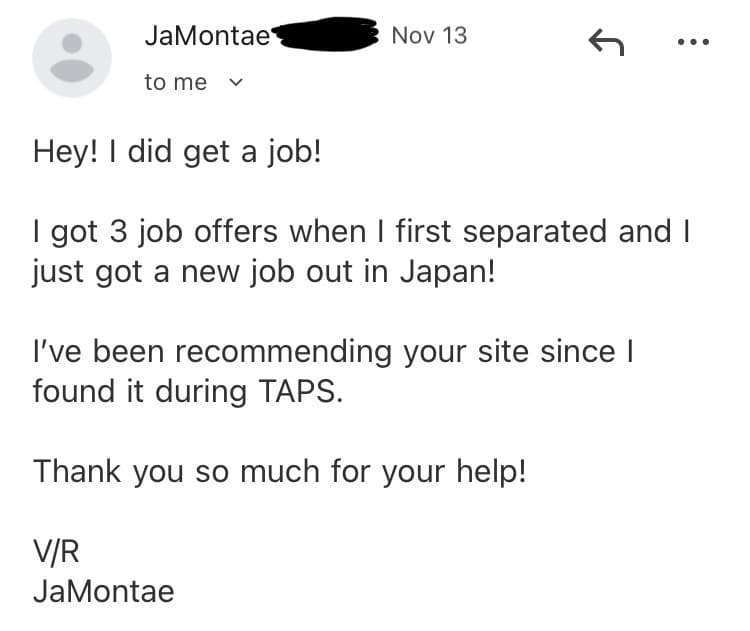
“Hey! I did get a job! I got 3 job offers when I first separated and I just got a new job out in Japan! I’ve been recommending your site since I found it during TAPS. Thank you so much for your help! V/R JaMontae ”
Federal service has a wage-grade lane built almost exactly for your AFSC. The WG-8268 Aircraft Pneudraulic Systems Mechanic series covers hydraulic and pneumatic work on aircraft, and WG-8255 Pneudraulic Systems Mechanic covers the same fluid-power work on non-aircraft equipment. These are the closest 1:1 federal matches to 2A6X5, and they sit inside Air Logistics Complexes (Tinker, Hill, Robins), Fleet Readiness Centers, and Army aviation depots. Wage-grade pay is set locally and tracks journeyman trade rates rather than the GS table, so confirm the area wage schedule for the installation you are targeting.
The broader aircraft trade is WG-8852 Aircraft Mechanic, which many former hydraulic specialists move into when a shop wants a full-airframe maintainer. On the white-collar side, GS-0802 Engineering Technician and GS-0830 Mechanical Engineering positions support hydraulic system design, sustainment engineering, and depot process work, and your hands-on knowledge of how these systems actually fail is the part those offices struggle to hire. Quality and safety roles use GS-1910 Quality Assurance and the GS-0018 Safety and Occupational Health series, both of which value a maintainer who knows what a deferred leak really means. Veterans’ Preference adds 5 or 10 points to your assessed score and applies across these series, and for wage-grade trade jobs your documented hydraulic experience often satisfies the qualification standard directly. If federal is your target, our federal resume builder formats to OPM length and detail rules, and the guide to decoding a USAJOBS announcement shows how to mirror the qualification language. You can start your federal resume when you are ready.
| GS Series | Federal Job Title | Typical Grades | Match | Explore |
|---|---|---|---|---|
| GS-8268 | Aircraft Pneudraulic Systems Mechanic | WG-8, WG-10, WG-11 | View Details → | |
| GS-8255 | Pneudraulic Systems Mechanic | WG-8, WG-10, WG-11 | View Details → | |
| GS-1910 | Quality Assurance | GS-7, GS-9, GS-11 | View Details → | |
| GS-0802 | Engineering Technician | GS-7, GS-9, GS-11 | View Details → | |
| GS-8852 | Aircraft Mechanic | WG-8, WG-10, WG-11 | View Details → | |
| GS-0830 | Mechanical Engineering | GS-7, GS-9 | View Details → | |
| GS-0018 | Safety and Occupational Health Management | GS-7, GS-9 | View Details → |
Federal hiring uses keyword-matching and structured experience. BMR builds federal-format resumes (USAJobs-ready) with the right keywords, hours/week, and supervisor info — for any GS series above.
Free · No credit card · Federal + civilian resume formats included
Not everyone wants to stay in a related field. These career paths leverage your transferable skills — leadership, risk management, logistics, project planning — in completely different industries.
Automated machinery runs on the same hydraulic and pneumatic actuation you maintained on aircraft. Your fault-isolation habit transfers; the new piece is the electronic controls layer.
Operating building and plant pressure systems rewards the exact instinct you built around a 3,000 PSI aircraft system: watch the pressures, catch the leak early, and never defer a real problem.
Pipefitting is pressurized-fluid work in a different trade. You already think in flow, pressure, and joint integrity, which is most of what separates a good fitter from a parts-installer.
Refrigeration is pressurized closed-loop fluid work. The diagnostic flow, find the leak, check the pressures, isolate the bad component, is the same one you ran on aircraft hydraulics.
Treatment plants are pump-and-valve operations where contamination control and reading the system from instruments decide whether things run clean. That is your daily aircraft-hydraulics discipline applied to water.
You spent your career deciding whether a part was airworthy and signing your name to it. That inspect-verify-certify judgment is exactly what a manufacturing QA role is, minus the airframe.
The skills that made you a good Marine, Sailor, Airman, or Soldier transfer further than you think. BMR rewrites your bullets for any of the pivot careers above — without making you sound like you've never done the work.
Free · No credit card · Try unlimited career angles
If you are staying in aviation or industrial maintenance, your terminology already lands. Hiring managers at an MRO or a manufacturing plant know what a servo valve, an accumulator, and a particle count are. This section is for the times you are aiming at a role outside hands-on maintenance, where a hiring manager has never read an AFTO Form 781 and will not know what 2A6X5 means.
The goal is to keep the technical substance and drop the Air Force-only shorthand. Name the system, the pressure, the failure you isolated, and the result. Here are translations that hold up in front of a non-aviation reader:
For more on rewriting service records into civilian language, see our glossary of 50 military terms translated to civilian language and the guide to translating EPR and OPR bullets. Our military resume builder handles this translation step for you.
BMR turns your 2A6X5 duties and accomplishments into civilian bullets that match the job you're applying for — no manual translation, no rewriting.
Free · No credit card · Tailored to each job posting
Which certifications you need depends on where you're headed. Find your target career path below.
The wrong placement can sink an otherwise strong application. BMR knows where each cert ranks, what to call it, and how to frame it for ATS keyword matching and hiring manager attention.
Free · No credit card · Built around your real certs and clearance
Staying in aviation or fluid-power maintenance. The single highest-leverage credential for civilian aviation work is the FAA Airframe and Powerplant (A&P) certificate. Your military maintenance experience can count toward the experience requirement, and many MRO employers sponsor or reimburse the testing. For industrial fluid-power roles, the International Fluid Power Society (IFPS) offers hydraulic specialist and technician certifications that signal you know the discipline beyond one airframe. SkillBridge is the cleanest on-ramp while you are still in: the top SkillBridge companies hiring in 2026 list includes airline and MRO partners that place hydraulic and landing-gear techs directly.
Careers outside maintenance. If you are leaving hands-on work, target the credentials that open the next field: an OSHA 30 card for safety roles, a Six Sigma or quality certificate for inspection and QA, or coursework toward the federal engineering-technician series. American Corporate Partners (ACP) offers free year-long mentorship to help you map the move. For the job search itself, start with the military career crosswalk, work through your transition checklist with SFL-TAP resources, and read the guide to explaining military experience in a civilian interview.
See also: Coast Guard Aviation Maintenance Technician and Marine Corps Helicopter Crew Chief for related cross-branch paths. When you are ready to put it together, you can build your resume now.
Most veterans do this backwards — they wait until terminal leave to start, then panic. Here's the actual sequence that works.
Print this. Tape it to your monitor. Veterans who treat the transition like a 90-day op get hired faster than the ones who treat it like an emergency.
Stop rewriting from scratch every time you apply. BMR turns your military experience into civilian and federal resumes — tailored to each job.