A Army story from the same road
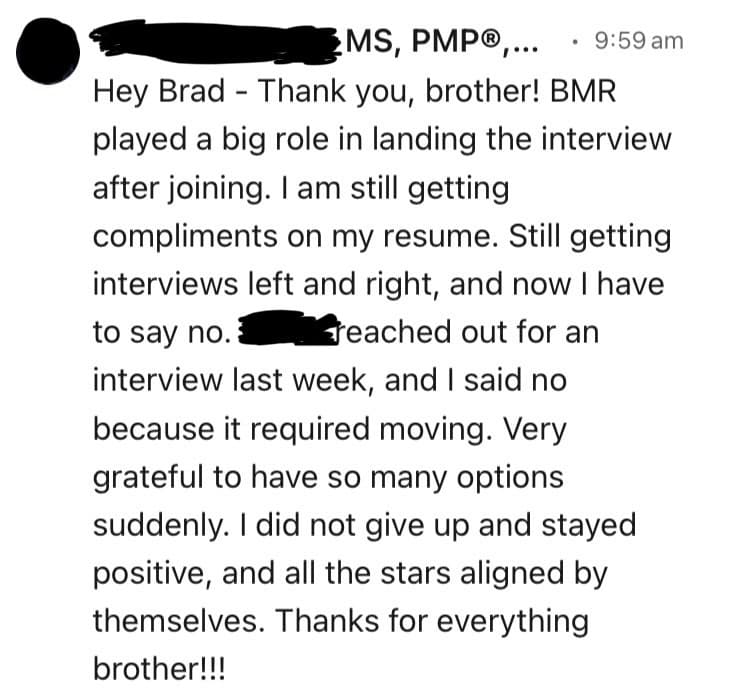
“I am still getting compliments on my resume. Still getting interviews left and right, and now I have to say no. Very grateful to have so many options suddenly.”
Taranjeet · Sergeant (E-5) · Army · Program Management
Home / Military to civilian jobs / Army / 91L
That is Army MOS 91L. Civilian jobs, federal paths, and how the work reads on a resume.
What is in this guide
What the translation looks like
How it reads in service
Conducted PMCS (Preventive Maintenance Checks and Services) on construction equipment fleet
How a hiring manager reads it
Executed scheduled preventive maintenance inspections per manufacturer specifications across heavy equipment fleet
Roles this background maps to
Median pay, BLS OEWS May 2024
Build a resume for a real jobYou pick the job. We write it from your 91L experience. Free to start.
Brad TachiNavy Diver · BMR founder
After the Navy he was hired into six federal career fields and tech sales, and sat on federal hiring panels along the way. The last two years went into rebuilding all of it into BMR, tuned for how resumes get screened today. 71,892 resumes built so far.
One page, built in our template, with the military experience translated into the civilian terms hiring managers and screening software read. Use it as a reference for your own. Leave an email and the download link comes to you.
Free. Occasional job-search tips come with it. Unsubscribe anytime.
Army 91L Construction Equipment Repairers keep the Army's heavy iron running. Every dozer pushing a berm, every grader cutting a road, every loader staging materials at a forward base — a 91L is what stands between that machine working and that machine sitting deadlined. These mechanics troubleshoot, repair, and maintain the Army's construction equipment fleet: dozers, graders, scrapers, wheel loaders, backhoes, excavators, cranes, dump trucks, and asphalt distributors. Diesel engines, hydraulic systems, electrical subsystems, pneumatic controls, undercarriages, and HVAC on cabs all live under the 91L scope of work.
After 10 weeks of Basic Combat Training, 91Ls go through roughly 14 weeks of AIT at the U.S. Army Engineer School at Fort Leonard Wood, Missouri, taught by Company D, 554th Engineer Battalion in Training Area 244. The course covers nine major equipment platforms and walks through engine theory, hydraulic and pneumatic system troubleshooting, electrical fault isolation, and cab and HVAC repair. Marines from MOS 1341 (Engineer Equipment Mechanic) train alongside 91Ls in a combined Engineer School pipeline. In the fleet, 91Ls support engineer battalions, USACE construction projects, horizontal and vertical construction units, sapper companies, and combat heavy units. They live in ULLS-G and GCSS-Army for parts and work orders, manage Class IX (repair parts) demand, and answer to Operational Readiness (OR) rates the same way wheeled-vehicle mechanics answer to FMC.
What makes a 91L different from a civilian heavy-equipment tech: multi-OEM exposure on day one. A typical motor pool will have CAT, John Deere, Komatsu, and legacy Volvo iron sitting next to each other, and a 91L is expected to work across all of it. Add diesel diagnostics, hydraulics, and electrical troubleshooting in the same skill set and you have a candidate that dealer service departments, pipeline contractors, and infrastructure firms compete for. For the same-branch comparisons, see 91B Wheeled Vehicle Mechanic and 91D Power Generation Equipment Repairer, or browse all military-to-civilian career paths. For trade-route options outside the federal track, our military-to-trade careers guide covers the apprenticeship side of this transition.
I worked federal environmental and engineering positions after the Navy, and 91L is one of the cleanest fits for the WG/GS facilities and engineering side I have seen. Heavy equipment maintenance, hydraulics, and diesel diagnostics map directly to WG-5803 Heavy Mobile Equipment Mechanic and the GS-1601 facility-ops track at USACE, NPS, and BLM. On the private side, mining, pipeline, and infrastructure contractors hire this background fast because multi-OEM dealer techs are rare. — Brad Tachi, Navy Diver veteran & BMR founder
The number that decides most of this: how does civilian pay compare to what the paycheck looks like now?
Army mid-career
$58K to $82K
E-5 to E-7 total comp: base plus BAH, BAS and the tax advantage.
Civilian Construction Equipment Repairer
$54K to $79K
BLS median across the direct-match civilian roles on this page.
Federal, GS-9 to GS-13
$58K to $120K
8 matching GS series, plus locality pay and step increases.
Comparable on average
Civilian pay for Construction Equipment Repairers lands in the same range as mid-career enlisted total comp.
Military comp is approximate and moves with location and dependents. Civilian is the BLS median. Federal includes locality pay. The real number depends on duty station, family status, GS step and overtime.
Civilian heavy-equipment dealers and infrastructure contractors actively recruit 91Ls because the multi-OEM, hydraulic-plus-diesel-plus-electrical skill set is genuinely rare. According to the Bureau of Labor Statistics OEWS May 2024 data, Mobile Heavy Equipment Mechanics (49-3042) earn a national median of around $64,150, Bus and Truck Mechanics (49-3031) earn around $60,640, Industrial Machinery Mechanics (49-9041) earn around $63,510, and First-Line Supervisors of Mechanics, Installers, and Repairers (49-1011) earn around $79,250.
The dealer-tech path is where 91Ls compete most directly. Caterpillar, John Deere, Komatsu, Volvo CE, and Case New Holland all run factory-trained tier programs (CAT Technician Career Development, John Deere TECH, Komatsu KTAP) where pay scales rise with each tier the technician completes. Top-tier dealer techs at CAT and Deere regularly clear $80,000-$100,000+ in higher cost-of-living markets, and field service engineers (FSEs) traveling to job sites often clear that bar earlier in their career. Field service work is where 91L deployment-style maintenance experience pays off — diagnosing in the dirt, on a generator, in the rain, with a customer waiting on the machine.
Pipeline and infrastructure construction is the second strong lane. Companies like Kiewit, Bechtel, Fluor, MasTec, and large mining operators (Freeport-McMoRan, Newmont, Barrick) hire heavy mechanics into roles that pay well above national medians because of overtime, per diem, and remote-site premiums. The trucking and leasing world (Penske, Ryder, U-Haul fleet maintenance, Holt Cat dealerships, Foley Equipment) offers more stable home time with strong pay. Cross-branch parallels include Navy CM Construction Mechanic, Navy EO Equipment Operator, Marines 1142 Engineer Equipment Mechanic, and Air Force 2T3X1 Vehicle Maintenance — all of those communities feed into the same civilian dealer and contractor talent pool.
For 91Ls considering the trades route instead of straight dealer work, the union heavy-equipment world (IUOE Local apprenticeships, signatory contractors) is a strong entry — see our Helmets to Hardhats apprenticeships guide and military-to-construction-management transition for context.
| Civilian job title | Industry | BLS median salary | Outlook | Match |
|---|---|---|---|---|
| Mobile Heavy Equipment MechanicO*NET 49-3042.00 | Construction / Mining / Government | $64,150 | About as fast as average (2%) | strong |
| Diesel Mechanic (Bus & Truck)O*NET 49-3031.00 | Transportation / Fleet Services | $60,640 | About as fast as average (5%) | strong |
| Industrial Machinery MechanicO*NET 49-9041.00 | Manufacturing / Energy / Utilities | $63,510 | Much faster than average (16%) | strong |
| Field Service Technician (CAT/Deere/Komatsu Dealer)O*NET 49-3042.00 | Heavy Equipment Dealer | $64,150 | About as fast as average (2%) | strong |
| Heavy Equipment Service ManagerO*NET 49-1011.00 | Construction Equipment Dealer | $79,250 | About as fast as average (3%) | strong |
| First-Line Supervisor of MechanicsO*NET 49-1011.00 | Multiple Industries | $79,250 | About as fast as average (3%) | strong |
| Crane and Tower Operator (Maintenance)O*NET 47-2073.00 | Construction | $64,690 | About as fast as average | moderate |
| Heavy and Tractor-Trailer Truck DriverO*NET 53-3032.00 | Trucking / Logistics | $54,320 | Faster than average | moderate |
| Construction Equipment OperatorO*NET 47-2073.00 | Construction | $56,160 | About as fast as average | moderate |
Top dealer-tech path for 91Ls. CAT engines and platforms are common in Army construction units, so platform familiarity transfers directly. Field service technician roles pay well above the dealer-shop median.
Strong dealer ladder with structured advancement. Construction and forestry equipment lines align with 91L work. Many community college partnerships are GI Bill approved.
Major mining and construction equipment OEM. Dealer apprentice program runs through partner schools and produces factory-trained techs.
Volvo CE technician program. Common in road construction and infrastructure markets.
Largest single-source CAT dealer in the U.S. Active SkillBridge partner. Strong base for 91Ls in Texas.
Major CAT dealer covering Kansas, Missouri, Nebraska, and western Iowa. Active recruiter of separating military mechanics.
One of the largest U.S. infrastructure contractors. Heavy equipment maintenance roles on long-duration civil projects with overtime and per diem.
Major EPC contractor. Heavy mechanic and FSE roles on energy, infrastructure, and government projects.
Large pipeline and infrastructure contractor. Heavy equipment mechanic and field service roles on pipeline and utility projects.
Major copper and molybdenum mining operator (Arizona, Nevada, New Mexico). Heavy mechanics on mine sites earn premium wages with rotating schedules.
Diesel engine OEM. 91Ls familiar with Cummins engines from military platforms have direct technical background for technician and field service roles.
One of the largest commercial truck fleet operators. Active SkillBridge partner with structured diesel-tech advancement.
Civil works projects across the country run heavy equipment shops. WG-5803 and GS-1670 hiring lane.
Park-level heavy equipment shops at large parks (Yellowstone, Grand Canyon, Great Smoky Mountains, Yosemite, Denali). WG-5803 hiring lane.
Heavy equipment shops on BLM lands across the western U.S. WG-5803 and WG-5806 hiring lane.
Federal government fleet management agency. Vehicle and equipment maintenance technicians across regional fleet centers.
BMR rewrites your 91L experience for any of the roles above, in the language the people reading actually scan for.
Free to start. 2 tailored resumes included.
Upload it and get a number in about a minute, plus the 91L lines a civilian hiring manager will not follow. No account. Sign up and BMR writes the fix.
Free. Your file is never stored.
Industrial machinery mechanic resume example (military to civilian): the whole page, the lines that changed, and the words the posts use. Built from 91L work.
GS-1670 Equipment Services resume example (GS-9, 2 pages): the whole page, the lines that changed, and the words the posts use. Built from 91L work.
“I am still getting compliments on my resume. Still getting interviews left and right, and now I have to say no. Very grateful to have so many options suddenly.”
Taranjeet · Sergeant (E-5) · Army · Program Management
The federal heavy-equipment maintenance lane is one of the cleanest WG/GS pathways available to any military mechanic, and 91L is right in the middle of it. The federal government runs heavy equipment shops at the U.S. Army Corps of Engineers (USACE), National Park Service (NPS), Bureau of Land Management (BLM), Department of Veterans Affairs cemeteries, GSA Fleet Management, USPS vehicle maintenance facilities, and Air Force Civil Engineer (CE) squadrons that hire civilians. Veterans'' Preference applies to all of these positions and gives former 91Ls a measurable advantage at the cert list stage.
The most direct landing is WG-5803 Heavy Mobile Equipment Mechanic, where 91L AIT plus motor pool experience qualifies veterans into the WG-8 through WG-10 range immediately. WG-5806 Mobile Equipment Servicing covers the lower-tier servicing work (lubrication, tire and battery service, light maintenance) and is a fast-entry path for early-career 91Ls. WG-5378 Powered Support Systems Mechanic covers ground support equipment (GSE) — generators, hydraulic test stands, environmental control units — which lines up well for 91Ls who cross-trained or assisted 91D power-generation work. WG-5306 Air Conditioning Equipment Mechanic is a related WG track for those who specialized in HVAC work on equipment cabs and shop systems.
For 91Ls with NCO supervisory experience, the GS side opens up. GS-1670 Equipment Specialist is the technical equipment-management series (writing specs, evaluating equipment, supporting acquisition) and is where senior 91Bs and 91Ls with project work tend to land. GS-1601 General Facilities and Equipment covers facility and equipment operations management — running the shop, not turning the wrenches — and is a strong fit for shop foremen and motor-sergeant types. GS-0802 Engineering Technician opens engineering support roles at USACE, NAVFAC, and Air Force CE squadrons, particularly for 91Ls who supported construction projects with mechanic-on-site duties.
For more on writing the federal-style resume these tracks require, see our NCOER to resume bullets guide and our dedicated federal resume builder. When you''re ready, you can build your resume free at BMR.
| Series | Federal job title | Typical grades | Match | Explore |
|---|---|---|---|---|
| WG-5803 | Heavy Mobile Equipment Mechanic | GS-9, GS-10, GS-11 | 5 of 5 | View details |
| WG-5378 | Powered Support Systems Mechanic | WG-08, WG-09, WG-10 | 4 of 5 | View details |
| WG-5806 | Mobile Equipment Servicing | WG-05, WG-06, WG-07 | 4 of 5 | View details |
| GS-0802 | Engineering Technician | GS-07, GS-08, GS-09, GS-11 | 4 of 5 | View details |
| GS-1601 | General Facilities and Equipment | GS-09, GS-11, GS-12 | 4 of 5 | View details |
| WG-5306 | Air Conditioning Equipment Mechanic | WG-08, WG-09, WG-10 | 3 of 5 | View details |
| GS-1670 | Equipment Services | GS-5, GS-6, GS-7 | 3 of 5 | View details |
| GS-0350 | Equipment Operator | GS-5, GS-6 | 3 of 5 | View details |
Federal raters match your record against the announcement's specialized experience statement. BMR writes the federal format for any GS series above, with the hours per week and supervisor detail a rater looks for.
Free to start. Federal and private sector formats included.
Not everyone stays in a related field. These paths run on the transferable half of the job: leadership, risk, logistics, planning.
91Ls already troubleshoot hydraulics, electrical controls, and load-bearing machinery. Elevator work is the same diagnostic skill set applied to vertical-transport systems in a unionized, well-paid trade.
Transfers: Hydraulic system diagnostics and repair, Electrical and electronic fault isolation, Reading mechanical and wiring schematics, Working safely around high-load lift machinery.
How to get there: Enter through the NEIEP apprenticeship sponsored by the IUEC. The four-year program combines paid on-the-job training with classroom instruction; military hydraulic and electrical experience can shorten the ramp.
BLS OEWS May 2024 · 6% (Faster than average)
Running a power plant is reading gauges, anticipating faults, and acting fast when a system drifts out of spec. That is the same situational discipline 91Ls use keeping a generator fleet mission-ready.
Transfers: Monitoring and controlling industrial machinery, Diagnosing abnormal equipment readings, Hydraulic and mechanical systems knowledge, Operating under strict safety and load conditions.
How to get there: Most operators start as equipment operators or auxiliary operators and train on the job for several years. A two-year power plant technology or process technology degree accelerates entry; NERC certification is often required for control-room roles.
BLS OEWS May 2024 · -2% (Decline)
A 91L who kept hydraulic and engine systems within tolerance can run the boilers, chillers, and pumps that heat and cool large buildings. The mechanical reasoning carries over directly to building plant operations.
Transfers: Operating and maintaining mechanical plant equipment, Hydraulic and pneumatic system troubleshooting, Preventive maintenance scheduling, Reading pressure, temperature, and flow instrumentation.
How to get there: Many states require a stationary engineer or boiler operator license earned through an exam plus documented hours. Apprenticeships through IUOE Local chapters and community-college HVAC/facilities programs are the common path.
BLS OEWS May 2024 · 2% (Slower than average)
Biomedical equipment repair rewards the same methodical fault-isolation a 91L uses on hydraulic and electrical systems, just scaled down to imaging machines and infusion pumps in a hospital instead of dozers in a motor pool.
Transfers: Precision electronic and electromechanical diagnostics, Calibration to manufacturer specifications, Systematic fault isolation, Documenting repairs for compliance.
How to get there: An associate degree in biomedical equipment technology is the standard entry point, though some employers train field-tested electronics troubleshooters. The AAMI CBET certification strengthens advancement.
BLS OEWS May 2024 · 13% (Much faster than average)
Treatment plants run on pumps, motors, and hydraulic flow control: the exact mechanical systems a 91L maintained in the field. The job adds public-health regulation but builds on hands-on equipment expertise.
Transfers: Operating pumps, valves, and hydraulic systems, Mechanical preventive maintenance, Regulatory compliance documentation, Diagnosing system malfunctions under time pressure.
How to get there: Entry-level operator roles require a high-school diploma and on-the-job training, then a state operator license earned by exam at progressive grades. Community-college water-technology programs speed licensing.
BLS OEWS May 2024 · 7% (Faster than average)
A 91L can look at damaged equipment and instantly price the parts, labor, and repair scope. That mechanical estimating judgment is exactly what auto-damage appraisers sell to insurers, in an office-and-field role off the shop floor.
Transfers: Assessing mechanical and structural damage, Estimating repair scope and cost, Knowledge of drivetrain and hydraulic components, Detailed inspection documentation.
How to get there: Most appraisers enter with collision-repair or heavy-equipment mechanical experience plus a state appraiser license where required. Insurer training programs and I-CAR estimating credentials round out the transition.
BLS OEWS May 2024 · 3% (Slower than average)
The skills behind the specialty carry further than the specialty. BMR rewrites your bullets for any of the paths above without making it sound like you have never done the work.
Free to start. Try as many angles as you want.
If you''re staying in heavy equipment, construction, or industrial maintenance, your terminology translates directly. Dealers, pipeline contractors, and infrastructure firms know what PMCS and Class IX mean in concept, even if they call it a PM inspection and an MRO part. This section is for 91Ls targeting careers outside heavy equipment — project management, operations, manufacturing, safety, or energy roles where the hiring manager has never opened ULLS-G in their life.
These translations reframe your shop experience into business language that resonates with non-technical hiring managers. They are not just word swaps — they show how to quantify and contextualize your motor pool experience for a completely different audience. For the broader military-to-civilian glossary, see our 50 military terms civilian equivalents glossary, and when you''re ready to put it on paper, build your resume at BMR.
| Military term | Civilian equivalent |
|---|---|
| Conducted PMCS (Preventive Maintenance Checks and Services) on construction equipment fleet | Executed scheduled preventive maintenance inspections per manufacturer specifications across heavy equipment fleet |
| Managed Class IX (repair parts) requisitions through ULLS-G and GCSS-Army | Administered MRO procurement and inventory through enterprise resource planning (ERP) system |
| Maintained Operational Readiness (OR) rates above 90% on construction equipment fleet | Achieved 90%+ asset availability across heavy equipment fleet valued at $20M+ |
| Performed BDAR (Battle Damage Assessment and Repair) on damaged equipment in field environments | Conducted rapid field assessment and emergency repair of damaged equipment under time and resource constraints |
| Trained junior Soldiers on heavy equipment maintenance per TM standards | Developed and delivered technical training programs aligned with manufacturer standards |
| Supervised motor pool maintenance section running 30+ pieces of construction equipment | Directed a technical operations team managing enterprise heavy equipment maintenance |
| Tracked maintenance data and generated readiness reports in SAMS-E | Compiled performance analytics and produced executive-level operational reports through maintenance management system |
| Coordinated equipment recovery and field maintenance during deployment / training rotations | Coordinated emergency response and equipment recovery logistics in austere environments |
| Enforced lockout/tagout, PPE, and HAZMAT protocols across maintenance bay operations | Administered shop-level safety program including lockout/tagout, PPE, and HAZMAT compliance |
BMR turns your 91L duties and accomplishments into civilian bullets aimed at the job you are applying for. No manual translation.
Free to start. Tailored to each posting.
Which ones you need depends on where you are headed.
RequiredCost $50-$200 per moduleGI Bill eligibleIndustry-recognized stackable construction craft credential. Maps well to dealer and contractor roles.
RecommendedCost Sponsored by localTime 3-4 yearsUnion apprenticeship route. Helmets to Hardhats can place qualified veterans into IUOE locals.
RequiredCost FreeTime 1-2 weeksWG and GS series resumes follow different rules than private sector. Build at bestmilitaryresume.com/federal-resume-builder.
RecommendedCost $20-$30 (exam fee)Time 1-2 weeks studyRequired for refrigerant handling on cab HVAC and shop systems.
RecommendedCost $295-$395 (exam)Time 2-3 months preparationGI Bill eligibleStrong credential for industrial and manufacturing maintenance roles.
RecommendedCost $200-$400 (exam)Time 2-4 months trainingGI Bill eligibleUseful for pivoting into manufacturing operations or process engineering tech roles.
RecommendedCost $405-$555 (exam)Time 3-6 months preparationGI Bill eligibleSenior 91Ls and motor sergeants who managed equipment overhauls or fielding actions often qualify.
RequiredCost $150-$300Time 4 daysStandard credential for construction-site work. Often required by infrastructure contractors.
RecommendedCost $300-$500 (exam)Time 6-12 months preparationGI Bill eligibleTop safety credential. Military safety experience counts toward the experience requirement.
RecommendedCost $100-$300 (test fees)Time 2-4 weeks trainingGI Bill eligibleStrong stack with mechanic credentials. Many dealer FSE and pipeline roles want a CDL.
RequiredCost $40-$45 per testTime 2-3 months study per testGI Bill eligibleT-series covers diesel, brakes, and electrical for heavy trucks. H-series covers heavy equipment specifically. 91L AIT and motor pool experience counts toward the work-experience requirement.
RecommendedCost Dealer-fundedGI Bill eligibleFactory-trained tier programs. Pay grade rises with each tier completed. GI Bill funding flows through partner community college programs.
Placement decides whether a screener ever sees it. BMR knows where each one ranks, what to call it, and how to frame it.
Free to start. Built around your real certs and clearance.
ASE Master Heavy Equipment Technician: The National Institute for Automotive Service Excellence (ASE) Medium/Heavy Truck and Equipment series is the credentialing standard. ASE H-series and T-series tests cover diesel engines, hydraulics, brakes, electrical, and preventive maintenance. 91L experience counts toward the ASE work-experience requirement. You can begin testing while still on active duty at Prometric centers on or near most installations.
NCCER Credentials: The National Center for Construction Education and Research (NCCER) issues craft credentials recognized across the U.S. construction industry. The Heavy Equipment Operations and Heavy Equipment Maintenance pathways align with 91L work and are stackable.
AED Dealer Certifications: The Associated Equipment Distributors (AED) Foundation supports dealer-specific certification ladders. CAT Technician Career Development (CTCD), John Deere TECH, Komatsu KTAP, and Volvo CE technician programs all run factory-trained tier systems where pay grade rises with each tier completed. These programs accept GI Bill funding through approved community college partnerships.
Helmets to Hardhats / IUOE: Helmets to Hardhats connects veterans to union construction apprenticeships. The International Union of Operating Engineers (IUOE) locals run apprenticeships for heavy-equipment mechanics and operators with strong wages and benefits — see our Helmets to Hardhats guide. Free CDL training routes are also worth knowing about if you want to stack a Class A on top of your maintenance background.
SkillBridge with Dealers: CAT dealers (Holt Cat, Foley Equipment, Wagner Equipment), Deere dealers, Komatsu dealers, Penske, Ryder, and Caliber Collision have all participated in DOD SkillBridge. Coordinate with your career counselor 6-9 months before your transition window — slots fill fast.
Project Management (PMP): The PMP from PMI is the standard for project management careers. Senior 91Ls and motor sergeants who managed equipment overhaul projects or unit-level fielding actions often have enough documented project hours to qualify. GI Bill covers many prep courses.
OSHA-30 and Safety: Start with OSHA 30-Hour Construction or General Industry. For a serious safety career, target the Certified Safety Professional (CSP) from the Board of Certified Safety Professionals. Your shop safety experience — lockout/tagout, PPE programs, HAZMAT, confined space — counts toward the experience requirement.
USAJobs and Veterans'' Preference: Build your USAJobs profile early. Search WG-5803, WG-5806, WG-5378, GS-1670, and GS-1601 for direct heavy-equipment lanes. Federal resumes are 2 pages max — not the 4-6 page myth you''ll see online. Build your federal resume free at BMR.
SFL-TAP Timing: Use SFL-TAP seriously, not just for the box-check. Your transition is one of the few moments where your full attention is funded by the Army.
ACP Mentoring: American Corporate Partners (ACP) pairs you with a corporate executive in your target industry for a free year-long mentorship. Legitimate, free, and underused.
GI Bill Trade School: Heavy-equipment programs and CAT/Deere dealer-school partnerships are commonly GI Bill approved. See our GI Bill trade school programs guide and use the GI Bill Comparison Tool to verify approval before enrolling.
91B Wheeled Vehicle Mechanic | 91D Power Generation Equipment Repairer | 12B Combat Engineer | Browse all military-to-civilian career paths
Most people do this backwards: wait for terminal leave, then panic. This is the sequence that works. Already out? Same plan, day one is today.
Days 0 to 30
Days 30 to 60
Days 60 to 90
The most direct landings are heavy equipment mechanic at a CAT, John Deere, Komatsu, or Volvo CE dealership; field service technician (FSE) for an OEM or large dealer group; diesel mechanic at a fleet shop (Penske, Ryder, UPS, FedEx, municipal fleets); industrial maintenance technician at a manufacturing or utility plant; and federal heavy equipment mechanic at WG-5803 with USACE, NPS, BLM, or GSA Fleet. Senior 91Ls who supervised motor sections often pivot into shop foreman, service manager, or first-line supervisor of mechanics roles. Pipeline and mining operators (Kiewit, Bechtel, Fluor, MasTec, Freeport-McMoRan) hire heavy mechanics into well-paid traveling roles too.
According to the Bureau of Labor Statistics OEWS May 2024 data, Mobile Heavy Equipment Mechanics (49-3042) earn a national median around $64,150. Bus and Truck Mechanics (49-3031) sit around $60,640, Industrial Machinery Mechanics (49-9041) sit around $63,510, and First-Line Supervisors of Mechanics (49-1011) sit around $79,250. Field service engineers, mining and pipeline mechanics, and top-tier dealer techs at CAT and Deere routinely clear $80,000-$100,000+ in stronger markets when overtime, per diem, and tier pay are factored in.
WG-5803 is the closest federal landing zone to 91L. AIT plus motor pool experience generally qualifies veterans into the WG-8 to WG-10 range immediately, and Veterans'' Preference applies on top of that. WG-5803 hires at USACE, NPS, BLM, USPS, GSA Fleet, Air Force CE squadrons, VA cemeteries, and DoD installations across the country. Apply on USAJobs, attach your DD-214 Member-4 copy and SF-15 to claim preference, and follow OPM''s WG qualification standard for trades and labor positions. Federal resumes for these roles run 2 pages — not the long-form 4-6 page version some sites still recommend.
All of the major OEMs run factory-trained tier ladders. CAT''s Technician Career Development (CTCD), John Deere TECH, Komatsu KTAP, and Volvo CE technician programs all gate pay grade behind the OEM''s own tier system — typically four or five tiers, each requiring completion of factory courses on engines, hydraulics, electrical, and the specific platforms the dealer sells. 91Ls usually enter at tier 1 or 2 because of their AIT and shop experience, and skipping tiers is rare even with strong military backgrounds. The dealer pays for the training, but the technician earns the credential. Top-tier techs at CAT and Deere dealers regularly clear $80,000-$100,000+ in higher cost-of-living markets, and field service techs often earn that earlier.
Focus on the management and systems side of your job, not the wrenching. Senior 91Ls and motor sergeants supervised teams, ran budgets through ULLS-G and GCSS-Army, managed Class IX parts demand, tracked Operational Readiness rates, and ran shop-level training programs. That is operations management with a technical specialty. PMP is the standard project management credential and your equipment overhaul and fielding projects often qualify for the documented project-hours requirement. CSP and OSHA-30 open EHS roles. Lean Six Sigma Green Belt opens manufacturing operations. Quantify everything in dollars, fleet size, and readiness percentages — that is the language non-technical hiring managers respond to.
Energy and infrastructure regions pay premium wages. The Permian Basin (West Texas/SE New Mexico), Gulf Coast petrochemical corridor (Houston-Beaumont-Lake Charles), Bakken (North Dakota), Marcellus/Utica (Pennsylvania, Ohio, West Virginia), and the Appalachian coal-to-natural-gas regions all run heavy equipment hard and pay accordingly. Mining markets in Nevada, Arizona, Montana, Wyoming, and Alaska hire 91Ls into well-paid roles with rotating schedules. Infrastructure boom regions — Texas Triangle (DFW/Austin/Houston/San Antonio), Phoenix, Nashville, Raleigh, and the Southeast generally — keep dealer techs busy. For federal, USACE districts on big civil-works rivers (Mississippi, Ohio, Columbia) and large NPS units in the West are strong WG-5803 markets.
Yes. Many ASE prep courses, dealer technical programs (CAT, Deere, Komatsu through community college partnerships), heavy-equipment trade schools, and CDL programs are GI Bill approved. Always verify the specific program through the VA GI Bill Comparison Tool before enrolling — approval is at the program level, not the school level. Many state Veterans Affairs offices also stack additional education benefits on top of the federal GI Bill. See our GI Bill trade school programs guide for the most common heavy-equipment programs and our military-to-CDL guide for free CDL routes that do not even require touching your GI Bill.
For most civilian heavy-equipment work, no — dealer service departments, pipeline contractors, mining operators, and fleet shops do not require clearances. Where clearance becomes valuable is the defense industrial base: heavy-equipment manufacturers (BAE Systems, Oshkosh Defense, AM General, General Dynamics Land Systems), large defense contractors (Leidos, KBR, Amentum, Vectrus) running base maintenance contracts, and DoD depot maintenance facilities. ClearanceJobs.com lists those positions. If you separate with an active Secret, do not let it lapse during transition — it stays active for up to 24 months and is genuinely useful for that subset of jobs.
PMCS is a multi-point preventive maintenance inspection done on a structured schedule. Civilian fleet shops use the same concept and call it a PM, scheduled service, or DOT inspection. ULLS-G and GCSS-Army are the Army''s logistics and maintenance management systems — civilian shops use a CMMS (Computerized Maintenance Management System) like Fleetio, Dossier, or AssetWorks. SAMS-E reporting maps to fleet KPI dashboards and uptime/availability reports. Class IX parts requisitions translate to MRO purchasing through an ERP. The cleanest translation: ULLS-G and GCSS-Army are enterprise asset management systems built on SAP — and ''SAP'' lands hard on a recruiter''s resume scan.
Yes, and arguably more than for many other federal lanes. WG (Wage Grade) trades and labor positions like WG-5803, WG-5806, and WG-5378 use direct rating rather than scored examinations, which means Veterans'' Preference points and preference categories can move you up the cert list directly. You need your DD-214 Member-4 copy and an SF-15 if you''re claiming 10-point preference. Apply early — federal hiring is slow, and USACE, NPS, and BLM heavy equipment shops in remote areas can sit on a vacancy for months before referral, then fill quickly once the cert lands.
Salary data from the U.S. Bureau of Labor Statistics, Occupational Employment and Wage Statistics (OEWS), May 2024. Career data from O*NET OnLine.
Stop rewriting from scratch every time you apply. BMR turns your military experience into civilian and federal resumes, tailored to each job.
Tailored resumes
Rewritten for each job posting
Cover letters
Matched to the role
LinkedIn optimization
Profile rewrite for civilian recruiters
Elevator pitch generator
For interviews and networking
Company research reports
Know who you are applying to
Job tracker
Every application in one place