Loading...
Loading...
Civilian Career Paths & Job Guide
Everything you need to translate your EO experience into a civilian career — salary data, companies hiring, resume examples, and certifications by career path.
Navy Equipment Operators (EO) are the backbone of Seabee construction. EOs operate and maintain every piece of heavy equipment in the Naval Construction Force. Bulldozers, excavators, graders, rollers, scrapers, backhoes, front-end loaders, and dump trucks. If it moves dirt, EOs run it.
EOs train at the Construction Battalion Center in Gulfport, Mississippi. After A-school, they deploy with Naval Mobile Construction Battalions (NMCBs) worldwide. Missions include road construction, airfield repair, base building, disaster relief, and humanitarian assistance. EOs build in combat zones, remote islands, and after natural disasters. They work in extreme heat, mud, rain, and dust.
What makes EOs valuable to civilian employers is the sheer volume of seat time. A typical EO accumulates thousands of hours on multiple equipment types before their first enlistment ends. Many EOs also earn their CDL equivalent through military training, hold HAZMAT certifications, and develop survey and grade-checking skills that go well beyond basic equipment operation. Senior EOs supervise crews, manage equipment fleets, plan earthwork projects, and coordinate with engineers on complex site work.
EOs walk into one of the strongest civilian job markets of any Seabee rating. The construction industry needs heavy equipment operators. Period. The median annual wage for operating engineers and other construction equipment operators is $58,580 according to BLS (May 2024, O*NET 47-2073.01). That is the national median. Operators in metro areas, union shops, and specialized roles earn well above that number.
The BLS projects 4% growth for construction equipment operators through 2033. Infrastructure spending at the federal and state level continues to drive demand. Road construction, bridge repair, utility installation, and site development all need operators.
Paving and surfacing equipment operators (O*NET 47-2071.00) earn a median of $48,460. Pile driver operators (O*NET 47-2072.00) earn a median of $72,220 and see faster-than-average growth. These are specialized niches that EOs can target with their military training.
Beyond direct equipment operation, EOs with leadership experience move into first-line supervisor roles. Construction supervisors (O*NET 47-1011.00) earn a median of $77,650. Construction managers (O*NET 11-9021.00) earn a median of $106,900. These roles value the combination of hands-on equipment knowledge and crew leadership that senior EOs bring.
One advantage EOs have over civilian-trained operators: versatility. Many civilian operators specialize on one or two machines. EOs operate everything in the fleet. Employers value operators who can run a dozer in the morning and switch to an excavator after lunch. That flexibility gets you hired and keeps you working when projects shift.
If you are exploring careers related to other Seabee ratings, check out the Navy CM Construction Mechanic page. For combat engineer backgrounds in other branches, see Army 12B Combat Engineer and Marine Corps 1345 Engineer Equipment Operator.
| Civilian Job Title | Industry | BLS Median Salary | Outlook | Match |
|---|---|---|---|---|
Operating Engineer / Construction Equipment Operator O*NET: 47-2073.01 | Construction / Infrastructure | $58,580 | About as fast as average (4%) | strong |
Paving and Surfacing Equipment Operator O*NET: 47-2071.00 | Construction / Road Work | $48,460 | About as fast as average | strong |
Pile Driver Operator O*NET: 47-2072.00 | Construction / Marine / Foundation | $72,220 | Faster than average | strong |
First-Line Supervisor of Construction Trades O*NET: 47-1011.00 | Construction / Infrastructure | $77,650 | About as fast as average | strong |
Construction Manager O*NET: 11-9021.00 | Construction / Engineering | $106,900 | Faster than average | moderate |
Highway Maintenance Worker O*NET: 47-4051.00 | Government / Transportation | $46,280 | Little or no change | strong |
Heavy and Tractor-Trailer Truck Driver O*NET: 53-3032.00 | Transportation / Logistics | $54,320 | About as fast as average (4%) | moderate |
Mining Machine Operator O*NET: 47-5042.00 | Mining / Extraction | $55,490 | Decline expected (-3%) | moderate |
Excavating and Loading Machine Operator O*NET: 53-7032.00 | Construction / Mining | $52,600 | About as fast as average | strong |
Federal agencies hire heavy equipment operators, construction supervisors, and engineering technicians across the country. For EOs, the U.S. Army Corps of Engineers (USACE) is the largest federal employer of construction-related roles. USACE manages dams, levees, waterways, and military construction projects nationwide.
The most direct federal match is the WG-5716 Engineering Equipment Operator series. These are Wage Grade positions that pay based on local prevailing wages. WG-9 through WG-11 are typical entry points for experienced EOs. Other strong matches include GS-0350 Equipment Operator, GS-1670 Equipment Specialist (fleet management), and GS-0802 Engineering Technician.
EOs with supervisory experience should target GS-1152 Production Control, WS-5716 Engineering Equipment Operator Supervisor, and GS-0301 Miscellaneous Administration (construction project coordination). For those interested in safety, GS-0018 Safety and Occupational Health Management and GS-0019 Safety Technician are strong fits. EOs handle heavy equipment in hazardous conditions every day. That safety mindset transfers directly.
Beyond the obvious matches, consider GS-1101 General Business and Industry (contracting support), GS-1640 Facility Management, GS-0809 Construction Control Technician, GS-0025 Park Ranger (maintenance division), GS-0083 Police (federal installation security), GS-5003 Industrial Equipment Maintenance, and GS-4749 Maintenance Mechanic. Federal agencies you should look at include USACE, NAVFAC, Bureau of Reclamation, National Park Service, Bureau of Land Management, Forest Service, Department of Energy, and state-level Department of Transportation offices that accept federal transfer.
Veterans preference gives you 5 or 10 extra points on federal hiring assessments. Direct Hire Authority at agencies like USACE can speed up the process. Federal resumes are 2 pages max. Build yours at BMR's federal resume builder. For more on the federal application process, read Federal Resume Template 2026 and Federal Application Checklist for Veterans.
| GS Series | Federal Job Title | Typical Grades | Match | Explore |
|---|---|---|---|---|
| GS-5716 | Engineering Equipment Operating | WG-9, WG-10, WG-11 | View Details → | |
| GS-0350 | Equipment Operator | GS-5, GS-6, GS-7 | View Details → | |
| GS-1670 | Equipment Services | GS-5, GS-6, GS-7 | View Details → |
Not everyone wants to stay in a related field. These career paths leverage your transferable skills — leadership, risk management, logistics, project planning — in completely different industries.
Senior EOs plan and execute construction projects with tight deadlines, limited resources, and zero tolerance for missed milestones. Detail leaders manage personnel, equipment, materials, and schedules across deployed locations. This is project management with real consequences.
EOs operate heavy equipment in hazardous conditions daily. Pre-operation inspections, safety stand-downs, ORM briefs, and strict adherence to operating procedures are core parts of the job. That safety discipline translates directly to OSHA compliance and EHS roles in any industry.
EOs manage equipment fleets, parts inventories, fuel logistics, and supply chains for construction operations in remote deployed environments. Planning material deliveries, coordinating with supply depots, and managing maintenance schedules is logistics work.
NMCB project experience is construction management in uniform. Detail leaders manage budgets, timelines, personnel, quality control, and stakeholder relationships. The jump to civilian construction management is about credentials, not capability.
EOs deploy for disaster relief regularly. Clearing roads after hurricanes, rebuilding infrastructure after earthquakes, and restoring access to isolated communities are core NMCB missions. The ability to mobilize equipment and crews on short notice for emergency construction is exactly what emergency management requires.
Senior EOs (E-6 and above) manage equipment sections, oversee training pipelines, track readiness metrics, and report to command leadership. They coordinate daily operations for entire construction details. This is operations management in a high-tempo, results-driven environment.
EOs manage equipment fleets and supervise operators. With a CDL, that experience translates to supervising truck fleets, delivery operations, and transportation teams. Many trucking and logistics companies promote experienced supervisors quickly.
If you are applying to construction companies, they know what a dozer operator is. They know what cut and fill means. You probably do not need this section.
But if you are targeting careers outside of construction, the hiring manager has never seen a NAVFAC project schedule. Below are translations that reframe your EO experience into language that works for non-construction industries like logistics, project management, safety, and operations. These are not just word swaps. They show how to quantify and present your experience for a completely different audience.
For a full guide on translating military experience for any industry, see How to Translate Military Leadership for a Civilian Resume. You can also use the BMR resume builder to translate your rating automatically.
Which certifications you need depends on where you're headed. Find your target career path below.
CDL Licensing: Many EOs have military CDL equivalency. Check your state's Department of Motor Vehicles for the Military Skills Test Waiver. Most states waive the CDL skills test for veterans with qualifying military vehicle experience. You still need to pass the written knowledge test. Do this before your military license expires.
SkillBridge Programs: Several construction companies and equipment dealers participate in DOD SkillBridge. Caterpillar, Komatsu dealers, and heavy civil contractors have historically offered programs. Search the SkillBridge database for current openings. This lets you work full-time civilian during your last 180 days while still collecting military pay. Read more in our SkillBridge 2026 guide.
Union Apprenticeships: The International Union of Operating Engineers (IUOE) represents heavy equipment operators nationwide. Many locals give credit for military seat time, which can shorten your apprenticeship. Union operators typically earn higher wages and receive benefits. Contact your local IUOE chapter before separating. Some locals participate in Helmets to Hardhats.
Helmets to Hardhats: The Helmets to Hardhats program connects veterans to union construction apprenticeships. Free for veterans. Strong pipeline for EOs into operating engineer locals. Read more about military to construction management paths.
NCCER Certifications: The National Center for Construction Education and Research (NCCER) offers industry-recognized certifications. Heavy Equipment Operations certification validates your skills for employers who want formal credentials beyond military records.
Project Management: The PMP certification (PMI) opens doors across industries. Senior EOs who managed construction projects may already have enough documented hours to qualify. Cost is around $555 for PMI members. Many employers reimburse the exam fee. GI Bill covers some prep courses.
Safety and EHS Careers: Start with OSHA 30-Hour Construction (available online, $150-300). For a serious safety career, target the CSP (Certified Safety Professional) from the Board of Certified Safety Professionals. Your EO safety experience with heavy equipment counts toward the experience requirement.
CDL Truck Driving: If you want to drive for a living, your military equipment time gives you a head start on a CDL. Long-haul trucking, local delivery, and specialized hauling are all options. Some companies hire military CDL holders with signing bonuses. Military to CDL Truck Driving: Free Training covers the details.
Federal Employment (USAJobs): Create your USAJobs profile 6 months before you separate. Federal hiring is slow. Use the Veterans filter. Key agencies: USACE, NAVFAC, Bureau of Reclamation, National Park Service, Forest Service, Bureau of Land Management. Federal resumes are 2 pages max. Build yours at BMR.
Veteran Networking: American Corporate Partners (ACP) provides free mentorship from corporate executives. You get paired with someone in your target industry. ACP is legitimate and completely free for veterans.
Education Benefits: GI Bill covers many professional certifications and degree programs. Check the GI Bill Comparison Tool to verify program approval before enrolling. Some certification exam fees are also covered.
Clearance Leverage: If you hold an active Secret clearance, that saves employers thousands of dollars and months of processing. Defense contractors and federal agencies value active clearances. ClearanceJobs.com lists positions requiring active clearances. Do not let yours lapse during transition.
Transition Assistance: Take full advantage of SFL-TAP workshops and career counseling. These free resources help you build a transition plan. Also explore the full military-to-civilian career hub for other ratings and MOS codes.
Navy Experience on a Resume | Complete Military Resume Guide | Jobs for Veterans by MOS | Build Your Resume Free
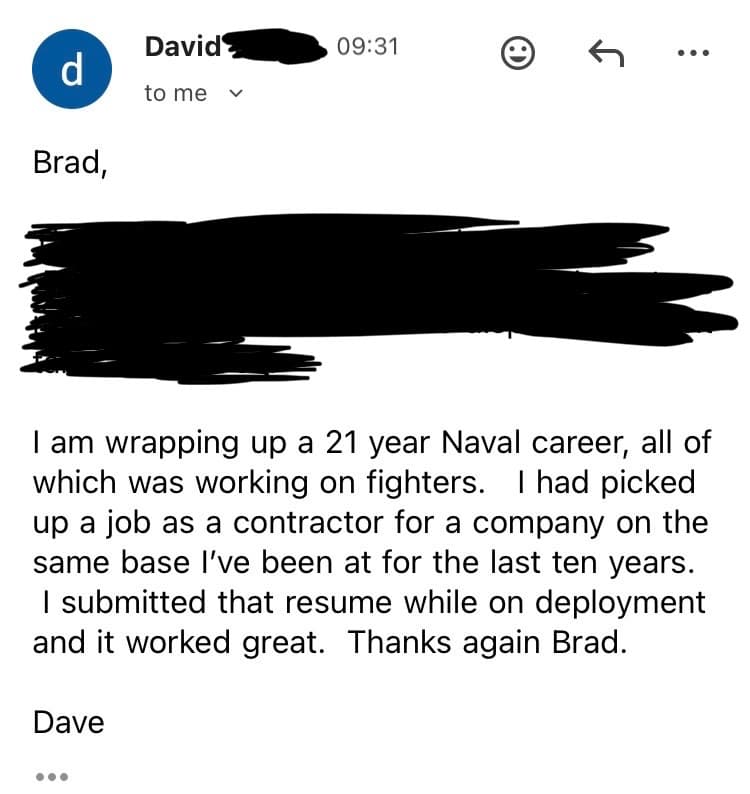
Translate your EO Equipment Operator experience into a resume that gets interviews.
Build Your Resume →