Home / Military to civilian jobs / Marines / 1371

MarinesMOS 1371

Combat Engineer

That is Marines MOS 1371. Civilian jobs, federal paths, and how the work reads on a resume.

What is in this guide

Salary range
$52K to $107K
Career paths
14
Federal GS series
10
Companies hiring
12
Resume examples
8
Certification paths
7
Questions answered
10

What the translation looks like

How it reads in service

Led route clearance team of 12 Marines across 150+ km of MSR, identifying and neutralizing 8 IEDs while maintaining convoy flow and reporting threat intelligence to battalion

How a hiring manager reads it

Led a 12-person field assessment team across 150+ km of operational area, identifying and mitigating 8 critical hazards while maintaining operational continuity and delivering risk intelligence reports to senior management


Roles this background maps to

  • Construction Manager$106,980
  • First-Line Supervisor of Construction Trades$76,060
  • Operating Engineer / Heavy Equipment Operator$58,350

Median pay, BLS OEWS May 2024

Build a resume for a real job

You pick the job. We write it from your 1371 experience. Free to start.

Brad TachiNavy Diver · BMR founder

After the Navy he was hired into six federal career fields and tech sales, and sat on federal hiring panels along the way. The last two years went into rebuilding all of it into BMR, tuned for how resumes get screened today. 71,892 resumes built so far.

Get a free 1371 Combat Engineer sample resume

One page, built in our template, with the military experience translated into the civilian terms hiring managers and screening software read. Use it as a reference for your own. Leave an email and the download link comes to you.

Free. Occasional job-search tips come with it. Unsubscribe anytime.

What the job actually is

Marine Corps Combat Engineers (MOS 1371) are trained in construction, demolition, obstacle emplacement and breaching, mine warfare, and field fortifications. 1371s serve in combat engineer battalions (CEBs) and engineer support battalions (ESBs) across the Marine Corps, supporting infantry operations and base camp construction in both garrison and deployed environments.

Training begins at the Marine Corps Engineer School (MCES) at Camp Lejeune, North Carolina, where 1371s learn basic engineering, demolitions, mine warfare, route clearance, and construction fundamentals. In the fleet, combat engineers operate heavy equipment (bulldozers, excavators, graders, dump trucks), construct fighting positions and defensive obstacles, perform route clearance operations, and build roads, bridges, and structures in austere environments. Many 1371s deploy in direct support of infantry battalions, conducting breaching operations, counter-IED tasks, and mobility/countermobility missions.

The civilian value of a 1371 depends on which part of the job you emphasize. The construction and heavy equipment side maps directly to the construction industry. The demolition and explosives side maps to demolition contractors and blasting operations. The planning and leadership side maps to project management and operations roles. Some 1371s leverage all three — construction management, for example, combines technical building knowledge with the project coordination and leadership skills that senior combat engineers develop by running construction projects in combat zones.

Marine combat engineers don't always think of themselves as "engineers" in the civilian sense — but I worked in federal engineering after the Navy and the demolitions, construction, and project execution side translates faster than the field branding suggests. The 1670 Equipment Specialist series and federal construction supervisor roles routinely hire 1371s. — Brad Tachi, Navy Diver veteran & BMR founder

Security clearance
Secret (some billets)
ASVAB requirement
GT 100+, MM 95+
Training
Marine Corps Engineer School (MCES), Camp Lejeune, NC. Training covers basic engineering, demolitions, mine warfare, route clearance, heavy equipment operation, and construction fundamentals. Follow-on training may include Combat Engineer Vehicle (CEV) operation, Assault Breacher Vehicle (ABV) training, and explosive ordnance training.
Certs earned in service
Military heavy equipment operator qualifications (varies by command), Demolitions training, Mine warfare, First Aid/CPR/AED, Military driver license (tactical vehicles)

Pay reality check

The number that decides most of this: how does civilian pay compare to what the paycheck looks like now?

Marines mid-career

$58K to $82K

E-5 to E-7 total comp: base plus BAH, BAS and the tax advantage.

Civilian Combat Engineer

$56K to $107K

BLS median across the direct-match civilian roles on this page.

Federal, GS-9 to GS-13

$58K to $120K

10 matching GS series, plus locality pay and step increases.

Comparable on average

Civilian pay for Combat Engineers lands in the same range as mid-career enlisted total comp.

Military comp is approximate and moves with location and dependents. Civilian is the BLS median. Federal includes locality pay. The real number depends on duty station, family status, GS step and overtime.

Private sector career paths

The construction industry is the most obvious career path for 1371s, and it is actively hiring. According to BLS (May 2024), First-Line Supervisors of Construction Trades Workers earn a median of $76,060, with Construction Managers earning $106,980. Operating Engineers and Other Construction Equipment Operators earn a median of $58,710.

Heavy construction, infrastructure, and civil engineering firms value Marines who can operate multiple pieces of heavy equipment, read construction plans, and lead crews in demanding conditions. Unlike many civilian-trained operators who specialize in one machine, 1371s typically gain experience across bulldozers, excavators, graders, loaders, and dump trucks — that versatility is a real advantage on jobsites.

For 1371s with demolition experience, the blasting industry (mining, quarrying, and demolition contractors) hires operators who understand explosives safety and detonation procedures. BLS categorizes these under Construction Laborers and Helpers (median $45,300) and Extraction Workers, but specialized blasting positions command premiums above those medians.

Electricians ($62,350 median), Welders ($51,000 median), and Plumbers/Pipefitters ($65,190 median) are adjacent trades that some 1371s transition into, particularly those with specific training from construction projects. However, most trade careers require civilian apprenticeship or journeyman certification regardless of military experience — plan accordingly.

Civilian job title translations

Civilian job titleIndustryBLS median salaryOutlookMatch
Construction ManagerO*NET 11-9021.00Construction / Engineering$106,980About as fast as average (5%)strong
First-Line Supervisor of Construction TradesO*NET 47-1011.00Construction$76,060About as fast as average (4%)strong
Operating Engineer / Heavy Equipment OperatorO*NET 47-2073.00Construction / Mining$58,350About as fast as average (4%)strong
ElectricianO*NET 47-2111.00Construction / Maintenance$62,350Much faster than average (11%)moderate
Occupational Health & Safety SpecialistO*NET 19-5011.00Government / Construction / Manufacturing$83,910Faster than average (12%)strong
CarpenterO*NET 47-2031.00Construction$56,350About as fast as average (3%)moderate
Demolition Specialist / BlasterO*NET 47-5032.00Construction / Mining / Demolition$58,350About as fast as average (4%)strong
Civil Engineering TechnicianO*NET 17-3022.00Engineering / Government$61,270Little or no change (1%)moderate

Companies that hire this background

Turner ConstructionMilitary Recruiting

One of the largest construction management firms in the U.S. Active military hiring program. Projects include commercial buildings, healthcare facilities, and infrastructure.

Fluor CorporationMilitary Transition Program

Global engineering and construction firm with significant defense and federal contracts. Hires combat engineers for construction management, project controls, and field supervision roles.

KBRVeterans Hiring

Defense contractor with construction and engineering operations worldwide. LOGCAP and other government contracts create steady demand for military construction backgrounds.

Bechtel

One of the largest construction and civil engineering companies globally. Infrastructure, energy, and defense projects. Values military project management and construction supervision experience.

AECOMMilitary & Veteran Careers

Global infrastructure consulting firm. Federal and defense construction projects, environmental remediation, and program management. Actively recruits military engineers.

McCarthy Building Companies

National non-residential builder. Healthcare, education, and commercial construction. Superintendent and project engineer roles align well with combat engineer backgrounds.

Granite Construction

Infrastructure-focused builder specializing in roads, bridges, tunnels, and heavy civil projects. The heavy civil focus aligns particularly well with combat engineer experience.

U.S. Army Corps of Engineers (USACE)Civilian Careers

The largest public engineering organization in the world. Civilian positions in construction management, project engineering, and safety. Veterans' preference applies. GS-0809 and GS-0810 series.

CaterpillarVeterans Program

World's largest construction equipment manufacturer. Service technician, field engineer, and equipment specialist roles value heavy equipment operation and maintenance experience.

Hensel PhelpsMilitary Recruiting

Employee-owned general contractor with a strong military hiring reputation. Known for promoting from within and supporting veterans transitioning into construction management.

Skanska USA

Global construction and development company. Heavy civil, building, and infrastructure projects across the U.S. Field engineer and superintendent roles for experienced combat engineers.

DynCorp International (Amentum)Veteran Hiring

Defense contractor providing construction, logistics, and base operations support. Overseas and domestic positions supporting military installations. Now operating under Amentum.

See a salary you want? Build a resume aimed at it.

BMR rewrites your 1371 experience for any of the roles above, in the language the people reading actually scan for.

Free to start. 2 tailored resumes included.

Build My Resume Free

Already have a resume? Get it graded straight.

Upload it and get a number in about a minute, plus the 1371 lines a civilian hiring manager will not follow and what to write instead. No account.

Free. Your file is never stored.

Score my resume free

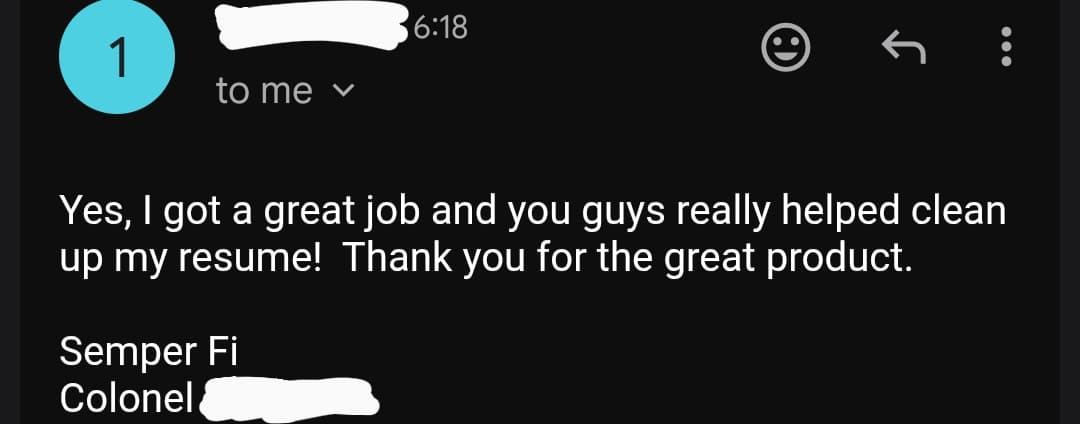
A Marines story from the same road

Eli, success story
I used the resume program to transition a very government centric resume into one that could be easily understood and appreciated in the civilian sector. I applied to several government and corporate jobs using the resume builder to adjust my details according to the job I was applying for. I…

Eli · Colonel (O-6) · Marines · Operations and Intelligence

Read the full story

Federal career paths

The federal government hires engineers, engineering technicians, construction managers, and safety specialists across multiple agencies. The Army Corps of Engineers (USACE) is the largest federal employer of construction professionals, but NAVFAC, GSA, Bureau of Reclamation, National Park Service, and Forest Service also hire from this background.

GS-0809 (Construction Control) is a direct match — these positions oversee federal construction projects and require exactly the kind of hands-on construction knowledge that 1371s bring. GS-0802 (Engineering Technician) covers a broad range of technical positions supporting engineering projects. GS-0018 (Safety and Occupational Health Management) values the explosives and construction safety experience that combat engineers develop.

For 1371s interested in law enforcement, GS-1896 (Border Patrol Agent) and GS-0083 (Police) positions at CBP, USCP, and VA actively recruit Marines with tactical backgrounds. The physical demands and operational mindset transfer directly. GS-0017 (Explosives Safety) positions are available at military installations and agencies that handle energetic materials — your demolitions training is a rare qualification for these roles.

WG (Wage Grade) positions are also worth considering. WG-5716 (Engineering Equipment Operating) and WG-5803 (Heavy Mobile Equipment Mechanic) positions exist at military installations and federal construction projects, often paying competitive wages with full federal benefits.

Federal series and position matches

SeriesFederal job titleTypical gradesMatchExplore
WG-5716Engineering Equipment OperatingWG-8, WG-9, WG-105 of 5View details
GS-0809Construction ControlGS-7, GS-9, GS-115 of 5View details
GS-0802Engineering TechnicianGS-7, GS-9, GS-114 of 5View details
GS-0018Safety and Occupational Health ManagementGS-7, GS-9, GS-114 of 5View details
GS-0017Explosives SafetyGS-7, GS-9, GS-114 of 5View details
GS-1896Border Patrol AgentGS-5, GS-7, GS-94 of 5View details
GS-0301Miscellaneous Administration and ProgramGS-7, GS-93 of 5View details
GS-0810Civil EngineeringGS-7, GS-9, GS-113 of 5View details
GS-0340Program ManagementGS-9, GS-11, GS-123 of 5View details
GS-0083PoliceGS-5, GS-73 of 5View details

Federal resumes follow different rules. We know them.

Federal raters match your record against the announcement's specialized experience statement. BMR writes the federal format for any GS series above, with the hours per week and supervisor detail a rater looks for.

Free to start. Federal and private sector formats included.

Build My Federal Resume Free

Want to change careers entirely?

Not everyone stays in a related field. These paths run on the transferable half of the job: leadership, risk, logistics, planning.

Cartographer and Photogrammetrist$78,380 median · Geospatial and Mapping · O*NET 17-1021.00

Combat engineers spend their careers reading terrain, plotting routes, and turning ground recon into usable map products. That spatial-analysis instinct is the core of mapping work in a completely different industry.

Transfers: Route reconnaissance and terrain analysis, Reading and producing tactical maps and overlays, Spatial data interpretation from imagery and survey data, Precision and attention to detail under field conditions.

How to get there: Most roles want a GIS certificate or an associate or bachelor degree in geography, geomatics, or GIS. Free ArcGIS/QGIS coursework plus a GISP track gets you in the door.

BLS OEWS May 2024 · 5% (Faster than average)

Wind Turbine Service Technician$62,580 median · Renewable Energy · O*NET 49-9081.00

The comfort with heights, hazardous conditions, and unforgiving safety procedures that combat engineers build doing breaching and heavy-equipment work transfers directly to climbing and servicing turbines.

Transfers: Working at height in hazardous environments, Mechanical and hydraulic systems troubleshooting, Confined-space and fall-protection safety discipline, Operating under strict lockout-tagout risk controls.

How to get there: Most enter through a 1-year wind energy technician certificate at a community or technical college; GI Bill covers many programs. Some employers train on the job for mechanically inclined hires.

BLS OEWS May 2024 · 60% (Much faster than average)

Forest Fire Inspector and Prevention Specialist$52,380 median · Wildland Fire and Public Safety · O*NET 33-2021.00

Combat engineers already assess hazardous terrain, manage fire and blast danger, and plan mitigation. Wildland fire prevention is that same hazard-assessment work pointed at a different threat.

Transfers: Assessing terrain and environmental hazards, Explosive and fire-hazard risk evaluation, Planning controlled clearance and mitigation, Operating safely in austere, dangerous field conditions.

How to get there: Entry usually needs fire-science coursework plus National Wildfire Coordinating Group (NWCG) red-card qualifications. Some agencies hire entry crew members and train the certifications on the job.

BLS OEWS May 2024 · 5% (Faster than average)

Claims Adjuster, Examiner, and Investigator$76,790 median · Insurance · O*NET 13-1031.00

Combat engineers understand how structures fail under blast, impact, and earthworks. That trained eye for damage and cause makes property and casualty claims investigation a natural and non-obvious pivot.

Transfers: Structural damage assessment from blast and impact, Documenting field conditions accurately, Cost and scope estimation for repairs, Investigating cause and reconstructing events.

How to get there: Many adjusters enter with a bachelor degree or relevant experience plus a state adjuster license (a short course and exam). Xactimate certification strongly helps for property claims.

BLS OEWS May 2024 · -6% (Decline)

Surveying and Mapping Technician$51,940 median · Geospatial and Civil · O*NET 17-3031.00

Engineers run recon and lay out routes and obstacles in the field. Survey crews do the civilian version: collecting precise field data on terrain and boundaries for projects and mapping.

Transfers: Field measurement and instrument operation, Terrain and elevation data collection, Route and site layout, Working precisely in remote field conditions.

How to get there: Often entry-level with on-the-job training; an associate degree in surveying technology or a certificate accelerates advancement toward licensed surveyor.

BLS OEWS May 2024 · 6% (Faster than average)

Emergency Management Director$86,130 median · Government and Emergency Management · O*NET 11-9161.00

Engineers plan and execute under fire, coordinate units, and manage real hazards on a clock. That incident-command instinct maps onto running emergency operations for a city, county, or agency.

Transfers: Operational planning under time pressure, Coordinating teams across a chaotic incident, Hazard and risk assessment, Resource staging and contingency planning.

How to get there: Typically requires a bachelor degree in emergency management or public administration plus FEMA ICS/NIMS certifications. Veterans often start as an emergency management specialist and move up.

BLS OEWS May 2024 · 5% (Faster than average)

Pivoting industries does not mean starting from scratch.

The skills behind the specialty carry further than the specialty. BMR rewrites your bullets for any of the paths above without making it sound like you have never done the work.

Free to start. Try as many angles as you want.

Tailor My Resume to a New Career

Skills translation guide

If you are applying to construction companies, demolition contractors, or engineering firms, your terminology is largely understood. Construction supervisors know what a D7 dozer is, and demolition companies know what shaped charges are. This section is for 1371s targeting careers outside of construction and engineering: project management, operations management, safety, emergency management, or corporate roles where the hiring manager has never seen a breaching charge or a hasty fighting position.

Resume bullet examples

Before, in service

Led route clearance team of 12 Marines across 150+ km of MSR, identifying and neutralizing 8 IEDs while maintaining convoy flow and reporting threat intelligence to battalion

After, on the resume

Led a 12-person field assessment team across 150+ km of operational area, identifying and mitigating 8 critical hazards while maintaining operational continuity and delivering risk intelligence reports to senior management

Before, in service

Supervised horizontal and vertical construction projects including a 500m improved road, two hardened fighting positions, and a 2,000 sq ft command post, managing a 15-Marine squad over 3 weeks

After, on the resume

Managed multiple construction projects including roadway improvements, reinforced structures, and a 2,000 sq ft facility, directing a 15-person crew through site preparation, material procurement, and final inspection over a 3-week timeline

Before, in service

Qualified operator on D7 bulldozer, TRAM, and front-end loader; maintained equipment readiness above 90% through preventive maintenance and fault diagnosis for a 6-vehicle section

After, on the resume

Maintained 90%+ operational readiness for a 6-vehicle heavy equipment fleet through systematic preventive maintenance scheduling, fault diagnosis, and parts procurement, reducing downtime by implementing standardized inspection procedures

Before, in service

Planned and executed demolition of 3 reinforced concrete structures using calculated charges, maintaining 100% safety record and completing operations within scheduled timeline

After, on the resume

Planned and executed controlled dismantlement of 3 structures, performing engineering calculations for safe removal procedures, maintaining a zero-incident safety record, and completing all operations within the scheduled timeline and budget

Before, in service

Constructed 12 reinforced fighting positions and 800m of triple-strand concertina wire obstacle to MCRP standards, completing battalion defensive plan ahead of schedule with 2 fire teams

After, on the resume

Constructed 12 engineered structures and 800m of perimeter infrastructure to organizational specifications, completing the project ahead of schedule by coordinating 2 work crews and managing material logistics

Before, in service

Managed fleet readiness for 12 pieces of combat engineer equipment valued at $8M+, tracking maintenance intervals, ordering parts through the supply system, and maintaining 92% operational readiness rate

After, on the resume

Directed maintenance operations for a $8M+ heavy equipment fleet of 12 assets, managing preventive maintenance schedules, parts procurement, and operator certification tracking to achieve a 92% operational availability rate

Before, in service

Conducted engineer reconnaissance of 5 potential construction sites, assessing soil composition, drainage patterns, material requirements, and security considerations to recommend optimal locations for battalion headquarters

After, on the resume

Conducted feasibility assessments of 5 potential project sites, evaluating soil conditions, drainage requirements, material needs, and environmental considerations to provide data-driven recommendations to senior leadership for facility placement

Before, in service

Developed and executed training program for 30 Marines on heavy equipment operation, demolition safety, and construction techniques, achieving 100% qualification rate and zero training incidents

After, on the resume

Designed and delivered technical training programs for 30 employees covering heavy equipment operation, safety compliance, and construction methods, achieving 100% qualification rates and maintaining a zero-incident safety record across all training events

Get bullets like these written from your own record.

BMR turns your 1371 duties and accomplishments into civilian bullets aimed at the job you are applying for. No manual translation.

Free to start. Tailored to each posting.

Generate My Resume Bullets

Certifications by career path

Which ones you need depends on where you are headed.

Construction & Trades

Certified Construction Manager (CCM)Construction Management Association of America (CMAA)

Industry credential for construction management. Demonstrates expertise in project delivery, cost management, and quality control.Cost $400-500 exam feeTime 3-6 months studyGI Bill eligibleRequires 48 months of construction management experience — your military construction projects count. Bachelor's degree in related field is preferred but not always required.

AWS Certified WelderAmerican Welding Society (AWS)

Industry-standard welding certification. Multiple process and material certifications available (SMAW, GMAW, FCAW).Cost $300-600 per testTime 1-3 months preparationGI Bill eligibleFor 1371s with welding experience from construction projects. AWS certifications are required or preferred by most construction and fabrication employers.

Emergency Management

Certified Emergency Manager (CEM)International Association of Emergency Managers (IAEM)

Professional credential for emergency management careers. Demonstrates expertise across all emergency management phases.Cost $300-500 application and examTime 3-6 months preparationGI Bill eligibleFor 1371s targeting emergency management careers. Military crisis response and construction emergency experience provides relevant background. Requires combination of education and experience.

Environmental & HAZMAT

HAZWOPER 40-HourOSHA

Required for workers involved in hazardous waste operations and emergency response. Relevant for environmental remediation and emergency response careers.Cost $200-500Time 1 weekGI Bill eligibleRelevant for 1371s with HAZMAT experience or those targeting environmental remediation, emergency response, or chemical safety roles.

GIS & Geospatial

APICS Certified Supply Chain Professional (CSCP)Association for Supply Chain Management

Supply chain management credential. For 1371s pivoting to logistics and supply chain careers.Cost $500-800 for prep + examTime 3-6 months studyGI Bill eligibleEquipment and materials logistics from military construction projects provide relevant background. Growing field with strong demand (BLS projects 17% growth for logisticians).

Project Management

Project Management Professional (PMP)Project Management Institute (PMI)

Universal project management certification recognized across all industries. Not limited to construction.Cost $555 (PMI member) exam feeTime 3-6 months studyGI Bill eligibleYour military construction project experience counts toward the 36-month experience requirement. Strongest certification for 1371s pivoting to non-construction management careers.

Safety & EHS

OSHA 30-Hour ConstructionOSHA

Baseline safety credential for the construction industry. Required or preferred for most construction supervisory positions.Cost $150-300Time 1 weekGI Bill eligibleCan be completed online before separation. Demonstrates construction safety knowledge to civilian employers. Foundation for CSP pursuit.

Certified Safety Professional (CSP)Board of Certified Safety Professionals (BCSP)

Premium safety credential. The gold standard for occupational health and safety careers.Cost $490 exam feeTime 3-6 months studyGI Bill eligibleRequires bachelor's degree and 4 years safety experience. BCSP accepts military construction and explosives safety experience toward the requirement. Highest ROI safety certification.

Transportation & Heavy Equipment

NCCCO Crane Operator CertificationNational Commission for the Certification of Crane Operators

Required by many states and employers for crane operation. Multiple crane types available (lattice boom, telescopic boom, overhead).Cost $300-500 per certificationTime 1-3 months preparationGI Bill eligibleSome 1371s may have crane experience from construction operations. NCCCO certification is the industry standard for civilian crane operation.

Commercial Drivers License (CDL) Class AState DMV

Required for operating vehicles over 26,001 lbs GVWR on public roads. Opens doors to equipment transport and heavy haul trucking.Cost $100-300 (testing fees vary by state)Time 2-6 weeksGI Bill eligibleMany states offer military-to-CDL expedited testing that waives the skills test for veterans with qualifying military driving records. Check your state DMV for specific programs.

Got a cert? Do not bury it.

Placement decides whether a screener ever sees it. BMR knows where each one ranks, what to call it, and how to frame it.

Free to start. Built around your real certs and clearance.

Build My Resume the Right Way

Transition resources

For Staying in Construction & Engineering

SkillBridge Programs: Several construction and heavy equipment companies participate in DOD SkillBridge. Caterpillar, Komatsu dealers, and union apprenticeship programs have historically offered transition pathways. Search the SkillBridge database for current openings.

Union Apprenticeships: The International Union of Operating Engineers (IUOE) and the Laborers International Union (LIUNA) offer apprenticeship programs. Many accept military experience toward apprenticeship hours. Helmets to Hardhats (helmetstohardhats.org) connects veterans to union apprenticeship programs in construction trades.

Heavy Equipment Certification: The National Commission for the Certification of Crane Operators (NCCCO) provides crane operator certifications. Other equipment certifications vary by state — check your state's licensing requirements for the specific equipment you operated.

CDL: Many 1371s already have experience driving military vehicles that exceed CDL weight thresholds. Getting a civilian CDL (Class A or B) is often a straightforward process with your military driving record. Some states offer military-to-CDL expedited licensing.

For Careers Outside of Construction

Project Management: The PMP certification (PMI) converts your construction project experience into a universal project management credential. Your field construction projects — estimating materials, coordinating equipment, managing timelines, supervising crews — count toward the experience requirement. Cost: ~$555 (PMI member).

Safety & EHS: OSHA 30-Hour Construction is the baseline credential (~$150-300, can take online). For a full safety career, target the CSP (Certified Safety Professional) from BCSP. Your construction and explosives safety experience counts toward the experience requirement.

Construction Management: The CMAA (Construction Management Association of America) offers the Certified Construction Manager (CCM) credential. Combines your technical construction skills with management certification.

Federal Employment: Create your USAJobs profile. Target GS-0809, GS-0802, GS-0018, and WG-5716 positions at USACE, NAVFAC, and Bureau of Reclamation. Federal resumes are 2 pages max — build yours here.

Veteran Networking: American Corporate Partners (ACP) provides free mentorship from corporate executives in your target industry.

Education Benefits: GI Bill covers construction management degrees, trade school programs, and professional certifications. Verify approval at the GI Bill Comparison Tool.

BMR Career Resources

Marine Infantry Resume Guide | Complete Military Resume Guide | Top Companies Hiring Veterans | Build Your Resume Free

Your 30, 60, 90-day transition plan

Most people do this backwards: wait for terminal leave, then panic. This is the sequence that works. Already out? Same plan, day one is today.

Days 0 to 30

Set the foundation

  • Pull your DD-214 (request it from milConnect if you are already separated)
  • List your top three civilian roles and your top three GS series
  • Build your tailored 1371 resume, free
  • Write one strong LinkedIn headline, not "veteran seeking opportunities"
  • Gather your evals and performance reports for the accomplishments
Build my resume free

Days 30 to 60

Apply with intent

  • Apply to five to ten jobs a week, quality over volume
  • Tailor every resume to the announcement (BMR does this part for you)
  • Connect with five people a week on LinkedIn, not a spray
  • Set up a USAJOBS profile and a saved search for your GS series
  • Say your bullets out loud to a civilian friend and fix what they do not follow
Tailor my next resume

Days 60 to 90

Close the offer

  • Track every application: date, status, contact, notes
  • Follow up seven to ten days after each one
  • Prep behavioral interviews with the STAR method
  • Negotiate. The BLS median is your floor, not the offer
  • Keep applying after the first offer. Options are the leverage
Track my applications

Questions about 1371

What civilian jobs can I get with a 1371 MOS?

The most direct matches are in the construction industry: Construction Equipment Operator (BLS median $58,710), Construction Supervisor ($76,060), and Construction Manager ($106,980). Heavy equipment operators, demolition specialists, and general contractors all value 1371 experience. Beyond construction, former 1371s work in project management ($100,750), safety management ($83,910), and operations management ($102,950). Defense contractors also hire for training support and engineering technician positions.

What is the salary range for construction careers?

According to BLS May 2024 data: Operating Engineers and Construction Equipment Operators earn a median of $58,710. First-Line Supervisors of Construction Trades earn $76,060. Construction Managers earn $106,980. Electricians earn $62,350, Welders $51,000, and Plumbers/Pipefitters $65,190. Specialized roles (crane operators, blasting specialists) may command premiums above these medians, though BLS does not track them separately in all cases.

Do my military heavy equipment qualifications transfer to civilian construction?

Your operational experience transfers, but civilian certifications and licensing vary by state and employer. Most civilian construction companies will require you to demonstrate proficiency on their specific equipment, even if you operated military equivalents. NCCCO certification is standard for crane operators. CDL is required for operating on public roads. Some union apprenticeship programs through Helmets to Hardhats accept military equipment hours toward apprenticeship requirements — check with IUOE or LIUNA locals in your area.

How do I get into construction management?

Construction management combines technical construction knowledge with project management skills. Certified Construction Manager (CCM) from CMAA is the industry credential. A bachelor's in construction management, civil engineering, or related field is typical for senior positions, though many firms promote from the field based on experience. PMP certification adds cross-industry credibility. Your experience running Marine construction projects — estimating, scheduling, managing crews, coordinating equipment — is directly relevant to civilian construction management.

What federal jobs match the 1371 MOS?

GS-0809 (Construction Control) is the most direct match — overseeing federal construction projects. GS-0802 (Engineering Technician) covers technical engineering support roles. GS-0018 (Safety and Occupational Health Management) values construction and explosives safety experience. GS-0017 (Explosives Safety) is a niche but well-matched series. WG-5716 (Engineering Equipment Operating) positions exist at USACE, NAVFAC, and military installations. GS-1896 (Border Patrol Agent) and GS-0083 (Police) are options for 1371s seeking law enforcement careers.

What if I want to leave construction entirely?

Many 1371s successfully pivot to careers that leverage their leadership and planning skills rather than their construction skills specifically. Project management (BLS median $100,750), operations management ($102,950), safety management ($83,910), and emergency management ($86,130) are all accessible. The key is translating your construction project experience into general management language — you planned projects, managed resources, supervised teams, and delivered results under pressure. See the Career Change Paths section above for specific pivot options.

Is my military demolitions experience valuable in the civilian world?

Yes, in specific sectors. Commercial demolition companies, mining and quarrying operations, and explosive ordnance disposal contractors value candidates who understand explosives safety, blast calculations, and detonation procedures. The GS-0017 (Explosives Safety) federal series specifically requires this expertise. However, civilian blasting licenses are state-regulated and require separate certification regardless of military training — check your state's requirements through the International Society of Explosives Engineers (ISEE).

Should I get a CDL after the military?

If you drove military vehicles over 26,001 lbs GVWR, getting a civilian CDL is usually straightforward. Many states offer military-to-CDL expedited testing that waives the skills test for drivers with qualifying military experience. A CDL Class A opens doors to heavy equipment transport, heavy haul trucking (BLS median $57,440 for heavy/tractor-trailer drivers), and expands your construction career options. Check your state's DMV for military CDL exemptions.

How does Veterans Preference work for federal construction jobs?

Veterans Preference gives you 5 points (honorable discharge) or 10 points (service-connected disability) on federal hiring assessments. For GS positions at USACE, NAVFAC, and other agencies, apply through USAJobs using the veterans filter. For WG (Wage Grade) trade positions, Veterans Preference also applies. Key tip: apply at GS-7 to GS-11 and WG-8 to WG-10 where Veterans Preference has the most impact. Start your federal resume early — federal resumes follow different rules than private sector resumes.

Can I start job searching while still on active duty?

Yes. Start 12 months before your EAS. Check Helmets to Hardhats (helmetstohardhats.org) for union apprenticeship connections. At 180 days, you may qualify for SkillBridge with a construction company or heavy equipment dealer. At 6 months: apply to federal positions (slow process), get your OSHA 30-Hour Construction completed, and start your CDL process if needed. Use terminal leave strategically — many construction companies will bring you on immediately if you have the right certifications.
Turn your 1371 Combat Engineer experience into a resume that gets callbacks

Stop rewriting from scratch every time you apply. BMR turns your military experience into civilian and federal resumes, tailored to each job.

2

Tailored resumes

Rewritten for each job posting

2

Cover letters

Matched to the role

LinkedIn optimization

Profile rewrite for civilian recruiters

Elevator pitch generator

For interviews and networking

2

Company research reports

Know who you are applying to

Job tracker

Every application in one place

Start My Free ResumeFree for every veteran. Built by a Navy Diver veteran, 71,892 resumes built for the military community.