Loading...
Loading...
The civilian and federal jobs that hire Air Force Structurals — with real salaries and the resume that gets callbacks.
Every 3E3X1 has more options than a Google search will tell you. Below: career paths, BLS salary data, federal GS series, certifications by target career, and how to translate your experience without losing what made you valuable to the Air Force in the first place.
Free · No credit card · Tailored resume in under 5 minutes
After the Navy I got hired into 6 federal career fields and tech sales, and sat on federal hiring panels along the way. I spent the last 2 years rebuilding everything I learned into BMR, tuned for how AI actually screens resumes today. This is the system I wish I'd had on day one.
If you held AFSC 3E3X1, you ran the trades that keep an Air Force installation standing. Structural airmen build and repair wooden, masonry, metal, and concrete structures, from footings, slabs, and foundations to walls, roofs, steps, doors, and windows on both prefabricated and permanent buildings. The work mixes carpentry, masonry, concrete and plaster finishing, structural steel erection, and gas and arc welding into one job. You read working drawings and schematics, surveyed work sites to scope material and labor, prepared cost estimates, and tracked work progress against the schedule.
Training started with the Structural apprentice course, and contingency and expedient-structure work means many 3E3X1s deploy with Prime BEEF and RED HORSE teams to stand up bare-base facilities under a clock. That is a rare profile: you can take a set of drawings, scope the job, sequence multiple trades, and put a code-compliant structure on the ground. The job carries no DoD security clearance requirement and is built around the mechanical aptitude area of the ASVAB.
Civilian employers value 3E3X1 experience because it is genuinely multi-trade. Most civilian tradespeople specialize in one craft. You read blueprints, judged materials, ran concrete and masonry, welded structural steel, and coordinated a sequence of trades to a finish date. That blueprint-to-build judgment is the part that transfers furthest, and it opens doors well beyond the job site. To see how the skill set maps across industries, start with our military career crosswalk tool. If electrical or mechanical building systems were closer to your day-to-day, the 3E0X1 Electrical Systems and 3E1X1 HVAC/R guides cover adjacent Civil Engineer paths.
I spent years in federal engineering and construction work after the Navy, and the agencies that maintain federal facilities are looking for exactly the multi-trade judgment a 3E3X1 already has. USACE, NAVFAC, GSA, and the VA all run on people who can read a drawing, scope a repair, and put a code-compliant structure on the ground. The trade you ran in the Air Force is the same work, the only thing that changes is the org chart. — Brad Tachi, Navy Diver veteran & BMR founder
The number that matters when you're deciding what's next: how does civilian pay compare to what you make now?
Military comp is approximate (varies by location/dependents). Civilian is BLS median. Federal includes locality pay. Your real number depends on duty station, family status, GS step, and overtime.
The construction trades that map directly from 3E3X1 sit in a cyclical market tied to interest rates, commercial development, and public infrastructure spending. Pay and demand swing with geography. Metro areas with active commercial pipelines and the Sun Belt generally carry stronger demand than rural markets, and union markets in the Northeast and West Coast pay above the national median for the same craft.
For the trades themselves, the U.S. Bureau of Labor Statistics (BLS OEWS, May 2024) reports a median annual wage of $58,360 for carpenters, $53,010 for brickmasons and blockmasons, $48,250 for cement masons and concrete finishers, and $51,000 for welders, cutters, solderers, and brazers. The roles that reward a multi-trade background more heavily are the ones that supervise or coordinate the trades rather than perform a single one. Construction managers had a median of $106,980, construction and building inspectors $72,120, and cost estimators $77,070 (BLS OEWS, May 2024). If you are weighing whether to keep swinging a hammer or move into the office side, the inspection and estimating paths are where structural breadth pays a premium.
The same blueprint-and-materials judgment that ran your job site also moves into completely different industries. Veterans who came up in other branches' construction ratings, like the Navy BU Builder and Navy SW Steelworker ratings, follow many of the same civilian paths. For a wider scan of where construction skills land, the all-branches MOS-to-civilian job chart lays the options side by side. When you are ready to put this on paper, our military resume builder translates trade experience into language hiring managers screen for.
| Civilian Job Title | Industry | BLS Median Salary | Outlook | Match |
|---|---|---|---|---|
Construction and Building Inspector O*NET: 47-4011.00 | Construction | $72,120 | Little or no change (BLS projected) | strong |
Construction Manager O*NET: 11-9021.00 | Construction | $106,980 | 9% (Faster than average) | strong |
Cost Estimator O*NET: 13-1051.00 | Construction | $77,070 | 1% (Little or no change) | strong |
Carpenter O*NET: 47-2031.00 | Construction | $58,360 | 4% (As fast as average) | strong |
Brickmason and Blockmason O*NET: 47-2021.00 | Construction | $53,010 | 1% (Little or no change) | strong |
Cement Mason and Concrete Finisher O*NET: 47-2051.00 | Construction | $48,250 | 6% (Faster than average) | strong |
Welder, Cutter, Solderer, and Brazer O*NET: 51-4121.00 | Manufacturing | $51,000 | 2% (Slower than average) | strong |
First-Line Supervisor of Construction Trades O*NET: 47-1011.00 | Construction | $79,940 | 5% (Faster than average) | moderate |
BMR rewrites your 3E3X1 experience for any of the civilian roles above — keywords, achievements, and language hiring managers actually scan for.
Free · No credit card · 2 tailored resumes included
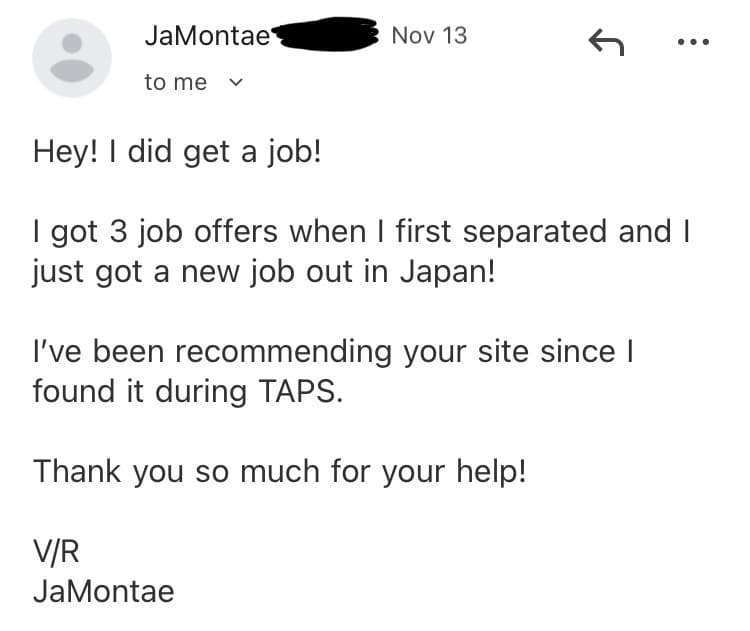
“Hey! I did get a job! I got 3 job offers when I first separated and I just got a new job out in Japan! I’ve been recommending your site since I found it during TAPS. Thank you so much for your help! V/R JaMontae ”
Federal facilities have to be built and maintained by someone, and the agencies that own large real-property inventories hire heavily from the trades. The U.S. Army Corps of Engineers (USACE), Naval Facilities Engineering Systems Command (NAVFAC), the General Services Administration (GSA), the Department of Veterans Affairs, and the National Park Service all run civil-engineering and facilities organizations that need people who can scope, build, and inspect structures.
On the Wage Grade (WG) side, the trade work translates with almost no friction: WG-3603 Masonry, WG-4604 Wood Working (carpentry), and WG-3502 Laboring cover the hands-on crafts a 3E3X1 already performed. As you move toward coordination and oversight, the General Schedule (GS) opens up: GS-0809 Construction Control and Inspection covers the inspector role, GS-0802 Engineering Technician supports project work, and GS-1601 General Facilities and Equipment fits facilities-management positions. The technical engineering series, GS-0810 Civil Engineering and GS-0801 General Engineering, are reachable later with the right education, but the WG trades and GS-0809 inspection path are the realistic entry points off a structural background.
Veterans' Preference adds 5 or 10 points to your federal application rating, and the WG trade positions weight hands-on experience heavily, which favors a tradesperson coming straight off active duty. The federal qualification standard for these roles values demonstrated work performed, not just job titles, so the way you describe the crafts you ran matters. A federal resume builder keeps the format aligned to what OPM expects, and our guide to specialized experience on a federal resume walks through how to phrase trade work for a rating panel. If you are aiming at the inspector or technician series, the GS-7 and GS-9 qualification guide shows where a trade background lands.
| GS Series | Federal Job Title | Typical Grades | Match | Explore |
|---|---|---|---|---|
| GS-0809 | Construction Control | GS-7, GS-9, GS-11 | View Details → | |
| GS-3603 | Masonry | WG-7, WG-8, WG-9 | View Details → | |
| GS-4604 | Wood Working | WG-7, WG-8, WG-9 | View Details → | |
| GS-1601 | General Facilities and Equipment | GS-7, GS-9, GS-11 | View Details → | |
| GS-0802 | Engineering Technician | GS-5, GS-7, GS-9 | View Details → | |
| GS-3502 | Laboring | WG-3, WG-4, WG-5 | View Details → | |
| GS-0810 | Civil Engineering | GS-7, GS-9, GS-11 | View Details → |
Federal hiring uses keyword-matching and structured experience. BMR builds federal-format resumes (USAJobs-ready) with the right keywords, hours/week, and supervisor info — for any GS series above.
Free · No credit card · Federal + civilian resume formats included
Not everyone wants to stay in a related field. These career paths leverage your transferable skills — leadership, risk management, logistics, project planning — in completely different industries.
Crime-scene and lab reconstruction work rewards the same precise measurement, documentation, and materials judgment a structural airman used to verify a build matched its drawings.
Investigating how a fire spread through a structure draws directly on knowing how buildings are framed, loaded, and where they fail, which a 3E3X1 understands from building them.
Structural welders already judge weld soundness by eye. NDT formalizes that into ultrasonic, radiographic, and dye-penetrant inspection of critical components in aerospace, pipelines, and power plants.
Building a custom orthotic or prosthetic device is precision fabrication to a measured spec, the same hands-and-materials judgment a structural airman applied to fabricating building components.
Valuing a property hinges on judging how it was built, its condition, and what repairs cost, which a structural airman reads in minutes from experience putting those systems in.
Estimating was already part of the AFSC. Moving it into manufacturing and product costing applies the same drawing-to-quantity-to-price discipline outside the job site.
Years of working safely around heights, concrete, welding, and heavy materials builds exactly the hazard awareness that industrial and construction employers need in a safety role.
The skills that made you a good Marine, Sailor, Airman, or Soldier transfer further than you think. BMR rewrites your bullets for any of the pivot careers above — without making you sound like you've never done the work.
Free · No credit card · Try unlimited career angles
If you are staying in the construction trades, your terminology already translates. A masonry foreman knows what a 3E3X1 did the moment you say you ran concrete and laid block. This section is for veterans targeting careers OUTSIDE the building trades, where a hiring manager has never set foot on a job site and reads military trade language as a blank.
The goal is to convert craft tasks into the planning, accountability, and quality language that non-trade employers screen for. Lead with the judgment, not the tool.
For a deeper list of conversions, the 50 military terms translated to civilian language glossary is a useful reference, and Air Force veterans should read our guide to translating an EPR or OPR into civilian resume language since your performance reports are the real source of resume content. Our military resume builder handles this translation for you, or you can build your resume now.
BMR turns your 3E3X1 duties and accomplishments into civilian bullets that match the job you're applying for — no manual translation, no rewriting.
Free · No credit card · Tailored to each job posting
Which certifications you need depends on where you're headed. Find your target career path below.
The wrong placement can sink an otherwise strong application. BMR knows where each cert ranks, what to call it, and how to frame it for ATS keyword matching and hiring manager attention.
Free · No credit card · Built around your real certs and clearance
If you want to keep building, the fastest moves are into supervision, inspection, and estimating, where your multi-trade background is an advantage over single-craft workers. SkillBridge is the strongest on-ramp before separation, and several large contractors run construction-focused internships. Our SkillBridge programs by industry list and top SkillBridge companies hiring guide both flag construction-trade partners. Industry associations worth joining include the Associated General Contractors of America (AGC) and the American Welding Society (AWS).
If you are done with the job site, the planning and quality side of your experience travels into inspection, forensics, safety, and appraisal. Start with USAJobs for federal facilities and inspection roles, and use American Corporate Partners (ACP) for free veteran mentorship while you map a new field. The GI Bill can fund the certifications or associate degree that several pivot paths require.
Useful next steps: explore the full military career crosswalk, review TAP and transition timing through the SFL-TAP resources, and when you are ready, build your resume now. For federal-specific formatting, the federal resume builder keeps you aligned to OPM standards.
See also: Army 12W Carpentry and Masonry Specialist, Navy SW Steelworker, and Air Force 3E2X1 Pavements and Construction Equipment career paths. For interview preparation in a new field, work through our Six Sigma for veterans guide on process credentials.
Most veterans do this backwards — they wait until terminal leave to start, then panic. Here's the actual sequence that works.
Print this. Tape it to your monitor. Veterans who treat the transition like a 90-day op get hired faster than the ones who treat it like an emergency.
Stop rewriting from scratch every time you apply. BMR turns your military experience into civilian and federal resumes — tailored to each job.