FE Exam for Veterans: Format, Cost and the Path to the PE
Michael got only rejections. Then a $100K facilities manager role.
Michael, E-7, Navy, tried a ton of outside help before BMR
The Fundamentals of Engineering (FE) exam for veterans is the same test civilians take: 110 questions, $225. Passing is usually the step to the Engineer Intern (EI) title. The Principles and Practice of Engineering (PE) exam is "designed for engineers who have gained a minimum of four years post-college work experience in their chosen engineering discipline."
Once you pass, the FE belongs on your resume. 79,689 resumes have been built on BMR, a resume builder for veterans.
What is the FE exam like?
Every row below comes from the National Council of Examiners for Engineering and Surveying (NCEES). Its FE exam page lists them.
| FE at a glance | What NCEES says |
|---|---|
| Questions | "The FE exam includes 110 questions." |
| Appointment | 6 hours in all. That covers a 2-minute agreement, an 8-minute tutorial and a 25-minute break. |
| Exam time | 5 hours and 20 minutes of actual testing. |
| Where and when | On a computer at Pearson test centers, all year. |
| Fee | "A $225 exam fee is payable directly to NCEES." |
| Disciplines | Seven exams: Chemical, Civil, Electrical and Computer, Environmental, Industrial and Systems, Mechanical, and Other Disciplines. |
| Reference book | NCEES gives you "an electronic reference handbook and all specified design standards during the exam." |
| Calculator | Only certain Casio, HP and TI models are allowed "through 2027." |
| Accommodations | "Reasonable accommodations are available for examinees who meet certain eligibility criteria and sufficiently document their request." |
| Retakes | NCEES policy gives "one attempt per testing window and no more than three attempts in a 12-month period." |
NCEES says the exam is "designed for recent graduates and students" in programs accredited by ABET, the group that accredits engineering degrees. If you finished school years ago, you may still be able to sit for it. Your state board sets who may test.
Which FE discipline should I take?
BMR advice: match the exam to your degree, not your last billet.
- Civil engineering degree: take FE Civil.
- Mechanical engineering degree: take FE Mechanical.
- Electrical or computer engineering degree: take FE Electrical and Computer.
- Chemical, environmental or industrial degree: take the exam with that name.
- A degree with no exam of its own: take FE Other Disciplines.
The PE comes later, in one field. So pick the FE field closest to the work you want next.
Can I take the FE without an ABET degree?
In some states, yes, because each state sets its own rule. Two boards show how different they can be.
Texas
The Texas board's FE eligibility page lets a non-student test with an approved engineering or related science degree. It also accepts "Other degree programs of four years or more" that meet its Rule 133.31. Those programs need:
- "8 semester hours of mathematics beyond trigonometry," including calculus.
- "20 semester hours of engineering science," such as mechanics or circuits.
Students may test too if they are "within two full-time semesters" of graduating.
A Texas Engineer-in-Training (EIT) needs a board-approved degree, a passed FE and a $15 fee. That comes from the Texas EIT page. A degree outside the approved list needs a full evaluation with your application. "A Texas EIT certificate expires eight years from the date of issuance and may be renewed."
You don't need the EIT for a Texas PE. The board says "An EIT certificate is not required to apply for a professional engineer license in Texas." A Texas EIT may also take the PE exam before earning the four years of experience.
Virginia
Virginia's rule is 18VAC10-20-191. You "apply directly with NCEES to take the Fundamentals of Engineering (FE) exam." The rule lists the years of engineering experience each degree needs first:
- An approved engineering or engineering technology degree: zero years.
- Graduated from "a nonapproved engineering curriculum or from a related science curriculum of four years or more": two years.
- Coursework the board judges equal to an ABET technology degree: six years.
Students can test early too. Virginia allows undergraduates in ABET programs with 12 months or less left. They need a certificate of good standing from the dean.
In Virginia, "The EIT designation will remain valid indefinitely."
Your state may differ from both. Read your own state board's FE page before you register.
What if I'm stationed overseas or get orders?
NCEES has a military exception for active-duty members and spouses. It covers those stationed outside the U.S., a U.S. territory or Canada. It "allows an examinee to test in the country in which they are currently located."
- Send your active-duty paperwork to NCEES. You don't ask during registration.
- Requests "are typically completed within 7-10 business days."
- You can't book a test center until it clears.
- You need a new request for each exam registration.
NCEES warns that Pearson centers outside those areas "are very limited." If duty keeps you from test day, "Military duty" is on NCEES's list of refund reasons. You can request a refund, less a $50 processing fee. You must send proof within 30 days of the exam date.
Does my military engineering work count toward the PE?
It depends on your state. Texas puts it in writing on its military page: "The Board shall credit verified military service, training, or education that is relevant to the occupation toward the engineering experience and educational requirements for the professional engineer license."
That is the Texas rule only, and other boards write their own. Check your board before you count any years.
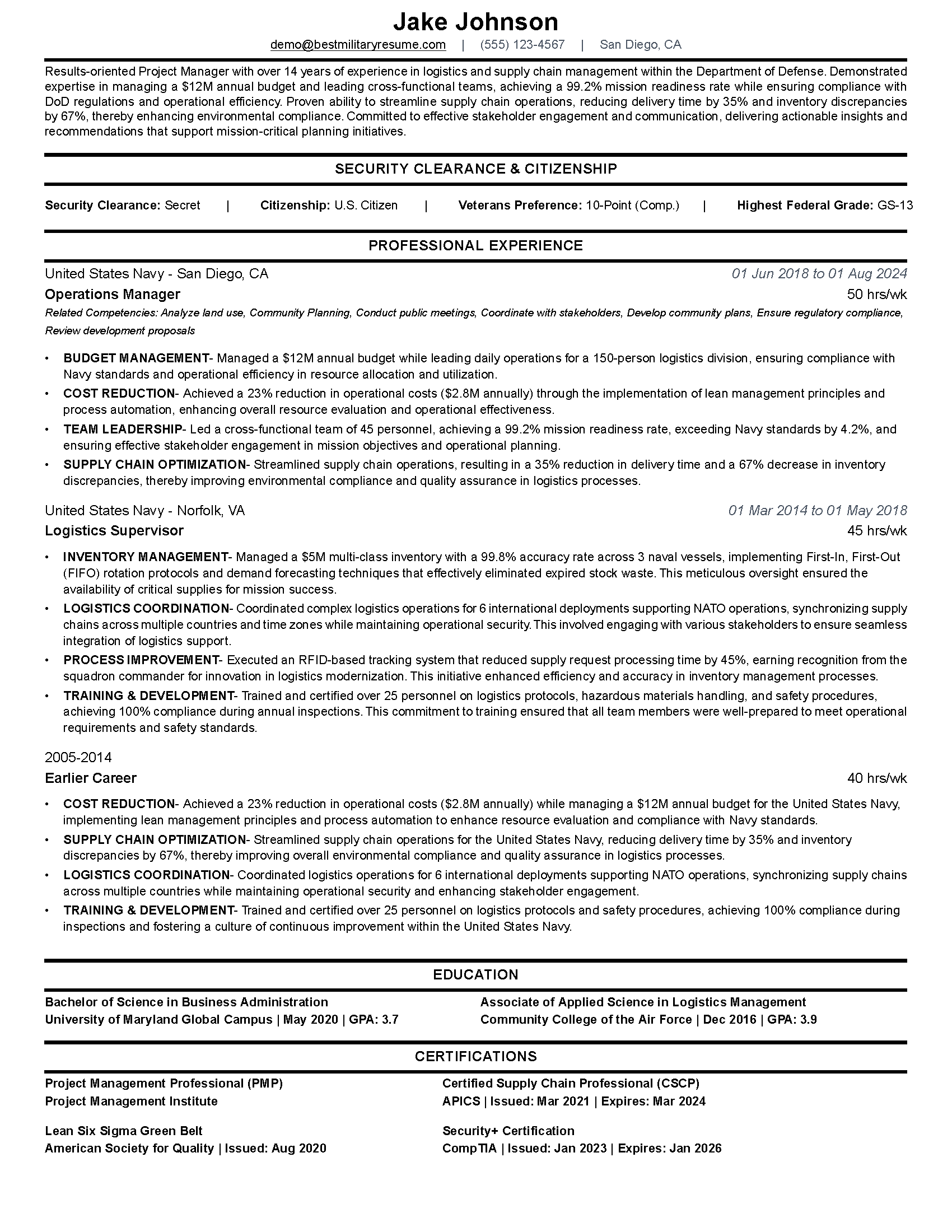
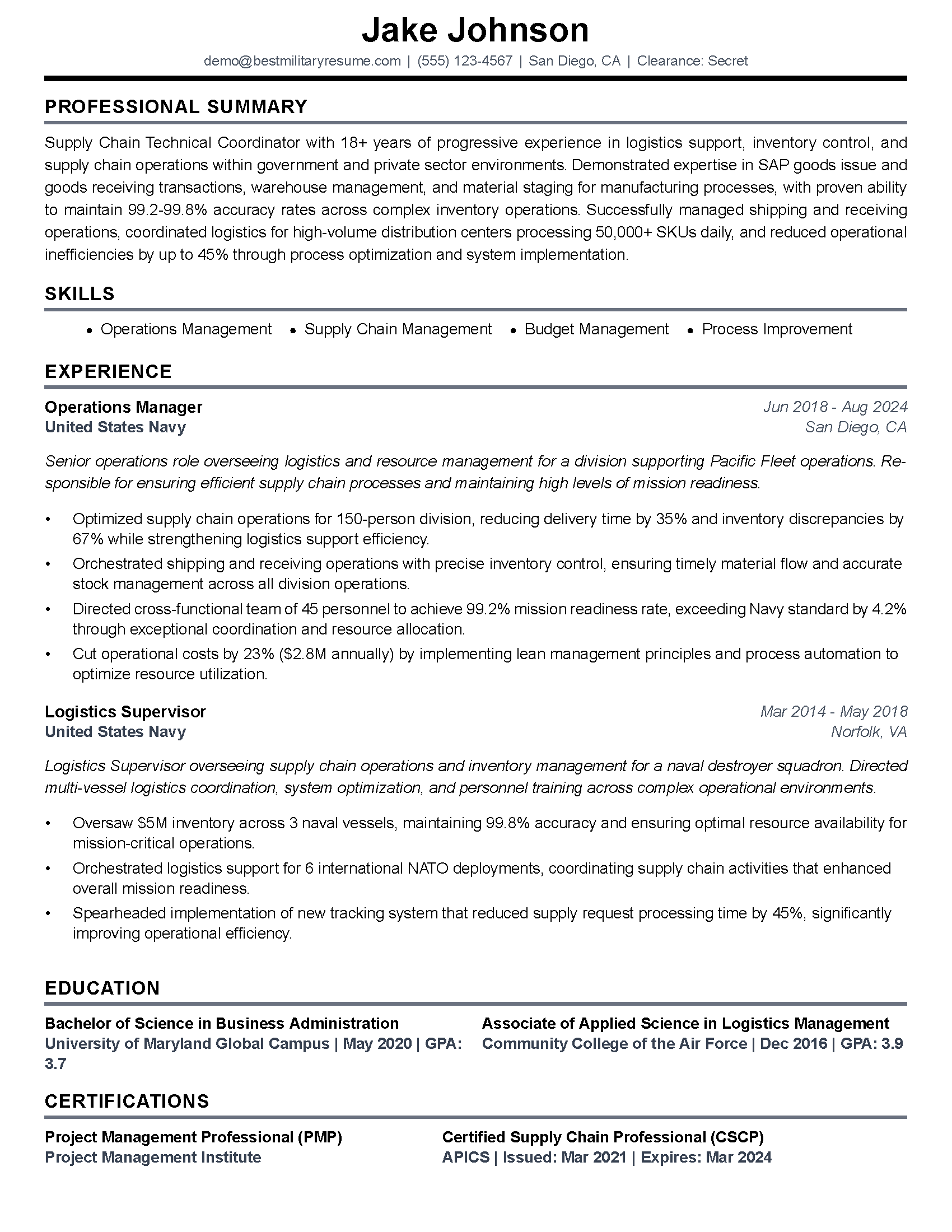
The key word is "verified." Your records and resume need to show the engineering work you did. Write each billet with what you designed or built, how big it was and what changed. Use only the counts, dollars and dates your records back up. For federal work, see the general engineering guide and the engineering technician guide.
Will the GI Bill pay for the FE?
It may. The Department of Veterans Affairs (VA) listed the FE in its test search in November 2026. Its licensing and certification test benefit caps each payback at "no more than $2,000 per test." Each test must lead to a license or certification a job needs.
- It pays registration and administrative fees.
- It still pays if you fail or must retake the same test.
- You need the Post-9/11 GI Bill, either Montgomery GI Bill, or Chapter 35.
- You file VA Form 22-0803 with your receipt and your results.
- You give up some entitlement for every test VA pays back.
Approval is the catch. In VA's words, "Your benefits will cover only tests approved for the GI Bill." VA's test search showed the FE under NCEES, at $225. Check it again before you file.
VA also says "If you don't see a test listed, it may be a valid test that's just not yet approved. We encourage you to submit an application for reimbursement."
Don't use VA Form 22-0810 for the FE. VA says that form is for "tests required for the college or graduate school admissions process." Our certification payback guide covers the rest.
What do engineering jobs pay?
The Bureau of Labor Statistics (BLS) gives May 2025 medians for two of the seven FE fields:
- Civil engineers: "$100,840 in May 2025."
- Mechanical engineers: "$104,110 in May 2025."
A license is not always needed to start. BLS says "Licensure is not required for entry-level positions as a mechanical engineer." It adds that engineers who pass the FE "are commonly called engineers in training (EITs) or engineer interns (EIs)."
For federal civil and mechanical jobs, read the civil engineering guide or the mechanical engineering guide. Navy engineering ratings can start with the Machinist's Mate guide.
Sources checked November 2026: NCEES's FE and PE pages, the Texas board, Virginia's rule, VA's pages and BLS.
What to Do Next
Run one engineer-in-training posting through BMR's Resume Builder. BMR rewrites the summary, skills and work bullets on a copy, matched to that job's terms. It keeps to work you really did, and your starting resume stays untouched. Each new bullet should still show design, size and result, with numbers your records back up.
"After 20 years in submarine nuclear power, I have been given a great opportunity at (Redacted) joining one of their (Redacted) in upstate NY! The interview process went smooth as butter, and the plant leadership was impressed with my experiences, all well-written through BMR!"
Jay, Navy Chief Petty Officer (E-7)
Frequently Asked Questions
Which calculator can I bring to the FE exam?
Can I get testing accommodations for a disability?
Can I take the FE before I finish my degree?
Do I need an EIT to get a Texas PE license?
About the author
Brad Tachi is the CEO and founder of Best Military Resume and a 2025 Military Friendly Vetrepreneur of the Year award recipient for overseas excellence. A former U.S. Navy Diver with over 20 years of combined military, private sector, and federal government experience, Brad brings unparalleled expertise to help veterans and military service members successfully transition to rewarding civilian careers. Having personally navigated the military-to-civilian transition, Brad deeply understands the challenges veterans face and specializes in translating military experience into compelling resumes that capture the attention of civilian employers. Through Best Military Resume, Brad has helped thousands of service members land their dream jobs by providing expert resume writing, career coaching, and job search strategies tailored specifically for the veteran community.