Military Retiree to College Adjunct or Professor: The Path
Michael got only rejections. Then a $100K facilities manager role.
Michael, E-7, Navy, tried a ton of outside help before BMR
You spent 20 years teaching. Maybe not in a classroom with a whiteboard. But you trained new troops and ran qualification courses. You built lesson plans and signed off on people who were ready. A lot of retirees look at a college class and think they could teach it. Many of them are right.
I've been hired into six federal career fields since the Navy. Environmental Management, Supply, Logistics, Property Management, Engineering, and Contracting. I've never been a professor, so I won't pretend to know the faculty lounge. What I do know is the move every one of those jobs asked for. You prove you know the subject on paper, in the words the hiring side uses. A college asks the same question, just with stricter rules.
So here's the worry I hear: "Do I need a PhD? Will 20 years count for anything?" This guide covers the path from military retiree to college professor, with real accreditor rules. You'll see what credentials many schools look for and when experience can stand in. Then you'll see how a faculty CV differs from a resume, and how to write your teaching record. Want a campus job outside the classroom? The guide to higher education administration jobs for military retirees covers staff roles. This one is about teaching.
Adjunct, community college, or full-time professor: which job are you after?
These are three different jobs, and they hire in different ways. Pick one before you write a word.
- Adjunct: A part-time instructor hired to teach one or more courses, often a term at a time. This is where many retirees start.
- Community college instructor: Full-time or part-time. The work centers on teaching, not research.
- Full-time professor at a university: Often expected to research and publish, too. Many of these jobs ask for a doctorate.
The Bureau of Labor Statistics guide to postsecondary teachers backs this up. It says most of them work full time, but part-time work is common. It also says some part-timers hold a full-time job in their field and teach on the side. That fits a retiree well. You can keep a civilian job, or your retired pay, and teach one night class.
BLS also says the typical path is a Ph.D. But it adds that a master's degree may be enough for some community college teachers. Others may need work experience in their field. So for many retirees, the community college and the adjunct role are the realistic first door.
On pay, BLS lists a median annual wage of $85,330 for postsecondary teachers in May 2025. Read that number with care. It covers all postsecondary teachers, full-time professors included. It is not what one adjunct course pays. Per-course pay varies by school, so look for it in each posting or ask HR.
What credentials do colleges look for?
This is the big one. Accreditors set a standard each school must meet. They also publish common benchmarks. Each school then writes its own faculty policy.
One major accreditor is SACSCOC. On September 1, 2026, it began going by a new name: The Commission on Colleges and Universities. Its release says the change does not affect any member school's accreditation. So you'll see both names on school pages for a while. They're the same body.
Its faculty credentials guidelines date from 2006. They were updated in 2018. They give a common benchmark when a school hires by degree:
- General education courses: A doctorate or master's in the teaching discipline. Or a master's with at least 18 graduate semester hours in that discipline.
- Associate degree courses built to transfer: The same master's or 18-hour standard.
- Associate degree courses not built to transfer: A bachelor's in the teaching discipline. Or an associate's degree plus shown skill in the discipline.
- Bachelor's degree courses: The same master's or 18-hour standard.
- Graduate courses: A doctorate or terminal degree in the discipline or a related one.
That 18-hour benchmark is the part people miss. Your master's doesn't have to carry the course's name. Say you hold an MBA, and you want to teach intro to management. If 18 of your graduate hours were in management, many schools could count it.
How to check your own 18 hours
Pull your graduate transcript. Then sort each course by subject. Add up the hours in the field you want to teach. If you hit 18, you may qualify for many courses in that field. That holds at schools that follow this benchmark.
If you're short, the gap may be a few classes, not a whole degree. Some retirees close it with graduate courses before they leave. The guide to online degrees for veterans using the GI Bill can help you weigh options. Check with the school first, so the hours land in the right subject.
One more note. Other accreditors and states use their own wording. Treat the 18-hour benchmark as common, not universal. The posting and the school's faculty policy are the final word.
Can 20 years of experience count without the degree?
Sometimes, yes. And this is where a lot of retirees have a real shot.
The accreditor's Resource Manual for the Principles of Accreditation (fourth edition, 2024) explains Standard 6.2.a. That standard says each school has to justify and document the qualifications of its faculty. The manual looks at a faculty member's overall qualifications. Degrees are one part.
It lists other qualifications that may count. These include related work in the field and licenses or certifications tied to the course. Honors and awards can count too. It also names ongoing professional training, peer-reviewed papers, and a record of strong teaching. The manual says these "are especially important in professional, technical, and technology-dependent fields."
It goes further for technical courses that don't transfer. Those, it says, depend heavily on professional experience and the right certifications. That's a big opening for enlisted retirees with deep technical careers.
But read the catch, too. Some faculty are hired on experience, or with a degree at or below the course level. The manual says those hires need more justification. The school has to write up why you qualify. So your CV has to hand them that case, line by line.
What a good experience case shows
- Years in the subject: Count the years you did the work the course teaches. Leave out the years you didn't.
- Licenses and certifications: List each one with the issuing body and date. An FAA certificate or a trade license reads cleanly.
- Teaching you already did: Formal instructor tours, qualification boards, and courses you built.
- Ongoing training: Recent courses that show you're current in the field.
Some schools may still say no. Experience-based hiring is the school's call, and it takes more paperwork on their side. Apply to several schools at once.
Which courses could you teach?
Start from the course catalog, not your job titles. Every college posts its catalog online. Find the department, read the course list, and mark the ones you could teach next term.
Then match each course to proof. A few examples of how that match might look:
- Logistics or supply chain management: A retiree who ran supply, maintenance support, or distribution for years.
- Intro to management or leadership: A retiree with a graduate degree in management and years leading large teams.
- Technical programs: A retiree with a trade license or FAA certificate, aimed at career and technical courses.
- Emergency management or public safety: A retiree with a matching degree and planning work behind it.
Be honest in this step. A course you can teach well is one where you have both the knowledge and the paper. If you only have one, write it down as a gap to close.
JROTC and K-12 are different paths with different rules. If one fits better, read about JROTC instructor requirements for retirees or teaching certification for veterans.
CV or resume: what does a faculty search want?
Faculty postings often ask for a CV. That's short for curriculum vitae. A resume sells you for one job in a tight space. A CV is a fuller record of your academic and teaching life.
The two share most of the same facts. They just sort them in a new order. For a CV, education goes near the top because credentials decide if you can teach the course. For more on the format, read how to list military status in a CV vs a resume.
Sections a teaching CV usually carries
- Education: Each degree, school, and year. Note the graduate hours in your teaching subject, like "21 graduate semester hours in management."
- Teaching experience: Every formal instructor role, with the course, audience, and size.
- Courses you're qualified to teach: Use the course names from the school's catalog.
- Professional experience: Your military and civilian work, tied to the subject.
- Licenses and certifications: The issuing body and the date for each.
- Training you designed: Courses, curricula, or programs you built or rewrote.
- Presentations and papers: Briefs to outside groups, published articles, or reports, if you have them.
- References: Often three to five, with titles and contact details. Check the posting for the number.
The other documents to expect
Many faculty postings ask for more than a CV. Read the "how to apply" list twice. These often show up:
- Teaching philosophy statement: Usually one to two pages on how you teach and why, per the Illinois guide to teaching statements. Follow the posting if it sets a length. Use one real story from a course you ran.
- Cover letter: Name the courses you want to teach and the proof for each.
- Transcripts: The accreditor's manual says schools should have faculty transcripts on hand for reviews. So order official copies early.
- Sample syllabus: Some schools ask for one. Build it from a course in their catalog.
A missing document can sink a strong application. Make a checklist from each posting and tick it off before you hit submit.
How do you turn military instruction into teaching experience?
This is the section many retirees undersell. You likely taught more than you think. But military instruction often gets written as a duty, not as teaching.
A line many people write looks like this:
Served as instructor at the schoolhouse. Responsible for training students.
Here's the same work, written so a department chair can count it:
Taught a 10-week maintenance course to 24 students per class. Wrote 18 lesson plans and 6 exams. Students passed the final qualification at a 96 percent rate.
The second one gives a course length, a class size, and the materials you built. It also shows a result. These numbers are made up to show the shape. Use your own. If you don't have a figure, leave it out rather than guess.
Questions to pull your teaching record out
- How many weeks or hours did each course run?
- How many students did you teach per class, and per year?
- Did you write or revise lesson plans, tests, or course materials?
- Did you evaluate other instructors or sit on qualification boards?
- What were the pass rates, and did they change while you ran it?
Spell out every acronym the first time you use it. A course name like A-School may need a plain label, like entry-level technical school. The guide to military training instructor resume summaries has more examples you can adapt.
Where do you find openings, and how should you apply?
Many colleges post faculty jobs on their own HR or careers page. Start with schools you can reach for an evening class, or online programs that hire remote adjuncts.
Work it like a target list:
- List five to ten schools: Community colleges near you, plus a few online programs.
- Find the department: Locate the one that teaches your subject. Note the chair's name.
- Read the faculty postings: Copy the credential lines word for word into a notes file.
- Match your proof: For each credential line, write the degree, hours, license, or years that meet it.
- Tailor each CV: Use that school's course names and that posting's words.
Timing matters, too. Colleges plan classes by term, so openings may cluster before fall and spring. Watch the postings over a few months to learn each school's rhythm.
Your network helps here, like anywhere. If you know someone who teaches at a school, ask how adjuncts get hired there. The 12-month networking plan before military retirement walks through how to start those talks early.
What to Do Next
Faculty searches often want a CV. But many retirees don't have a clean resume yet. The CV grows from it. The facts are the same. Get them on paper once, and the CV is mostly sorting.
Spend your next hour on these four steps:
- Pick one course: Choose one course from a real catalog that you could teach next term.
- Count your hours: Add up the graduate hours in that subject from your transcript.
- Write your teaching record: Use the questions above for every instructor role you held.
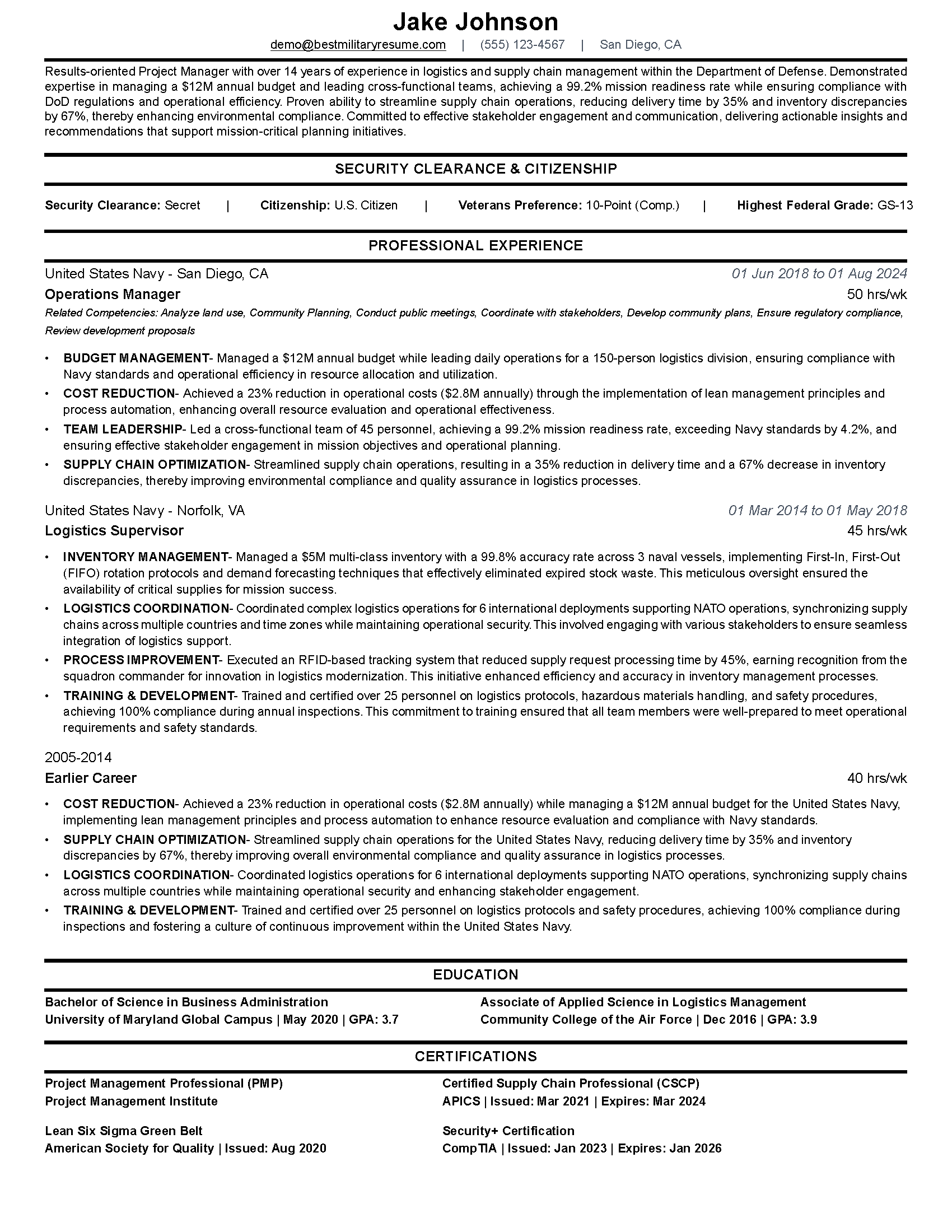
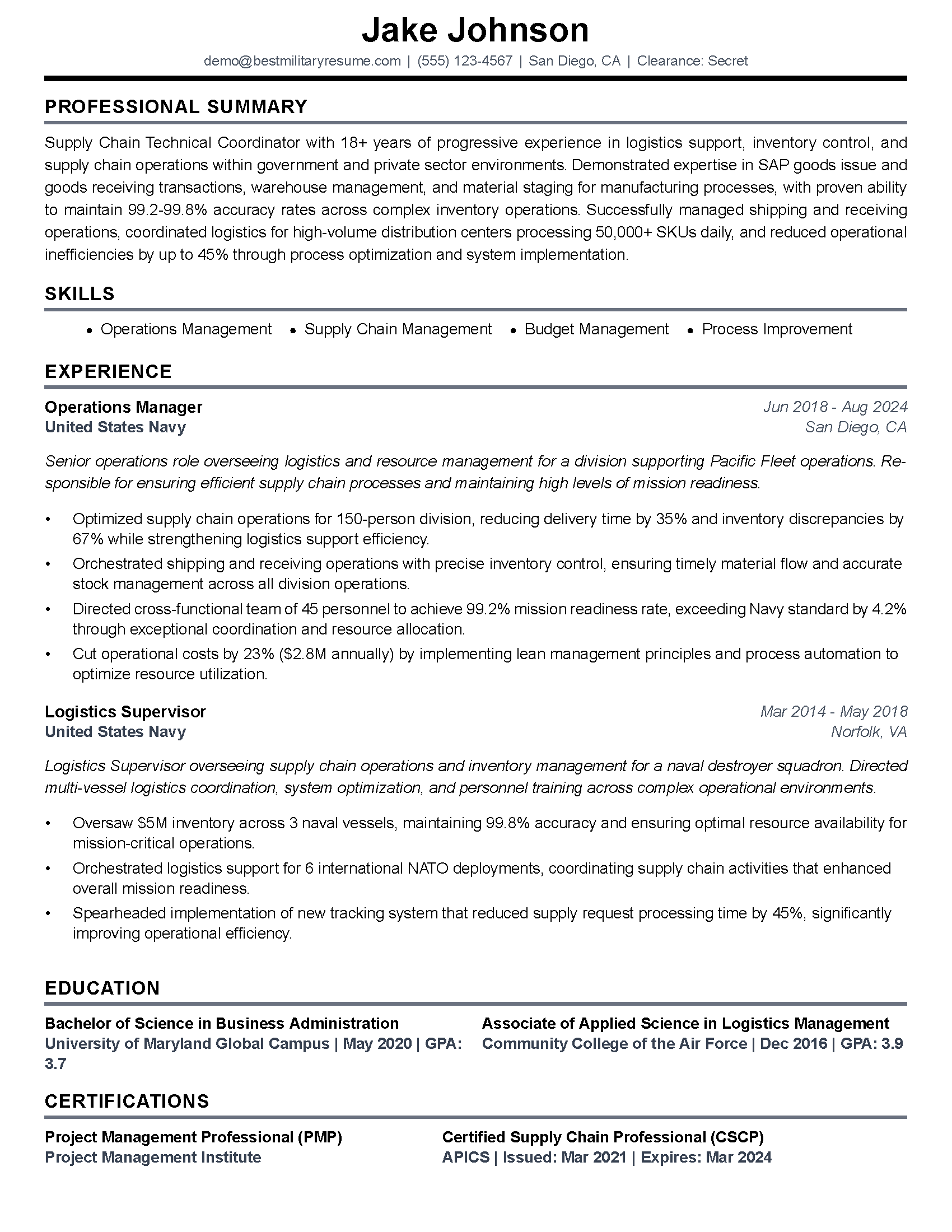
- Build the base resume: Put every job, degree, license, and course you taught in one place.
That last step is where BMR's free resume builder helps. It puts your service into civilian words and spells out the acronyms. It also keeps the scope of what you ran. Your base resume holds everything. Then you can tailor a version to a posting. For faculty jobs, you reorder that same base into a CV. The guide to building a master resume from a thin draft shows how that base comes together.
Twenty years of training people counts for something. Your job now is to put it on the page so a school can prove it.
Frequently Asked Questions
Can a military retiree teach college without a PhD?
What is the 18 graduate hour rule for college faculty?
Is SACSCOC the same as The Commission on Colleges and Universities?
Can work experience count instead of a degree?
Do I need a CV or a resume to teach college?
Does military instructor duty count as teaching experience?
How much do adjunct professors make?
About the Author
Brad Tachi is the CEO and founder of Best Military Resume and a 2025 Military Friendly Vetrepreneur of the Year award recipient for overseas excellence. A former U.S. Navy Diver with over 20 years of combined military, private sector, and federal government experience, Brad brings unparalleled expertise to help veterans and military service members successfully transition to rewarding civilian careers. Having personally navigated the military-to-civilian transition, Brad deeply understands the challenges veterans face and specializes in translating military experience into compelling resumes that capture the attention of civilian employers. Through Best Military Resume, Brad has helped thousands of service members land their dream jobs by providing expert resume writing, career coaching, and job search strategies tailored specifically for the veteran community.