Reinventing Life: From Uniform to Uncertainty
Michael got only rejections. Then a $100K facilities manager role.
Michael, E-7, Navy, tried a ton of outside help before BMR
My Reinvention: Uniform to Uncertainty
The day had finally come.
After twenty years of service, twenty years of early mornings, late nights, deployments, evaluations, mentoring sessions, and missions bigger than myself—I was ready to ask for something I had never asked for before.
Freedom, sweet freedom. It was time to submit my request for retirement.
September 1st fell on a holiday that year, so the office was closed—but that didn’t stop me. I had brought my government laptop home that weekend like it was carrying something sacred. I logged in with my CAC reader, and stared at the screen for a moment longer than necessary.
Twenty years.
I took a breath.
And I hit submit.
In that quiet room, with no ceremony and no audience, my next chapter began. It was the greatest feeling in the world. Freedom wasn’t here yet—but it was finally within sight.
The Final Two Years: Purpose and Pressure
The last two years of my military career were the best — and hardest — of my professional life.
I had what I believe was the greatest job I’ll ever hold.
My mission wasn’t paperwork. It wasn’t metrics. It was people.
I trained and developed men and women across units within a 41-mile radius, ensuring they were ready if our nation ever went to war. I mentored. I guided careers. I checked in during conversations that looked small but weren’t.
I cared deeply. But passion can be uncomfortable.
When I elevated real concerns, not everyone welcomed it. And although I had talked about retirement for years, this role confirmed it was time to pass the baton.
The military gave me everything:
● My degrees
● My PMP certification
● Financial stability
● Growth beyond measure
It shaped me. But there came a point when I decided to choose personal values and beliefs over the job. And that’s when the real transition began.

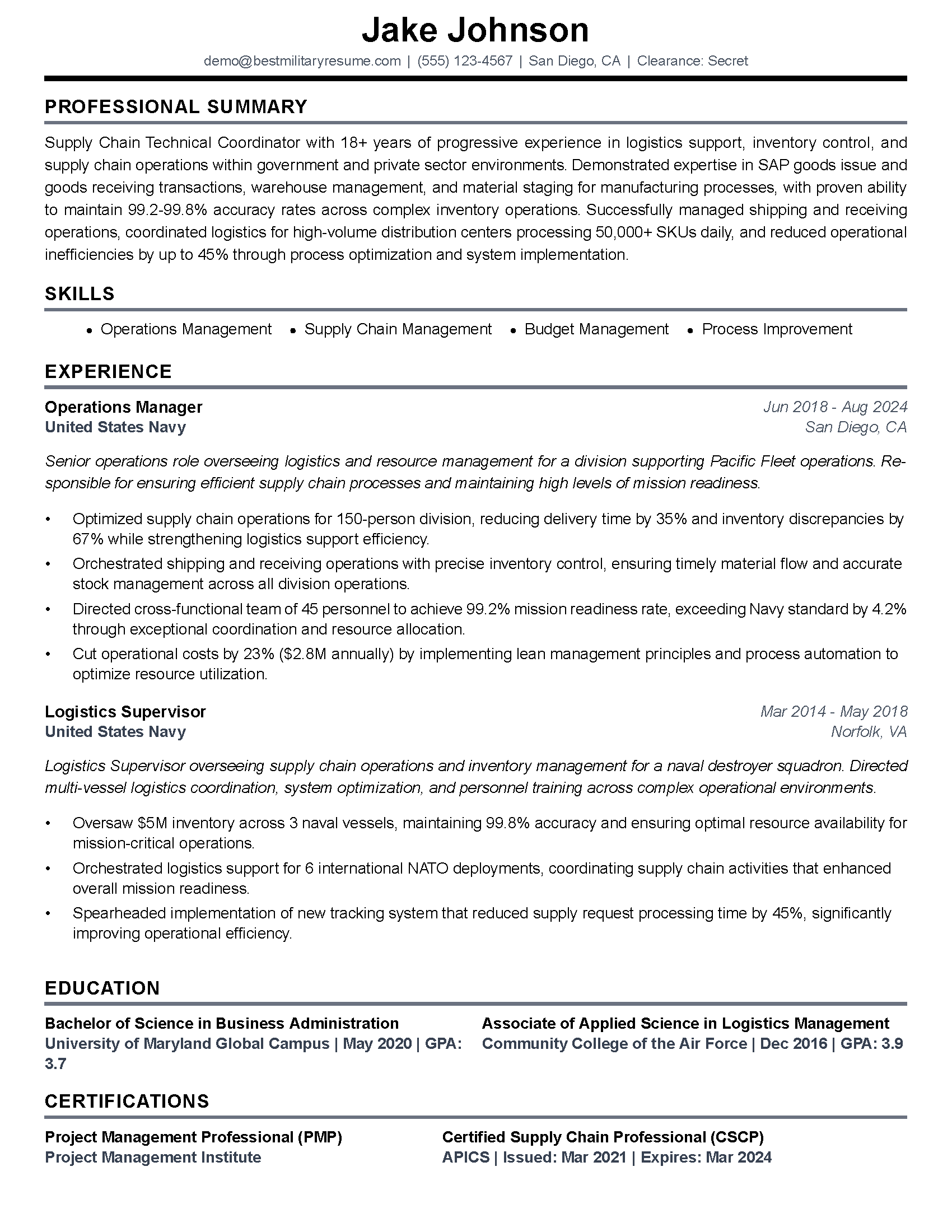
The Myth of the “Easy” Transition
I did everything right.
● SkillBridge
● Terminal leave
● Workshops
● Webinars
● Resume templates
● Interview prep sessions
On paper, I was ready. As a soon-to-be 20-year veteran with an MBA, PMP certification, and years of leadership and strategy development experience, I assumed landing a job would be simple.
It wasn’t.
A few applications turned into dozens. Dozens turned into hours rewriting resumes. Tailoring each one carefully.
Then retyping the same information into online portals that seemed determined to test my patience.
What was the point of the resume?
The Translation Problem No One Warns You About
I had stories. Leadership under pressure. Crisis management. Strategic development. Team transformation.
But in interviews? I choked.
How do you translate 20 years of military service to someone who has never served?
At home, AI tools helped refine my words. In person? There was no safety net.
Civilian employers often wanted:
● Hands-on experience in specific platforms
● Deep specialization in one system
● Industry-specific terminology
In the military we’re trained to adapt across roles. In the civilian world, they sometimes want a master of one.
Cue the rejection emails. The silence. The ghosting.
And then the harder questions started creeping in: Was I aiming too high?
I didn’t want to settle for a job that paid about the same as my high school daughter made — not after 20 years of service, leadership responsibility, and the education and experience I had worked so hard to earn. I was aiming for roles with the pay and title that matched the level I had operated at.
But maybe the civilian world didn’t see it that way.
So the doubts got louder:
Did any of this matter? Was twenty years not enough? Or was I just expecting or asking for too much?
When Support Isn’t Enough
I took advantage of every tool I could find available to veterans:
- Workshops.
- Webinars.
- Resume templates.
- Interview prep guides.
On paper, I had support.
But in reality, none of it seemed to deliver the one thing I truly needed.
A job.
I didn’t need another polished bullet point. I didn’t need another mock interview. I didn’t need someone to tell me how valuable veterans are in the workforce. I needed an offer letter.
Each new resource felt like another reminder that I was doing everything “right” and still coming up empty. The encouragement started to sound hollow. The advice blurred together. And with every rejection email—or worse, silence—my confidence chipped away.
Frustration turned into anxiety. Anxiety turned into doubt. I wasn’t looking for a theory. I was looking for stability. For security. For proof that the last twenty years meant something in this new world. As the weeks dragged on, the distance between preparation and employment seemed to grow.
What Finally Changed: Precision and Positioning
Then I decided to work smarter.
I leaned fully into Best Military Resume — not just as a template tool, but as a strategy.
Instead of listing what I did, I learned how to:
● Translate military impact into civilian language
● Align achievements directly with job postings
● Optimize my resume with keywords that applicant tracking systems actually recognize
● Strengthen my LinkedIn profile for recruiter visibility
● Quantify results instead of listing responsibilities
● Improve my interview skills
It wasn’t about polishing bullets, it was about positioning. That shift changed everything.
Five Months Later: The Call
Five months of sleepless nights later…
The phone rang. I got the job!
A nonprofit role helping people — aligned perfectly with my heart to serve and give back.
I stepped into civilian culture inside a startup nonprofit, and what an adjustment it was. The pace. The structure. The differences in how decisions were made.
I caught myself comparing everything to the military.
But I did what I was trained to do—I adapted, researched, read, and studied. I leaned into the process the way I always had and built the knowledge I needed.
And Then… Another Plot Twist
Four months in, life shifted again. My husband was selected for an overseas assignment. This time, I’d go as a dependent — not the service member.
Exciting. Bittersweet.
It meant resigning from the job I fought so hard to get.
And just like that, another transition began.
Preparation is Key
Here’s what I know now:
The transition isn’t just about resumes. It’s about identity. It’s about translating not just skills — but self. And if you’re in that space right now — applying, waiting, doubting — hear this clearly:
You are not behind. You are not irrelevant. And your twenty years (or ten, or four, or whatever it may be) absolutely matter.
But translation matters too.
Action Steps If You’re Transitioning
If you're preparing to leave Active Duty:
● Start resume refinement 6–9 months early
● Translate impact, not duties
● Match keywords to job descriptions
● Optimize your LinkedIn presence
● Practice civilian interview language
● Use targeted tools like Best Military Resume strategically
Every application is sharpening you.
Every rejection is refining you.
Every adjustment is preparation for the next mission.
Final Word
Temporary emotions should never define permanent outcomes.
Your story isn’t over.
You are still capable. Still resilient. Still mission-ready. This isn’t the end. It’s a new beginning.
And sometimes, the bravest thing you’ll ever submit… is not a retirement request.
It’s your resume.
Stay Tuned
👉 Next series: Purpose Redefined Where I share the realities, challenges, and personal growth that come with navigating life on the other side of the uniform—as a military dependent.
If this resonated with you, share it with another veteran or service member working through the same transition.
Frequently Asked Questions
How long does military transition actually take after you submit your retirement?
Why do veterans struggle to translate military experience in job interviews?
What's the biggest mistake veterans make when applying for civilian jobs?
Do military certifications and degrees guarantee a good civilian job?
When should I start working on my resume before leaving active duty?
What should I do if I'm getting rejected from jobs that match my experience level?
Is it normal to doubt your value during military transition?
What's the difference between transition support and actually getting hired?
About the Author
Retired 20-year U.S. military veteran. After navigating her own military-to-civilian transition — including five months of rejection emails before landing a nonprofit role — Ashley joined Best Military Resume as a volunteer to help other service members find their footing on the other side of the uniform. Now based overseas as a military spouse, Ashley writes the Reinventing Life series on identity, purpose, and the realities of life after service. She holds an MBA and a PMP certification, and channels her experience into encouraging veterans and military spouses navigating their own transitions.
