Build a Military Resume in 15 Minutes That Works
 Brad Tachi6 min read
Desiree landed a $135K hybrid senior financial consultant role.
Desiree, E-5, Army National Guard, the interviewer loved the resume from the top down
Introduction
You can build a military resume in just 15 minutes using the right tools and strategies.
Here's the reality: You've got the skills. You've led teams, managed complex operations, solved problems under pressure. But when you sit down to write a civilian resume? The words don't come easy.
Military language doesn't translate directly to civilian job postings. Your accomplishments get buried in acronyms. Your leadership experience sounds generic when you try to explain it.
And you don't have weeks to figure this out.
This guide walks you through the exact process to build a strong military resume in 15 minutes. You'll learn how to gather your documents, translate your experience into civilian terms, and use tools that do the heavy lifting for you.
No fluff. Just the steps that work.
How Can You Start Building Your Resume in 15 Minutes?
Here's the fastest way to get this done:
Gather Your Documents First
Pull up all of your evaluations (EPR, FITREP, NCOER, OER), and any awards or training certificates. You don't need everything perfect. Just have them ready.
Upload and Let AI Do the Heavy Lifting
Head to BMR's Resume Builder and upload your military documents. The AI reads your evaluations and extracts your accomplishments automatically.
No manual typing. No staring at a blank page wondering how to start.
Convert Military Language on the Fly
Here's where most people get stuck. You see "Squad Leader" and think "Team Manager" sounds weak. You see "Managed $2M budget" and wonder if civilians care.
The tool translates as it builds. Your military roles become civilian job titles. Your technical skills get matched to industry terms that ATS systems recognize.
Paste the Job Posting
Copy the job description you're applying for or just the URL to that announcement. Paste it in. The builder tailors your resume to match what that specific employer wants.
Different job? Different resume. Takes two minutes to adjust.
Review and Download
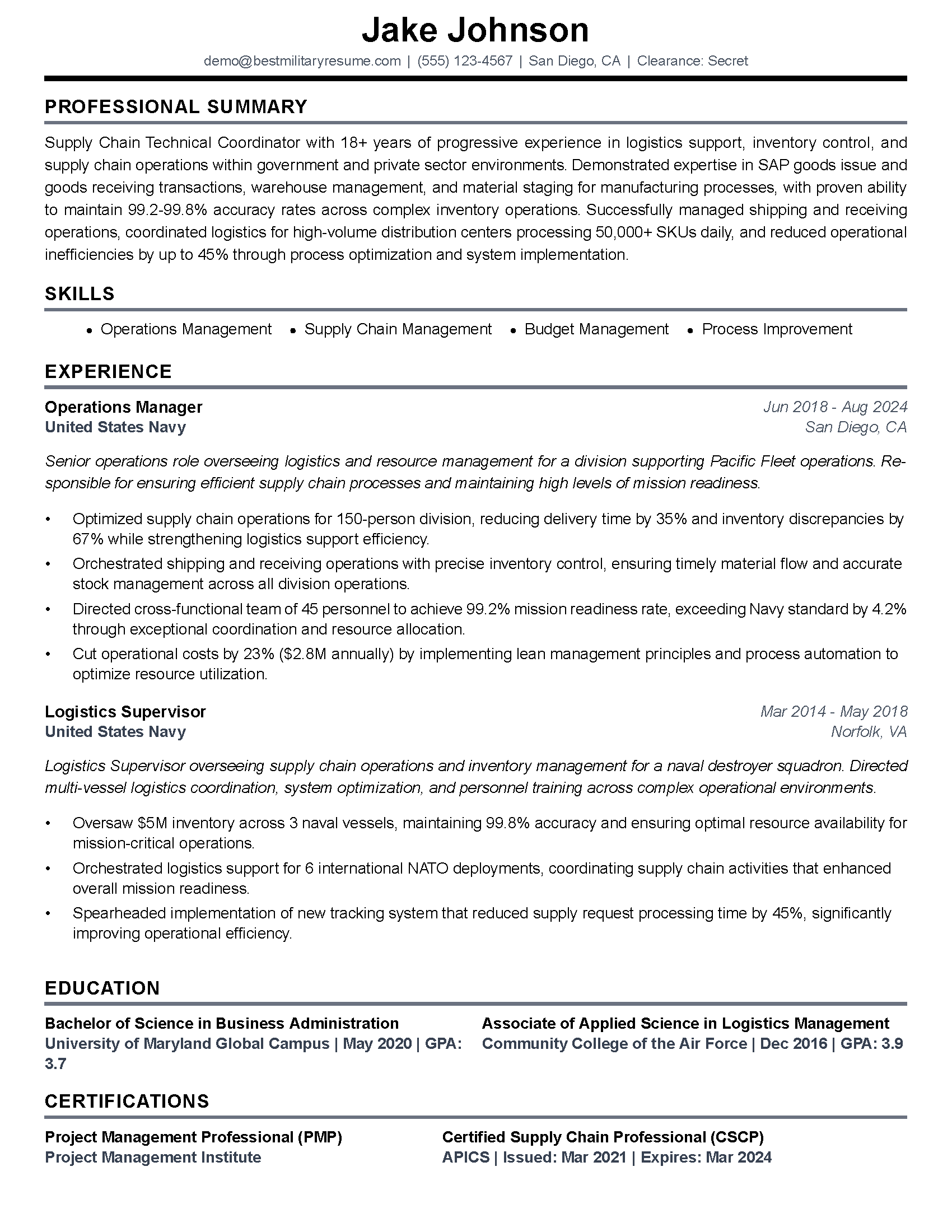
You'll get a clean, ATS-friendly resume formatted for civilian hiring managers. Check that your contact info is current. Make sure the job titles make sense for what you're targeting.
That's it. Fifteen minutes from documents to finished resume.
The hard part isn't writing it anymore. The hard part is deciding which jobs to apply for.

What Tools Make Translating Military Experience Easier?
The translation problem isn't about intelligence. It's about language barriers.
You know what a NCOER means. You know what "led a 12-person team through a six-month deployment" involved. Civilian hiring managers don't.
Here's what actually speeds up the process:
MOS Translator
BMR's MOS Translator shows what a military occupation code maps to in civilian terms. Open the guide for "11B" and get the top civilian job titles for that code. Each one shows real median pay. Your own duties and jargon get converted later, when the resume is built for a posting.
No guessing. No wondering if you're underselling yourself.
Document Upload That Reads Your Evals
The document upload feature pulls accomplishments straight from your EPR, FITREP, NCOER, or OER. It reads the military format and rewrites it in civilian language automatically.
You're not starting from scratch. You're editing what's already extracted.
MOS to Civilian Career Paths
Not sure what jobs match your military background? The MOS Translator shows you civilian career paths that align with your specific military occupation code. It works across all branches.
You see options you didn't know existed.
Why This Matters
Translation tools don't just save time. They catch things you'd miss on your own.
You might not realize that "supply chain management" is the civilian term for your logistics role. You might not know that "crisis management" is more valuable than "handled emergencies."
The tools know. They read military terminology, ranks, and occupation codes.
Use them. Your experience is solid. The words just need to match what employers are searching for.
Common Translation Mistakes That Cost Veterans Interviews
Even with good tools, veterans make predictable mistakes when translating their experience. Here are the ones that come up most often.
Underselling Leadership Scope
"Led a team" could mean three people or three hundred. Civilian hiring managers need specifics. Always include how many people you led, what budget you managed, and what area of responsibility you covered.
Instead of: "Supervised maintenance operations"
Write: "Supervised 22-person maintenance section responsible for 145 vehicles valued at $38M, maintaining 97% operational readiness"
Using Military Time References Without Context
"During a 15-month rotation" won't land with a civilian reader the same way. Translate: "During a 15-month assignment supporting operations in [region]." Better yet, skip the timeframe and focus on what you accomplished.
Listing Duties Instead of Results
Your evaluation already lists your duties. Your resume should show what happened because you did those duties. For every bullet, ask: "So what? What changed because I was there?"
Duty: "Conducted physical security inspections"
Result: "Identified and corrected 47 security vulnerabilities across 12 facilities, eliminating $2.1M in potential liability exposure"
Keeping Military Acronyms
NCOER, FITREP, AFT, MTOE — these mean nothing outside the military. Every acronym on your resume is a speed bump for the reader. If you would not use the term at a civilian dinner party, do not use it on your resume.
The exception: acronyms your target industry uses. If you are applying for a defense contractor role, terms like COMSEC, OPSEC, and SIPR are expected. For a corporate role at Google, they are not.
One Resume for Every Job
This is the single biggest mistake. Sending the same resume to a logistics coordinator position and a project manager position wastes both applications. Each job posting uses different keywords, emphasizes different skills, and has different qualification requirements.
Tailoring takes two minutes with the right tool. Paste the job posting, let the AI adjust your bullets, review the output, and submit. Two minutes per application versus hours of manual rewriting.
What to Do After Your 15-Minute Resume
Your resume is built. Now what?
Save Multiple Versions
Keep a master resume with all your experience, then create tailored versions for each job family you are targeting. Label them clearly: "Resume_ProjectManager_Boeing.pdf" so you do not accidentally send the wrong version.
Build Your LinkedIn Profile
Your LinkedIn profile should complement your resume, not duplicate it. Use LinkedIn for the broader narrative of your career and let your resume handle the job-specific details.
Prepare for the Interview
A strong resume gets you in the door. Interview preparation gets you the offer. Practice explaining your military experience in civilian terms out loud. If you stumble over your own resume bullets when speaking, rewrite them until they flow naturally.
Conclusion
You don't need weeks to build a military resume that works.
Fifteen minutes. That's what it takes when you use the right tools and skip the guesswork.
Your experience matters. Your leadership matters. The challenge was never your qualifications. It was translating them into language that civilian employers understand and ATS systems recognize.
BMR's Resume Builder handles the translation, formatting, and tailoring automatically. Upload your documents. Paste the job posting. Get a resume that matches what employers are actually looking for.
Stop staring at blank pages. Stop wondering if you're using the right words.
Build your resume now. Apply to jobs today. Your transition doesn't have to take months.
The tools exist. Use them!
For proven templates, see our military resume templates that actually work.
Related: Military resume keywords that beat ATS by industry and resume red flags that get veteran resumes rejected.
Frequently Asked Questions
How can I translate military experience to a civilian resume?
Why is a well-crafted military resume important?
What tools can help build a military resume quickly?
How do I make my military achievements stand out on my resume?
What are the first steps in creating a military resume?
Can I use a military resume for all civilian jobs?
What common mistakes should I avoid in a military resume?
How long should a military resume be?
About the Author
Brad Tachi is the CEO and founder of Best Military Resume and a 2025 Military Friendly Vetrepreneur of the Year award recipient for overseas excellence. A former U.S. Navy Diver with over 20 years of combined military, private sector, and federal government experience, Brad brings unparalleled expertise to help veterans and military service members successfully transition to rewarding civilian careers. Having personally navigated the military-to-civilian transition, Brad deeply understands the challenges veterans face and specializes in translating military experience into compelling resumes that capture the attention of civilian employers. Through Best Military Resume, Brad has helped thousands of service members land their dream jobs by providing expert resume writing, career coaching, and job search strategies tailored specifically for the veteran community.
