MyCAA Scholarship 2026: $4,000 for Military Spouses

What Is MyCAA?
The My Career Advancement Account (MyCAA) is a Department of Defense program that provides up to $4,000 in financial assistance to eligible military spouses for education, training, and licensing fees associated with portable career fields. The program covers tuition, fees, books, and exam costs for approved programs at accredited schools and licensing bodies.
The key word is "portable." MyCAA was designed specifically to address the career challenges military spouses face with frequent PCS moves. The program prioritizes credentials you can take with you — certifications, licenses, and associate degrees in fields where you can find employment at virtually any military installation or civilian community. It doesn''t cover bachelor''s or master''s degrees (that''s what the GI Bill transfer or federal tuition assistance is for). It covers the career training that gets you employed quickly and keeps you employable through multiple relocations.
$4,000 may not sound like much compared to a four-year degree, but it''s enough to cover many of the most in-demand certifications in healthcare, IT, education, financial services, and skilled trades — certifications that can lead to $40,000-$80,000+ careers. And unlike student loans, MyCAA money is a scholarship. You don''t pay it back.
Eligibility Requirements
MyCAA eligibility has specific criteria tied to your spouse''s military status:
Spouse of active duty service member in pay grades E-1 through E-5, W-1 through W-2, or O-1 through O-2. This is the primary eligibility requirement. MyCAA targets spouses of junior service members — the population that typically faces the greatest financial barriers to career training.
Must have a valid military ID card. Your military dependent ID serves as proof of your connection to the active duty sponsor.
Service member must have at least one year remaining on their service agreement. If your spouse is separating within 12 months, MyCAA eligibility ends. This ensures the investment in your training supports ongoing military family stability.
Not currently enrolled in the service member''s GI Bill Transfer of Entitlement. You can''t use MyCAA and transferred GI Bill benefits simultaneously. However, you can use them sequentially — MyCAA for a certification now, GI Bill for a degree later.
Brad''s Take
The pay grade restriction is the detail that catches most people. If your spouse just got promoted to E-6 or O-3, you lose MyCAA eligibility. If your spouse is approaching those promotions, use MyCAA now before the promotion goes through. It''s one of those "use it or lose it" benefits that disappears based on a timeline you can predict. Plan accordingly.

What MyCAA Covers (And What It Doesn''t)
Covered
Certification and licensing programs: Industry certifications like CompTIA A+, CompTIA Security+, AWS Cloud Practitioner, medical coding (CPC), pharmacy technician, real estate licensing, personal training certifications, teaching credentials, paralegal certificates, and hundreds more. These are the highest-value uses of MyCAA because they lead directly to employment.
Associate degrees: Two-year associate degree programs at accredited institutions. While $4,000 won''t cover a full associate degree at most schools, it can cover a significant portion when combined with other financial aid. Community colleges with lower tuition rates make MyCAA stretch further.
Exam fees: Certification and licensing exam fees are covered. This includes state licensing board fees, proctoring fees, and retake fees if needed (within the $4,000 cap).
Books and materials: Required textbooks and course materials for approved programs are covered expenses.
Not Covered
Bachelor''s or master''s degrees: MyCAA does not cover four-year degree programs or graduate programs. For these, look into GI Bill transfer, federal tuition assistance, or employer tuition reimbursement programs.
Non-portable career fields: Programs in career fields that are highly location-dependent and don''t transfer well across geographic areas may not be approved. The program prioritizes portability — careers you can practice at any duty station.
Programs at non-accredited institutions: The school or training provider must be accredited or approved by the DoD for MyCAA participation.
Best Ways to Use Your $4,000
Strategic use of MyCAA can launch a portable career that survives multiple PCS moves. Here are the highest-value options by career field.
Healthcare Certifications
Medical coding and billing (CPC/CCS): $1,500-$3,500 for training and certification. Medical coders earn $40,000-$60,000 and can work remotely, making this one of the most PCS-proof careers available. Demand is consistently high nationwide.
Pharmacy technician (CPhT): $1,000-$3,000 for training and certification. Pharmacy technicians earn $35,000-$45,000 and can find work at any duty station with a pharmacy — which is virtually every military community.
Medical assistant: $2,000-$4,000 for training and certification. Medical assistants earn $35,000-$42,000 and are in demand at clinics, hospitals, and military treatment facilities nationwide.
Dental assistant: $2,000-$4,000 for training. Dental assistants earn $38,000-$48,000 and can work in private practice or at military dental clinics on most installations.
IT Certifications
CompTIA A+ / Network+ / Security+: $500-$2,000 for training and exam fees. These entry-level IT certifications open doors to help desk, network administration, and cybersecurity roles earning $45,000-$70,000. Security+ is required for most DoD IT positions, making it especially valuable for spouses seeking on-base employment.
AWS Cloud Practitioner / Solutions Architect: $1,000-$2,500 for training and certification. Cloud certifications are among the highest-demand credentials in tech, with salaries ranging from $60,000-$120,000+ depending on experience level. These roles are frequently remote.
Google IT Support Professional Certificate: $300-$1,000 through Coursera. An affordable entry point into IT that''s recognized by major employers and leads to help desk and IT support roles.
Business and Administrative
Project Management Professional (PMP) prep: $1,500-$3,500 for training and exam fees. PMP certification qualifies you for project management roles earning $70,000-$100,000+. Highly portable across industries and locations.
Bookkeeping/QuickBooks certification: $500-$2,000. Bookkeepers earn $35,000-$50,000 and can work for small businesses anywhere, including remotely. Every community needs bookkeepers.
Real estate license: $1,000-$3,000 for pre-licensing courses and exam fees. Real estate licenses are state-specific but many states offer reciprocity or expedited licensing for military spouses. Earning potential is uncapped.
Education and Childcare
Child Development Associate (CDA): $500-$2,000. CDAs earn $25,000-$35,000 and are in high demand at on-base Child Development Centers and off-base childcare facilities. Most installations have CDCs that actively recruit credentialed staff.
Teaching certification/alternative licensure: Some states'' alternative teaching licensure programs cost $2,000-$4,000 and can be covered by MyCAA. Many states now offer expedited licensing for military spouses, and the teacher shortage means demand is high everywhere.
Important Note
Before committing your MyCAA funds, research whether the certification or license transfers across state lines. Some credentials (like RN, CPA, real estate) have state-specific requirements. Many states have adopted military spouse licensure reciprocity laws, but the specifics vary. Check whether your target credential will follow you to the next duty station before investing your $4,000.
Stacking MyCAA with Other Military Spouse Benefits
MyCAA is powerful on its own, but it becomes even more valuable when combined with other benefits available to military spouses.
MyCAA + Military Spouse Preference (MSP): Earn a certification through MyCAA, then use Military Spouse Preference to get priority consideration for DoD civilian positions that require that credential. For example, earning CompTIA Security+ through MyCAA qualifies you for DoD IT positions where MSP gives you priority hiring. This combination is one of the fastest paths to stable federal employment for military spouses.
MyCAA + Employer Tuition Assistance: If you're already employed at a company that offers tuition assistance, use MyCAA for an initial certification and employer tuition assistance for advanced credentials or continuing education. This lets you build on your MyCAA investment without dipping into other military education benefits.
MyCAA + State Military Spouse Programs: Many states offer additional career training grants, tax credits, or licensing fee waivers for military spouses. These can supplement your MyCAA funds or cover additional certifications beyond the $4,000 cap. Check your state's military spouse employment resources — Military OneSource maintains a database of state-level programs.
MyCAA + Remote Work: Some of the certifications MyCAA covers — medical coding, IT support, bookkeeping, project management — are perfect for remote work. Earning a remote-friendly credential means you can build a career that's not just portable between duty stations, but completely location-independent. You work the same job regardless of where the military sends you.
Common MyCAA Mistakes to Avoid
Choosing a program solely because it's cheap. The goal isn't to spend as little as possible — it's to invest in the credential that leads to the best career outcomes. A $3,500 medical coding certification that leads to a $50,000 career is a better use of MyCAA than a $500 certification that leads to a $25,000 career. Use the full $4,000 strategically.
Not researching the credential's portability. Some licenses don't transfer between states without additional requirements. Before investing MyCAA funds, verify that your credential is recognized in multiple states or that military spouse reciprocity laws apply. Real estate licenses, teaching credentials, and some healthcare licenses are the most common portability concerns.
Waiting too long to start. If your spouse is approaching promotion to E-6, W-3, or O-3, your MyCAA eligibility disappears. Even if promotion isn't imminent, life gets busy during PCS moves and deployments. Start the process early when you have time to complete career counseling, select a program, and actually finish the training.
Not completing the program. MyCAA pays the school directly, and if you don't complete the program, those funds are essentially wasted. Choose a program you can realistically finish given your family obligations, PCS timeline, and personal schedule. Shorter certification programs (8-16 weeks) have higher completion rates than longer programs for military spouses dealing with frequent moves and solo parenting during deployments.
Ignoring the career counseling requirement. The MySECO career counseling session isn't just a checkbox — it's genuinely useful. The counselors understand military spouse employment challenges and can point you toward credentials and careers you might not have considered. Use the session as an opportunity to explore options, not just to satisfy a requirement.
How to Apply for MyCAA
The application process is straightforward but has specific steps that must be completed in order.
Step 1: Create a MySECO account. Go to MySECO (Military OneSource Spouse Education and Career Opportunities) and create an account. This is the portal through which all MyCAA applications are processed.
Step 2: Complete career counseling. Before MyCAA funds are approved, you must complete a career counseling session with a MySECO career coach. This session helps you identify portable career fields, evaluate training options, and develop an education plan. The counseling can be done by phone or online.
Step 3: Identify an approved program. Work with your career coach to identify a specific training program at an approved institution. The school must be in the MySECO approved provider list or willing to become an approved provider. Confirm that the program cost falls within the $4,000 cap or that you can cover the difference.
Step 4: Submit your Education and Training Plan. Through the MySECO portal, submit an Education and Training Plan that includes the specific program, school, cost breakdown, and timeline. Your career coach reviews and approves the plan.
Step 5: Receive your financial assistance document. Once approved, you receive a financial assistance document that authorizes the school to bill MyCAA for the approved amount. The funds are paid directly to the school — you don''t receive a check.
The entire process typically takes 2-4 weeks from initial career counseling to fund authorization. Start early — don''t wait until the week before a program''s enrollment deadline to begin the MyCAA application process.
Key Takeaway
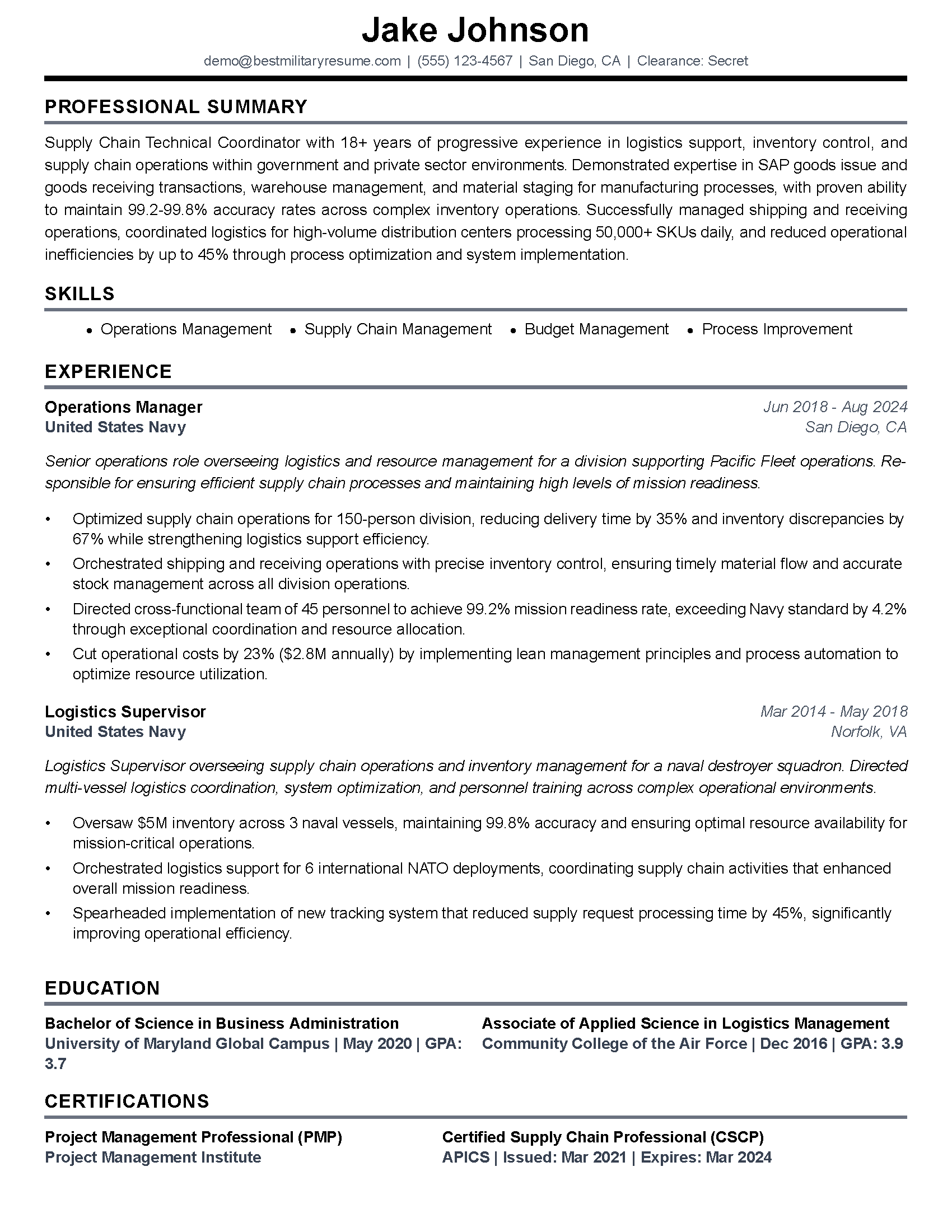
MyCAA is free money for career training — don''t leave it on the table. Focus on portable certifications in high-demand fields that let you find work at any duty station. Healthcare certifications, IT credentials, and business licenses offer the best combination of portability, salary potential, and job availability. And once you have your certification, BMR''s resume builder can help you create a resume that showcases your new credentials alongside any military-connected experience.
For more career training options, see GI Bill career training. Also explore best MyCAA-approved programs and best remote jobs for military spouses.
Related: How to write a military spouse resume that gets hired and every military spouse employment program in 2026.
Frequently Asked Questions
QWhat is MyCAA?
QWho is eligible for MyCAA?
QDoes MyCAA cover bachelor's degrees?
QWhat are the best certifications to get with MyCAA?
QHow do I apply for MyCAA?
QCan I use MyCAA and the GI Bill?
QWhat happens to my MyCAA if my spouse gets promoted to E-6?
About the Author
Brad Tachi is the CEO and founder of Best Military Resume and a 2025 Military Friendly Vetrepreneur of the Year award recipient for overseas excellence. A former U.S. Navy Diver with over 20 years of combined military, private sector, and federal government experience, Brad brings unparalleled expertise to help veterans and military service members successfully transition to rewarding civilian careers. Having personally navigated the military-to-civilian transition, Brad deeply understands the challenges veterans face and specializes in translating military experience into compelling resumes that capture the attention of civilian employers. Through Best Military Resume, Brad has helped thousands of service members land their dream jobs by providing expert resume writing, career coaching, and job search strategies tailored specifically for the veteran community.
Found this helpful? Share it with fellow veterans:
