GI Bill Career Training: Bootcamps to Trade Schools
Tim is a Veteran Career Advisor. He used BMR himself and was hired.
Tim, E-8, Army, recommends BMR to the veterans he advises
Why Does the GI Bill Cover More Than Just College?
Most veterans hear "GI Bill" and think four-year university. That was the original design, sure. But the Post-9/11 GI Bill and the Montgomery GI Bill have expanded well beyond bachelor's degrees. Today, the VA approves funding for coding bootcamps, welding programs, commercial truck driving schools, flight training, on-the-job training (OJT), apprenticeships, and dozens of certification programs.
The problem is that nobody tells you about most of these options. TAP covers GI Bill basics, but the briefing usually focuses on traditional degree programs. When I separated as a Navy Diver, I had no idea the GI Bill could fund trade certifications or apprenticeship programs. I figured it out later, but that gap cost me months of planning time I could have spent getting trained and hired.
After helping 23,726 veterans and military spouses through BMR, I see the same pattern repeatedly. Veterans burn months or years on a degree they don't need when a 12-week certification program would have gotten them hired faster and earning sooner. This guide covers the GI Bill training pathways that lead to a job, how to verify a program is approved, what your housing allowance looks like for each option, and how to put non-traditional education on a resume that actually gets interviews.
What GI Bill Training Programs Are Available Beyond College?
The VA approves more than a dozen ways to use the GI Bill for career training. Many have nothing to do with a bachelor's degree. Here are the six that matter most if your goal is a job, not a diploma. Each has different rules for eligibility, housing allowance rates, and approval processes.
On-the-Job Training (OJT)
OJT lets you earn a paycheck from an employer while the VA pays you a monthly housing allowance on top of it. The employer agrees to train you in a job that normally takes six months to two years. Federal rules set that range for full-time training, and the VA certifies the program. Your GI Bill housing payment starts at full rate and decreases every six months as your employer wages increase. Industries with strong OJT programs include law enforcement, healthcare administration, skilled trades, and manufacturing.
Apprenticeships
Registered apprenticeships through the Department of Labor work like OJT but typically run longer, one to six years. They include structured classroom instruction alongside hands-on work. Electrician, plumber, HVAC technician, ironworker, and elevator mechanic apprenticeships all qualify. The VA pays housing allowance the same way as OJT, scaling down as your apprentice wages increase.
Vocational and Trade Schools
Non-college degree programs at vocational schools qualify if the school holds VA approval. This covers welding, automotive technology, medical assisting, dental hygiene, surgical technology, and commercial driving (CDL). The Post-9/11 GI Bill pays tuition directly to the school (up to the annual cap for private institutions) plus a monthly housing allowance based on the school's zip code.
Coding Bootcamps and Tech Training
The VA has funded select coding bootcamps since the original VET TEC pilot launched in 2019. It also approves bootcamps as ordinary non-college degree programs. That first pilot stopped funding new students on March 25, 2024, and formally ended on April 1, 2024. What exists today is VET TEC 2.0, created by Section 212 of the Senator Elizabeth Dole Act. It reopened to applicants in June 2026, and two rules changed in ways that matter to your planning. VET TEC 2.0 now charges one month of entitlement for every month of full-time training. That charge applies if you still have Post-9/11, Montgomery GI Bill Active Duty, or DEA entitlement left. The VA can also only fund a program that begins on or before September 30, 2027. Approved providers show up in the GI Bill Comparison Tool.
VET TEC 2.0 Now Charges GI Bill Entitlement
VET TEC 2.0 pays tuition, a housing stipend, and a books allowance for approved high-tech training. It is no longer free of entitlement. The VA charges one month of entitlement for every month of full-time training. That applies if you have entitlement left under Post-9/11, Montgomery GI Bill Active Duty, or DEA. If your entitlement is already used up, you can still take part. That training comes on top of what you have already used. The program is capped at 4,000 paid participants per fiscal year. You apply on VA Form 22-10297.
Flight Training
The GI Bill covers flight training, but with restrictions. Under the Post-9/11 GI Bill, you need a private pilot certificate and a second-class medical certificate. Both have to be in hand before the VA funds advanced ratings. Going for the Airline Transport Pilot certificate raises that to a first-class medical. The VA pays your flight school for approved fees, up to a flight-specific cap. For the 2026-2027 academic year that cap is $17,661.89. That sits well under the $30,908.34 the VA pays at a private non-college degree school. The VA pays no monthly housing allowance and no book stipend for standalone flight training. That rule covers flight training at a flight school. Inside a college degree program, the normal housing rules apply. Under the Montgomery GI Bill, flight training reimbursement works differently, covering 60% of approved charges.
Licensing and Certification Tests
The GI Bill reimburses the cost of licensing and certification exams, even if you are not enrolled in a training program. This covers tests like CompTIA Security+, PMP, AWS certifications, real estate licensing exams, and professional engineering exams. The VA reimburses up to $2,000 per test through the licensing and certification reimbursement benefit.
- •Traditional degree programs
- •VET TEC 2.0 bootcamps
- •OJT and apprenticeships (the charge steps down to 80%, 60%, 40%, then 20%)
- •Trade and vocational schools (charged by the tuition VA pays against the annual non-college degree cap)
- •Licensing and certification tests (prorated by the fee, up to $2,000 per test)
- •Flight training (charged against the annual flight cap by dollars paid)
- •Correspondence courses
How Do You Verify a Program Is GI Bill Approved?
Not every bootcamp, trade school, or certification program accepts GI Bill funding. Before you enroll and sign any paperwork, you need to confirm VA approval. Programs that claim "GI Bill accepted" on their website are not always telling the full story. Some are approved for the Montgomery GI Bill but not the Post-9/11 GI Bill, which changes your benefits significantly.
Confirm Approval in the Comparison Tool
Go to the VA's GI Bill Comparison Tool at va.gov/education/gi-bill-comparison-tool. Search by school name or program to confirm VA approval status. The VA retired its public WEAMS Institution Search and now redirects it here.
Read the Program's Detail Page
Once you find the program, open its Comparison Tool profile. The detail page shows estimated costs and the housing allowance rate for that location. It also shows graduation rates, where the VA has that data.
Contact the School's VA Certifying Official
Every VA-approved school has a certifying official who handles enrollment verification. Call them directly and ask which specific programs are approved and under which GI Bill chapter.
Check Your State Approving Agency (SAA)
Each state has an SAA that approves programs for GI Bill use within that state. Your SAA can confirm approval status and flag any pending applications from programs not yet approved.
Red flags to watch for: programs that pressure you to sign immediately, schools that cannot provide their VA facility code, and any program that asks you to pay out of pocket first with a promise of reimbursement. Legitimate VA-approved programs bill the VA directly for tuition under the Post-9/11 GI Bill.
How Does Housing Allowance Differ by Training Type?
Your Monthly Housing Allowance (MHA) under the Post-9/11 GI Bill changes significantly based on what type of training you pursue. This is where many veterans get surprised. The full E-5 with dependents BAH rate only applies to certain program types. Others pay a reduced amount, and a few pay none at all.
For classroom-based programs at brick-and-mortar schools (trade schools, vocational programs, traditional colleges), you receive the full MHA based on the school's zip code BAH rate. This is the rate most veterans expect when they hear about GI Bill housing allowance. Standalone flight training at a flight school is an exception, and it earns no MHA at all.
For online-only programs, the MHA is a flat national rate (currently about half the average in-person rate). If your program is hybrid with some in-person classes, you may qualify for the higher in-person rate based on the campus location. The VA determines this by the ratio of in-person to online instruction.
For OJT and apprenticeships, the MHA structure is different. You start at the full rate during your first six months, then it drops to 80% for the next six months, 60% after that, and so on. The logic is that your employer wages should increase as you gain skills and the VA supplements less over time.
Key Takeaway
Before choosing a training program, calculate the total financial picture: tuition coverage, housing allowance rate for that program type, and how long you can sustain yourself during training. A 12-week in-person bootcamp with full MHA may be financially smarter than a 2-year online program at half the housing rate.
How Should You List Non-Traditional Education on a Resume?
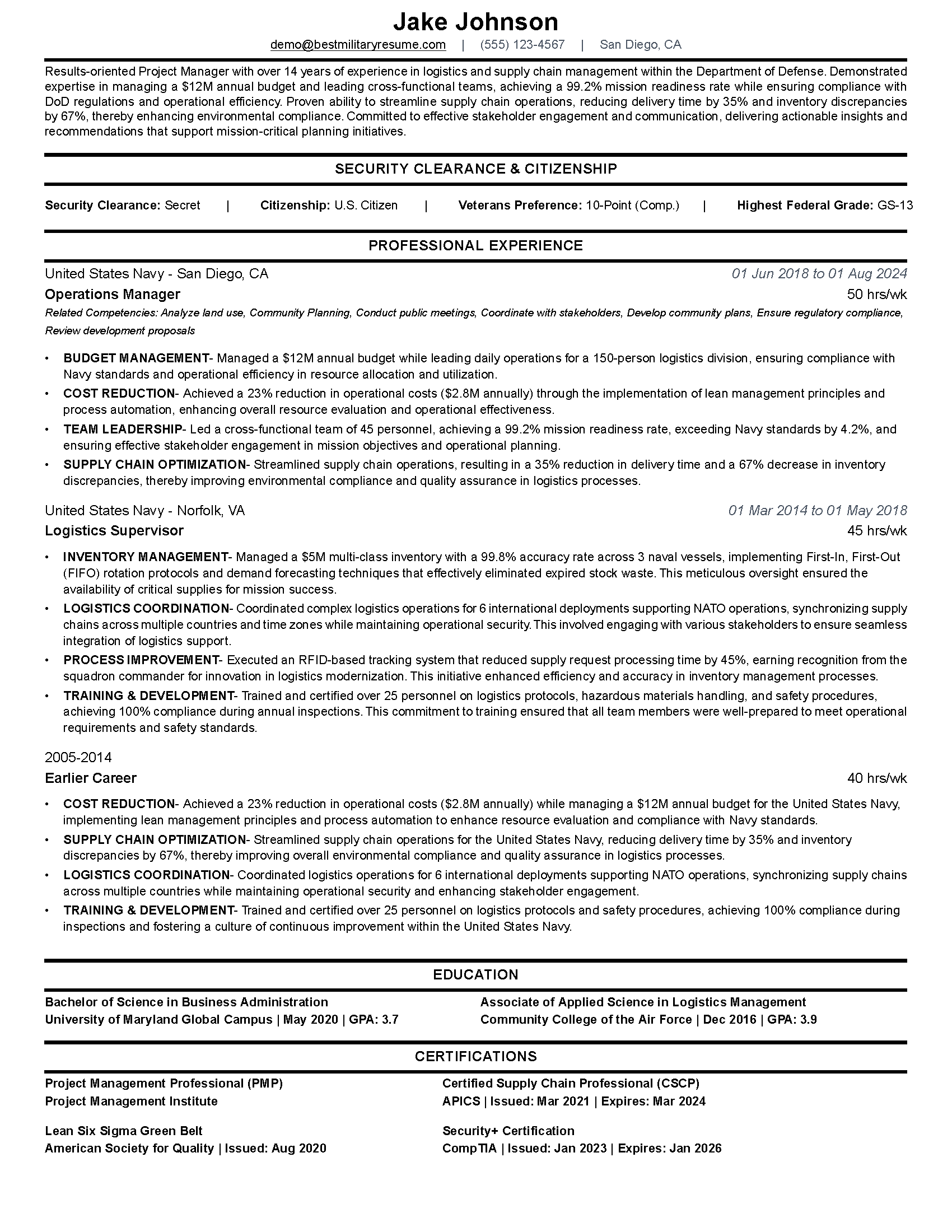
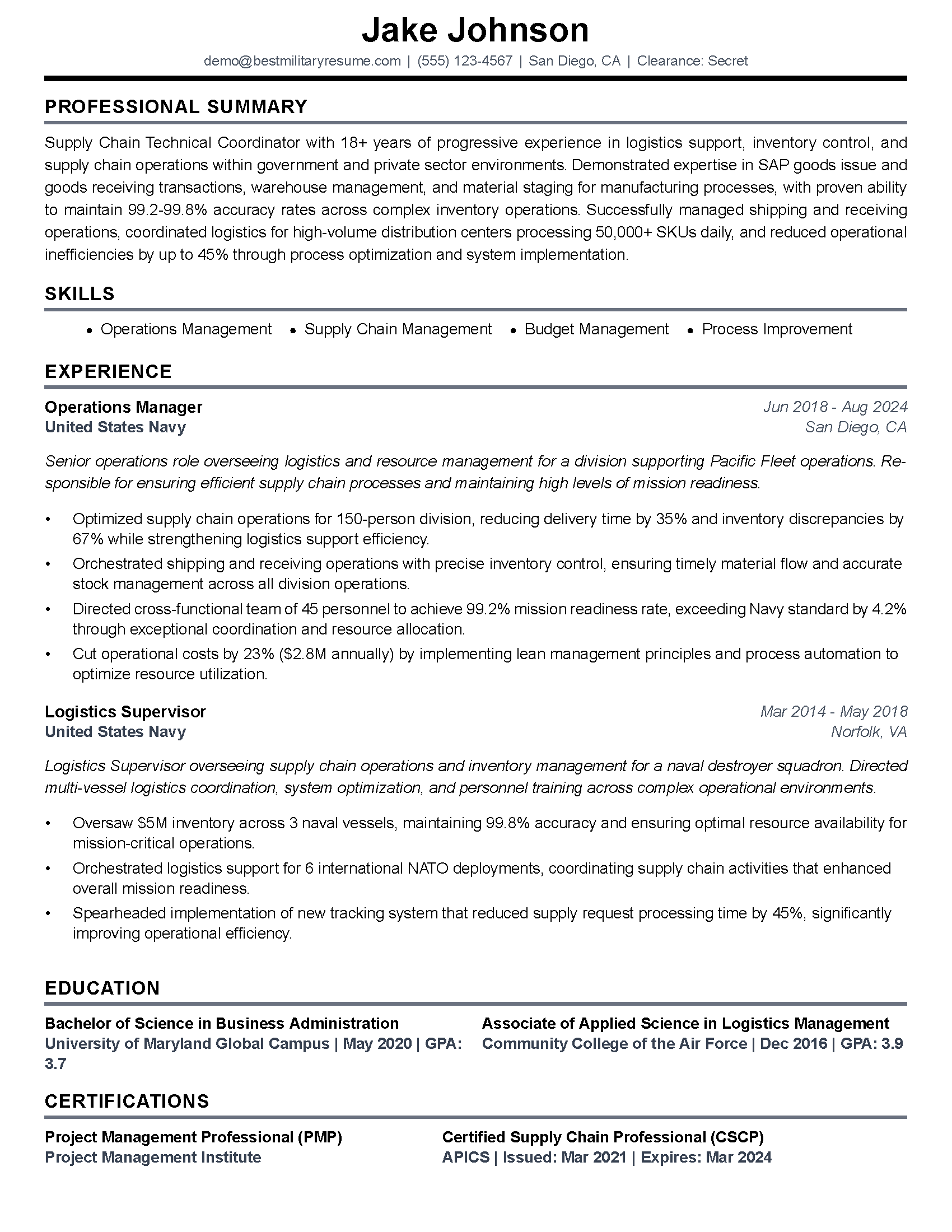
Completing a coding bootcamp, trade certification, or apprenticeship is only half the battle. You need to present that training on your resume in a way that hiring managers recognize and respect. Many veterans bury these credentials at the bottom of their resume or list them in a way that undersells the training.
For coding bootcamps and intensive programs, list the program name, the school, completion date, and the specific technologies or skills covered. Add total instructional hours if the number is impressive (many bootcamps run 500 to 800 hours of instruction). This helps hiring managers understand the depth of training.
Web Development Certificate
Coding Bootcamp, 2025
Full-Stack Web Development Certificate
VA-Approved Coding Bootcamp | 720 Hours | 2025
JavaScript, React, Node.js, PostgreSQL, REST APIs
For trade certifications and vocational programs, include the credential name, issuing body, and any license numbers relevant to your field. If you completed an apprenticeship, list it under work experience rather than education, since apprenticeships combine employment with training. Include your employer name, the apprenticeship title, dates, and key accomplishments just like any other job.
For OJT programs, treat the training period as employment. List the company, your title, dates, and specific results you achieved during training. Hiring managers care about what you can do, not what category of program taught you. BMR's Resume Builder formats these non-traditional credentials automatically, placing them where they make the strongest impression based on the job you are targeting.
In your professional summary, reference the certification or training if it directly relates to the target role. A PMP certification belongs in the summary for a project management job. A CDL belongs in the summary for a logistics or transportation role. Do not bury relevant credentials where hiring managers might miss them during a quick scan.
Which GI Bill Training Paths Lead to the Fastest Hiring?
Not all training paths are equal when it comes to time-to-employment. Based on what we see from veterans using BMR, certain GI Bill-funded programs consistently produce faster job offers than others.
IT certifications (CompTIA Security+, AWS Cloud Practitioner, CCNA) combined with a security clearance regularly lead to job offers within weeks of completion. The defense contractor and federal IT sectors have persistent hiring demand, and veterans with active clearances plus current certifications are in high demand.
Skilled trades apprenticeships in electrical, plumbing, and HVAC fields have strong placement rates because many programs are run by unions or employer associations that hire graduates directly. The Department of Labor reports 93% employment retention for apprentices after they complete a program. The average starting salary is $86,000.
CDL training programs usually run three to six months, according to the Bureau of Labor Statistics. Commercial trucking companies actively recruit from VA-approved driving schools. Many companies offer sign-on bonuses and immediate placement. Healthcare certifications (EMT, phlebotomy, medical coding) also have short training timelines and strong job markets, particularly in areas near VA medical centers and military installations.
Coding bootcamps have more variable outcomes. Under VET TEC 2.0, the law tells the VA to prefer providers that clear one of two bars. The first is a program where at least 70% of graduates find full-time work. That work has to be in the field of study, within 180 days of graduating. The second is a program that refunds tuition to any graduate who does not find that work. Those are fair bars to hold any bootcamp to when you ask for its outcome data. Real results still depend on the school, your effort during the program, and the local tech job market. Do your research on individual program outcomes before committing months of GI Bill entitlement.
Making the Most of Your GI Bill Training Investment
Your GI Bill benefit is one of the most valuable assets you earned through military service. The Post-9/11 GI Bill alone can be worth over $100,000 in tuition and housing allowance. Spending it wisely means matching the training to your actual career goals, not just picking whatever program sounds interesting or is easiest to enroll in.
Start by identifying the career field you want to enter, then work backward to find what credentials that industry actually requires. Talk to people already working in the field. Check job postings for the roles you want and note which certifications, licenses, or training programs they list as required or preferred. Then find a GI Bill-approved program that matches.
If you are still figuring out your direction, BMR's career crosswalk tool can help you see which civilian careers align with your military specialty, including salary ranges and required credentials. Combine that research with the training options covered in this guide, and you will have a clear path from service to your next career.
The veterans who get the most out of GI Bill career training are the ones who treat it like a mission: define the objective, research the route, execute the plan, and build a resume that shows employers exactly what you bring. Your training is the foundation. Your resume is what gets you in the door.
Frequently Asked Questions
Can you use the GI Bill for coding bootcamps?
Does the GI Bill cover trade school?
How do you verify a program is GI Bill approved?
What is the GI Bill housing allowance for OJT?
Does VET TEC use your GI Bill months?
Can you use the GI Bill for flight training?
How do you list a coding bootcamp on a resume?
What GI Bill training gets you hired fastest?
About the Author
Brad Tachi is the CEO and founder of Best Military Resume and a 2025 Military Friendly Vetrepreneur of the Year award recipient for overseas excellence. A former U.S. Navy Diver with over 20 years of combined military, private sector, and federal government experience, Brad brings unparalleled expertise to help veterans and military service members successfully transition to rewarding civilian careers. Having personally navigated the military-to-civilian transition, Brad deeply understands the challenges veterans face and specializes in translating military experience into compelling resumes that capture the attention of civilian employers. Through Best Military Resume, Brad has helped thousands of service members land their dream jobs by providing expert resume writing, career coaching, and job search strategies tailored specifically for the veteran community.
