Air ForceAFSC: 1N3X1

Cryptologic Language Analyst

The civilian and federal jobs that hire Air Force Cryptologic Language Analysts — with real salaries and the resume that gets callbacks.

Every 1N3X1 has more options than a Google search will tell you. Below: career paths, BLS salary data, federal GS series, certifications by target career, and how to translate your experience without losing what made you valuable to the Air Force in the first place.

Free to start · Tailored resume in under 5 minutes

$58K–$125K
Salary Range
BLS-verified median salaries
13
Career Paths
14
Companies Hiring
9
Resume Examples
7
Federal GS Series
6
Certification Paths
10
FAQs Answered
BT
Brad Tachi
Navy Diver · BMR Founder

After the Navy I got hired into 6 federal career fields and tech sales, and sat on federal hiring panels along the way. I spent the last 2 years rebuilding everything I learned into BMR, tuned for how AI actually screens resumes today. This is the system I wish I'd had on day one.

65,000+ resumes built·Success stories every week
Free Sample · Emailed to You

Get a free 1N3X1 Cryptologic Language Analyst sample resume

One page, built in our template, with your military experience translated into civilian terms hiring managers and ATS systems read. Use it as a reference for your own. Drop your email and we'll send you the download link.

Free. We'll also send occasional job-search tips. Unsubscribe anytime.

Military Role Overview

As a 1N3X1 Cryptologic Language Analyst, you sat at the front end of the intelligence cycle. You were the one who could actually understand the target. Where a 1N2X1 charts the signal and a fusion analyst stitches the picture together, you translated, transcribed, and gisted foreign-language voice and text communications in near real time, then reported what mattered up the chain. That is rare work. The Defense Language Institute Foreign Language Center at the Presidio of Monterey trains you in one language for anywhere from 36 to 64 weeks depending on category, and you carried a DLPT score that the government re-tested every year.

The day-to-day is more than translation. You worked SIGINT collection positions, ran language quality control on intercepted material, built target knowledge over months, and briefed analysts and operators who did not speak the language but needed the meaning fast and right. Many 1N3X1s rotate through NSA, the 70th ISRW, the 480th ISRW, Fort Meade, Lackland, Kunia, Misawa, and RAF Menwith Hill. You held a TS/SCI clearance with a CI or full-scope polygraph, and you handled material where a mistranslation had operational consequences.

Civilian employers value this background for two reasons that have nothing to do with the military. First, proven foreign-language proficiency that a federal test scored and re-scored every year is a credential most applicants can only claim. Second, you produced accurate, time-pressured analytic product from ambiguous source material. That combination opens language-services work, intelligence and analysis roles, and a long list of fields you would not expect. If you want to see how your skill set maps across branches and industries before you commit to one lane, start with the military-to-civilian career crosswalk. For the analyst-heavy paths, the 1N0X1 All Source Intelligence Analyst and 1N2X1 Signals Intelligence Analyst pages cover the adjacent career lanes you trained alongside.

I sat on the federal hiring side of the table after the Navy, and a cleared 1N3X1 is one of the cleaner federal hires there is. Verified language proficiency plus a TS/SCI is exactly what the GS-1040 Language Specialist series and the intelligence community recruit for, and most of your hardest credentials are already in a government system. I was a Navy Diver, not a linguist, but I learned which resumes got referred and which got buried, and your problem is almost never your experience. It is translating that experience into language a federal HR specialist can rate against the standard. — Brad Tachi, Navy Diver veteran & BMR founder

Security ClearanceTop Secret/SCI with CI or full-scope polygraph
ASVAB RequirementGeneral: 72; plus a qualifying DLAB score for language training
TrainingBasic Military Training, then language training at the Defense Language Institute (36 to 64 weeks by category), then cryptologic and SIGINT analysis training at Goodfellow AFB
Certs Earned in ServiceDefense Language Proficiency Test (DLPT) rating, DLI language certificate, SIGINT analysis training

Pay Reality Check

The number that matters when you're deciding what's next: how does civilian pay compare to what you make now?

Air Force mid-career
$58K–$82K
E-5 to E-7 total comp (base + BAH + BAS + tax advantage)
Civilian Cryptologic Language Analyst
$58K–$125K
BLS median across direct-match civilian roles
Federal (GS-9 to GS-13)
$58K–$120K
7 matching GS series + locality pay + step increases
Comparable on average
Civilian pay for Cryptologic Language Analysts lands within the same range as mid-career enlisted total comp.

Military comp is approximate (varies by location/dependents). Civilian is BLS median. Federal includes locality pay. Your real number depends on duty station, family status, GS step, and overtime.

Private Sector Career Paths

Your language proficiency and analytic output map to several civilian fields with real salary data behind them. The figures below come from the U.S. Bureau of Labor Statistics Occupational Employment and Wage Statistics, May 2024.

Interpreters and translators (O*NET 27-3091.00) is the most direct match. BLS reports a 2024 median wage of $58,400, with the top earners in technical, legal, and conference work running well above that. The market rewards rare and harder languages, so if you held a category III or IV language at DLI, you are positioned for the higher end. Demand is concentrated around courts, hospitals, federal contractors, and language-services firms. Be honest with yourself about geography. Conference and government-linked work clusters around D.C., and remote phone and video interpreting has grown but pays less per hour than on-site specialty work.

Intelligence analysts in the private sector are tracked by BLS under a broader umbrella; the closest published figure is intelligence analyst work captured within management analysts (O*NET 13-1111.00) and information security and threat-intelligence roles. Cleared analyst positions with defense contractors lean heavily on your TS/SCI and your demonstrated ability to build target knowledge over time. This is the same lane the Army 35P Cryptologic Linguist and Navy CTI Cryptologic Technician Interpretive compete in, so you are not alone in this transition and the hiring managers already understand the pipeline.

Localization specialists (O*NET 27-3091.00, the same occupational code as translators) adapt software, games, and content for foreign markets. This is a tech-adjacent role that pays toward the upper end of the translator wage band and rewards people who can move fast and keep meaning intact under deadline. The work is heaviest at software, gaming, and global-content companies.

For salary and growth across all of these, the BLS figure to anchor on is the translator median of $58,400; cleared analyst roles run materially higher because the clearance itself carries a premium. If you want to understand exactly how much your clearance adds, the breakdown in Security Clearance Jobs: Salary by Clearance Level is worth a read before you negotiate. When you are ready to put this on paper, the military resume builder is built to translate this exact background, or you can build your resume now.

Civilian Job Title Translations

Interpreter and Translator
Language Services
strong
$58,400median
2% (As fast as average)
O*NET: 27-3091.00
Localization Specialist
Software & Global Content
strong
$58,400median
2% (As fast as average)
O*NET: 27-3091.00
Intelligence Analyst
Defense & Government Contracting
strong
$99,410median
11% (Much faster than average)
O*NET: 13-1111.00
Information Security Analyst (Threat Intelligence)
Cybersecurity
moderate
$124,910median
33% (Much faster than average)
O*NET: 15-1212.00
Court Interpreter
Legal Services
moderate
$58,400median
2% (As fast as average)
O*NET: 27-3091.00
Medical Interpreter
Healthcare
moderate
$58,400median
2% (As fast as average)
O*NET: 27-3091.00
Foreign Language Instructor
Education
moderate
$65,000median
4% (As fast as average)
O*NET: 25-1124.00

Companies That Hire This Background

Direct civilian roles in language analysis and SIGINT for former cryptologic linguists.
All-source and language analyst roles across the combatant commands.
Cleared analyst and linguist-support roles across the IC mission.
Intelligence and language-services contracts supporting DoD and the IC.
One of the largest linguist and translation contractors to the U.S. government.
Cleared intelligence, language, and analysis roles across federal contracts.
Global translation and localization firm hiring translators and localization specialists.
Large provider of phone and video interpreting for healthcare, courts, and business.
Localization, interpreting, and language-data work for global software and content clients.
Hires language analysts and linguists across field offices and HQ.
Language and program roles supporting diplomatic and analytic missions.
IC mission support including cleared linguist and analyst staffing.
Localization, program, and analyst roles, plus AWS GovCloud teams that value cleared backgrounds.
Localization and language-services firm hiring linguists and localization specialists.

See a salary you want? Build a resume targeting it.

BMR rewrites your 1N3X1 experience for any of the civilian roles above — keywords, achievements, and language hiring managers actually scan for.

Free to start · 2 tailored resumes included

Build My Resume Free
Real Air Force success story
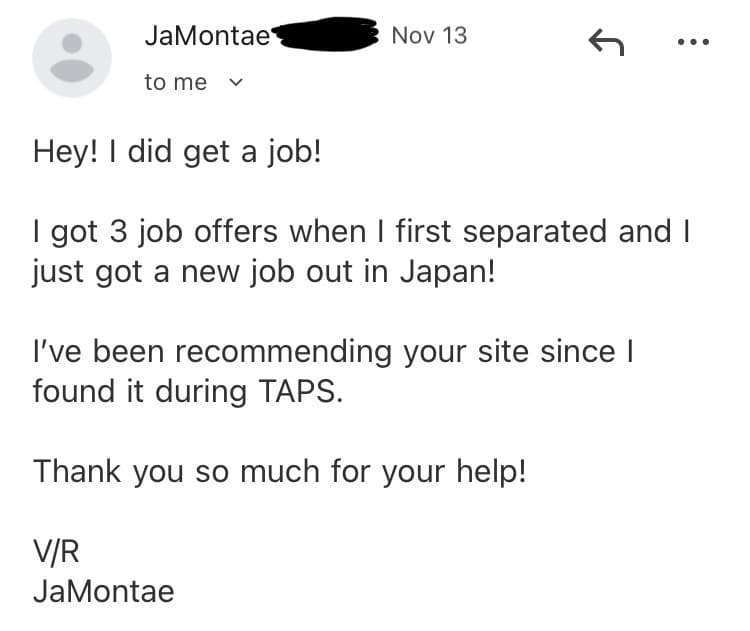
Hey! I did get a job! I got 3 job offers when I first separated and I just got a new job out in Japan! I’ve been recommending your site since I found it during TAPS. Thank you so much for your help! V/R JaMontae
JaMontae· Staff Sergeant (E-5)· Air Force
Information Technology and Computer Science
Read the full story

Federal Career Paths

Federal service is the strongest single path for a cleared 1N3X1, and the qualification standards line up with your record better than almost any private posting. The series to target:

GS-1040 Language Specialist is the direct fit. This series covers translating, interpreting, and language analysis across the intelligence community, the State Department, the FBI, and DoD components. Your annual DLPT scores are evidence the rating panel can use directly, which is unusual; most applicants have to argue proficiency they cannot prove. Cleared 1N3X1s typically qualify at GS-9 through GS-12 depending on time in service and language category.

GS-0132 Intelligence is the analyst series for the IC. NSA, DIA, and the combatant commands hire heavily here, and your collection and target-development experience qualifies you. Grade placement usually runs GS-9 to GS-13 with your clearance and operational background.

GS-1701 General Education and Training and the related GS-1712 Training Instruction series matter because DLI and the broader DoD language enterprise need instructors and curriculum developers who actually held the linguist seat. If you instructed or ran quality control, you have the qualifying experience.

Two adjacent series round out your options. GS-0301 Miscellaneous Administration and Program absorbs language-program and IC-support roles that do not fit a tighter series, and GS-0080 Security Administration fits if you want to move toward the security and clearance-adjudication side using your TS/SCI background.

Veterans' Preference applies across all of these, and your clearance shortens onboarding dramatically because the agency does not have to fund a new investigation. To see how your record reads against the federal standard, the 15 Federal Resume Tips That Get Veterans Referred guide is the place to start, and the federal resume builder handles the USAJobs formatting. When you are ready to apply, you can start your federal resume here.

GS Series & Position Matches

GS-1040
Language Specialist
Typical grades: GS-9, GS-11, GS-12
View Details
GS-0132
Intelligence
Typical grades: GS-9, GS-11, GS-12, GS-13
View Details
GS-1046
Language Clerical
Typical grades: GS-9, GS-11
View Details
GS-1712
Training Instruction
Typical grades: GS-7, GS-9, GS-11
View Details
GS-1701
General Education and Training
Typical grades: GS-9, GS-11, GS-12
View Details
GS-0080
Security Administration
Typical grades: GS-7, GS-9, GS-11
View Details
GS-0301
Miscellaneous Administration and Program
Typical grades: GS-7, GS-9, GS-11
View Details

Federal resumes follow different rules. We know them.

Federal hiring uses keyword-matching and structured experience. BMR builds federal-format resumes (USAJobs-ready) with the right keywords, hours/week, and supervisor info — for any GS series above.

Free to start · Federal + civilian resume formats included

Build My Federal Resume Free

Want to Change Careers Entirely?

Not everyone wants to stay in a related field. These career paths leverage your transferable skills — leadership, risk management, logistics, project planning — in completely different industries.

Technical Sales Representative

$100,070
Global Commerce(O*NET: 41-4011.00)BLS OEWS May 20241% (Little or no change)
Native-level foreign-language fluency for international accountsCross-cultural communication and regional expertiseTranslating complex technical detail for non-expert audiencesComposure and judgment under deadline pressure

Companies selling into foreign markets need reps who can build trust in the customer's own language and read cultural context most sales teams miss. Your verified fluency and regional knowledge are a direct edge on international accounts.

How to get there: Start in inside sales or a sales-development role tied to a region you know. Product training plus a track record moves you to field sales; no degree is strictly required.

Market Research Analyst

$76,950
Marketing and Research(O*NET: 13-1161.00)BLS OEWS May 20247% (Faster than average)
Longitudinal research from fragmentary, ambiguous sourcesForeign-language source exploitation for global marketsSynthesizing raw signal into decision-ready findingsAccuracy review under deadline

Market research is target-knowledge development pointed at consumers instead of adversaries. Foreign-language ability lets you read primary-source material on international markets that English-only analysts cannot.

How to get there: A bachelor's helps; many enter via market-research coursework or a Google Data Analytics certificate plus a portfolio. Survey and statistics tools (SPSS, R) are the upskill.

Survey Researcher

$63,380
Research(O*NET: 19-3022.00)BLS OEWS May 20244% (As fast as average)
Designing and interpreting research instrumentsCross-cultural and multilingual study designDisciplined accuracy and quality controlSynthesizing ambiguous data into clear reporting

Survey research rewards the exact rigor a language analyst applies to source material. Multilingual study design and cross-cultural interpretation are scarce and directly billable skills.

How to get there: Typically requires a bachelor's in social science or statistics; a master's opens senior roles. Coursework in research methods and survey design is the entry path.

Technical Writer

$91,670
Technology and Communications(O*NET: 27-3042.00)BLS OEWS May 20241% (Little or no change)
Real-time summarization of complex material into clear textAccuracy review and standards enforcementTranslating technical detail for non-expert readersSustained editorial judgment under deadline

Gisting is technical writing under a stopwatch. You already turn dense, ambiguous source material into accurate, decision-ready prose for readers who do not share your expertise.

How to get there: Build a portfolio of clear documentation samples. A technical-writing certificate plus familiarity with tools like Markdown, Git, and a help-authoring platform gets you in the door.

Adult ESL Instructor

$59,950
Education(O*NET: 25-3011.00)BLS OEWS May 2024-14% (Declining)
Deep applied knowledge of language acquisitionCross-cultural communication and patienceCurriculum and quality-control experience from DLI-adjacent workAssessing proficiency against a standard

You learned a foreign language to a tested standard as an adult, which is exactly the journey your students are on. That lived experience plus any instruction time at DLI translates straight into teaching adults.

How to get there: A TEFL or TESOL certificate is the standard entry credential; community colleges and language schools hire on that plus a bachelor's. Note BLS projects this field to decline, so target growing markets.

Compliance Officer

$78,420
International Trade and Compliance(O*NET: 13-1041.00)BLS OEWS May 20244% (As fast as average)
Standards enforcement on high-stakes deliverablesReading foreign-language regulatory and trade documentsMeticulous accuracy and audit disciplineHandling sensitive information under strict rules

Export controls, sanctions screening, and trade compliance need people who can read foreign-language documentation and hold a rule line precisely. Your quality-control habits and language access fit international-trade compliance well.

How to get there: Entry roles exist with a bachelor's; certifications like Certified Export Specialist or a customs-broker license accelerate movement into senior trade-compliance roles.

Pivoting industries? You don't need to start from scratch.

The skills that made you a good Marine, Sailor, Airman, or Soldier transfer further than you think. BMR rewrites your bullets for any of the pivot careers above — without making you sound like you've never done the work.

Free to start · Try as many career angles as you want

Tailor My Resume to a New Career

Skills Translation Guide

If you are staying in language services or the intelligence community, your terminology already translates. Recruiters at language-services firms and IC contractors know what DLPT, gisting, and SIGINT collection mean. This section is for the careers OUTSIDE the linguist and intel world, where a hiring manager has never seen an AFSC and will not decode your acronyms for you.

The goal is to convert what you did into outcomes a civilian manager can rate. A few mappings:

  • DLPT-rated proficiency becomes federally-certified foreign-language proficiency (annually re-tested). The point a hiring manager cares about is that an external body verified it on a schedule, not that you self-report it.
  • Gisting and time-sensitive reporting becomes real-time summarization of complex source material into decision-ready briefs. That is editorial judgment under deadline, which transfers to research, content, and product work.
  • Language quality control becomes accuracy review and standards enforcement on high-stakes deliverables. Compliance, localization QA, and editorial roles all need this.
  • Target knowledge development becomes longitudinal subject-matter research synthesizing fragmentary sources into a coherent picture. Market research and analyst roles live on this skill.

A before-and-after for a non-field role makes it concrete. Before: "Performed real-time gisting of category III voice cuts and submitted KLs to the analytic team." After: "Summarized high-volume foreign-language audio into accurate, decision-ready reports under operational deadlines, sustaining a verified accuracy standard across thousands of items." The second version reads to a civilian manager who never served. For more on stripping the jargon, the 50 Military Terms Translated to Civilian Language glossary and the Translate EPR/OPR to Civilian Resume guide are both built for Air Force records. The military resume builder does this translation automatically if you would rather not hand-write every bullet.

Resume Bullet Examples

Before (Military)
Maintained a DLPT 3/3 in a category III language with annual re-testing.
After (Civilian)
Held externally-certified foreign-language proficiency, independently verified and re-tested every year.
Before (Military)
Performed gisting of high-volume foreign-language voice traffic for the analytic team.
After (Civilian)
Summarized high-volume audio into accurate, decision-ready written briefs under tight deadlines.
Before (Military)
Ran language quality control on transcribed and translated material before release.
After (Civilian)
Reviewed deliverables for accuracy and enforced quality standards on time-sensitive, high-stakes output.
Before (Military)
Built and maintained target knowledge over months from fragmentary collection.
After (Civilian)
Conducted longitudinal research, synthesizing fragmentary and ambiguous sources into a coherent picture.
Before (Military)
Produced and disseminated time-sensitive reports to analysts and operators.
After (Civilian)
Translated technical findings into clear written products for non-expert stakeholders on deadline.
Before (Military)
Held a TS/SCI with a counterintelligence polygraph.
After (Civilian)
Hold an active top-tier U.S. government security clearance with a favorable background investigation.
Before (Military)
Stood mission watch on the ops floor processing live collection.
After (Civilian)
Sustained accuracy and judgment across continuous shift operations in a high-tempo environment.
Before (Military)
Applied regional and cultural expertise to interpret intent in source material.
After (Civilian)
Applied deep cultural and regional knowledge to interpret meaning and intent across language barriers.
Before (Military)
Transcribed foreign-language audio with verified accuracy on operational timelines.
After (Civilian)
Produced high-accuracy written documentation from audio under consistent deadline pressure.

Get bullets like these auto-generated for your resume.

BMR turns your 1N3X1 duties and accomplishments into civilian bullets that match the job you're applying for — no manual translation, no rewriting.

Free to start · Tailored to each job posting

Generate My Resume Bullets

Certifications by Career Path

Which certifications you need depends on where you're headed. Find your target career path below.

Cybersecurity

CompTIA Security+
Recommended
CompTIA
Cost: $400-$500Time: 1-3 monthsGI Bill Eligible
Baseline DoD 8570/8140 credential for analysts moving toward cyber and threat-intel roles.
Certified Information Systems Security Professional (CISSP)
Optional
(ISC)2
Cost: $700-$800 examTime: 3-6 monthsGI Bill Eligible
For senior cyber and security roles; requires experience to fully certify.

Federal Employment

USAJobs Federal Resume Workshop
Recommended
OPM / USAJobs
Cost: FreeTime: 1 day
Free training on building a USAJobs-compliant federal resume for GS-1040 and GS-0132 roles.
Security Clearance (TS/SCI) Maintenance
Recommended
DoD / DCSA
Cost: Employer-fundedTime: Ongoing
Keeping a current TS/SCI is the single biggest accelerator for federal and contractor hiring.

General Career Transition

TEFL/TESOL Certification
Optional
Accredited TEFL provider
Cost: $200-$1,500Time: 1-4 months
Entry credential if you pivot into English-language or ESL instruction.
Lean Six Sigma Green Belt
Optional
Accredited provider (IASSC-aligned)
Cost: $200-$3,000Time: 2-4 monthsGI Bill Eligible
Useful signal for operations, compliance, and quality roles outside the language field.

Intelligence & Analysis

GIAC Cyber Threat Intelligence (GCTI)
Recommended
GIAC
Cost: $2,500+Time: 3-6 monthsGI Bill Eligible
Bridges analytic tradecraft into commercial threat-intelligence roles.
Certified in Open Source Intelligence (C|OSINT)
Optional
McAfee Institute
Cost: Check current pricingTime: 1-3 months
OSINT credential useful for commercial and investigative analyst roles.

Project Management

PMP
Optional
Project Management Institute
Cost: $400-$600Time: 3-6 monthsGI Bill Eligible
Strong for localization-program management and analyst-team leadership tracks.

Translation & Interpreting

ATA Certification
Recommended
American Translators Association
Cost: Check current pricingTime: 3-6 months prepGI Bill Eligible
The recognized civilian translation credential for court, conference, and technical work.
Federal Court Interpreter Certification (FCICE)
Recommended
Administrative Office of the U.S. Courts
Cost: Check current pricingTime: Varies
Required for federal court interpreting; Spanish has a formal exam, other languages vary.
Certified Medical Interpreter (CMI)
Recommended
National Board of Certification for Medical Interpreters
Cost: $200-$500Time: 2-4 months
Standard credential for hospital and clinical interpreting roles.
Localization Project Management Certification
Optional
The Localization Institute
Cost: Check current pricingTime: 1-3 months
For moving into localization management at software and content companies.

Got a cert? Don't bury it. List it the right way.

The wrong placement can sink an otherwise strong application. BMR knows where each cert ranks, what to call it, and how to frame it for ATS keyword matching and hiring manager attention.

Free to start · Built around your real certs and clearance

Build My Resume the Right Way

Transition Resources

Concrete next steps, split by whether you are staying in the language and intelligence world or moving out of it.

Staying in language services or intelligence

Careers outside the field

Your 30 / 60 / 90-Day Transition Plan

Most people do this backwards. They wait until terminal leave to start, then panic. Here's the sequence that works. Already out? Same plan, start at day one today.

1Days 0–30

Set the foundation

  • Pull your DD-214 (request from Milconnect if separated)
  • List your top 3 civilian roles AND top 3 GS series
  • Build your tailored 1N3X1 resume — BMR does it free
  • Write 1 strong LinkedIn headline (not "veteran seeking opportunities")
  • Pull together your evals/performance reports for accomplishments
Build my resume free
2Days 30–60

Apply with intent

  • Apply to 5–10 jobs/week — quality over quantity
  • Tailor every resume to the job description (BMR auto-tailors)
  • Connect with 5 people/week on LinkedIn (not a spray)
  • Set up a USAJobs profile and a saved-search alert for your GS series
  • Practice translating your military bullets out loud — explain to a civilian friend
Tailor my next resume
3Days 60–90

Close the offer

  • Track every application — date, status, contact, notes
  • Follow up 7–10 days after each application
  • Prep for behavioral interviews using the STAR method
  • Negotiate salary — don't take the first offer (BLS median is your floor)
  • Stay applying even after one offer — leverage = options
Track my applications

Print this. Tape it to your monitor. Veterans who treat the job search like a 90-day op get hired faster than the ones who treat it like an emergency.

Frequently Asked Questions

What civilian jobs hire former 1N3X1 Cryptologic Language Analysts?
The most direct matches are interpreter and translator (O*NET 27-3091.00, BLS May 2024 median $58,400), localization specialist (same O*NET code, tech-adjacent and higher-paying), and cleared intelligence analyst roles with defense contractors. Your annual DLPT proficiency and TS/SCI clearance are the two credentials civilian employers weigh most. Rare or harder languages push you toward the upper end of the translator wage band.
How much do civilian translators and interpreters earn?
BLS Occupational Employment and Wage Statistics (May 2024) reports a median wage of $58,400 for interpreters and translators. Technical, legal, and conference specialists earn well above that, and cleared analyst roles built on your clearance run materially higher because the clearance itself carries a salary premium. BLS does not break out 'cryptologic linguist' as a separate occupation, so the translator figure is the closest published anchor.
Is my Air Force language training worth anything as a civilian credential?
Yes. Defense Language Institute training plus a yearly DLPT score is verified, externally-tested proficiency, which most civilian applicants cannot prove. For the federal GS-1040 Language Specialist series, those DLPT scores are evidence a rating panel can use directly. The American Translators Association certification can add a civilian-recognized credential on top for court and conference work.
What federal jobs match a 1N3X1 background?
GS-1040 Language Specialist is the direct fit and covers translating, interpreting, and language analysis across the IC, State, FBI, and DoD. GS-0132 Intelligence is the analyst series for NSA, DIA, and the combatant commands. GS-1701/GS-1712 cover language instruction and curriculum work at DLI and beyond. GS-0301 and GS-0080 round out program-support and security-administration options. Most cleared 1N3X1s qualify at GS-9 through GS-13 depending on time in service and language category.
How valuable is my TS/SCI clearance after I separate?
Very. A current TS/SCI lets an employer skip funding a new investigation, which shortens onboarding and is why cleared roles pay a premium. The value depends on your clearance staying current and documented. Read Security Clearance Jobs: Salary by Clearance Level for the numbers, and list it correctly without oversharing per our LinkedIn guide.
What if I want to leave the linguist and intel world entirely?
Your distinctive skills, verified language proficiency, real-time summarization under deadline, accuracy review, and longitudinal research, transfer to fields like market research, ESL instruction, international business development, UX research, and trade compliance. See the 'Want to Change Careers Entirely?' section on this page for cross-industry options with BLS salary data and the retraining each one actually takes.
Do I qualify for Veterans' Preference for federal jobs?
Most separating veterans qualify for either 5-point or 10-point preference depending on service dates, campaign service, or a service-connected disability. Preference applies across the GS-1040, GS-0132, and other series above. It does not replace meeting the qualification standard, but it improves your standing once you are qualified. Confirm your specific category before you apply.
Can I use the GI Bill to add civilian language or analyst credentials?
Yes. The GI Bill can fund degree programs and many approved certificate and certification paths. American Translators Association certification prep, localization and computational-linguistics coursework, and analyst-focused degrees are common targets. Confirm approval for the specific program through the VA before enrolling, since eligibility varies by program.
How do I explain my 1N3X1 work in a civilian interview?
Drop the acronyms and lead with outcomes. Instead of DLPT scores and KLs, say you produced accurate, decision-ready summaries of complex foreign-language material under deadline, with externally-verified proficiency re-tested every year. Our guide on explaining military experience in a civilian interview walks through the no-jargon version for non-technical hiring managers.
Where are the jobs for this background concentrated?
Cleared analyst and language-support work clusters around the National Capital Region, Fort Meade, and major intelligence hubs, plus overseas contractor sites. Court and medical interpreting exists nationwide. Localization work is heaviest at software, gaming, and global-content companies. Remote interpreting has grown but pays less per hour than on-site specialty work, so weigh location against pay when you target roles.
Free for every veteran

Translate your 1N3X1 Cryptologic Language Analyst experience into a resume that gets callbacks

Stop rewriting from scratch every time you apply. BMR turns your military experience into civilian and federal resumes — tailored to each job.

What you get — all free:
2
Tailored resumes
AI-rewritten for each job posting
2
Cover letters
Matched to the role
LinkedIn optimization
Profile rewrite for civilian recruiters
Elevator pitch generator
For interviews and networking
2
Company research reports
Know who you're applying to
Job tracker
Manage every application in one place
Start My Free Resume
Free to start · 90 seconds to sign upBuilt by a Navy Diver veteran. More than 65,000 resumes built for the military community.