What civilian jobs can a Coast Guard Gunner's Mate get?
GMs have several direct paths: weapons/ordnance technician with defense contractors (supporting the same systems you maintained in service), armorer for law enforcement agencies, firearms manufacturing technician, and field service representative for weapons system OEMs. Beyond firearms-specific roles, GM skills transfer to industrial maintenance technician (BLS median $62,920), quality assurance inspector (BLS median $47,110), electromechanical technician, and calibration technician. The underlying skill set — precision mechanical work, system diagnostics, documentation, and safety compliance — is valued across manufacturing and industrial sectors.
What is the salary range for former Coast Guard GMs?
Salary varies significantly by career path. According to BLS May 2024 data: industrial machinery mechanics earn a median of $62,920, quality assurance inspectors earn $47,110, mechanical engineering technicians earn $62,680, and occupational health and safety specialists earn $83,910. Defense contractor positions for weapons systems technicians typically fall in the $55,000-$85,000 range depending on location and clearance level, though BLS does not track this specialty separately.
Do I need additional certifications after leaving the Coast Guard?
It depends on your target career. For law enforcement armorer roles, NRA Armorer certifications for specific platforms are often required. For industrial maintenance, the CMRP (Certified Maintenance & Reliability Professional) strengthens your resume. For quality assurance, ASQ certifications (CQI, CQT) are industry standard. For staying in defense contracting, your military qualifications often transfer directly — especially for positions maintaining the same systems you worked on in service.
What if I want to leave the weapons/defense field entirely?
Many GMs successfully pivot to non-defense careers. Your experience with precision mechanical systems, calibration, quality inspections, and team supervision translates to manufacturing, aerospace, energy, and industrial maintenance. Project management is another strong pivot — senior GMs who managed maintenance programs and budgets can pursue PMP certification. Safety management is also a natural fit given your expertise with hazardous materials handling and safety protocols. See the Career Change Paths section above for specific options with salary data.
How does Veterans' Preference work for federal jobs?
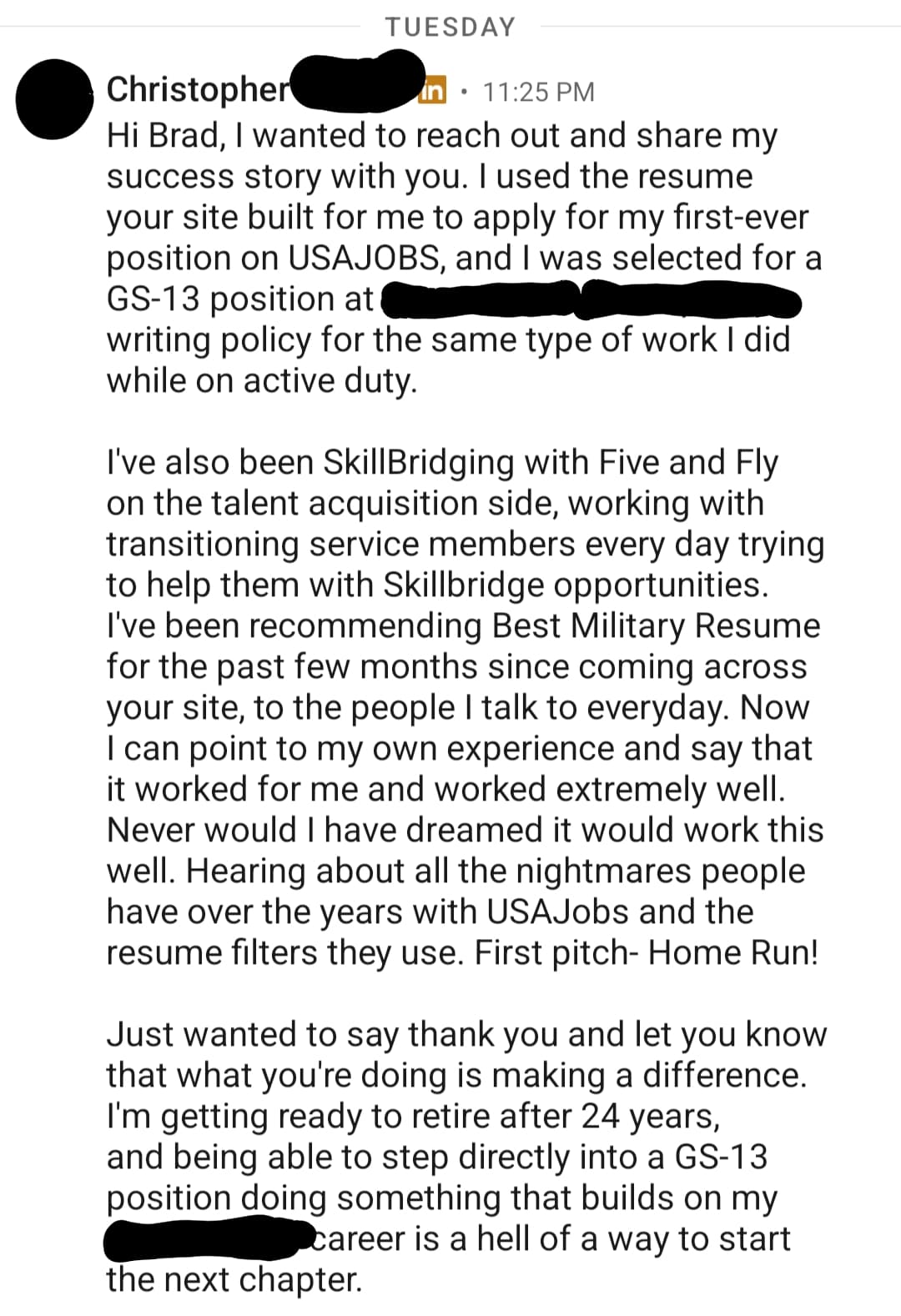
Veterans' Preference gives you 5 points (honorable discharge) or 10 points (disability rating) on federal hiring assessments. You need your DD-214 (Member 4 copy) and SF-15 form for 10-point preference. Some positions use Direct Hire Authority which can bypass normal competitive processes — NAVSEA and DHS frequently use this for veteran hires. Apply to positions at or below GS-11 initially where Veterans' Preference is most impactful. Build your federal resume at bestmilitaryresume.com — federal resumes follow different formatting rules than private sector.
Is my security clearance valuable after the Coast Guard?
Yes. An active Secret clearance saves employers $5,000-15,000+ and months of processing time. Defense contractors, federal agencies, and some energy companies require clearances. Your clearance stays active for up to 24 months after separation if not renewed, so start your job search before it lapses. ClearanceJobs.com lists positions specifically requiring active clearances.
What federal agencies hire former GMs?
More than you might expect. NAVSEA and Coast Guard civilian workforce hire weapons system technicians directly. ATF hires for investigator and technical specialist roles. FLETC (Federal Law Enforcement Training Centers) hires firearms instructors and armorers. DHS, DOD, and Defense Logistics Agency hire for ordnance management and logistics. Beyond weapons-specific roles, virtually any federal agency hires for safety (GS-0018/0019), program management (GS-0340), and logistics management (GS-0346) — all strong GM matches.
Should I use my GI Bill for a degree or certifications?
Depends on your target career. For defense contracting and industrial maintenance, certifications (CMRP, ASQ, NRA Armorer) give faster ROI than a 4-year degree. For engineering or program management at a senior level, a degree may be required — mechanical engineering technology or industrial technology programs are strong fits. Many employers in manufacturing and maintenance accept military experience plus certifications in lieu of a degree. Use the VA GI Bill Comparison Tool to verify program approval before enrolling.
Where are the best job markets for former Coast Guard GMs?
For defense work: Hampton Roads/Norfolk, San Diego, and the DC Metro area have the highest concentration of defense contractors and federal agencies. For law enforcement armorer work: any major metro area. For industrial maintenance and manufacturing: Houston, Detroit, and the Southeast manufacturing belt (Alabama, Tennessee, South Carolina) are strong markets. Coast Guard GMs have an advantage in port cities where maritime defense contractors operate — Baltimore, New Orleans, and Seattle are good options.
Can I start job searching while still on active duty?
Yes — and you should. Start 12 months before your EAS. At 180 days out, you may be eligible for DOD SkillBridge to work full-time at a civilian company while still receiving military pay. At minimum: have your resume ready 6 months out, start networking on LinkedIn 6 months out, apply to federal positions 6 months out (federal hiring is slow), and attend industry events like SHOT Show or NDIA conferences if targeting defense. Use terminal leave strategically — it's your transition runway.