Loading...
Loading...
The civilian and federal jobs that hire Marines Aircraft Rescue and Firefighting Specialists — with real salaries and the resume that gets callbacks.
Every 7051 has more options than a Google search will tell you. Below: career paths, BLS salary data, federal GS series, certifications by target career, and how to translate your experience without losing what made you valuable to the Marines in the first place.
Free · No credit card · Tailored resume in under 5 minutes
After the Navy I got hired into 6 federal career fields and tech sales, and sat on federal hiring panels along the way. I spent the last 2 years rebuilding everything I learned into BMR, tuned for how AI actually screens resumes today. This is the system I wish I'd had on day one.
If you held the 7051 MOS, you ran toward burning aircraft for a living. Aircraft Rescue and Firefighting Specialists (the airfield calls it ARFF, and the Corps now also tracks the role as Expeditionary Firefighting and Rescue) cover flight-line and structural fire emergencies on Marine Corps air stations and expeditionary airfields. That means forcible entry and extrication on a crashed or burning airframe, fire suppression and extinguishment, hazardous-material operations-level response to fuel and chemical spills, basic emergency medical care, salvage and overhaul, and incident command when the call gets big.
The training is real and it is certifiable. After boot camp and Marine Combat Training, 7051s attend the DoD Fire Academy at Goodfellow AFB in San Angelo, Texas, the same 68-day apprentice course that trains Air Force, Army, and a handful of Navy firefighters. Graduates walk away with Pro Board and IFSAC accredited certifications built on NFPA standards: structural firefighting (Firefighter I and II under NFPA 1001), aircraft rescue firefighting (NFPA 1003), hazardous materials operations, and Emergency Medical Responder. Those are nationally recognized credentials, not service-only paperwork. Day to day you operated P-19 and P-23 ARFF crash trucks, agent-and-foam systems, self-contained breathing apparatus, the Jaws of Life, and thermal imaging on stations like MCAS Cherry Point, MCAS Miramar, MCAS Yuma, MCAS Beaufort, and MCAS Iwakuni.
Civilian employers value this background because it is one of the few military jobs that produces a directly licensed civilian professional. A municipal fire department, an airport ARFF unit, or an industrial plant fire brigade does not have to imagine what you can do. They can read your Pro Board and IFSAC cards. The catch is the resume. "Aircraft rescue and firefighting specialist" reads clean to a fire chief and reads like a mystery to a corporate safety manager or an HR screener who has never seen the term. If you want to explore where those certifications travel, start with our military career crosswalk tool, and if you came from an aviation-ops background you may also want to compare paths with the 7041 Aviation Operations Specialist page. For the translation mechanics, our guide to 50 military terms in civilian language is a good starting point.
When I separated from the Navy I spent 18 months applying with no callbacks, and the problem was never the experience. It was the language. ARFF Marines carry that problem in a specific way. The firefighting, the EMT work, the hazmat response are real and certifiable, but "aircraft rescue and firefighting" on a resume needs translating into civilian fire service, industrial fire, and airport ARFF terms before a hiring manager outside the fire world can see what you already proved on the flight line. — Brad Tachi, Navy Diver veteran & BMR founder
The number that matters when you're deciding what's next: how does civilian pay compare to what you make now?
Military comp is approximate (varies by location/dependents). Civilian is BLS median. Federal includes locality pay. Your real number depends on duty station, family status, GS step, and overtime.
The strongest path for many 7051s is to stay in the fire service, where your Pro Board and IFSAC certifications carry weight on day one. The numbers below are from the BLS Occupational Employment and Wage Statistics survey, May 2024.
Municipal and structural firefighters earn a median of $59,530 per year (BLS, May 2024). Civilian departments hire heavily on certification and physical-agility testing, both areas where 7051 training puts you ahead of a candidate coming straight off a college fire-science program. Airport ARFF firefighters at FAA Part 139 airports do the exact crash-fire-rescue mission you ran in uniform, and they fall under the same firefighter wage category. This is the cleanest one-to-one transfer in the entire field.
If you move into prevention and code work, fire inspectors and investigators earn a median of $78,060 (BLS, May 2024), drawing on the hazard-recognition and fire-behavior knowledge you used on the line. On the medical side, the EMS credential you built opens emergency medical technician roles at a median of $41,340 and paramedic roles at a median of $58,410 (BLS, May 2024) once you complete civilian licensure, which many former ARFF Marines stack on top of fire certifications. Supervisory fire roles (first-line supervisors of firefighting and prevention workers) sit higher again, though BLS reports that category as a mean of roughly $97,030 rather than a median.
Be honest with yourself about the market. Municipal fire hiring is competitive and cyclical, often gated by city budgets and academy class sizes, and many departments require you to live within or near the jurisdiction. Airport and industrial fire jobs are less crowded and frequently pay shift differentials. Veterans coming from the same field as you include Air Force 3E7X1 Fire Protection airmen, and the shipboard firefighting world of the Navy Damage Controlman overlaps on hazmat and suppression. To package the certification stack so a civilian department actually sees it, work through our military resume builder, and read up on quantifying military experience so your call volume and response metrics land on the page.
| Civilian Job Title | Industry | BLS Median Salary | Outlook | Match |
|---|---|---|---|---|
Firefighter O*NET: 33-2011.00 | Fire Service | $59,530 | 4% (As fast as average) | strong |
Airport (ARFF) Firefighter O*NET: 33-2011.00 | Fire Service | $59,530 | 4% (As fast as average) | strong |
Fire Inspector and Investigator O*NET: 33-2021.00 | Fire Service | $78,060 | 5% (Faster than average) | strong |
First-Line Supervisor of Firefighting and Prevention Workers O*NET: 33-1021.00 | Fire Service | $97,030 | 3% (As fast as average) | moderate |
Paramedic O*NET: 29-2043.00 | Emergency Medical Services | $58,410 | 6% (Faster than average) | moderate |
Emergency Medical Technician (EMT) O*NET: 29-2042.00 | Emergency Medical Services | $41,340 | 6% (Faster than average) | moderate |
Industrial Fire Brigade / Plant Firefighter O*NET: 33-2011.00 | Industrial Fire Protection | $59,530 | 4% (As fast as average) | strong |
BMR rewrites your 7051 experience for any of the civilian roles above — keywords, achievements, and language hiring managers actually scan for.
Free · No credit card · 2 tailored resumes included
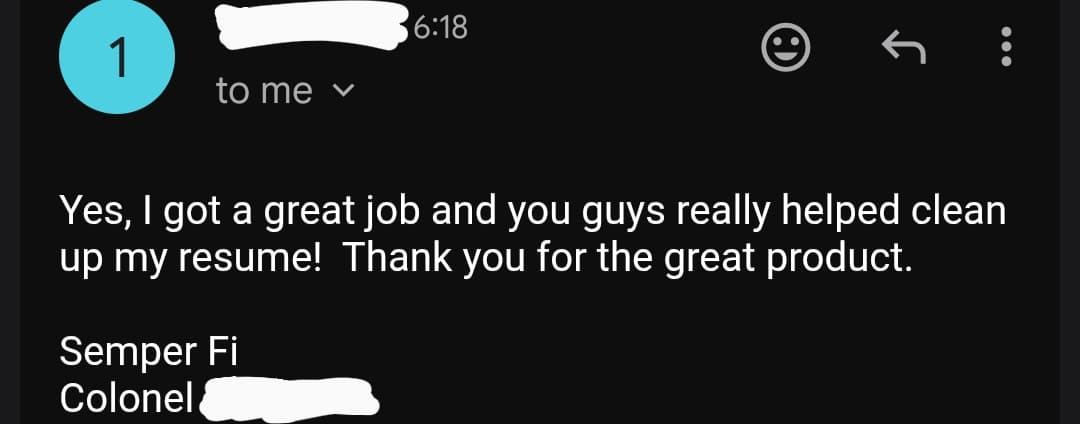
“Hey Brad, Just wanted to send out a quick thank you. You've created something amazing with BMR and your continued advocacy for transitioning service members does not go unnoticed. It was the most effective resource I used in my transition and I know it played a key role in landing a six figure…”
Federal fire service is one of the most natural destinations for a 7051, and it is bigger than many veterans realize. The DoD, the VA, the Forest Service, the FAA, and dozens of agencies run their own fire departments, and they hire under the GS-0081 Fire Protection and Prevention series. A structural and ARFF background with current Pro Board or IFSAC certifications maps directly into GS-0081 at the GS-5 through GS-9 entry and journey range, with lead and supervisory roles reaching GS-10 and above. Federal fire jobs on military installations often hire former installation firefighters specifically because the equipment and standards are identical.
Beyond the obvious, your hazmat operations training supports the GS-0089 Emergency Management series and the GS-0018 Safety and Occupational Health Management and GS-0019 Safety Technician series, where agencies want people who understand incident command and hazard response from the field, not just from a textbook. Spill-response and chemical-handling experience can also support the GS-0028 Environmental Protection Specialist series and the GS-0690 Industrial Hygiene series. If you ran or maintained airfield fire systems and facilities, the GS-1601 General Facilities and Equipment series is a credible adjacent target, and base-security-adjacent work can map to GS-0083 Police.
Veterans' Preference matters here. Eligible veterans receive 5 or 10 additional points on competitive federal applications, and many federal fire positions are filled through veteran-focused hiring authorities. The qualification standard rewards specific, certification-anchored descriptions, so list your NFPA-based certifications and your apparatus and incident-command experience explicitly. To assemble an OPM-compliant document, use our federal resume builder, then read 15 federal resume tips that get veterans referred and 10 federal job series every veteran should search. When you are ready to start the application, you can start your federal resume now.
| GS Series | Federal Job Title | Typical Grades | Match | Explore |
|---|---|---|---|---|
| GS-0081 | Fire Protection and Prevention | GS-5, GS-7, GS-9 | View Details → | |
| GS-0019 | Safety Technician | GS-5, GS-7, GS-9 | View Details → | |
| GS-0018 | Safety and Occupational Health Management | GS-7, GS-9, GS-11 | View Details → | |
| GS-0089 | Emergency Management | GS-7, GS-9, GS-11 | View Details → | |
| GS-0028 | Environmental Protection Specialist | GS-7, GS-9 | View Details → | |
| GS-0690 | Industrial Hygiene | GS-7, GS-9, GS-11 | View Details → | |
| GS-1601 | General Facilities and Equipment | GS-5, GS-7, GS-9 | View Details → |
Federal hiring uses keyword-matching and structured experience. BMR builds federal-format resumes (USAJobs-ready) with the right keywords, hours/week, and supervisor info — for any GS series above.
Free · No credit card · Federal + civilian resume formats included
Not everyone wants to stay in a related field. These career paths leverage your transferable skills — leadership, risk management, logistics, project planning — in completely different industries.
The breathing-apparatus, airway, and oxygen-delivery work you did on SCBA and in EMS care maps surprisingly well to respiratory care, where calm assessment and equipment precision matter most.
Your working knowledge of fire detection, suppression systems, and NFPA standards is the exact foundation of fire-protection engineering, a high-paying corner of safety engineering most firefighters never realize is open to them.
Spill containment, decontamination, and working safely in IDLH atmospheres are daily ARFF skills that transfer straight into environmental remediation and industrial hazmat removal.
The fire-code, sprinkler, and life-safety inspection knowledge you used checking apparatus and facilities is directly relevant to building inspection, especially fire and life-safety plan review.
Maintaining crash trucks, pumps, and foam-proportioning systems builds the hands-on mechanical and troubleshooting skill that industrial maintenance employers pay for, in a fast-growing field.
Running a fire crew means coordinating people, equipment, and time-critical decisions, which is the core of operations management once you translate the language out of the fire world.
The skills that made you a good Marine, Sailor, Airman, or Soldier transfer further than you think. BMR rewrites your bullets for any of the pivot careers above — without making you sound like you've never done the work.
Free · No credit card · Try unlimited career angles
If you are applying to a fire department, an airport ARFF unit, or an industrial fire brigade, skip this section. Those recruiters speak your language. NFPA 1001, NFPA 1003, Pro Board, and IFSAC all mean exactly what you think they mean to a fire chief. This section is for ARFF Marines targeting careers OUTSIDE the fire service, where "aircraft rescue and firefighting specialist" needs to be rewritten into business and safety language a hiring manager already understands.
The principle is simple. A corporate safety manager, an operations director, or an HR screener does not picture a crash truck when they read your resume. They picture risk, response time, training, and accountability. Translate the mission into those terms.
| Military term | Civilian translation |
|---|---|
| ARFF crash truck operations | Emergency vehicle and life-safety equipment operation |
| Hazardous materials operations response | Hazardous materials incident response and containment |
| Incident command at a structure fire | On-scene emergency coordination and resource management |
| Fire-system and apparatus inspection | Life-safety systems compliance inspection |
Here is the before-and-after that wins interviews outside the fire world. Before: "Served as ARFF crewman responding to flight-line emergencies." After: "Led on-scene emergency response and hazardous-material containment for a high-risk operating environment, coordinating personnel and equipment under time pressure with zero preventable injuries." The second version is true, it is specific, and it reads as risk management to a manager who has never set foot on a flight line. For more patterns, see our military terms glossary and the guide on explaining military experience without jargon. Our military resume builder handles this translation as you write.
BMR turns your 7051 duties and accomplishments into civilian bullets that match the job you're applying for — no manual translation, no rewriting.
Free · No credit card · Tailored to each job posting
Which certifications you need depends on where you're headed. Find your target career path below.
The wrong placement can sink an otherwise strong application. BMR knows where each cert ranks, what to call it, and how to frame it for ATS keyword matching and hiring manager attention.
Free · No credit card · Built around your real certs and clearance
If you are continuing in firefighting, your priority is converting and documenting your DoD certifications for civilian and state recognition. Because the DoD Fire Academy is Pro Board and IFSAC accredited, your NFPA 1001 Firefighter I and II, NFPA 1003 Airport Firefighter, and hazmat operations cards are portable to most state fire-training systems, though each state has its own reciprocity process worth confirming early. Many former ARFF Marines also pursue civilian EMT or paramedic licensure to broaden hiring options. SkillBridge fellowships with municipal and airport fire departments let you start the civilian application process before you separate. Related fire-field paths worth comparing: Air Force 3E7X1 Fire Protection and the shipboard Coast Guard Damage Controlman.
If you are leaving the fire world, your strongest credentials become hazmat response, incident command, life-safety systems knowledge, and performance under pressure. For safety and EHS roles, the Board of Certified Safety Professionals (BCSP) and OSHA training carry weight. For federal work, American Corporate Partners (ACP) offers veteran mentorship, and your security clearance, if you held one, is a real asset. Explore options with our career crosswalk tool, prep with behavioral interview questions and STAR answers, and review TAP resources at SFL-TAP transition support. When you are ready, you can build your resume now. See also the Navy Damage Controlman career paths and our SkillBridge program guide.
Most veterans do this backwards — they wait until terminal leave to start, then panic. Here's the actual sequence that works.
Print this. Tape it to your monitor. Veterans who treat the transition like a 90-day op get hired faster than the ones who treat it like an emergency.
Stop rewriting from scratch every time you apply. BMR turns your military experience into civilian and federal resumes — tailored to each job.