Best Certifications for Veterans in 2026 (By Career Field)

Why Do Certifications Matter More for Veterans Than Other Job Seekers?
Certifications solve a specific problem that veterans face in the civilian job market: proving your skills in language that hiring managers and automated systems recognize. You may have years of hands-on experience operating, maintaining, or managing complex systems, but if a job posting requires a specific certification and you do not have it, your application gets ranked lower regardless of your actual capability.
The good news is that many military training programs already align with civilian certification requirements. Some certifications even accept military training as a partial or full prerequisite. The challenge is knowing which certifications actually matter in the career field you are targeting — and which ones sound impressive but do not move the needle with employers.
This guide organizes certifications by career field so you can find the ones relevant to your transition goals. Not every veteran needs certifications — if your military experience directly qualifies you for civilian positions, additional credentials may not be necessary. But for career fields where certifications are table stakes (IT, project management, healthcare, logistics), having the right ones dramatically shortens your job search.
Brad's Take
I have watched veterans burn through GI Bill benefits on certifications that sound good but do not actually help them get hired. Before you invest time and money in any certification, check actual job postings in your target field. If the certification shows up consistently in the "required" or "preferred" qualifications section, it is worth pursuing. If it does not appear in job postings, skip it — no matter how impressive the credential sounds.
What Are the Best IT and Cybersecurity Certifications for Veterans?
Information technology is one of the most common transition paths for veterans, and it is also one of the most certification-driven fields. Many IT positions — especially in government contracting and federal agencies — require specific certifications as a condition of employment, not just a preference.
CompTIA Security+ (SY0-701): This is the single most important certification for veterans entering cybersecurity or IT security roles. It meets the DoD 8570/8140 baseline certification requirement for Information Assurance Technical (IAT) Level II positions, which means it is required for most cybersecurity jobs in the defense sector. If you held a military cybersecurity role (25D, 17C, 1D7X1, CTN, etc.), you may already have this certification. If not, get it before you separate. Exam cost is approximately $404, and many military education centers offer vouchers or funded testing.
CompTIA Network+ and A+: Network+ validates networking fundamentals and is a prerequisite or co-requisite for many security roles. A+ covers hardware and operating system fundamentals and is the standard entry point for IT support and help desk positions. If you are transitioning from a non-IT military role into IT, A+ is your starting point. For veterans with IT experience, skip A+ and start with Network+ or Security+ depending on your target role.
Certified Information Systems Security Professional (CISSP): This is the gold standard for experienced cybersecurity professionals. It requires five years of cumulative paid work experience in two or more of eight security domains — but military cybersecurity experience counts. CISSP holders command significantly higher salaries than those with Security+ alone. Average salaries for CISSP-certified professionals exceed $130,000 in most markets. If you have the experience to qualify, this certification opens doors to senior security positions in both the private sector and government contracting.
AWS Cloud Practitioner and AWS Solutions Architect: Cloud computing is the fastest-growing segment of IT, and Amazon Web Services dominates the market. The Cloud Practitioner certification is entry-level and validates foundational cloud knowledge. Solutions Architect (Associate) proves you can design and deploy scalable systems on AWS. Both are valuable for veterans transitioning into cloud engineering, DevOps, or systems administration roles. AWS offers free training resources, and the GI Bill covers many cloud certification bootcamps.
Certified Ethical Hacker (CEH): Relevant for veterans pursuing penetration testing or offensive security roles. CEH meets DoD 8570/8140 requirements for certain positions and is recognized across the defense industry. However, it is not as universally required as Security+ — check your target job postings before investing in this certification over other options.

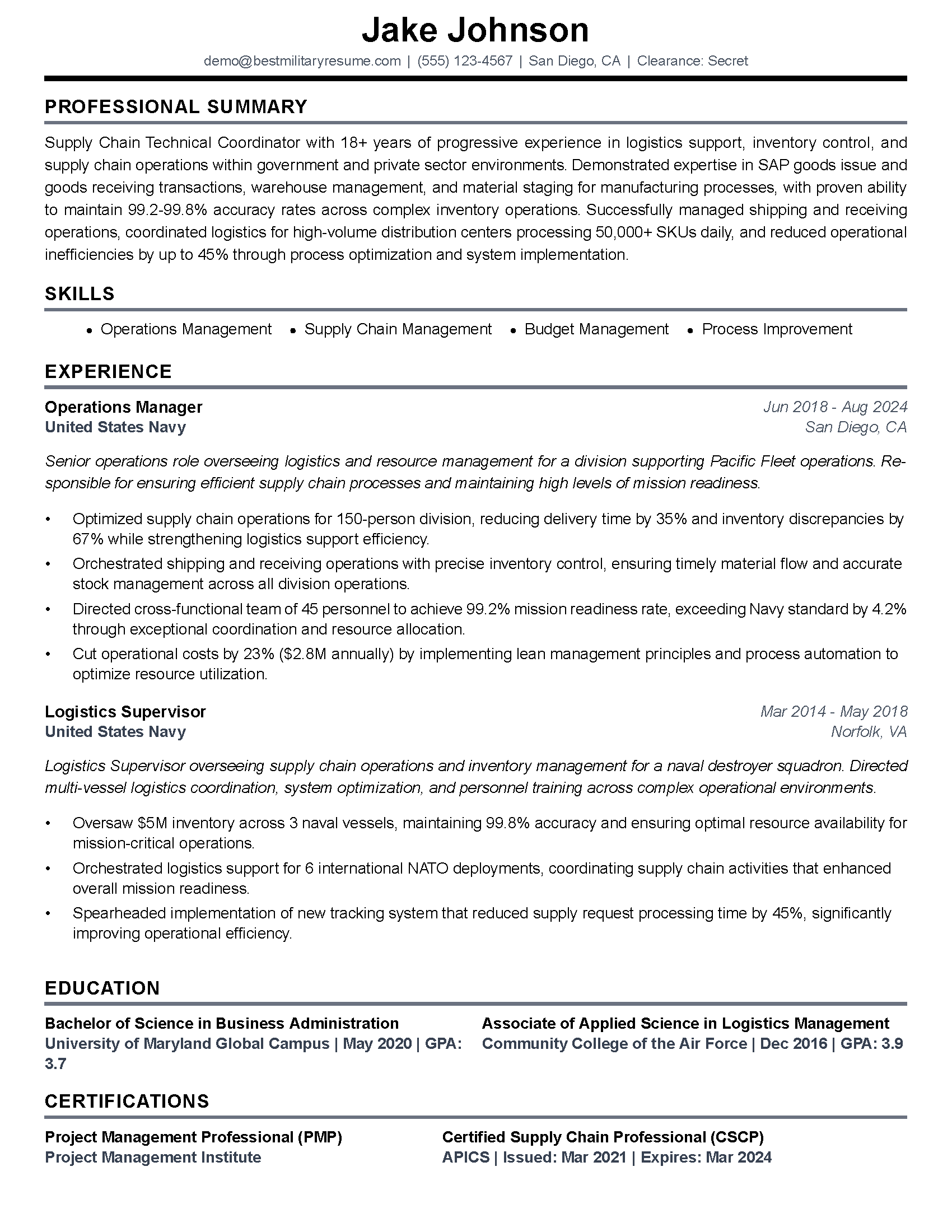
Which Project Management Certifications Should Veterans Get?
Military veterans are natural project managers — you have planned operations, managed resources, coordinated across teams, and delivered results under constraints. Project management certifications translate that experience into credentials that civilian employers recognize.
Project Management Professional (PMP): The PMP is the most widely recognized project management certification globally. It requires 36 months of project management experience (with a bachelor's degree) or 60 months (without a degree), plus 35 hours of PM education. Military experience counts — leading operations, managing programs, coordinating logistics, and overseeing personnel actions all qualify as project management experience. PMP holders earn a median salary of $120,000+ according to PMI's salary survey, making this one of the highest-ROI certifications available.
Certified Associate in Project Management (CAPM): If you do not yet meet PMP experience requirements, CAPM is the stepping stone. It requires 23 hours of PM education and passes the same foundational body of knowledge. CAPM can be useful for veterans with less than three years of leadership experience or those who want a PM credential while building toward PMP eligibility.
Lean Six Sigma (Green Belt and Black Belt): Lean Six Sigma certifications validate process improvement and quality management skills. Green Belt demonstrates you can participate in improvement projects; Black Belt shows you can lead them. These certifications are particularly valuable in manufacturing, logistics, healthcare, and operations management roles. Many military supply and logistics professionals (92A, 3F0X1, LS, etc.) have direct experience with the concepts that Lean Six Sigma formalizes.
Before You Pay for a Certification
Check if your military branch offers funded certification testing through credentialing programs like Army COOL, Navy COOL, Air Force COOL, or Marine Corps COOL. These programs cover exam fees for hundreds of certifications while you are still serving. Use them before you separate — after you leave active duty, you lose access to free or subsidized testing through these programs.
What Certifications Help Veterans Break Into Healthcare?
Veterans with medical training — combat medics (68W), corpsmen (HM), medical technicians, and other healthcare occupations — often need civilian certifications to practice outside the military. The transition can be frustrating because you may have performed advanced medical procedures in combat but lack the civilian credential to do the same work in a hospital.
Emergency Medical Technician (EMT) and Paramedic: Many combat medics and corpsmen can test for EMT-Basic certification with minimal additional training. Some states have expedited processes for military medical personnel. Paramedic certification requires additional coursework but builds on the advanced skills you already have. Both credentials open doors to emergency medical services, fire departments, and hospital emergency rooms.
Certified Nursing Assistant (CNA): A stepping stone for veterans who want to enter nursing. CNA programs are short (4-12 weeks), affordable, and widely available. For corpsmen and medics with patient care experience, the training reinforces skills you already have while earning the credential civilian employers require. Many veterans use CNA as a bridge while completing RN programs on the GI Bill.
Licensed Practical Nurse (LPN) or Registered Nurse (RN): These require formal academic programs, but the GI Bill covers the full cost at most schools. Veterans with military medical experience often find nursing programs faster to complete because their clinical skills are already strong. Some states offer credit for military medical training, reducing the time to earn your nursing degree.
Certified Medical Assistant (CMA): Relevant for veterans who want to work in outpatient clinics, physician offices, or specialty practices. CMA certification requires completing an accredited program and passing a national exam. Military medical technicians with clinical experience transition well into these roles.
Which Certifications Work Best for Logistics and Supply Chain Veterans?
The military runs one of the largest logistics operations in the world, and veterans from supply, transportation, and logistics specialties bring experience that civilian employers actively seek. Certifications in this field validate your ability to manage supply chains, optimize distribution, and reduce costs — all in terms that civilian hiring managers understand.
Certified Supply Chain Professional (CSCP): Offered by APICS (now the Association for Supply Chain Management), CSCP covers end-to-end supply chain management including design, planning, execution, and improvement. This certification is recognized across manufacturing, retail, distribution, and defense contracting. Veterans from military logistics backgrounds (92A, 3F1X1, LS, 0431) find that their daily military duties map directly to CSCP exam content.
Certified in Production and Inventory Management (CPIM): Also from APICS, CPIM focuses on internal operations — demand management, procurement, material planning, supplier relationships, and execution. This certification is particularly valuable for veterans transitioning into manufacturing, production management, or procurement roles.
Certified Logistics Professional (CLP): Offered by the International Society of Logistics (SOLE), CLP validates expertise across logistics disciplines including acquisition, distribution, maintenance, and supply support. This certification is especially valued in defense contracting and government logistics positions.
Commercial Driver's License (CDL): For veterans from transportation MOSs (88M, 3E2X1, etc.) who drove military vehicles, a CDL opens access to one of the highest-demand civilian fields. Many CDL training programs offer veteran discounts or accept VA education benefits. Commercial truck drivers earn $50,000-$80,000+ annually, with some specialized routes and experienced operators earning over $100,000. Check with your state's DMV — many offer military skills test waivers that allow you to convert your military driving experience directly to a CDL class.
Smart Certification Strategy
Do not collect certifications for the sake of collecting them. Target two or three that appear consistently in job postings for positions you actually want. Start with the one that is most frequently listed as "required" (not just "preferred"). Then build toward the next one that either increases your earning potential or opens access to higher-level positions in your field.
How Should Veterans Pay for Certifications?
One of the biggest advantages veterans have is access to multiple funding sources for professional certifications. The challenge is knowing which funding source to use for each certification to maximize your total benefits.
Military COOL Programs (while still serving): Army, Navy, Air Force, and Marine Corps each maintain Credentialing Opportunities On-Line (COOL) programs that fund certification exams for service members. These programs cover hundreds of certifications and are separate from your GI Bill benefits — meaning you can use COOL for exam fees without touching your education benefits. Use these first if you are still on active duty.
GI Bill (Chapter 33 Post-9/11): The GI Bill covers certification exam fees and some prep courses. It also covers licensing exams in fields like nursing, paramedicine, and teaching. You can use GI Bill benefits for certification programs at approved testing organizations. Check the VA's WEAMS database to verify that your specific certification or training program is approved for GI Bill funding.
VET TEC Program: The VA's Veteran Employment Through Technology Education Courses program covers tuition for high-tech training programs — including certification prep courses for IT, cybersecurity, data science, and software development. VET TEC does not reduce your GI Bill entitlement, making it an ideal first stop for tech certifications before you tap into your GI Bill months.
Employer-sponsored certifications: Many employers — particularly in IT, defense contracting, and healthcare — pay for employee certifications or reimburse exam fees. Some even include certification bonuses. When evaluating job offers, factor in the employer's certification support as part of the total compensation package. A position that pays $5,000 less but covers a $3,000 certification may actually be the better long-term investment.
The military-to-civilian career guides on BMR include certification recommendations organized by career path for each military job code, so you can see exactly which credentials employers expect for positions that match your background.
Key Takeaway
The best certifications are the ones that appear in job postings for positions you actually want. Use military COOL programs while still serving, then layer in GI Bill and VET TEC benefits after separation. Focus on two to three high-value certifications in your target career field rather than collecting credentials broadly. Every certification you earn should directly connect to a job you can apply for within six months of earning it.
Use your GI Bill to earn these — see our GI Bill career training guide. Also explore free certification programs for veterans and where veterans are getting hired.
Related: When to start job hunting before separation and the complete military resume guide for 2026.
Frequently Asked Questions
QWhich single certification has the highest ROI for veterans?
QCan I use the GI Bill to pay for certifications?
QWhat is the COOL program and how do I use it?
QDo employers actually check for certifications or just look for experience?
QHow many certifications should I get before job searching?
QDo military training certificates count as civilian certifications?
About the Author
Brad Tachi is the CEO and founder of Best Military Resume and a 2025 Military Friendly Vetrepreneur of the Year award recipient for overseas excellence. A former U.S. Navy Diver with over 20 years of combined military, private sector, and federal government experience, Brad brings unparalleled expertise to help veterans and military service members successfully transition to rewarding civilian careers. Having personally navigated the military-to-civilian transition, Brad deeply understands the challenges veterans face and specializes in translating military experience into compelling resumes that capture the attention of civilian employers. Through Best Military Resume, Brad has helped thousands of service members land their dream jobs by providing expert resume writing, career coaching, and job search strategies tailored specifically for the veteran community.
View all articles by Brad TachiFound this helpful? Share it with fellow veterans:
