
Why Do Most Veterans Start Too Late?
The most common answer veterans give when asked when they started their civilian job search is "about a month before I got out." That is too late. By the time you are 30 days from separation, you should already have interviews scheduled or offers on the table — not be writing your first resume.
The reason most veterans start late is simple: the military keeps you busy until the very end. Between final duties, clearing post, medical appointments, and the administrative grind of out-processing, your transition can feel like something that happens to you rather than something you control. TAP/SFL-TAP gives you a framework, but the classroom portion is designed as an overview, not a job search execution plan.
The civilian hiring process also moves slower than most veterans expect. Private sector hiring typically takes 4-8 weeks from application to offer. Federal hiring takes 2-6 months — sometimes longer. Defense contractors with clearance requirements need time for security onboarding. If you want to walk out of the military on Friday and start your civilian job on Monday, you need to work backward from your ETS date by at least 6 months, ideally 12. The veterans who transition smoothly are not luckier or more qualified — they just started earlier and gave themselves room to be strategic instead of desperate.
Brad's Take
"After I left the Navy, I spent a year and a half applying for government jobs with zero callbacks. That was not because I was unqualified — it was because I did not know how to translate my experience or time my applications. If I had started the process 12 months before separation instead of after, that gap would not have existed."
— Brad, Navy Diver Veteran & BMR Founder
What Should You Do 12 Months Before Separation?
Twelve months out is your strategic planning phase. You are not applying to jobs yet — you are building the foundation that makes your applications effective when the time comes.
Define your target career direction. This is the most important decision of your transition and it deserves real thought. Are you staying in your military specialty's civilian equivalent? Pivoting to a new field? Targeting federal or private sector? The answer drives everything else — your resume format, the certifications you pursue, where you apply, and who you network with. The career field selection guide walks through this decision in detail.
Research salary ranges and location options. Use BMR's career translation guides to see what your military job code translates to in the civilian market — including salary ranges from BLS data, federal GS series matches, and companies that hire veterans in your field. Knowing what roles pay and where the jobs are concentrated helps you make smart decisions about relocation, housing, and your financial transition plan.
Start building your professional network. LinkedIn should be set up and active at this point. Connect with veterans who have already transitioned from your branch and specialty. Join veteran employee resource groups at companies you are targeting. Schedule informational interviews with people in your target roles to understand what the day-to-day looks like and what qualifications matter most. Networking 12 months out is low-pressure and builds relationships that pay off when you are actively applying later.
Identify and start certifications. If your target career values specific certifications (PMP, Security+, AWS, CDL, trade licenses), start working toward them now. Many certifications take 2-4 months of study. Completing them before you separate means you apply with the credential already in hand, which is significantly more competitive than "pursuing certification."
Attend TAP/SFL-TAP early. You are eligible for TAP up to 24 months before separation. Attending early gives you the overview while you still have time to act on it. If you wait until the mandatory window, you are sitting in a classroom learning about resume writing when you should be out interviewing.
SkillBridge and CSP Programs
DoD SkillBridge and Career Skills Programs let you intern with civilian employers during your last 180 days of service — while still receiving military pay and benefits. Applications for these programs often need to be submitted 6-9 months in advance. If SkillBridge is part of your plan, 12 months out is when you should be identifying host companies and talking to your command about approval. Many SkillBridge participants receive full-time offers from their host company before they even separate.

What Should You Do 6 Months Before Separation?
Six months out is when you shift from planning to execution. Your resume should be ready, your target companies identified, and your applications going out.
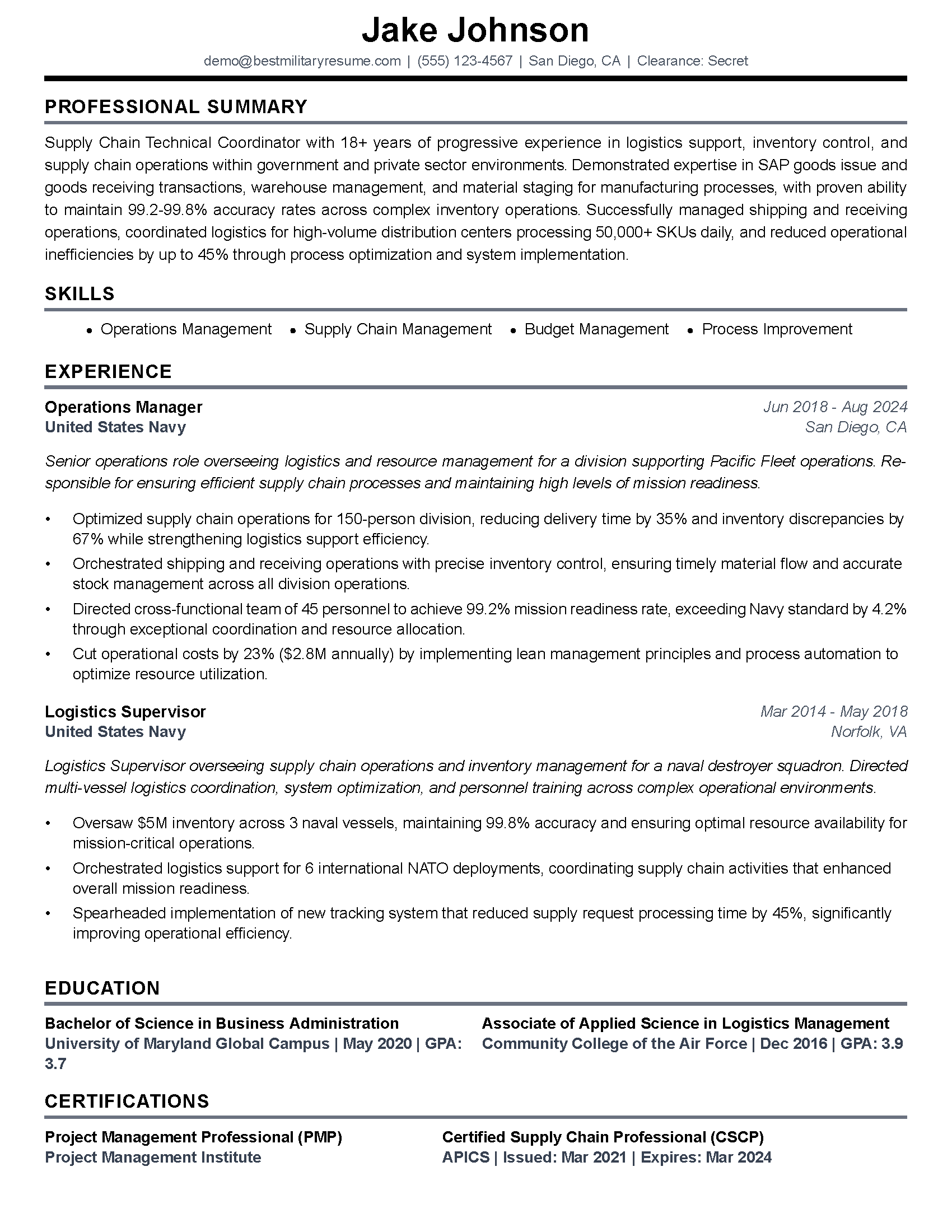
Build your tailored resume. Not a generic resume — a resume tailored to your target career. If you are targeting federal positions, you need a federal resume that maps your experience to OPM qualification standards. If you are targeting private sector, you need a concise resume that translates military jargon into civilian language. BMR builds both formats for free — two tailored resumes, two cover letters, and LinkedIn optimization are included for every veteran.
Start applying to federal positions. Federal hiring timelines are long. USAJOBS postings can take 2-6 months from application to start date. If you want a federal job by the time you separate, you need to be applying at the 6-month mark. Many agencies can extend tentative offers to candidates who are still on active duty with a projected separation date. Check each posting's requirements — some federal positions require you to have separated before the closing date, while others accept applications from active duty with a future separation date.
Apply to private sector roles selectively. Private sector hiring moves faster, so 6 months out you can start applying to companies known for longer hiring pipelines — large defense contractors, Fortune 500 companies, and organizations with structured veteran hiring programs. For smaller companies and startups that hire in 2-4 weeks, wait until the 2-3 month mark so your availability aligns with their timeline.
Attend veteran career fairs and hiring events. Organizations like Hiring Our Heroes, RecruitMilitary, and military base transition offices host regular career fairs — both in-person and virtual. At 6 months out, you are in the sweet spot where employers take you seriously because your separation date is concrete. Bring printed resumes, dress professionally, and have your elevator pitch rehearsed. Many veterans report that career fairs led to interviews they would not have gotten through online applications alone.
Activate your network. This is when those connections you built at 12 months start paying off. Let your network know you are actively looking. Ask for referrals to specific positions. Reach out to veteran recruiters at your target companies. A warm introduction moves your resume to the top of the pile faster than any job board application.
What Should You Do in the Final 90 Days?
The last three months are your sprint to the finish. Your goal is to have an offer accepted and a start date confirmed before your ETS date.
Apply aggressively to private sector roles. At 60-90 days out, your timeline aligns perfectly with most private sector hiring cycles. Apply to roles where you can interview and onboard within 4-8 weeks. If you have been networking effectively, you should have referrals and warm contacts that accelerate this process.
Follow up on federal applications. If you applied to federal positions at the 6-month mark, some should be moving through the process by now. Check your USAJOBS account for status updates. If you have been referred to the hiring manager, follow up through the proper channels to express continued interest.
Prepare for interviews. At this stage, you should be getting interview requests. Prepare for the most common veteran interview questions. Practice translating military experiences into civilian stories using the STAR method. If you are interviewing for multiple roles, keep a tracking system so you do not miss follow-up deadlines or scheduling conflicts.
Negotiate offers deliberately. When offers come in, do not accept the first number out of relief that something came through. Use the salary negotiation strategies from our guide. Your military experience has market value — research what the role pays and counter if the offer is below market.
Handle the logistics. Coordinate your start date with your terminal leave and separation date. Many veterans use terminal leave as a buffer — you are still technically on active duty (getting paid and keeping benefits) while starting your civilian job. Talk to your finance office about how terminal leave affects your last military paycheck, and make sure there is no gap in health insurance coverage between TRICARE and your new employer's plan.
Complete VA disability claims before you separate. File your VA disability claim through the Benefits Delivery at Discharge (BDD) program 180-90 days before separation. BDD claims are processed faster than claims filed after you are already out because the VA has access to your service medical records while you are still in. A disability rating affects your federal hiring eligibility (10-point veterans preference for disabled veterans), your access to VA healthcare, and your monthly compensation. This is not something to put off — filing after separation often means waiting 6-12 months for a decision.
Too Late vs. On Track
Started Too Late
Writing resume 30 days before ETS, no network, no certifications, applying to random jobs, accepting first offer out of desperation, income gap after separation
Started On Time
Career direction set at 12 months, certifications earned, resume tailored, federal apps submitted at 6 months, offer in hand before ETS, seamless transition
What If You Have Already Separated Without a Job?
If you are reading this after separation and do not have a civilian job yet, you are not behind in a way that cannot be fixed — you just need to move with urgency now.
Your immediate priority is income. If you do not have savings to sustain several months of job searching, take a bridge job — something that pays the bills while you search for your target role. There is no shame in this. A bridge job keeps you financially stable, fills a gap on your resume, and often provides health insurance. Warehouse operations, delivery, retail management, and security roles hire quickly and value military discipline.
File for VA unemployment compensation. UCX (Unemployment Compensation for Ex-Service Members) provides unemployment benefits to recently separated veterans. Each state administers it differently, but eligibility is based on your military service rather than civilian employment history. File immediately at your state unemployment office — there is typically a one-week waiting period before payments begin, and benefits last up to 26 weeks in most states.
Use free veteran career resources. American Corporate Partners, and your state's Department of Labor veteran representatives (DVOP and LVER) provide free career coaching and job placement assistance. BMR gives every veteran two free tailored resumes, two cover letters, and LinkedIn optimization — use these to get your applications competitive quickly.
If you hold a security clearance, prioritize cleared positions. Your clearance is a depreciating asset. As covered in the security clearance guide, you have roughly two years before reactivation becomes difficult. Getting into a cleared role — even if it is not your ideal position — preserves this valuable credential.
Do not isolate. The transition period is when many veterans struggle with purpose and identity. Stay connected with other veterans, maintain a routine that includes daily job search activities, and set specific weekly goals (number of applications, networking conversations, follow-ups). Treat your job search like a mission with defined objectives and daily actions.
Key Takeaway
Start your job search 12 months before separation. Use the first 6 months for strategy, networking, certifications, and federal applications. Use the last 6 months for active private sector applications, interviews, and offer negotiation. If you have already separated without a plan, start today — file for UCX, build your tailored resume on BMR, and prioritize cleared positions if you hold an active clearance. The gap between veterans who transition smoothly and those who struggle is almost always timing, not talent.
Frequently Asked Questions
QWhen should I start looking for a civilian job before leaving the military?
QCan I apply for jobs while still on active duty?
QHow long does the civilian hiring process take?
QWhat is SkillBridge and when should I apply?
QWhat if I already separated and do not have a job?
QShould I use terminal leave to start my civilian job?
About the Author
Brad Tachi is the CEO and founder of Best Military Resume and a 2025 Military Friendly Vetrepreneur of the Year award recipient for overseas excellence. A former U.S. Navy Diver with over 20 years of combined military, private sector, and federal government experience, Brad brings unparalleled expertise to help veterans and military service members successfully transition to rewarding civilian careers. Having personally navigated the military-to-civilian transition, Brad deeply understands the challenges veterans face and specializes in translating military experience into compelling resumes that capture the attention of civilian employers. Through Best Military Resume, Brad has helped thousands of service members land their dream jobs by providing expert resume writing, career coaching, and job search strategies tailored specifically for the veteran community.
View all articles by Brad TachiFound this helpful? Share it with fellow veterans:
