Grad School vs Job Search: What Veterans Should Do
Should You Go Straight to Grad School or Start Working?
This is one of the biggest decisions veterans face during transition, and there is no universal right answer. Both paths have real advantages, and both have risks that people underestimate. The choice depends on your career goals, financial situation, GI Bill eligibility, and whether you know what you want to do next.
The temptation to go straight to grad school is strong. School provides structure, a clear daily schedule, and a built-in community. It delays the uncertainty of the job market. And many veterans have the GI Bill sitting there, waiting to be used. Going to school feels productive even when you are not sure what career to pursue.
But going to grad school without a clear career goal is one of the most expensive ways to postpone a decision. Even with the GI Bill covering tuition, you are spending two to four years of your life and career momentum. If the degree does not directly connect to a specific job you want, that time may have been better spent gaining work experience, building professional connections, and figuring out your career direction on someone else's payroll.
I used my GI Bill, and I do not regret it. But I have also talked to hundreds of veterans through BMR who wish they had worked first and gone to school later, once they knew what they actually needed the degree for. Both approaches work. The question is which one works for your situation right now.
When Does Grad School Make Sense Right After Separation?
Grad school immediately after the military makes sense in specific situations. If your answer matches one of these, the academic path is probably the right call.
You Need a Degree to Enter Your Target Field
Some careers have hard credential requirements. If you want to become a physician assistant, a licensed counselor, a nurse practitioner, or an engineer, you need the specific degree. No amount of military experience substitutes for the professional licensure that comes from completing the right graduate program. In these cases, school is not optional. It is a prerequisite.
You Are Targeting a Career That Recruits From Schools
Management consulting, investment banking, and certain corporate strategy roles recruit almost exclusively from MBA and graduate programs. If McKinsey, Goldman Sachs, or similar firms are your target, the school's recruiting pipeline is how you get in. Working for a few years first and then applying to programs can also work, but these firms have strong on-campus recruiting relationships that are hard to replicate from the outside.
You Have Full GI Bill Benefits and a Top Program Accepts You
If you can attend a top-ranked program with the GI Bill and Yellow Ribbon covering most or all tuition, the financial risk is minimal. The combination of a strong degree, a powerful alumni network, and near-zero tuition cost is hard to beat. This is especially true for programs that have strong veteran communities and post-graduation employment rates above 90%.
GI Bill Timeline
Your Post-9/11 GI Bill benefits do not expire as long as you separated on or after January 1, 2013. If you separated before that date, your benefits expire 15 years after your last separation. Check your remaining entitlement at va.gov/education.
When Should You Work First and Go to School Later?
For most veterans, working first and going to school later produces better outcomes. Here is why that counterintuitive advice holds up.
You Do Not Know What You Want to Do Yet
This is the most common reason veterans should work before going to school. If you are choosing a degree program based on what sounds interesting rather than what a specific job requires, you are gambling with your GI Bill benefits. Working for a year or two in different industries gives you real data about what you enjoy, what you are good at, and what careers match your strengths.
Many veterans discover their career direction only after working in a few civilian roles. The job you end up loving might be in a field you never considered while you were on active duty. Getting that real-world exposure before committing to a specific degree program means your education dollars go toward something you know you need.
Your Target Industry Values Experience Over Degrees
In tech, sales, operations, logistics, project management, and many other fields, experience and demonstrated results matter more than academic credentials. A veteran with four years of supply chain management experience and a PMP certification is often more competitive than a veteran with an MBA and no civilian work history. If your target industry hires based on what you can do rather than what degree you hold, front-load the experience.
You Need Income Now
The GI Bill housing allowance helps, but it may not cover your full cost of living, especially if you have a family, a mortgage, or debts from the transition period. Getting a job first stabilizes your finances and gives you a foundation from which to plan your next move. Making educational decisions under financial pressure leads to shortcuts like choosing a cheaper, lower-quality program because it is the one you can afford right now.
- •Credential required for target career
- •Top program with GI Bill coverage
- •Career field recruits from campuses
- •Clear career goal already defined
- •Unsure about career direction
- •Target field values experience over degrees
- •Need to stabilize finances first
- •Want real data before choosing a program
Can You Do Both at the Same Time?
Working full-time while attending grad school part-time is possible, and many veterans do it successfully. This approach lets you earn income, gain experience, and earn a degree simultaneously. The tradeoff is that it takes longer and demands significant discipline with your time.
Online programs have made this more practical than ever. Schools like WGU, SNHU, ASU Online, and many state universities offer flexible graduate programs designed for working professionals. Your GI Bill benefits work at these schools, and the self-paced or asynchronous format lets you study during hours that fit your work schedule.
Some employers also offer tuition assistance programs that stack with GI Bill benefits. Federal employees can access the Federal Employee Education and Assistance Fund. Many private-sector employers, including Amazon, Starbucks, and most major defense contractors, offer tuition reimbursement that covers what the GI Bill does not. Using both together can result in a fully funded degree with zero out-of-pocket cost.
The part-time route works best for veterans who are established in a career they enjoy and want to add a credential to accelerate their advancement. If you are a project manager earning good money but need a master's degree to reach a director-level position, evening and weekend classes are a smart investment that does not require you to give up your income.
"I changed career fields multiple times after separating. Each time, I had a clearer picture of what I needed educationally and what I could skip. Working first gave me that clarity."
How Do You Decide What Degree to Pursue?
Choosing the wrong degree is worse than no degree at all, because it costs you time and GI Bill benefits that you cannot get back. Here is a practical framework for deciding.
Start with the job, not the degree. Find five to ten job postings for roles you want in two to five years. Read the requirements sections. What degrees do they list? What certifications? If most postings say "bachelor's degree required, master's preferred," you might not need a graduate degree at all. If they say "master's degree in computer science or related field required," that tells you exactly what to pursue.
Talk to people in those roles. LinkedIn makes this easy. Find people with the job title you want, check their education, and message them to ask whether the degree was essential to getting hired. Many will respond, especially to veterans. You will often hear that the degree got them past HR filters but that their experience and skills mattered more in the actual interview.
Check the employment outcomes. Every accredited graduate program publishes or can provide employment data. What percentage of graduates are employed within six months? What are the median starting salaries? Where do graduates end up? If a program cannot show you strong employment outcomes, that is a warning sign regardless of how prestigious the school name sounds.
Consider the credential separately from the degree. Sometimes a professional certification delivers the same career benefit as a degree in less time. A veteran who earns a CISSP (cybersecurity), a PMP (project management), or a CPA (accounting) can command strong salaries without a graduate degree. Do not assume that a degree is the only path to the credential your career requires.
Before starting any program, review whether your target career actually requires a degree, or whether experience and certifications will get you there faster.
What About Using the GI Bill for Non-Traditional Education?
The GI Bill covers more than just traditional university programs. Understanding your full range of options can help you make a better decision about how to invest your benefits.
VET TEC: This VA program covers tuition for high-tech training programs like coding bootcamps, data science programs, and IT courses. You do not use your GI Bill entitlement for VET TEC, meaning it preserves your 36 months for other education. This is a strong option if you are interested in tech but do not want to commit to a full degree program.
Vocational and trade programs: The GI Bill covers trade school programs for electricians, HVAC technicians, welders, and other skilled trades. These programs are shorter, often lead directly to employment, and can put you in a career earning $60,000-$90,000 within a year. Not every veteran needs or wants a desk job.
On-the-job training and apprenticeships: Some GI Bill-approved employers offer on-the-job training where you earn a salary while also receiving GI Bill housing allowance. This is essentially getting paid twice to learn a trade. Check the VA's approved program list at va.gov for participating employers.
Professional certifications: While the GI Bill does not directly pay for certification exams, it can cover preparatory courses that lead to certifications. If your career goal requires a specific certification rather than a degree, this can be a more efficient use of your benefits.
Key Takeaway
Your GI Bill is one of the most valuable benefits you earned through military service. Treat it like an investment, not a voucher. Match your education to a specific career goal, research the program's outcomes, and consider all options including certifications and trade programs before defaulting to a traditional degree.
What Mistakes Do Veterans Make With Education Decisions?
The biggest mistake is treating education as a default activity when you do not know what else to do. Going to school because you are uncertain about your career is not a plan. It is a postponement that costs time and benefits. Veterans who succeed academically almost always have a clear answer to the question "what job will this degree help me get?" If you cannot answer that question specifically, you are not ready to enroll.
Another common mistake is choosing a school based on marketing rather than outcomes. For-profit schools spend heavily on advertising to military communities because GI Bill dollars are guaranteed federal funding. Some of these schools have poor graduation rates, weak employer recognition, and student loan default rates that should give you pause. Always check a school on the VA GI Bill Comparison Tool before committing.
Finally, many veterans undervalue their military experience in the civilian job market. You do not necessarily need a degree to be competitive. Depending on your MOS, your clearance level, and the industry you are targeting, your military background plus targeted certifications might get you hired faster than spending two years in a classroom. Do not assume that more school is always the right answer.
Making Your Decision
The grad school versus job search decision is not permanent. Veterans who work first can go to school later with more clarity. Veterans who go to school first will eventually job search with a new credential. The question is about sequencing, not about choosing one and giving up the other forever.
If you have a clear career goal that requires a specific degree, and you have a strong program that the GI Bill covers, go to school. The math works in your favor, and delaying will not make the degree more valuable.
If you are not sure what you want to do, work first. Even a year of civilian work experience will give you better information about what education you actually need than any amount of research while still on active duty. Your transition timeline should include space for exploration, and that exploration is easier when you are earning money.
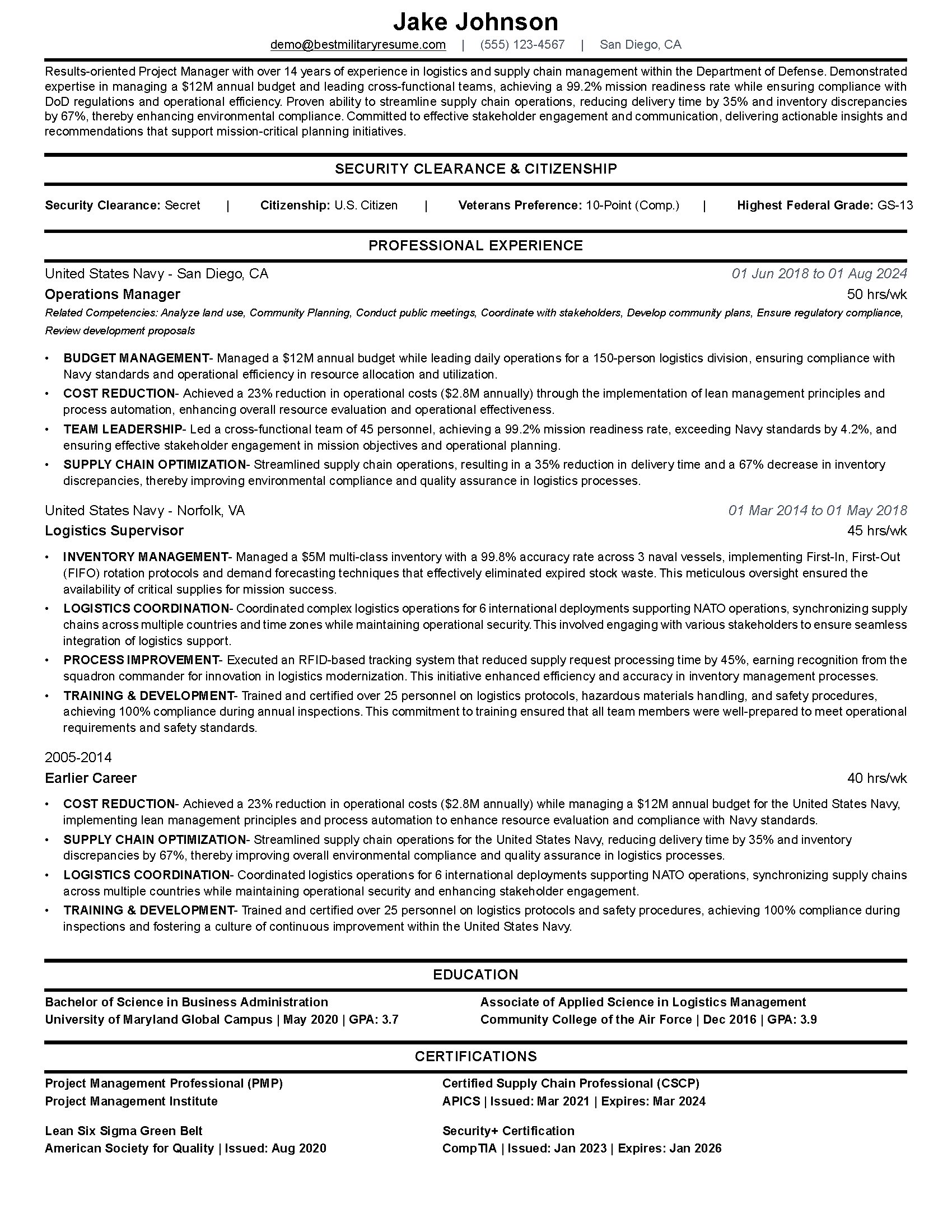
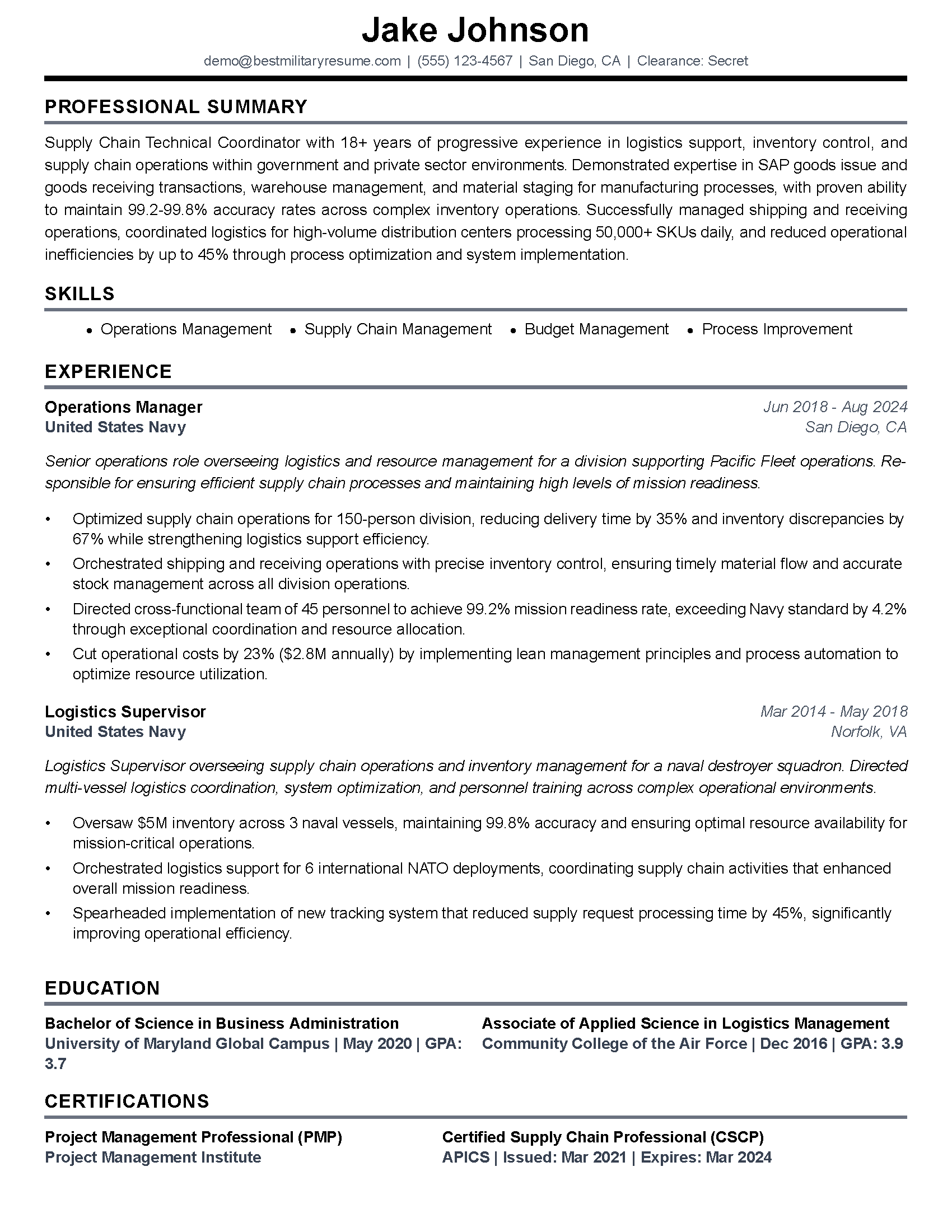
Whatever you choose, build a strong resume that represents your military experience in civilian terms. Whether you are applying to grad schools or jobs, the ability to translate your military background into language that resonates with your audience is the skill that makes everything else possible.
Related: When to start job hunting before separation and the complete military resume guide for 2026.
Frequently Asked Questions
QShould veterans go to grad school right after the military?
QDoes the GI Bill expire?
QCan I work and go to grad school at the same time?
QWhat is VET TEC?
QHow do I choose between an MBA and a specialized degree?
QIs it worth using GI Bill for trade school?
QWhat if I choose wrong and waste my GI Bill?
QDo employers prefer experience or degrees for veteran hires?
About the Author
Brad Tachi is the CEO and founder of Best Military Resume and a 2025 Military Friendly Vetrepreneur of the Year award recipient for overseas excellence. A former U.S. Navy Diver with over 20 years of combined military, private sector, and federal government experience, Brad brings unparalleled expertise to help veterans and military service members successfully transition to rewarding civilian careers. Having personally navigated the military-to-civilian transition, Brad deeply understands the challenges veterans face and specializes in translating military experience into compelling resumes that capture the attention of civilian employers. Through Best Military Resume, Brad has helped thousands of service members land their dream jobs by providing expert resume writing, career coaching, and job search strategies tailored specifically for the veteran community.
View all articles by Brad TachiFound this helpful? Share it with fellow veterans:
