Refuel/Bomber Aircraft Maintenance
The civilian and federal jobs that hire Air Force Refuel/Bomber Aircraft Maintenances — with real salaries and the resume that gets callbacks.
Every 2A5X4 has more options than a Google search will tell you. Below: career paths, BLS salary data, federal GS series, certifications by target career, and how to translate your experience without losing what made you valuable to the Air Force in the first place.
Free to start · Tailored resume in under 5 minutes
After the Navy I got hired into 6 federal career fields and tech sales, and sat on federal hiring panels along the way. I spent the last 2 years rebuilding everything I learned into BMR, tuned for how AI actually screens resumes today. This is the system I wish I'd had on day one.
Get a free 2A5X4 Refuel/Bomber Aircraft Maintenance sample resume
One page, built in our template, with your military experience translated into civilian terms hiring managers and ATS systems read. Use it as a reference for your own. Drop your email and we'll send you the download link.
Free. We'll also send occasional job-search tips. Unsubscribe anytime.
Military Role Overview
Air Force Refuel/Bomber Aircraft Maintenance specialists (2A5X4) keep the heavy iron flying: the KC-135 Stratotanker and KC-46 Pegasus tankers, and the B-1 Lancer, B-2 Spirit, and B-52 Stratofortress bombers. The work is crew chief and integrated maintenance on large, multi-engine airframes. You launch and recover aircraft on a clock, run pre-flight and post-flight inspections, service hydraulic and fuel systems, and troubleshoot mechanical, electrical, and pneudraulic faults across some of the oldest and most complex platforms in the inventory.
On the tanker side, the aerial-refueling systems are their own discipline. The KC-135 flying boom and the KC-46 boom-and-drogue setup carry their own hydraulics, fuel-transfer plumbing, and control logic that have to work right every sortie. On the bomber side, the airframes are large, weapons-bay-adjacent, and unforgiving. A B-52 has been flying since the 1950s and a B-1 carries variable-sweep wings, so the maintainer has to read the jet, not just the tech data. Initial skills training runs through Sheppard AFB, Texas, then airframe-specific technical training for the assigned platform, with 3-, 5-, 7-, and 9-skill-level upgrades over a career. At the senior level the specialty merges into the 2A590 manager track.
Civilian employers value this background because heavy-airframe maintenance is a small world and the discipline behind it is rare. Every action is governed by a Technical Order, every inspection is signed off, and the launch/recovery tempo means you learn to diagnose under time pressure without cutting corners. Across more than 60,000 resumes built on BMR, the maintainers who land fastest are the ones who translate that sign-off authority and systems-troubleshooting depth into civilian language. If you want to see how your specialty maps to civilian roles, start with the career crosswalk tool, and compare notes with the broader 2A5X1 Aerospace Maintenance path if you cross-trained. The 8852 aircraft mechanic civilian guide walks through the federal side in depth.
BMR has built more than 60,000 resumes, and the tanker and bomber maintainers we see consistently undersell themselves. Keeping a 70-year-old B-52 or a brand-new KC-46 mission-ready is not generic wrench-turning. It is heavy-airframe systems integration with real sign-off authority, and that is exactly what FAA repair stations, airline heavy-check lines, and DoD depots are short on. The work transfers cleanly. The resume just has to say so. — Brad Tachi, Navy Diver veteran & BMR founder
Pay Reality Check
The number that matters when you're deciding what's next: how does civilian pay compare to what you make now?
Military comp is approximate (varies by location/dependents). Civilian is BLS median. Federal includes locality pay. Your real number depends on duty station, family status, GS step, and overtime.
Private Sector Career Paths
The clearest civilian path is FAA-certificated aircraft maintenance. Aircraft mechanics and service technicians earned a median of $78,680 per year in May 2024 (BLS OEWS), and the work on commercial heavy aircraft, the Boeing 737, 767, and 777 families, maps directly onto the large-airframe experience you built on tankers and bombers. Major carriers, MRO (maintenance, repair, and overhaul) providers, and FAA-certificated repair stations all hire here, and the FAA Airframe & Powerplant (A&P) certificate is the credential that unlocks the field.
Avionics is the higher-paying adjacent lane. Avionics technicians earned a median of $81,390 in May 2024 (BLS OEWS), and the troubleshooting you did on tanker fuel-control logic and bomber electrical systems lines up with the avionics-bench work civilian shops need. Quality and inspection roles are a third option: inspectors, testers, sorters, samplers, and weighers earned a median of $47,460 in May 2024 (BLS OEWS), and the entry point is your inspection and tech-data discipline rather than a new trade.
Be honest about geography. The heavy-MRO work clusters where the carriers and depots are: the Dallas-Fort Worth area, Atlanta, Phoenix, Oklahoma City, and the Gulf Coast. Pay and availability swing with the airline cycle, so the A&P credential is what keeps you portable when one market softens. If you held a tanker or bomber billet and want to see how a sister-service maintainer translated the same airframe work, the Navy Aviation Machinist's Mate (AD) and Aviation Structural Mechanic (AM) pages cover the carrier side of the house. When you are ready to put it on paper, the military resume builder handles the structure, or you can build your resume now.
Civilian Job Title Translations
| Civilian Job Title | Industry | BLS Median Salary | Outlook | Match |
|---|---|---|---|---|
Aircraft Mechanic and Service Technician O*NET: 49-3011.00 | Aviation Maintenance | $78,680 | 5% (Faster than average) | strong |
Avionics Technician O*NET: 49-2091.00 | Aviation Maintenance | $81,390 | 5% (Faster than average) | strong |
Aircraft Maintenance Inspector / Quality Inspector O*NET: 51-9061.00 | Aviation Maintenance | $47,460 | 1% (Little or no change) | strong |
Aerospace Manufacturing Technician O*NET: 49-3011.00 | Aerospace Manufacturing | $78,680 | 5% (Faster than average) | moderate |
Industrial Machinery Mechanic O*NET: 49-9041.00 | Industrial Maintenance | $63,510 | 13% (Much faster than average) | moderate |
Maintenance Crew Lead / Line Maintenance Supervisor O*NET: 49-3011.00 | Aviation Maintenance | $78,680 | 5% (Faster than average) | moderate |
Companies That Hire This Background
See a salary you want? Build a resume targeting it.
BMR rewrites your 2A5X4 experience for any of the civilian roles above — keywords, achievements, and language hiring managers actually scan for.
Free to start · 2 tailored resumes included
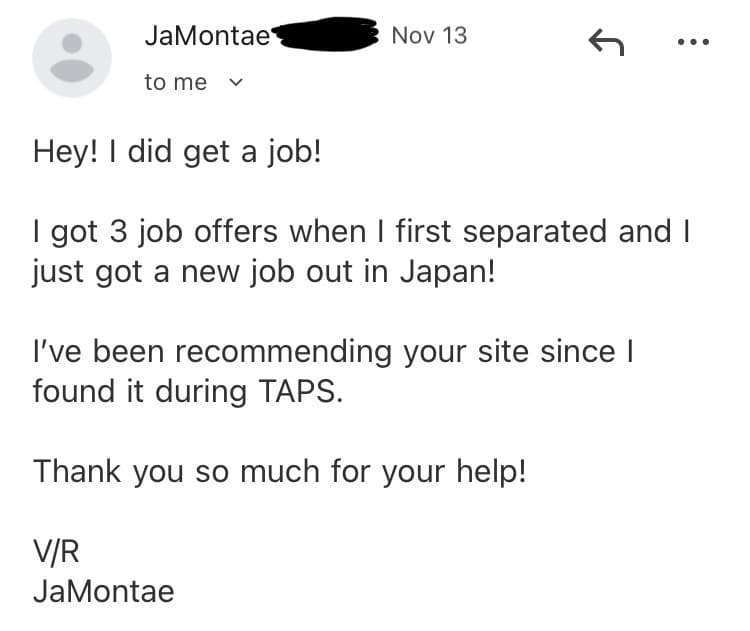
“Hey! I did get a job! I got 3 job offers when I first separated and I just got a new job out in Japan! I’ve been recommending your site since I found it during TAPS. Thank you so much for your help! V/R JaMontae ”
Federal Career Paths
Federal maintenance work is one of the strongest landing zones for a 2A5X4, and it runs on a different hiring system than industry. The anchor series is GS/WG-8852 Aircraft Mechanic, used across Air Force depots, the Air National Guard, Navy fleet readiness centers, and Army aviation. Wage Grade (WG) trade jobs are hands-on; the General Schedule (GS) versions lean toward planning, inspection, and oversight. Air Logistics Complexes at Tinker (Oklahoma City), Hill (Utah), and Robins (Georgia) keep tanker and bomber fleets running and hire maintainers who already know the platforms.
Beyond the wrench, the pneudraulic and powered-support specialties translate cleanly: WG-8255 Pneudraulic Systems Mechanic and WG-8268 Aircraft Pneudraulic Systems Mechanic for the hydraulic and boom-system side, and WG-5378 Powered Support Systems Mechanic for the ground equipment that keeps the flightline moving. As you move up, GS-1910 Quality Assurance and GS-1825 Aviation Safety reward your tech-data and inspection background, and GS-0802 Engineering Technician opens depot and program roles. Veterans' Preference adds 5 or 10 points to your rated score, and federal hiring is one of the few places your skill-level history reads as direct qualifying experience instead of needing translation.
Federal resumes are their own format: longer, with hours per week, supervisor details, and specific accomplishment statements tied to the qualification standard. The military skills to federal job series guide shows how the crosswalk works, and the Coast Guard Aviation Maintenance Technician (AMT) page shares the same GS-8852 target if you want a cross-branch comparison. To get the format right the first time, use the federal resume builder or start your federal resume.
GS Series & Position Matches
| GS Series | Federal Job Title | Typical Grades | Match | Explore |
|---|---|---|---|---|
| GS-8852 | Aircraft Mechanic | WG-8, WG-10, GS-9, GS-11 | View Details → | |
| GS-8268 | Aircraft Pneudraulic Systems Mechanic | WG-8, WG-10 | View Details → | |
| GS-1910 | Quality Assurance | GS-9, GS-11, GS-12 | View Details → | |
| GS-0802 | Engineering Technician | GS-7, GS-9, GS-11 | View Details → | |
| GS-8255 | Pneudraulic Systems Mechanic | WG-8, WG-10 | View Details → | |
| GS-5378 | Powered Support Systems Mechanic | WG-8, WG-10 | View Details → | |
| GS-1825 | Aviation Safety | GS-11, GS-12 | View Details → |
Federal resumes follow different rules. We know them.
Federal hiring uses keyword-matching and structured experience. BMR builds federal-format resumes (USAJobs-ready) with the right keywords, hours/week, and supervisor info — for any GS series above.
Free to start · Federal + civilian resume formats included
Want to Change Careers Entirely?
Not everyone wants to stay in a related field. These career paths leverage your transferable skills — leadership, risk management, logistics, project planning — in completely different industries.
Electrical Power-Line Installer and Repairer
Tanker and bomber electrical and systems work, plus the comfort working at height and on high-energy systems, sets up the lineworker trade. The safety discipline and methodical troubleshooting transfer directly.
Boilermaker
Heavy-airframe structural repair and the tolerance discipline behind it translate to boilermaker work on tanks, boilers, and pressure vessels. The high-consequence mindset is already there.
Structural Iron and Steel Worker (Ironworker)
The structural-repair, rigging, and at-height work from heavy-aircraft maintenance maps onto ironworking on buildings and bridges. The schedule pressure and safety culture carry over.
Sheet Metal Worker
Airframe skin and structural sheet-metal repair is a near-literal trade match outside aviation. The fabrication and layout skills transfer to HVAC and architectural sheet-metal work.
Heavy Vehicle and Mobile Equipment Service Technician
Diagnosing hydraulic, fuel, and mechanical faults on heavy aircraft transfers to construction, mining, and fleet equipment. The systems are different but the troubleshooting method is the same.
Stationary Engineer and Boiler Operator
Running and maintaining the interlocked mechanical, hydraulic, and pneumatic systems of a building plant mirrors keeping a complex airframe ready. The continuous-operations mindset fits.
Pivoting industries? You don't need to start from scratch.
The skills that made you a good Marine, Sailor, Airman, or Soldier transfer further than you think. BMR rewrites your bullets for any of the pivot careers above — without making you sound like you've never done the work.
Free to start · Try as many career angles as you want
Skills Translation Guide
If you are staying in aircraft maintenance, your terminology already translates. FAA repair stations and airline heavy-check lines speak Technical Order, launch and recovery, and inspection sign-off natively. This section is for the maintainers targeting careers OUTSIDE the flightline, where a hiring manager has never seen a B-52 isochronal inspection and needs the business meaning of what you did.
The move is to describe the system and the stakes, not the airframe. "Crew chief on KC-135" means little to a manufacturing plant manager. "Owned launch-and-recovery readiness for a multi-engine aircraft, signing off airworthiness on a fixed daily timeline" reads as accountability and throughput ownership anywhere. Lead with the scope (number of systems, dollar value of the asset, downtime avoided), then name the discipline.
- Before: "Performed phase inspections and red-X sign-offs on B-1 hydraulic systems." After: "Inspected and certified safety-critical hydraulic systems on $300M+ assets, holding final sign-off authority that cleared equipment for operation with zero documented failures."
- Before: "Launched and recovered tanker sorties on the flightline." After: "Coordinated time-critical equipment readiness for a high-tempo operation, troubleshooting mechanical and fuel-system faults under deadline to keep an asset fleet mission-ready."
- Before: "Used Tech Data to troubleshoot fuel-transfer discrepancies." After: "Diagnosed complex fuel and hydraulic system faults using controlled technical documentation, restoring operational status while maintaining full audit-trail compliance."
For a full library of these conversions, the military jargon decoder and the EPR/OPR to civilian resume guide are built for exactly this. Drop your bullets into the military resume builder to see them rewritten, or get started here.
Resume Bullet Examples
Get bullets like these auto-generated for your resume.
BMR turns your 2A5X4 duties and accomplishments into civilian bullets that match the job you're applying for — no manual translation, no rewriting.
Free to start · Tailored to each job posting
Certifications by Career Path
Which certifications you need depends on where you're headed. Find your target career path below.
Aviation Maintenance
Construction & Trades
Federal Employment
Industrial Maintenance
Quality Assurance
Safety & EHS
Got a cert? Don't bury it. List it the right way.
The wrong placement can sink an otherwise strong application. BMR knows where each cert ranks, what to call it, and how to frame it for ATS keyword matching and hiring manager attention.
Free to start · Built around your real certs and clearance
Transition Resources
For staying in aircraft maintenance. The FAA Airframe & Powerplant (A&P) certificate is the gateway credential, and military maintenance experience can count toward the experience requirement through the FAA's military-to-A&P pathway (FAA Form 8610-2). SkillBridge placements with airlines and MRO providers let you start the civilian transition before separation. Industry groups like the Aeronautical Repair Station Association (ARSA) and PAMA (Professional Aviation Maintenance Association) are where the jobs and the people are. Compare your path against the Marine Helicopter Crew Chief (6173) and Army Aircraft Powerplant Repairer (15B) pages, which feed the same FAA pipeline.
For careers outside the flightline. Your heavy-systems troubleshooting transfers to energy, rail, and heavy industry. American Corporate Partners (ACP) offers free veteran mentorship to map the jump, and your GI Bill can fund a trade credential or a two-year technical degree. USAJobs is the front door for federal trade work, and the federal resume builder formats your experience to the WG/GS standard. The 8852 aircraft mechanic guide and the military experience translation guide are good next reads.
See also: Navy Aviation Machinist's Mate (AD), Coast Guard Aviation Maintenance Technician (AMT), and the full military-to-civilian career library. When you are ready, build your resume now or open the federal resume builder.
Your 30 / 60 / 90-Day Transition Plan
Most people do this backwards. They wait until terminal leave to start, then panic. Here's the sequence that works. Already out? Same plan, start at day one today.
Set the foundation
- Pull your DD-214 (request from Milconnect if separated)
- List your top 3 civilian roles AND top 3 GS series
- Build your tailored 2A5X4 resume — BMR does it free
- Write 1 strong LinkedIn headline (not "veteran seeking opportunities")
- Pull together your evals/performance reports for accomplishments
Apply with intent
- Apply to 5–10 jobs/week — quality over quantity
- Tailor every resume to the job description (BMR auto-tailors)
- Connect with 5 people/week on LinkedIn (not a spray)
- Set up a USAJobs profile and a saved-search alert for your GS series
- Practice translating your military bullets out loud — explain to a civilian friend
Close the offer
- Track every application — date, status, contact, notes
- Follow up 7–10 days after each application
- Prep for behavioral interviews using the STAR method
- Negotiate salary — don't take the first offer (BLS median is your floor)
- Stay applying even after one offer — leverage = options
Print this. Tape it to your monitor. Veterans who treat the job search like a 90-day op get hired faster than the ones who treat it like an emergency.
Frequently Asked Questions
What civilian jobs can a 2A5X4 get after the Air Force?
Do I need an FAA A&P license to work on civilian aircraft?
How does my tanker or bomber experience translate if I leave aviation entirely?
What federal GS series fit a 2A5X4?
Is my security clearance worth anything as a civilian?
How does Veterans' Preference help me get a federal maintenance job?
Can I use my GI Bill for a maintenance career outside aviation?
What pays the most for a transitioning 2A5X4?
Where are the civilian heavy-aircraft maintenance jobs concentrated?
How do I write a resume that gets me hired off the flightline?
Translate your 2A5X4 Refuel/Bomber Aircraft Maintenance experience into a resume that gets callbacks
Stop rewriting from scratch every time you apply. BMR turns your military experience into civilian and federal resumes — tailored to each job.