Loading...
Loading...
The civilian and federal jobs that hire Marines Body Repair Mechanics — with real salaries and the resume that gets callbacks.
Every 3513 has more options than a Google search will tell you. Below: career paths, BLS salary data, federal GS series, certifications by target career, and how to translate your experience without losing what made you valuable to the Marines in the first place.
Free · No credit card · Tailored resume in under 5 minutes
After the Navy I got hired into 6 federal career fields and tech sales, and sat on federal hiring panels along the way. I spent the last 2 years rebuilding everything I learned into BMR, tuned for how AI actually screens resumes today. This is the system I wish I'd had on day one.
The 3513 Body Repair Mechanic works the collision side of Occupational Field 35, Motor Transport. While the 3521 Automotive Organizational Mechanic turns wrenches on engines and drivetrains, you are the Marine who makes a wrecked vehicle whole again. You straighten bent frames on hydraulic alignment benches, pull and replace crushed body panels, weld and fabricate sheet metal, repair plastic and composite panels with hot-air guns, and refinish the surface so it leaves the shop looking like it was never hit.
The work spans the full motor transport fleet: HMMWVs, MTVRs, LVSRs, MRAPs, trailers, and the seven-ton family of vehicles. A typical job runs from damage assessment through structural straightening, panel replacement, metal finishing, body filler and block sanding, masking, primer, and a color-matched topcoat. You align headlights, wheels, and brake systems after a frame pull, and you clean and prep stations between jobs. This is precision restoration work measured against factory tolerances, not parts-swapping.
Training runs through the Motor Transport Maintenance courses tied to OccField 35 (the schoolhouse at Camp Johnson, Marine Corps Combat Service Support Schools). Some Marines stack civilian-recognized skills along the way through the Marine COOL program, including ASE and I-CAR pathways. If you are weighing where this MOS sits next to the rest of motor transport, compare it with the 3521 Automotive Organizational Mechanic and the 3523 LVS Mechanic paths, or browse the full military-to-civilian career crosswalk. For the resume side, the military terms glossary is a useful first read.
Civilian collision shops value this background because the translation is short. The work you did in the motor pool is the same work a body shop bills out every day: frame straightening, panel replacement, welding, and refinishing. The gap is naming it in shop terms a service manager recognizes, which is exactly what the rest of this page is built to do.
BMR has built more than 60,000 resumes across every MOS, and 3513s have one of the cleanest trade translations I see. Auto-body and collision work is a strong civilian trade with steady demand, and the only thing standing between your motor-pool experience and a body-shop offer is naming the frame, panel, and refinish work the way a shop manager reads it. Get that right and your hands-on record does the rest. — Brad Tachi, Navy Diver veteran & BMR founder
The number that matters when you're deciding what's next: how does civilian pay compare to what you make now?
Military comp is approximate (varies by location/dependents). Civilian is BLS median. Federal includes locality pay. Your real number depends on duty station, family status, GS step, and overtime.
Collision repair is a hands-on trade with measurable demand. The U.S. Bureau of Labor Statistics (BLS OEWS, May 2024) reports a median annual wage of $51,680 for Automotive Body and Related Repairers (O*NET 49-3021.00), with the top 10 percent earning more. Pay tracks skill: a technician who can pull a frame, weld aluminum, and lay a clean clearcoat earns more than one who only does R&I (remove and install).
Auto Body Repairer / Collision Technician is the direct match. You diagnose structural and cosmetic damage, replace panels, perform metal finishing, and restore vehicles to pre-accident condition. Frame Technician roles focus on the alignment-bench work you already did on HMMWVs and MTVRs, measuring and pulling unibody and full-frame structures back to spec. Automotive Painter / Refinisher is a distinct specialty with its own pay band (BLS lists Coating, Painting, and Spraying machine operators at a $47,590 median, May 2024); color matching and spray technique are the differentiators.
The market has two honest realities worth knowing. First, it is cyclical and tied to accident volume and insurance work, so independent shops ebb and flow while dealership and franchise body shops (Gerber, Caliber, Crash Champions) tend to be steadier. Second, geography matters: dense metro areas and regions with harsh winters carry more volume. Pay also rises fast on the supervisory track. BLS puts First-Line Supervisors of Mechanics, Installers, and Repairers (O*NET 49-1011.00) at a $78,300 median (May 2024), and many shop foremen and estimators come up through the body side.
If you would rather stay in the broader vehicle trade than the collision lane specifically, the mechanical path overlaps with Automotive Service Technicians (O*NET 49-3023.00, $49,670 median, May 2024). Marines coming from other motor-T and vehicle-repair backgrounds land in the same shops, so it is worth seeing how the Army 91B Wheeled Vehicle Mechanic and Air Force 2T3X1 Vehicle Maintenance pages frame the same civilian market. For a structured trade roadmap, the BMR guide to military-to-trade careers and the breakdown of high-demand veteran careers for 2026 are both worth a look. When you are ready to turn the experience into interviews, the military resume builder handles the translation.
| Civilian Job Title | Industry | BLS Median Salary | Outlook | Match |
|---|---|---|---|---|
Auto Body Repairer O*NET: 49-3021.00 | Collision Repair | $51,680 | Little or no change (BLS projected) | strong |
Collision Repair Technician O*NET: 49-3021.00 | Collision Repair | $51,680 | Little or no change (BLS projected) | strong |
Frame Technician O*NET: 49-3021.00 | Collision Repair | $51,680 | Little or no change (BLS projected) | strong |
Automotive Painter / Refinisher O*NET: 51-9124.00 | Collision Repair | $47,590 | Little or no change (BLS projected) | strong |
Automotive Service Technician O*NET: 49-3023.00 | Vehicle Repair | $49,670 | 3% (As fast as average) | moderate |
Body Shop Estimator O*NET: 49-3021.00 | Collision Repair | $51,680 | Little or no change (BLS projected) | moderate |
Body Shop Foreman / Supervisor O*NET: 49-1011.00 | Collision Repair | $78,300 | 3% (As fast as average) | moderate |
Welder (Structural / Fabrication) O*NET: 51-4121.00 | Manufacturing | $51,000 | 2% (Little or no change) | moderate |
BMR rewrites your 3513 experience for any of the civilian roles above — keywords, achievements, and language hiring managers actually scan for.
Free · No credit card · 2 tailored resumes included
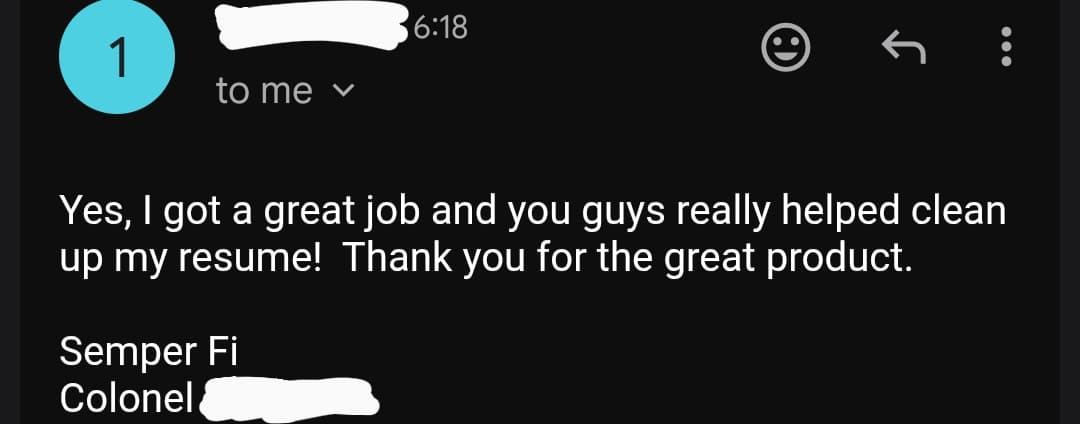
“Hey Brad, Just wanted to send out a quick thank you. You've created something amazing with BMR and your continued advocacy for transitioning service members does not go unnoticed. It was the most effective resource I used in my transition and I know it played a key role in landing a six figure…”
Federal hands-on body and collision work mostly lives in the Wage Grade (WG) trade system rather than the GS scale, and it sits inside fleet, depot, and installation transportation shops. DoD installations, VA medical centers, the U.S. Postal Service, the Forest Service, and the General Services Administration (GSA) Fleet all run vehicle and equipment shops that repair body damage, fabricate sheet metal, and refinish vehicles. Veterans' Preference applies across these competitive-service jobs, and a 5-point or 10-point preference can move you up the certificate of eligibles.
The trade series that map to 3513 work include WG-3806 Sheet Metal Mechanic (panel fabrication and body repair), WG-3703 Welding (structural and frame welding), WG-4102 Painting (vehicle refinishing and coatings), and WG-5823 Automotive Mechanic (fleet shops where body and mechanical work overlap). Frame-bench and metalworking experience also lines up with WG-5350 Production Machinery Mechanic. On the GS side, supervisory, quality, and technical roles open up as you add credentials: GS-0802 Engineering Technician supports vehicle and equipment engineering shops, GS-1601 General Facilities and Equipment covers fleet and facilities equipment management, and GS-1910 Quality Assurance fits inspectors who verify collision and refinish work meets standard.
A practical note on grade: WG trade jobs are graded by the work, not by a GS-7/9/11 ladder, and they often pay competitively with mid-grade GS for skilled hands-on positions. Build the federal resume around verifiable tasks (frames pulled to tolerance, panels fabricated, welds passed, vehicles refinished) and the qualification standard reads itself. Other vehicle-repair MOS pages target the same shops, so the Army 91B federal section is a useful companion. For the application mechanics, read the 10 federal job series every veteran should search and the guide to finding your military job series equivalent on USAJobs. The federal resume builder formats the rest to OPM standard.
| GS Series | Federal Job Title | Typical Grades | Match | Explore |
|---|---|---|---|---|
| GS-3703 | Welding | WG-8, WG-9, WG-10 | View Details → | |
| GS-4102 | Painting | WG-7, WG-8, WG-9 | View Details → | |
| GS-3806 | Sheet Metal Mechanic | WG-8, WG-9, WG-10 | View Details → | |
| GS-5823 | Automotive Mechanic | WG-8, WG-9, WG-10 | View Details → | |
| GS-5350 | Production Machinery Mechanic | WG-8, WG-9, WG-10 | View Details → | |
| GS-1601 | General Facilities and Equipment | GS-7, GS-9, GS-11 | View Details → | |
| GS-0802 | Engineering Technician | GS-7, GS-9, GS-11 | View Details → | |
| GS-1910 | Quality Assurance | GS-7, GS-9, GS-11 | View Details → |
Federal hiring uses keyword-matching and structured experience. BMR builds federal-format resumes (USAJobs-ready) with the right keywords, hours/week, and supervisor info — for any GS series above.
Free · No credit card · Federal + civilian resume formats included
Not everyone wants to stay in a related field. These career paths leverage your transferable skills — leadership, risk management, logistics, project planning — in completely different industries.
Building braces, orthotics, and prosthetics is precision forming and finishing of metal and polymer to a measured fit, the same hand skills used to fabricate and shape body panels.
Cutting, fitting, and sealing glass to precise openings draws on the same measure-and-fit discipline used replacing auto glass and body panels in collision repair.
Building and finishing custom cabinetry is fine surface and shape work to a tight tolerance, the woodworking analog of body filler, block sanding, and panel fitting.
Making foundry patterns and core boxes is exact metal and plastic forming from a drawing, closely related to fabricating and shaping replacement body components.
Fabricating crowns, dentures, and appliances is small-scale precision shaping and finishing, the bench-craft cousin of metal finishing and panel detailing.
Running a collision job from damage assessment through final inspection is the same scheduling, coordination, and quality oversight a site superintendent does across trades.
The skills that made you a good Marine, Sailor, Airman, or Soldier transfer further than you think. BMR rewrites your bullets for any of the pivot careers above — without making you sound like you've never done the work.
Free · No credit card · Try unlimited career angles
If you are applying to a body shop, a collision center, or a dealership, your terminology already translates. Shop managers know what a frame pull, a panel R&I, and a clearcoat are. This section is for 3513s targeting careers OUTSIDE collision repair, where a hiring manager has never set foot in a motor pool and needs the work named in their language.
The pattern is to convert military equipment and process names into outcomes a civilian recruiter can score. Lead with the result (tolerance, throughput, quality, cost avoidance), then the method.
| Military term | Civilian translation |
|---|---|
| Frame straightening on a hydraulic alignment bench | Structural restoration to manufacturer tolerance using measuring and pulling equipment |
| Sheet metal fabrication and panel replacement | Precision metal fabrication, forming, and assembly |
| Refinishing (primer, masking, color-matched topcoat) | Surface preparation and industrial coatings application to a finish spec |
| Tactical vehicle fleet (HMMWV, MTVR, LVSR) | Heavy and light vehicle fleet servicing under safety and quality standards |
Before: "Performed body repair on tactical vehicles in a Marine motor transport maintenance shop."
After: "Restored 40+ damaged vehicles to manufacturer tolerance, performing structural alignment, metal fabrication, and refinishing with zero rework rejections during quality inspection."
Before: "Used hot-air welding guns and frame alignment machines."
After: "Operated hydraulic alignment, welding, and forming equipment to repair metal, plastic, and composite assemblies to dimensional spec under deadline."
For a deeper reference, work through the 50 military terms translated to civilian language and the guide to converting evaluations into resume bullets. The military resume builder applies this translation automatically as you enter your experience.
BMR turns your 3513 duties and accomplishments into civilian bullets that match the job you're applying for — no manual translation, no rewriting.
Free · No credit card · Tailored to each job posting
Which certifications you need depends on where you're headed. Find your target career path below.
The wrong placement can sink an otherwise strong application. BMR knows where each cert ranks, what to call it, and how to frame it for ATS keyword matching and hiring manager attention.
Free · No credit card · Built around your real certs and clearance
The two credentials civilian shops recognize are ASE and I-CAR. ASE B-series tests (B2 Painting and Refinishing, B3 Non-Structural, B4 Structural, B5 Mechanical and Electrical) certify hands-on collision skill, and passing B2 through B5 earns ASE Master Collision Repair Technician status. I-CAR ProLevel training is the industry standard insurers and dealers look for, and I-CAR welding qualifications (steel GMA and aluminum) directly match the welding you did on the fleet. Use the Marine COOL program and the GI Bill to fund these. Dealership and franchise networks (Caliber Collision, Crash Champions, Gerber) hire steadily and run their own tech-development tracks.
If you are leaving the trade entirely, your transferable strengths are precision fabrication, surface and structural restoration to tolerance, materials knowledge, and reading damage to plan a repair sequence. Those map into manufacturing, construction trades, and precision-craft healthcare roles covered in the Career Change section below. For the move itself, the SFL-TAP transition resources and American Corporate Partners (ACP) mentorship are worth using early. The Marine COOL certification guide and the GI Bill trade school programs guide both lay out how to fund retraining.
See also the related vehicle-repair paths: Marine 3521 Automotive Organizational Mechanic, Army 91B Wheeled Vehicle Mechanic, and the Navy HT Hull Maintenance Technician metalworking path. Explore every option in the career crosswalk, then build your resume now to turn your 3513 record into interviews.
Most veterans do this backwards — they wait until terminal leave to start, then panic. Here's the actual sequence that works.
Print this. Tape it to your monitor. Veterans who treat the transition like a 90-day op get hired faster than the ones who treat it like an emergency.
Stop rewriting from scratch every time you apply. BMR turns your military experience into civilian and federal resumes — tailored to each job.