Loading...
Loading...
The civilian and federal jobs that hire Marines Correctional Specialists — with real salaries and the resume that gets callbacks.
Every 5831 has more options than a Google search will tell you. Below: career paths, BLS salary data, federal GS series, certifications by target career, and how to translate your experience without losing what made you valuable to the Marines in the first place.
Free · No credit card · Tailored resume in under 5 minutes
After the Navy I got hired into 6 federal career fields and tech sales, and sat on federal hiring panels along the way. I spent the last 2 years rebuilding everything I learned into BMR, tuned for how AI actually screens resumes today. This is the system I wish I'd had on day one.
If you held the 5831 Correctional Specialist MOS, you ran the daily operations of a military brig: 24-hour custody and supervision of confined Marines, sailors, and other service members awaiting trial, serving sentences, or pending administrative separation. You worked escort and dorm-supervisor billets, master control, mess-deck supervision, and stood duty as a brig supervisor. You processed personnel in and out of confinement, transported prisoners and apprehended deserters and absentees, accounted for inmate funds and personal property, documented behavioral changes, and reported every infraction of facility regulations. None of that is a desk job and none of it is generic.
The training pipeline is specific. After recruit training at Parris Island or San Diego, 5831 Marines attend formal corrections schooling. Many complete the Navy and Marine Corps corrections course historically run at Lackland AFB, or the Corrections and Detention Specialist Course (A16MN43) at the U.S. Army Military Police School, Fort Leonard Wood. Entry requires a GT score of 100 or higher and a clean record (no courts-martial convictions and no drug or moral-turpitude offenses), because you are entrusted with the custody and safety of people the system has taken into its control.
Civilian employers value this background because the work is custody, accountability, and de-escalation under constant scrutiny. You supervised a controlled population where a single lapse in counts, key control, or contraband screening had real consequences, and you documented everything to a standard that holds up under review. That blend of physical-security discipline, defensible recordkeeping, and the judgment to defuse a tense situation before it becomes a use-of-force incident is exactly what correctional facilities, courts, and security operations hire for. If you want to see how your record maps to specific civilian roles, the military career crosswalk tool lays it out, and the 5811 Military Police path covers the law-enforcement side if your interest runs that direction. For the resume mechanics, the Marine Corps resume guide walks through translating MOS language line by line.
I spent years on the federal hiring side, evaluating cleared candidates, and corrections people are some of the most overlooked applicants out there. A 5831 already knows custody, defensible documentation, and how to hold a line without escalating. The Bureau of Prisons built the GS-0007 and GS-0006 series for exactly that experience, and the clearance and clean-record screening you passed is a credential most civilian applicants cannot show on paper. The work translates. The resume is what has to catch up. — Brad Tachi, Navy Diver veteran & BMR founder
The number that matters when you're deciding what's next: how does civilian pay compare to what you make now?
Military comp is approximate (varies by location/dependents). Civilian is BLS median. Federal includes locality pay. Your real number depends on duty station, family status, GS step, and overtime.
Corrections and security hiring is steady but uneven by region, and the numbers tell an honest story. According to BLS Occupational Employment and Wage Statistics (May 2024), correctional officers and jailers (O*NET 33-3012.00) earn a median of $57,970, though BLS also projects overall employment of correctional officers to decline about 7% from 2024 to 2034 as some states reduce incarcerated populations. That decline is not uniform. Federal facilities, county jails in growing metros, and private operators continue to hire, and your federal brig experience reads differently than a county applicant with no custody background.
The supervisory tier pays meaningfully more. First-line supervisors of correctional officers (33-1011.00) earn a median of $76,310 (BLS, May 2024), and your duty-brig-supervisor and master-control billets are direct evidence of that responsibility level. Court-facing roles are adjacent: bailiffs (33-3011.00) earn a median of $57,050, and probation officers and correctional treatment specialists (21-1092.00) earn a median of $64,520 for those who add a bachelor's degree in criminal justice or a related field.
Outside the wire of corrections, your custody and access-control work transfers into security operations. Security guards (33-9032.00) earn a median of $38,370 with little or no employment change projected through 2034, but that figure understates supervisory and specialized posts. Private detectives and investigators (33-9021.00) earn a median of $52,370, and corporate or institutional security supervision pays above the entry guard rate. Geography matters: corrections wages run highest in California, New York, New Jersey, and Massachusetts, and federal facilities pay on the GS scale regardless of state. If your background also touched apprehension and transport, the Navy Master-at-Arms and Air Force Security Forces pages cover overlapping civilian markets. For framing custody work so a hiring manager reads it correctly, our military resume builder handles the translation, or you can build your resume now.
| Civilian Job Title | Industry | BLS Median Salary | Outlook | Match |
|---|---|---|---|---|
Correctional Officer O*NET: 33-3012.00 | Corrections | $57,970 | -7% (Decline, 2024-2034) | strong |
First-Line Supervisor of Correctional Officers O*NET: 33-1011.00 | Corrections | $76,310 | Little or no change projected | strong |
Bailiff O*NET: 33-3011.00 | Courts & Public Safety | $57,050 | Little or no change projected | strong |
Probation Officer / Correctional Treatment Specialist O*NET: 21-1092.00 | Corrections & Social Services | $64,520 | 4% (As fast as average) | moderate |
Security Guard / Security Officer O*NET: 33-9032.00 | Security Services | $38,370 | Little or no change projected | moderate |
Private Detective / Investigator O*NET: 33-9021.00 | Investigations | $52,370 | 5% (Faster than average) | moderate |
Gambling Surveillance Officer O*NET: 33-9031.00 | Hospitality & Gaming Security | $43,900 | Little or no change projected | emerging |
BMR rewrites your 5831 experience for any of the civilian roles above — keywords, achievements, and language hiring managers actually scan for.
Free · No credit card · 2 tailored resumes included
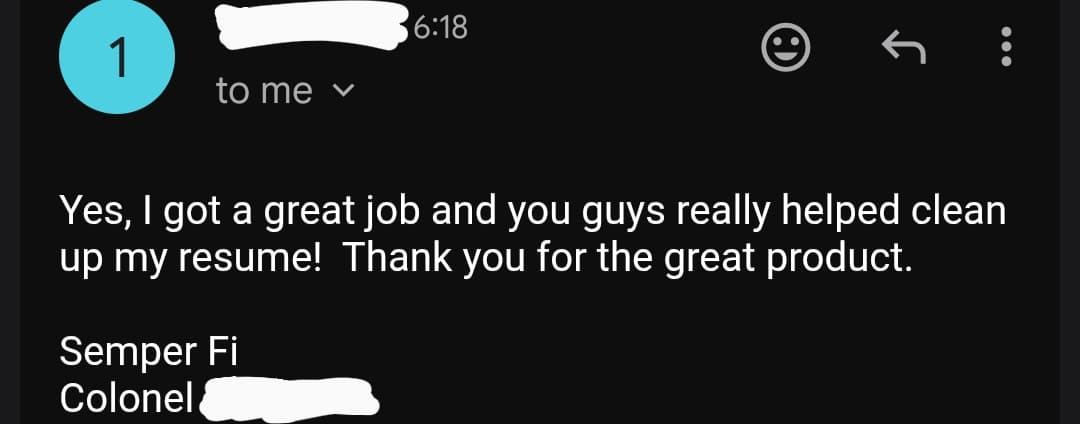
“Hey Brad, Just wanted to send out a quick thank you. You've created something amazing with BMR and your continued advocacy for transitioning service members does not go unnoticed. It was the most effective resource I used in my transition and I know it played a key role in landing a six figure…”
The strongest federal match for a 5831 is the one the Bureau of Prisons designed around the exact work you did. GS-0007 Correctional Officer is the line officer series for federal institutions, and the BOP actively recruits veterans with custody experience. Entry is typically GS-05 with a bachelor's degree or qualifying experience, advancing to GS-06, GS-07, and GS-08 as a journey-level officer. Above it sits GS-0006 Correctional Institution Administration, the series for case-management, unit-management, and facility-administration roles where your brig programs and operations billets line up directly. These two series alone make federal corrections a more natural landing spot for a 5831 than almost any other military job.
Your skill set reaches further than corrections. GS-0083 Police covers federal protective and police officers at VA medical centers, military installations, and federal buildings. GS-0085 Security Guard and GS-0080 Security Administration cover physical-security and access-control roles across DoD and the agencies. For the investigations and enforcement side, GS-1801 General Inspection, Investigation, Enforcement and Compliance spans inspector and compliance officer roles. And if your interest runs toward the rehabilitation and case-management work you saw inside the brig, GS-0101 Social Science supports correctional treatment and program roles when paired with the right coursework.
Veterans' Preference applies to all of these. Your 5 or 10 points move you up the certificate, and the clean-record screening you already passed to hold a 5831 maps closely to the suitability standards federal corrections and police positions require. The Bureau of Prisons and the VA police program are two of the more veteran-friendly federal employers in this space. The 5821 Criminal Investigator path overlaps on the investigative series if that is your direction. For the federal application itself, read 10 federal job series every veteran should search and the 10-point Veterans' Preference guide, then build the document with our federal resume builder or start your federal resume here.
| GS Series | Federal Job Title | Typical Grades | Match | Explore |
|---|---|---|---|---|
| GS-0007 | Correctional Officer | GS-5, GS-7, GS-9 | View Details → | |
| GS-0006 | Correctional Institution Administration | GS-7, GS-9, GS-11 | View Details → | |
| GS-0085 | Security Guard | GS-4, GS-5, GS-6 | View Details → | |
| GS-1801 | General Inspection, Investigation, Enforcement | GS-7, GS-9, GS-11 | View Details → | |
| GS-0083 | Police | GS-5, GS-7 | View Details → | |
| GS-0080 | Security Administration | GS-7, GS-9, GS-11 | View Details → | |
| GS-0101 | Social Science | GS-7, GS-9, GS-11 | View Details → |
Federal hiring uses keyword-matching and structured experience. BMR builds federal-format resumes (USAJobs-ready) with the right keywords, hours/week, and supervisor info — for any GS series above.
Free · No credit card · Federal + civilian resume formats included
Not everyone wants to stay in a related field. These career paths leverage your transferable skills — leadership, risk management, logistics, project planning — in completely different industries.
Inside the brig you watched people at their lowest and learned to read behavior, defuse crises, and document patterns without judgment. That is the core of addiction and behavioral counseling, where many clients arrive through the justice system you already understand.
Master control and duty-brig billets trained you to track multiple feeds, stay composed when a situation turns, and log every action precisely. A 911 dispatch floor demands the same nerve and the same documentation discipline.
Brig programs work, reentry coordination, and the daily contact you had with confined personnel are the same skills caseworkers use to connect at-risk people to services. You already know how the justice system intersects with social services.
Command-investigator and incident-documentation work built the exact toolkit insurance carriers need to flag and prove fraudulent claims: interviewing, evidence handling, and reports that hold up when challenged.
You watched confined service members work toward release and reentry. Rehabilitation counseling applies that same patience and structure to help people with disabilities or barriers reach employment and independence.
Operations-chief and programs-chief brig billets had you running staff, schedules, and compliance for a controlled environment. Community-service organizations need that same operational backbone to run reentry, veteran, and social programs.
The skills that made you a good Marine, Sailor, Airman, or Soldier transfer further than you think. BMR rewrites your bullets for any of the pivot careers above — without making you sound like you've never done the work.
Free · No credit card · Try unlimited career angles
If you are staying in corrections or institutional security, your terminology already lands. Wardens, facility administrators, and corrections HR read "brig," "confinement," and "custody" without a problem. This section is for the careers OUTSIDE corrections, where a hiring manager has never set foot in a brig and needs your experience in their language.
The fix is not to hide what you did. It is to describe the underlying competency in terms a civilian recruiter already values. "Master control supervisor" means access control and electronic-systems monitoring. "Prisoner accountability and counts" means asset and population accountability with zero-error tolerance. "Behavioral observation and reporting" means incident documentation and risk assessment. The 50 military terms translated to civilian language glossary covers the common ones, and the complete military skills translation list goes deeper.
Two before-and-after examples for non-corrections roles:
Targeting a security operations or facility role:
Targeting a human-services or case-management role:
When you frame custody work this way, you keep the credibility without forcing the reader to decode jargon. Our military resume builder does this translation as you write, or you can get started here.
BMR turns your 5831 duties and accomplishments into civilian bullets that match the job you're applying for — no manual translation, no rewriting.
Free · No credit card · Tailored to each job posting
Which certifications you need depends on where you're headed. Find your target career path below.
The wrong placement can sink an otherwise strong application. BMR knows where each cert ranks, what to call it, and how to frame it for ATS keyword matching and hiring manager attention.
Free · No credit card · Built around your real certs and clearance
Use these resources by direction: staying in corrections and security, or moving into a different field entirely.
See also: 5811 Military Police, Army 31E Internment/Resettlement Specialist, and Coast Guard Maritime Enforcement Specialist for related paths. Explore every option with the career crosswalk tool, then build your resume now.
Most veterans do this backwards — they wait until terminal leave to start, then panic. Here's the actual sequence that works.
Print this. Tape it to your monitor. Veterans who treat the transition like a 90-day op get hired faster than the ones who treat it like an emergency.
Stop rewriting from scratch every time you apply. BMR turns your military experience into civilian and federal resumes — tailored to each job.