Loading...
Loading...
The civilian and federal jobs that hire Marines Aircraft Ordnance Systems Technicians — with real salaries and the resume that gets callbacks.
Every 6531 has more options than a Google search will tell you. Below: career paths, BLS salary data, federal GS series, certifications by target career, and how to translate your experience without losing what made you valuable to the Marines in the first place.
Free · No credit card · Tailored resume in under 5 minutes
After the Navy I got hired into 6 federal career fields and tech sales, and sat on federal hiring panels along the way. I spent the last 2 years rebuilding everything I learned into BMR, tuned for how AI actually screens resumes today. This is the system I wish I'd had on day one.
One page, built in our template, with your military experience translated into civilian terms hiring managers and ATS systems read. Use it as a reference for your own. Drop your email and we'll send you the download link.
Free. We'll also send occasional job-search tips. Unsubscribe anytime.
The Marine Corps 6531 Aircraft Ordnance Systems Technician is the I-level (intermediate maintenance activity) backbone of Marine aviation weapons work. While the 6541 senior systems technician owns the deeper integration and quality assurance role, the 6531 lives on the airframe ordnance system itself: bomb racks, missile launchers, gun systems, armament panels, weapons release mechanisms, and the wiring, hydraulics, and electronics that tie those subsystems back into the aircraft. If a station can carry a weapon on an F/A-18, AH-1Z, UH-1Y, V-22, or F-35, a 6531 is the Marine who maintained, troubleshot, and signed off on it.
6531s train through Marine Corps Recruit Training (13 weeks), Marine Combat Training, and then the Navy School of Aviation Ordnance at NAS Pensacola, Florida — typically 14 to 19 weeks of MOS school covering airframe armament systems, weapons handling, system checkouts, electrical and hydraulic troubleshooting, and ordnance safety. Most 6531s are assigned to Marine Aviation Logistics Squadrons (MALS) under the parent Marine Aircraft Wing (MAW), supporting the squadrons at MCAS Cherry Point, MCAS New River, MCAS Beaufort, MCAS Miramar, MCAS Yuma, MCAS Iwakuni, and MCAS Kaneohe Bay. The job is hands-on the airframe — running system tests on Auxiliary Power Units, verifying weapons release continuity, replacing bomb racks (BRU-32, BRU-33, BRU-42), installing missile launchers (LAU-7, LAU-127, LAU-129), and clearing fault codes on the F/A-18 Stores Management System (SMS) or the F-35 Pilot Vehicle Interface.
What makes the 6531 background strikingly valuable in the civilian aviation and defense sectors is the rare combination on one person: airframe-level maintenance experience plus weapons systems integration plus active security clearance plus FAA-relevant safety culture. Boeing weapons integration, Raytheon Missile Systems, Lockheed Martin F-35 sustainment, NAVAIR depots at Cherry Point and Jacksonville, and dozens of mid-tier defense contractors recruit on this background specifically because the I-level diagnostic skill set is what they need on a flight line or a depot floor. You ran armament panel troubleshooting on a $70M aircraft. That is the hire.
Compare your path with the senior systems track at Marines 6541 Aviation Ordnance Systems Technician, the supply side at Marines 6672 Aviation Supply Specialist, or the broader career translation hub for cross-branch comparisons.
I sat on the federal hiring side after the Navy and Marine 6531s walk into federal aviation maintenance and weapons-systems integration roles with one of the most directly-translatable backgrounds the Marine Corps produces. The aircraft armament systems experience plus airframe-side maintenance plus active clearance is the package Boeing weapons integration, Raytheon Missile Systems, federal NAVAIR depots, and DoD aviation maintenance offices recruit on sight. — Brad Tachi, Navy Diver veteran & BMR founder
The number that matters when you're deciding what's next: how does civilian pay compare to what you make now?
Military comp is approximate (varies by location/dependents). Civilian is BLS median. Federal includes locality pay. Your real number depends on duty station, family status, GS step, and overtime.
The civilian market for 6531s splits into four real lanes: defense aviation contractors (where the systems you turned wrenches on are designed and sustained), commercial aviation maintenance (where your safety culture and electrical/hydraulic troubleshooting carry over), federal aviation depot work (NAVAIR, DLA Aviation), and weapons-systems manufacturing (Raytheon Missile Systems, Northrop munitions, Olin). The honest read of the market: airframe armament experience is niche enough that the right resume gets pulled to the top quickly, and broad enough that you have real choices about where to land.
Geography matters. The strongest civilian aviation ordnance markets are around major naval aviation hubs (Jacksonville, Cherry Point, San Diego, Patuxent River) and weapons production sites (Tucson for Raytheon Missile Systems, St. Louis for Boeing Defense, Camden AR for Lockheed missiles). For a wider salary view across paths, read Military to Civilian Salary: What You're Worth. Cross-branch peers walk into the same lanes — see Navy AO Aviation Ordnanceman and Air Force 2W1X1 Aircraft Armament Systems.
Defense aviation contractors building or sustaining the F/A-18, F-35, AH-1Z, V-22, and the missiles those airframes carry are the most direct fit. Major MROs, federal depots, and weapons producers round out the list. Build a tailored 6531 resume free in under 5 minutes — the AI translates BRU-32 and LAU-127 work into civilian language automatically.
| Civilian Job Title | Industry | BLS Median Salary | Outlook | Match |
|---|---|---|---|---|
Aircraft Mechanic / Service Technician O*NET: 49-3011.00 | Aviation Maintenance | $70,740 | 4% (Faster than average) | strong |
Avionics Technician O*NET: 49-2091.00 | Aviation Electronics | $74,440 | 6% (Faster than average) | strong |
Field Service Technician (Defense Aviation) O*NET: 49-9099.00 | Defense Contracting | $58,640 | 4% (Faster than average) | strong |
Industrial Production Manager O*NET: 11-3051.00 | Aerospace Manufacturing | $116,970 | 3% (As fast as average) | moderate |
Manufacturing Production Supervisor O*NET: 51-1011.00 | Munitions / Aerospace Manufacturing | $66,750 | 0% (Little or no change) | strong |
Munitions / Aerospace Quality Inspector O*NET: 51-9061.00 | Quality Assurance | $46,790 | -1% (Little or no change) | moderate |
Aerospace Engineering Technician O*NET: 17-3021.00 | Aerospace | $76,720 | 6% (Faster than average) | moderate |
BMR rewrites your 6531 experience for any of the civilian roles above — keywords, achievements, and language hiring managers actually scan for.
Free · No credit card · 2 tailored resumes included
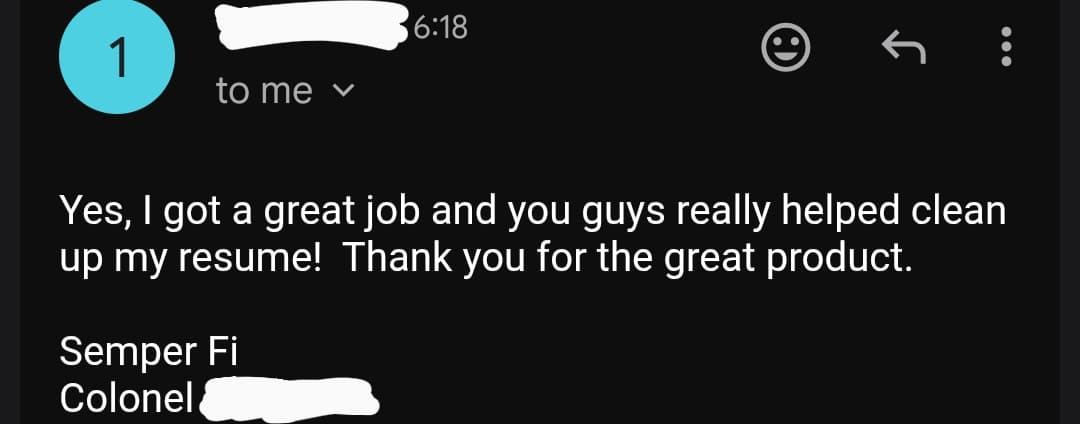
“Hey Brad, Just wanted to send out a quick thank you. You've created something amazing with BMR and your continued advocacy for transitioning service members does not go unnoticed. It was the most effective resource I used in my transition and I know it played a key role in landing a six figure…”
Aviation ordnance is one of the cleaner federal hiring fits the Marine Corps produces. The work translates directly into multiple GS series at NAVAIR depots, DoD aviation maintenance offices, DLA Aviation, FAA, and the federal munitions footprint. Two things separate 6531s who land federal aviation jobs from those who do not: a federal-format resume that speaks the GS qualification standards, and recognizing that the strongest entries are not always the obvious ones.
Most honorably discharged Marines qualify for 5-point preference, and disabled veterans qualify for 10-point preference, which can move applicants to the top of GS-9 and below registers. Combat-zone service from CENTCOM and PACOM deployments commonly qualifies for additional points. Preference is real but it does not bypass the qualification screen — the federal resume has to pass the GS standard first, and that is where most 6531 applications get scored out.
For the federal resume side, read Convert NCOER, OER, or FITREP into Resume Bullets for evaluation-to-resume translation, or use the BMR federal resume builder to handle GS formatting end-to-end.
| GS Series | Federal Job Title | Typical Grades | Match | Explore |
|---|---|---|---|---|
| GS-8852 | Aircraft Mechanic | WG-9, WG-10, WG-11 | View Details → | |
| GS-1670 | Equipment Services | GS-9, GS-11, GS-12 | View Details → | |
| GS-1825 | Aviation Safety | GS-12, GS-13 | View Details → | |
| GS-6907 | Materials Handler | WG-5, WG-7, WG-9 | View Details → | |
| GS-0856 | Electronics Technician | GS-7, GS-9, GS-11 | View Details → | |
| GS-1801 | General Inspection, Investigation, Enforcement | GS-7, GS-9, GS-11 | View Details → | |
| GS-0346 | Logistics Management | GS-9, GS-11, GS-12 | View Details → | |
| GS-0301 | Miscellaneous Administration and Program | GS-7, GS-9, GS-11 | View Details → |
Federal hiring uses keyword-matching and structured experience. BMR builds federal-format resumes (USAJobs-ready) with the right keywords, hours/week, and supervisor info — for any GS series above.
Free · No credit card · Federal + civilian resume formats included
Not everyone wants to stay in a related field. These career paths leverage your transferable skills — leadership, risk management, logistics, project planning — in completely different industries.
Quarry and demolition blasting is the same disciplined energetics handling an ordnance tech does daily, just on rock instead of aircraft. The respect for procedure and the no-shortcuts mindset transfer directly.
Aircraft weapons release systems are electrical circuits you test, trace, and verify before anything goes live. That circuit-checkout discipline is the core of electrical work, and the field is growing fast.
Substation relay work is precision electrical testing where a missed step is dangerous, which is exactly the environment an ordnance tech is trained for. The combination of electrical skill and procedural rigor is rare and well paid.
Running a chemical process safely is procedure discipline around materials that punish mistakes, the same instinct that keeps an ordnance tech alive. Plants value people who never freelance a step.
Remediation crews deal with materials that hurt people if mishandled, under strict regulation and PPE protocols. An ordnance tech already lives by exactly that kind of hazard discipline.
Treatment-plant operation is procedure-driven process control with public-safety stakes, the kind of careful, by-the-book work an ordnance tech does without thinking. Many municipalities give veterans hiring preference.
The skills that made you a good Marine, Sailor, Airman, or Soldier transfer further than you think. BMR rewrites your bullets for any of the pivot careers above — without making you sound like you've never done the work.
Free · No credit card · Try unlimited career angles
If you are staying in aviation maintenance, weapons integration, or defense contracting, your terminology translates directly. Boeing, Raytheon, Lockheed, NAVAIR, and the larger MROs all speak BRU, LAU, SMS, and ALSS. This section is for 6531s targeting careers OUTSIDE aviation ordnance: industrial supervision, manufacturing quality, project management, or non-aviation field service.
Civilian recruiters at a Caterpillar plant, a medical device manufacturer, or a power utility will not pattern-match on Marine aviation ordnance terms. Key swaps:
Before (Military): Performed I-level maintenance on F/A-18 armament panel and BRU-32 bomb racks at MALS-31 in support of squadron flight operations.
After (Civilian Aerospace Manufacturing Supervisor): Performed intermediate-level repair and integration testing on $70M+ aircraft weapons release subsystems, supporting flight-line readiness for active operational squadrons. Delivered 100% on-time component returns across 14-month rotation.
Before (Military): Troubleshot Stores Management System fault codes on F-35B aircraft to restore weapons-release functionality during deployed operations.
After (Civilian Industrial Operations): Diagnosed and resolved fault codes on mission-critical avionics software for a $100M+ aircraft platform, restoring full operational capability under tight deployment timelines and zero acceptable defect rate.
Before (Military): Conducted pre-flight ordnance build-up and end-of-runway checks on AH-1Z and UH-1Y aircraft.
After (Civilian Quality Inspector): Executed final quality assurance verification on aviation weapons systems prior to operational release, applying manufacturer specifications and federal safety standards across 200+ aircraft turnarounds with zero rejected aircraft.
For the broader translation playbook, read 50 Military Terms Translated to Civilian Language. Or skip ahead and let the BMR builder do the translation work.
BMR turns your 6531 duties and accomplishments into civilian bullets that match the job you're applying for — no manual translation, no rewriting.
Free · No credit card · Tailored to each job posting
Which certifications you need depends on where you're headed. Find your target career path below.
The wrong placement can sink an otherwise strong application. BMR knows where each cert ranks, what to call it, and how to frame it for ATS keyword matching and hiring manager attention.
Free · No credit card · Built around your real certs and clearance
Most veterans do this backwards — they wait until terminal leave to start, then panic. Here's the actual sequence that works.
Print this. Tape it to your monitor. Veterans who treat the transition like a 90-day op get hired faster than the ones who treat it like an emergency.
Stop rewriting from scratch every time you apply. BMR turns your military experience into civilian and federal resumes — tailored to each job.