Demobilizing Reservist Transition Resources: Your Checklist
Michael got only rejections. Then a $100K facilities manager role.
Michael, E-7, Navy, tried a ton of outside help before BMR
Your orders have an end date. Your civilian life does not wait for it. A lot of Guard and Reserve members come off a long activation with a stack of briefs. They get a few days at the demob site. That leaves little time to sort out what they actually get.
Most of the help you qualify for is tied to day counts. More than 30 days on certain orders opens one door. Ninety days opens another. A full 180 continuous days opens two more. If you don't know which line you crossed, you can walk past benefits you earned.
This guide lays out those demobilizing reservist transition resources in the order you'll use them. That means before you leave, at the demob site, in your first month, and through day 180. It covers health care, your civilian job, money, and counseling. It ends with the resume you'll need either way. A job search or a return to work goes better with one ready.
Which benefits do your orders actually open up?
Start with your orders and count the days. The number on your orders drives most of what follows. Write down four things before you do anything else.
- Total days: How many continuous days of active duty you served on this set of orders.
- Order type: The authority listed on your orders, like 10 U.S.C. 12302 or 12304b.
- Mission: If the orders were for a contingency operation or a preplanned mission.
- Location: If you served in a combat theater or area of hostility.
Here's how those details usually line up with the programs below. Check each one against its source, because every program has its own rules.
Day counts that matter after release.
More than 30 consecutive days.
On a contingency or preplanned mission, this can open TAMP health coverage.
At least 90 days total since 9/11.
Qualifying active duty can count toward the Post-9/11 GI Bill.
180 continuous days or more.
This is the line for preseparation counseling and federal unemployment pay.
The full period on a federal order.
Finishing the full call-up is part of how VA looks at health care for Guard and Reserve.
One trap is worth knowing. For the 180-day count in the counseling law, training duty days and service school days don't count. So a long set of orders that started with a school may come up shorter than you think.
What should you do before you leave theater or the mob station?
The window before release is short, so use it. Preseparation counseling under 10 U.S.C. 1142 covers members released after 180 continuous days of active duty. Members separated for disability are covered no matter the days. For a demobilizing reservist, the timeline can be tight. The law says counseling then begins as soon as possible.
That counseling covers a long list. It includes education benefits, health coverage, job placement help, and your reemployment rights. It also covers VA health care and how to file benefit claims. Ask your unit transition staff what you're scheduled for, and when. Had counseling in the last 3 years? Ask about a waiver if the topics have not changed.
Collect your paper while you still can
Once you're home, your unit chain gets harder to reach. So grab what you need now. Ask for copies of your orders and any amendments. Get your evaluations, award write-ups, training certificates, and hand receipts from this activation.
Those documents are where your resume bullets come from later. An award write-up often lists the numbers you'll forget in six months. That might be the value of the gear you signed for, or how many people you trained.
Tell your employer what's coming
Going back to your civilian job? Send your boss or HR a short note before you leave. Give your expected release date and when you plan to return. You don't have to ask permission. It just makes the first week back easier for everyone.
If you're already thinking about a career change instead, the timing question is different. Guard and Reserve SkillBridge has its own rules. Read SkillBridge eligibility for National Guard and Reserve before you assume it fits your orders.
What should you check at the demob site?
The demob site moves fast. Medical checks, finance, records, and briefings stack up over a few days. Two things deserve more of your attention than they usually get.
Read your DD-214 before you sign
DoD Instruction 1336.01 sets who gets a DD-214. Reservists on contingency orders for more than 30 days get one. So do members who finish 90 or more days on training or support orders. Your DD-214 confirms your service dates and character of service. States and VA will lean on it.
So read every block before you sign. Check your dates of service and your deployment entries. Look at awards, character of service, the authority for release, and the narrative reason. A wrong date can shave days off a count you need. Fixing it at the table is far easier than fixing it from home.
Report anything that hurts
If something got hurt or got worse on orders, say so during the medical out-processing. Got hurt on orders over 30 days? TRICARE treats you like active duty while those orders last. Report the injury before your orders end. Orders of 30 days or less work differently. Those injuries may qualify for TRICARE line of duty care, not TAMP.
1 Check the service dates.
2 Confirm the deployment entries.
3 Review the awards list.
4 Keep several clean copies.
How does health care work after you're released?
This is the part people often get wrong, because there are three systems in play. They overlap, and each one has its own clock.
TAMP gives you 180 days
The Transitional Assistance Management Program (TAMP) gives 180 days of TRICARE coverage after your regular benefits end. TRICARE lists Guard and Reserve members leaving more than 30 consecutive days of active duty. The orders must be for a preplanned mission or a contingency. There are no premiums. Your family can be covered too.
The 180 days start when you separate. Your service decides eligibility and records it in DEERS. You can see your TAMP status in milConnect. Put day 180 on your calendar now.
TRICARE Reserve Select can pick up after that
TRICARE says TRICARE Reserve Select coverage begins after the TAMP period ends. It's a premium plan for members of the Selected Reserve. You can't use it if you're eligible for or enrolled in the Federal Employees Health Benefits program. If you qualify, contact your service personnel office before TAMP runs out.
Federal employees have a real choice to make here. Our guide to FEHB vs TRICARE for a federal job walks through it.
VA health care may already be open to you
VA's health care eligibility page covers Guard and Reserve members. You may qualify if a federal order called you to active duty and you finished the full period. Active duty for training only doesn't count.
Combat veterans released on or after September 11, 2001 can get enhanced eligibility for 10 years. That puts you in a higher priority group. VA also lists free care for OEF, OIF, and OND combat veterans. It covers conditions tied to that service for 10 years after discharge. So if you deployed to a combat zone, don't wait on this one.
- •TAMP runs 180 days from separation.
- •No premiums during TAMP.
- •Reserve Select can start after TAMP.
- •FEHB eligibility blocks Reserve Select.
- •Federal order, full period completed.
- •Training-only orders do not count.
- •Post-9/11 combat vets get higher priority for 10 years.
- •Apply early, not when you're sick.
When do you have to report back to your civilian job?
If you left a civilian job for these orders, federal law protects your return. The rules sit in 38 U.S.C. 4312, part of USERRA. You or your unit must have told your employer before you left. The law excuses this for military necessity, or if notice was impossible or unreasonable. Your total time away from that one employer generally can't pass five years. Some types of service don't count toward that cap.
The deadline to come back depends on how long you served.
Under 31 days of service.
Report for your first full work shift after safe travel home and eight hours of rest.
31 to 180 days of service.
Apply to go back to work within 14 days after your service ends.
More than 180 days of service.
Apply to go back to work within 90 days after your service ends.
Many long mobilizations land in that last group. Ninety days sounds like a lot, but it goes fast once you're home. Put your application in writing, even a short email, so there's a dated record.
If you work for the federal government, the same return rights apply, plus a few federal twists. Our post on federal jobs while serving in the Guard or Reserve covers that side.
Missing the deadline is not the end.
The law says a late application doesn't automatically end your rights. Your employer's normal rules on absence can apply instead. Don't test it. File on time.
What if you don't have a job to go back to?
Some reservists come home to no job at all. The company closed, or they were between jobs when the orders came. If that's you, there's money and help available while you look.
Unemployment pay for ex-servicemembers
The Labor Department's UCX fact sheet covers Unemployment Compensation for Ex-Servicemembers. For a reservist, it says you must have completed 180 days of continuous active duty. You also need an honorable discharge, and you have to meet your state's other rules.
You file in the state where you're physically located. Have your DD-214 ready, because the state uses it to process the claim. Your state sets the weekly amount and how many weeks you can draw. File soon after you get home.
American Job Centers
American Job Centers are local offices that help people find work and training. Under 38 U.S.C. 4215, veterans get priority of service in those job training programs. That applies when they meet the program's other rules. For this priority, federal rules count Guard and Reserve active duty unless it was only for training. Many centers have veteran job specialists. Ask if your service qualifies you to work with one.
The GI Bill you may have just earned
The Post-9/11 GI Bill can count Guard and Reserve time. VA's main route is at least 90 days of active duty since September 11, 2001. The days can add up across breaks. A Purple Heart or a service-connected disability discharge can also qualify you. Orders under sections like 12301(d), 12302, and 12304b can count. Some other orders don't. Your benefit level depends on how much active service you have.
School isn't the only use. The GI Bill can also pay for certification tests, which can help a resume fast.
What should your first 30, 90, and 180 days look like?
Put it all on one calendar. Dates count from the day you're released from active duty.
Your first 180 days home.
Week one.
Scan your DD-214. No job and 180 straight days on orders? File for UCX. Check TAMP in milConnect.
First 30 days.
Apply for VA health care. Send your reemployment request in writing.
By day 90.
This is the USERRA deadline after more than 180 days of service. Have a resume done either way.
Before day 180.
TAMP ends if you have it. Line up Reserve Select or other coverage first.
Yellow Ribbon events
The Yellow Ribbon Reintegration Program runs events for Guard and Reserve members and their families. Events happen before, during, and after a deployment. Your unit's program staff sets the dates. Go to the post-deployment ones, and ask ahead what help will be there.
Vet Centers
VA Vet Center eligibility includes anyone who served on active duty in a combat theater. It also covers drilling reservists with a service-related behavioral health condition that hurts their adjustment. Vet Centers do readjustment counseling, and families can often take part. You don't need a crisis to walk in.
Your unit is a network
The people you just deployed with work all over your state. Some of them hire. Our guide to networking inside your Guard unit shows how to ask without making it weird.
How do you put this activation on your resume?
Back to your old job or starting fresh, update your resume now. The details are fresh this month. In a year they won't be.
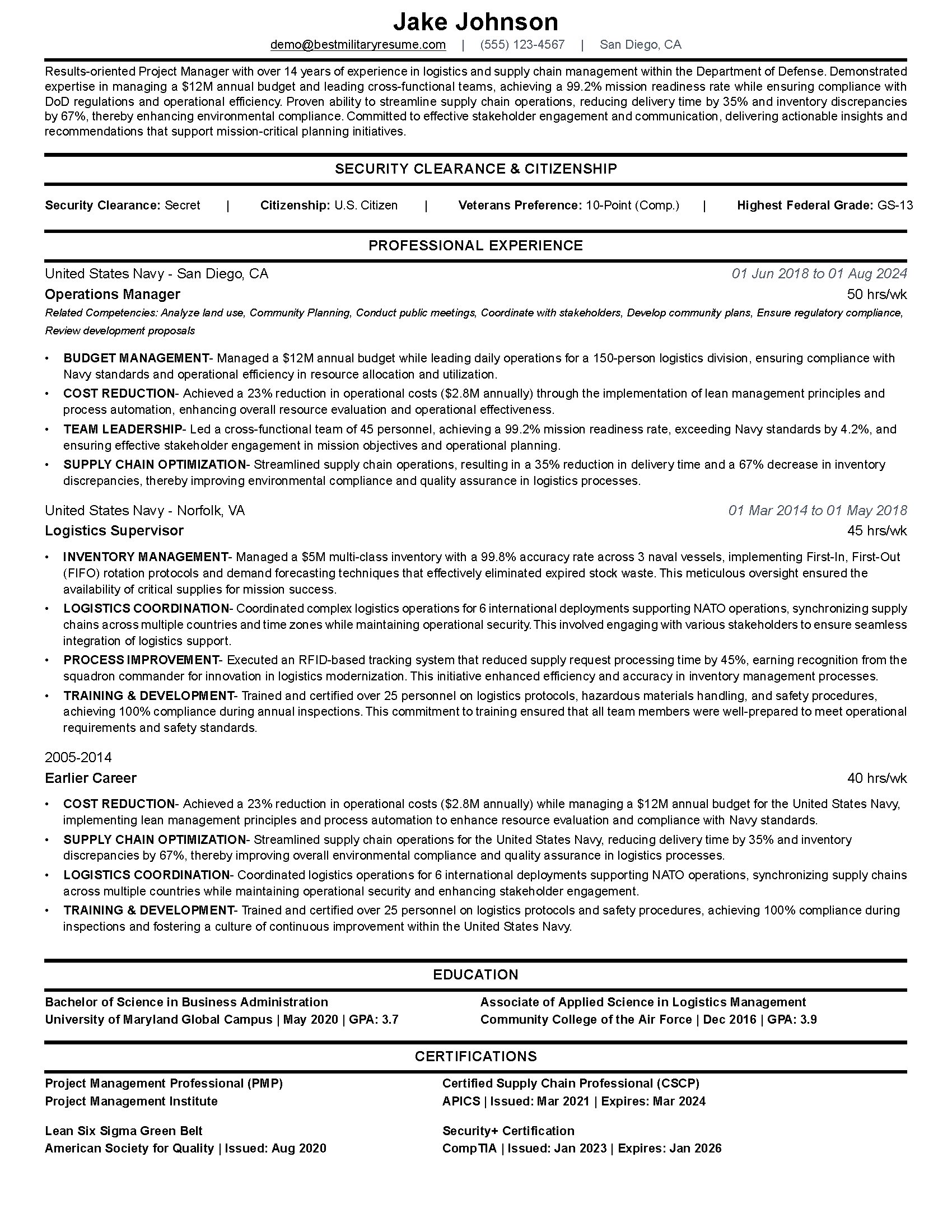
After the Navy, I sent federal applications for about 18 months with no callbacks. What finally changed it was how I described my work. The experience was always there. The words on the page weren't showing it.
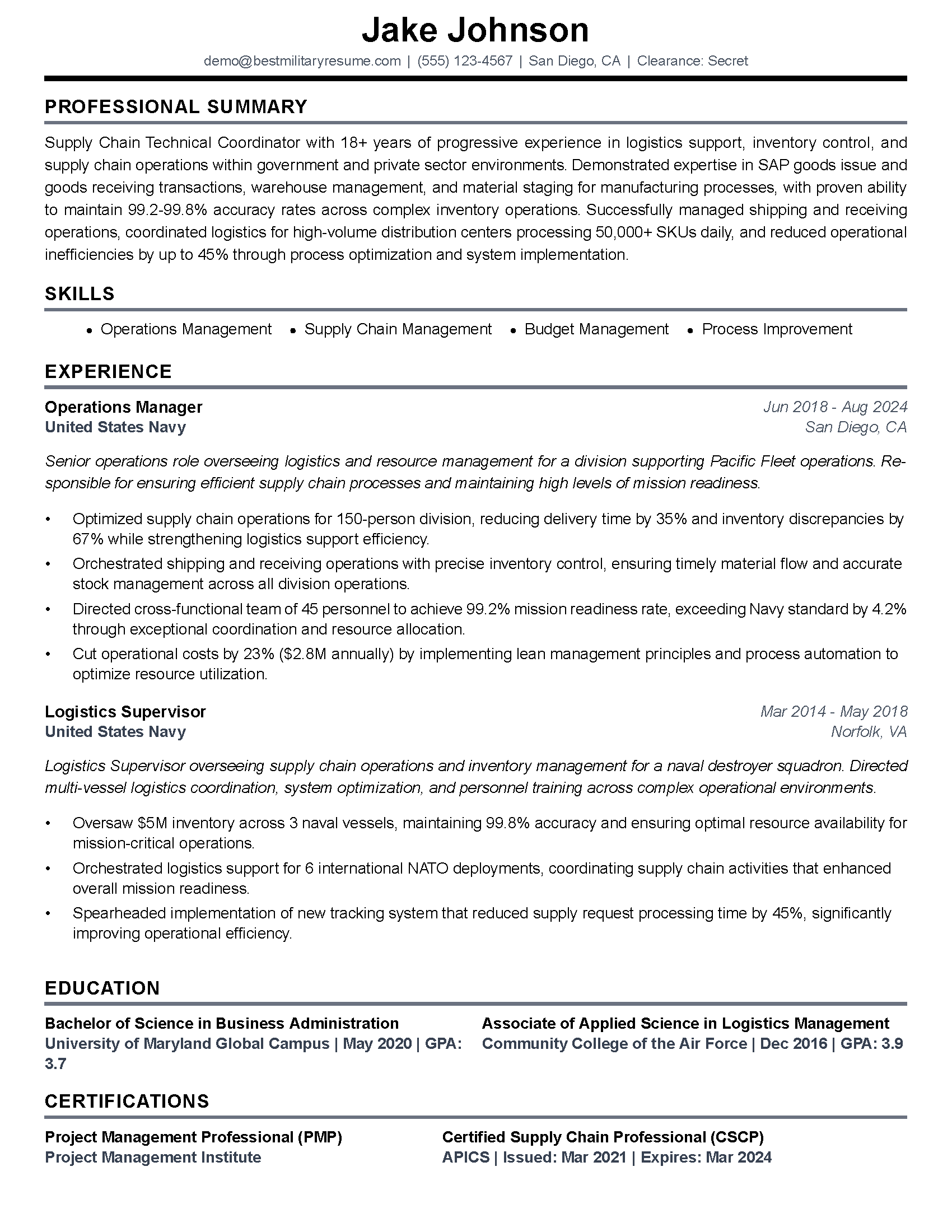
Your activation is the same. It's real work with real scope. This is how it often shows up on a resume.
Deployed overseas with my unit. Performed logistics duties.
Supply Supervisor, 11-month activation. Tracked [number] line items worth [dollar value] with [result]. Trained [number] new soldiers on inventory software.
The brackets are yours to fill from your award write-ups and evaluations. That's why you grabbed them at the demob site. Use real numbers only.
Where the activation goes on the page
An activation can sit inside your reserve service entry, not as a separate job. Our guide to listing reservist duty changes on a resume shows the layout. If the activation overlaps a civilian job, read how to handle overlapping reserve and civilian dates.
For the leadership side, our post on selling reserve leadership to a civilian employer gives you the language. Need a letter to go with it? Start with our reservist cover letter guide.
Key Takeaway.
Count your days first. Then work the 180-day calendar. Build the resume while the numbers are still fresh.
What to Do Next
Pull out your orders tonight and write down your continuous days. Then mark four dates on your calendar. Add your USERRA deadline and day 180 for TAMP. Add a date to apply for VA health care and a date to finish your resume.
For the resume, start with one base version that holds everything from this activation and your civilian work. Then cut a tailored copy for each job you'd actually take. The Best Military Resume builder translates your military work into civilian terms. It also tailors a copy to each posting you paste in. A free account includes one federal and one private tailored resume. So you can test both paths before you decide.
Your orders ended. Your next job search doesn't have to start from a blank page.
Frequently Asked Questions
Do demobilizing reservists have to attend transition counseling?
How long does TAMP last for Guard and Reserve members?
Can I get TRICARE Reserve Select after TAMP ends?
How long do I have to return to my civilian job after mobilization?
Can a reservist get unemployment after deactivation?
Does a Title 10 activation count toward the Post-9/11 GI Bill?
Can demobilized Guard members use VA health care?
About the Author
Brad Tachi is the CEO and founder of Best Military Resume and a 2025 Military Friendly Vetrepreneur of the Year award recipient for overseas excellence. A former U.S. Navy Diver with over 20 years of combined military, private sector, and federal government experience, Brad brings unparalleled expertise to help veterans and military service members successfully transition to rewarding civilian careers. Having personally navigated the military-to-civilian transition, Brad deeply understands the challenges veterans face and specializes in translating military experience into compelling resumes that capture the attention of civilian employers. Through Best Military Resume, Brad has helped thousands of service members land their dream jobs by providing expert resume writing, career coaching, and job search strategies tailored specifically for the veteran community.
