Top Healthcare Jobs for Military Veterans: 14 Ranked by BLS Pay
Michael got only rejections. Then a $100K facilities manager role.
Michael, E-7, Navy, tried a ton of outside help before BMR
Ranked by 2025 BLS median pay, the top healthcare job for military veterans is physician assistant, at $135,880. The table ranks all 14 jobs and shows each one's growth from 2025 to 2035.
For each role, it names the military jobs that lead in and the license or certificate you need.
The 14 Healthcare Jobs Ranked by 2025 BLS Pay
Each role links to its page in the Occupational Outlook Handbook from the Bureau of Labor Statistics (BLS). Pay is the 2025 median, so half the workers earn more and half earn less.
Growth is the projected change in jobs from 2025 to 2035. The military jobs come from BMR's own military job pages, which list each role as a civilian path.
| Rank and role | 2025 median pay | Growth, 2025 to 2035 | Military jobs that lead in | Credential to get hired |
|---|---|---|---|---|
| 1. Physician assistant | $135,880 | 21 percent | 18D, 4N0X1, 68W, HM, HS | Master's degree, the PANCE exam and a state license |
| 2. Medical and health services manager | $123,860 | 24 percent | 4A0X1, 4A1X1, 68E, 68J, 68V, 68Y | Bachelor's degree. License only for some roles |
| 3. Registered nurse | $97,550 | 6 percent | 68C, 68W, 4N0X1, HM, HS | Approved nursing program and the NCLEX-RN |
| 4. Occupational health and safety specialist or technician | $83,740 | 19 percent | 1S0X1, 3E7X1, 3E9X1, 4B0X1, 68S, 5711 | Some employers prefer or require certification |
| 5. Respiratory therapist | $82,280 | 9 percent | 68V, 4H0X1, 1H0X1 | Associate degree and a state license |
| 6. Purchasing agent or buyer | $77,710 | 6 percent | 92Y, 92A, LS, 0431, 3051, 4A1X1 | Bachelor's degree is typical. Certification is optional |
| 7. Surgical technologist | $64,650 | 5 percent | 68D, 4N1X1, 18D, 68W, HM | Certificate or associate degree. Some employers want the NBSTSA's CST |
| 8. Licensed practical nurse | $64,400 | 3 percent | 68C, 4N0X1, HS | State-approved program and the NCLEX-PN |
| 9. Medical equipment repairer | $61,660 | 13 percent | 4A2X1, 2P0X1, 68H, 2171, AME | Associate degree is typical. Certification is optional |
| 10. Medical records specialist | $51,140 | 8 percent | 68G, 4A0X1, 0111, 4Y0X1 | Postsecondary certificate. Certification often preferred |
| 11. EMT or paramedic | $48,150 | 6 percent | 68W, 1Z1X1, HM, HS, 12M, 7051 | State license. Most states use the NREMT exam |
| 12. Dental assistant | $48,070 | 7 percent | 68E, 4Y0X1, HS | Usually no license to start. Some states require one for x ray work |
| 13. Pharmacy technician | $45,750 | 6 percent | 68Q, 68J, HM, HS | State rules vary. PTCB certification helps |
| 14. Medical assistant | $45,690 | 13 percent | 68W, HM, 4N0X1, 4N1X1, 68B, 68Y, 4V0X1, HS | Most states do not require certification. Employers may prefer or require it |
Figures from the BLS Occupational Outlook Handbook (May 2025 pay, 2025 to 2035 growth), checked Nov 2026.
Four notes on the table. The purchasing pay is the BLS median for buyers and purchasing agents in every industry. BLS projects 6 percent growth for buyers and purchasing agents alone. The surgical pay is the BLS median for surgical technologists alone. The pay figures are national, so your city may pay more or less.
Which Healthcare Jobs Fit Veterans Who Were Not Medics?
Five roles on the list run the business side of care or keep its gear working. A hospital needs people to buy supplies, fix machines, keep records and keep staff safe. Those jobs pull from admin, supply, safety and maintenance ratings.
Medical and health services manager
This is the highest-ranked role that a non-clinical veteran can aim at. Managers plan and run the business work of a clinic, a ward or a whole hospital. An Air Force 4A0X1 Health Services Management civilian career guide shows the closest match. Army 68J medical logistics and Air Force 4A1X1 medical materiel lead here too.
For the full path, see the guide to a healthcare administration career change.
Occupational health and safety specialist
BMR's military job pages list this role as a civilian path for 38 military jobs. No other role in this post has more. That count is from Nov 2026.
It pulls from fire, explosives, fuels, safety and emergency management. Safety staff inspect work areas and fix hazards before people get hurt. The 1S0X1 Safety civilian career guide covers the closest fit.
Purchasing agent or buyer
Hospitals buy drugs, gloves, beds and lab gear every day. A 92Y, a 92A, a Navy LS or a Marine 0431 already orders and tracks stock. Look for "buyer" or "supply chain" titles at a hospital system.
Medical equipment repairer
Repairers install, test and fix patient care machines. The Air Force 4A2X1 is the direct match. The 4A2X1 Biomedical Equipment civilian career guide walks through it. A 2P0X1 PMEL tech also fits, because calibration is a big part of the work. Growth on this row is 13 percent, tied for fourth-fastest on the list.
Medical records specialist
Records staff build, code and keep patient files. An Army 68G does this work in uniform. The 68G Patient Administration Specialist civilian career guide shows the match. A Marine 0111 admin specialist can step in too. Much of the work happens at a computer.
Which Jobs Build on Medic, Corpsman or Med Tech Training?
The other nine roles treat patients. Here your training is the head start, but each one still asks for a civilian license or exam. The medic jobs show up again and again in the table: 68W, HM, HS and 4N0X1.
- Registered nurse: the most jobs of the 14, with 3,465,400 in 2025 per BLS. A 68C or a 4N0X1 is the shortest jump.
- Surgical technologist: a 68D or a 4N1X1 already works in the operating room.
- Medical or dental assistant: a 68W or HM fits medical assistant, and a 68E fits dental assistant.
For how medical training carries over, read how to translate military medical training into civilian healthcare. If you were a 68W, the 68W combat medic civilian career guide goes deeper on your options. Navy corpsmen can use the corpsman civilian healthcare resume guide.
What Credential Does Each Job Need, and Does Military Training Count?
This is where the list splits. Some roles let military training count toward the exam. Others want a civilian school first. Check your state board too, because licenses are issued by each state.
Credentials with a military link
Surgical technologist: the CST exam is run by the National Board of Surgical Technology and Surgical Assisting. Its CST eligibility page lists two paths. One is for graduates of accredited programs. The other is for military program graduates.
EMT: to earn the National Registry EMT card, you finish a state-approved EMT course and pass the exam. The NREMT EMT page says the course must be done within the past two years. You also need a state-approved skills check. Your state then decides on the license.
The Army's own job rules point to the same civilian cards. DA PAM 611-21, chapter 9 has a table for recruits who join with civilian skills.
It asks a 68W for an NREMT card and a 68D for the CST. It asks a 68C for the NCLEX-PN and a state license. If you hold one of those cards now, it is the same one a civilian employer asks for.
Exams that need a civilian program first
Physician assistant: the NCCPA eligibility page says you must graduate from an entry-level PA program accredited by ARC-PA. Military service is not listed as a separate path.
Registered nurse and LPN: each state's board of nursing decides who can sit for the NCLEX. The usual path is a board-approved program, as the NCSBN program approval page explains. Ask your board whether it credits military training before you enroll.
Respiratory therapist: the NBRC CRT page asks for an associate degree or higher. The program must be backed by CoARC. Watch the dates. NBRC pages list December 15 or December 17, 2026, as the last TMC application date. Apply by December 15 to be safe. The new Respiratory Therapy exam starts January 4, 2027.
Pharmacy technician: the PTCB CPhT page lists two paths. You can finish a PTCB-recognized program, or show at least 500 hours of work as a pharmacy tech.
Roles with no single required license
Managers, buyers, records staff, repairers and safety staff usually get hired on degree and experience. BLS says all states license nursing home administrators. That one manager role is the exception. For the rest, a certificate is a plus that some employers ask for.
Credential rules come from the NREMT, NBSTSA, NCCPA, NBRC, PTCB and NCSBN pages, checked Nov 2026. The Army's table comes from DA PAM 611-21 chapter 9, posted December 2025.
How Do You Pick One of the 14?
Start with the gap between your training and the credential. Then weigh the pay against the time it takes to close that gap. Three questions help.
- Do you hold a current card? An NREMT, CST or LPN license from service can get you hired now. Start with the role that matches it.
- Can you go back to school? PA and RN pay more, but both need a civilian program. Your GI Bill may help pay for it.
- Do you want patient care at all? If not, the five non-clinical roles skip the clinical license.
Some veterans start in a fast role and climb. An EMT may go on to paramedic school. BLS notes that an LPN can enter an LPN-to-RN program. An RN can go on to become a nurse practitioner with a graduate degree. Nurse practitioners earned a median of $132,300 in May 2025, per BLS. A records specialist may move up to manager with a degree.
Federal jobs are an option too. The 0600 medical and health series group shows the federal side. If nursing is your goal, see the GS-0610 nurse federal resume guide.
What to Do Next
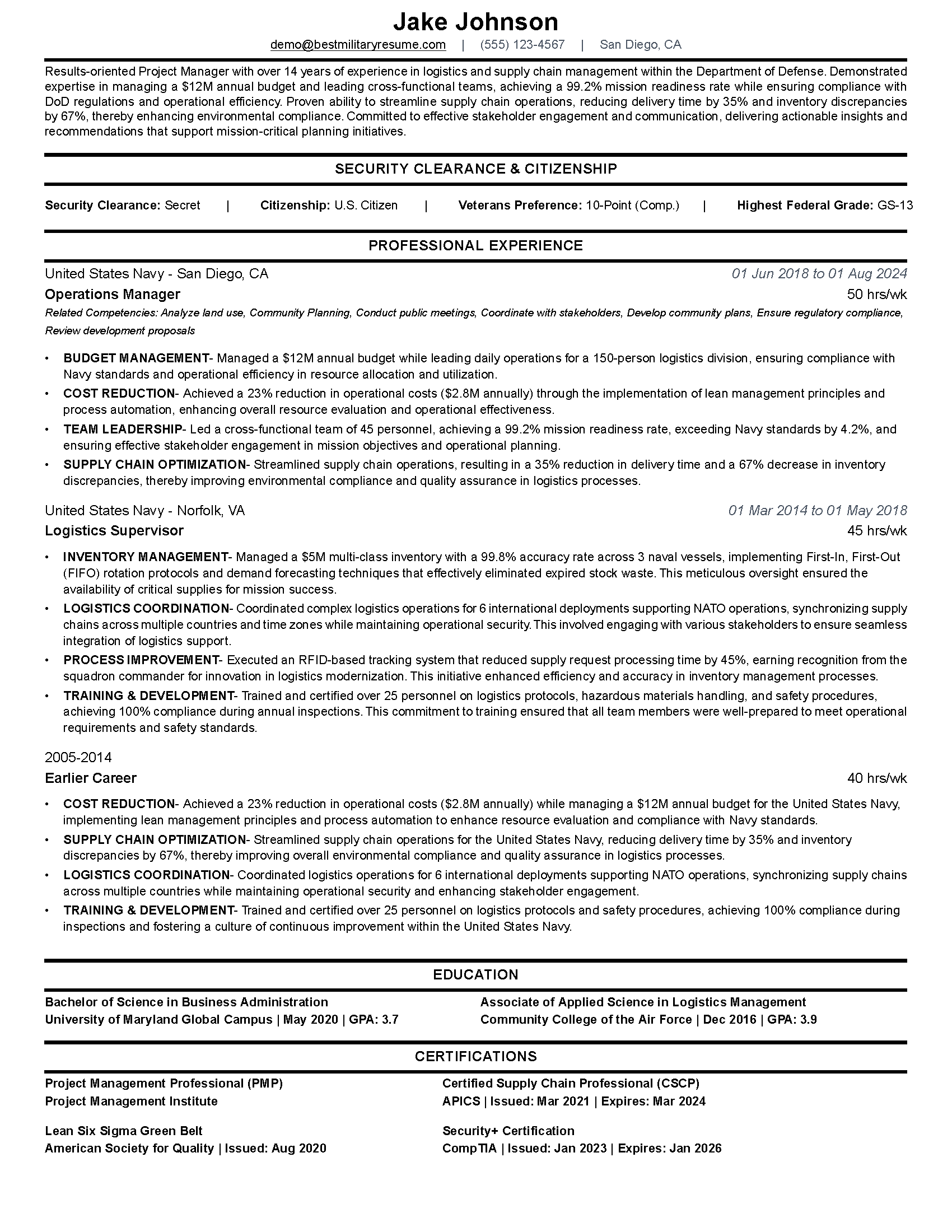
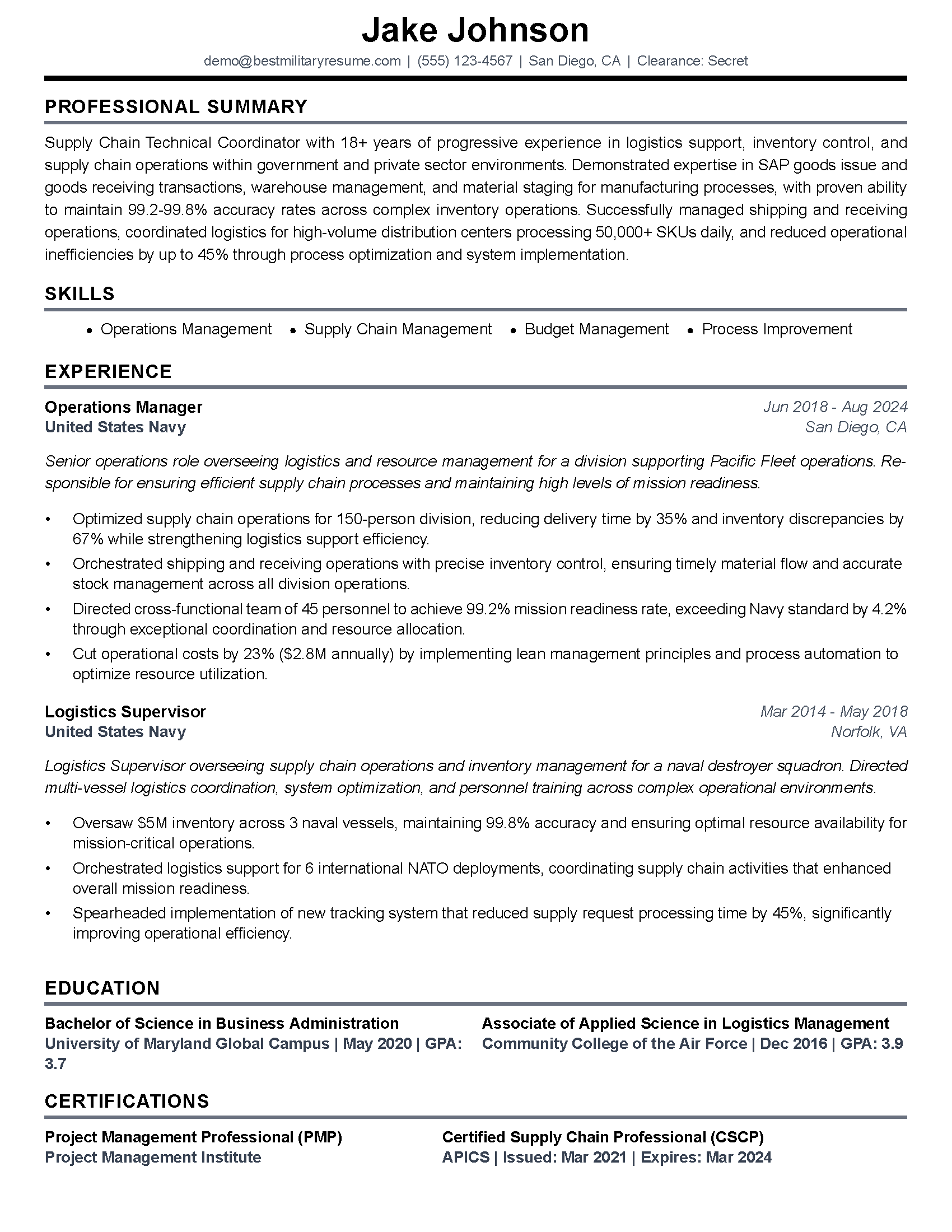
Pick one role from the table. Then find one real job post for it near you. That post is what your resume needs to match. Use its title and its words for the duties. Each word you borrow has to match real work on your record.
Kristin, an Air Force Master Sergeant (E-7) who aimed at healthcare roles, got two job offers. She took the one in DC. She thinks the resume behind those offers was one of the first she built on BMR.
The military resume builder is where that next step starts. Sign up and build one master resume. Then paste the job post, and BMR cuts a version for that title. Your first private-sector tailored resume is free.
Frequently Asked Questions
How many states require the National Registry for EMT jobs?
Can an Air Force 4A1X1 move into a hospital buyer job?
Why does the BLS page show a different surgical pay figure?
About the author
Brad Tachi is the CEO and founder of Best Military Resume and a 2025 Military Friendly Vetrepreneur of the Year award recipient for overseas excellence. A former U.S. Navy Diver with over 20 years of combined military, private sector, and federal government experience, Brad brings unparalleled expertise to help veterans and military service members successfully transition to rewarding civilian careers. Having personally navigated the military-to-civilian transition, Brad deeply understands the challenges veterans face and specializes in translating military experience into compelling resumes that capture the attention of civilian employers. Through Best Military Resume, Brad has helped thousands of service members land their dream jobs by providing expert resume writing, career coaching, and job search strategies tailored specifically for the veteran community.
