Counseling Compact at a PCS: Keep Your Counseling License as a Military Spouse
Luana, a military spouse, landed a Staff Policy and Procedures Analyst role.
Luana, military spouse, policy and procedures analyst
The Counseling Compact is live in eleven states. At a PCS (permanent change of station), its Section 6 says active duty members and spouses "may retain the home state designation."
But the live application rule still speaks of where you live. A counselor licensed by one live state and living there can apply in the other ten. All eleven fees sit in one table below, with Section 6 in plain words.
What Section 6 does for your counseling license at a PCS
Each member state passes the compact as its own law. Arizona's copy sits in Arizona Revised Statutes 32-3306. One of its stated purposes is to "support spouses of relocating active duty military personnel." Section 6 reads in full:
- "Active duty military personnel and their spouses shall designate a home state where the individual has a current license in good standing."
- "The individual may retain the home state designation during the period the service member is on active duty."
- "After designating a home state, the individual shall change the individual's home state only by applying for licensure in the new state or through the process outlined in section 5 of this compact."
In plain words, you pick one home state. Your license there must be current and in good standing. You can keep that state as home while the member serves on active duty. New orders do not force a switch.
Guard and Reserve members count when on active duty orders under chapters 1209 and 1211 of Title 10. A privilege to practice is "equivalent to a license" in the remote state. It expires on the date your home state license carried when the privilege was issued.
What it means at a PCS: say you hold a Georgia license and move to Missouri. Under Section 6, Georgia can stay your home state. The compact's route would be a Missouri privilege instead of a new Missouri license. Whether the application accepts that today is the catch below.
One catch sits on the compact's own home page. Its live rule speaks of counselors "licensed by" a live state "and who live in" it. The page does not say how a military home state fits that rule. Our advice: ask your home state board before you move.
Keep your home state license renewed. Then renew each privilege in CompactConnect, the compact's online system, once the new date posts. A privilege does not update on its own.
The eleven live states and the fee each one charges
The license titles differ by state. LPC means Licensed Professional Counselor. LMHC means Licensed Mental Health Counselor. LPCC means Licensed Professional Clinical Counselor. Tennessee's LPC/MHSP is the Licensed Professional Counselor/Mental Health Service Provider license.
Each total below is the state fee plus the compact's own $30.00 fee, from the compact fee page. Oklahoma charges no state fee, so its total is the $30.00 alone.
| Live state | License that qualifies | Total fee |
|---|---|---|
| Arizona | LPC | $280.00 |
| Arkansas | LPC | $80.00 |
| Georgia | LPC | $130.00 |
| Indiana | LMHC | $80.00 |
| Louisiana | LPC | $160.00 |
| Minnesota | LPCC | $80.00 |
| Missouri | LPC | $130.00 |
| Ohio | LPCC | $55.00 |
| Oklahoma | LPC | $30.00 |
| Tennessee | LPC/MHSP | $210.00 |
| Wyoming | LPC | $280.00 |
The fee page lists the military fee for active duty or a spouse as "Not offered" in every state. So a military family pays the full fee.
Timing matters too. The home page shows a counselor who applies, then renews the home license two weeks later. The privilege must be renewed and paid for again. Its second example uses Ohio's fees. There, a counselor who renewed first and applied after paid only once.
Who can apply today, and what the other members still need
Right now the home page says "Currently, only" counselors licensed by a live state and living there can apply. They apply for the other ten live states. A license from a member state that is not live yet does not work today.
The home page adds that recent graduates "completing hours under supervision" are not eligible. The compact's Section 4 lists more steps for each privilege:
- A valid Social Security number or national practitioner identifier.
- No encumbrance or restriction on any license or privilege in the past two years. That covers a revocation, suspension or limit.
- Your home state's rules for ongoing training, met.
- Any jurisprudence requirement the new state sets, met. That is a check of what you know about its counseling laws and rules.
- The fees for that state, paid.
The rest of the members are still getting ready. The compact FAQ lists steps such as "Adopting rules and establishing fees" and "Implementing federal criminal background checks with FBI authorization." Its FAQ says applications for the first states opened on September 30, 2025.
The compact's pages do not agree on a total. The FAQ speaks of "all 39 jurisdictions." The home page says 29 more states and the District of Columbia are still working. Check the member list on the compact map for your own state. Check the home page for which states are live before you plan a move around it.
Speed is why it is worth the wait. The home page says a privilege "can be obtained in a matter of minutes" through the shared data system.
Telehealth into member states under a privilege
Section 7 covers sessions by video or phone. Member states must honor a home state counselor's right to "practice professional counseling in any member state via telehealth under a privilege to practice."
The compact defines telehealth as "the application of telecommunication technology to deliver professional counseling services remotely to assess, diagnose and treat behavioral health conditions."
So the privilege lets you see a client in another member state online. You follow that state's laws while you do. The line names member states only.
For a spouse, this can help keep clients through a move. Say you keep your Georgia home license and hold a Missouri privilege. You could see Missouri clients online from your next duty station, under each state's rules.
Where the federal law stops and the compact takes over
The federal law for licensed spouses is 50 U.S.C. 4025a, part of the United States Code. Its section (e) covers a spouse with a license to operate in multiple states under an interstate compact.
That spouse "shall be subject to the requirements of such compact or the applicable provisions of law of the applicable State," and the federal section "shall not apply."
So once you practice through the compact, the compact's rules or that state's own law govern you. The federal section does not. If your state is not live yet, the federal route is still there. Our dental hygiene license transfer guide walks through that federal packet step by step.
Social workers have their own compact. Our Social Work Licensure Compact guide covers it. For the wider rules across other jobs, see the state license reciprocity guide.
A credentials block for each license and privilege
O*NET's Mental Health Counselors page lists a 2025 median wage of $59,350 a year. That figure uses data for the wider Substance Abuse, Behavioral Disorder, and Mental Health Counselors group. It rates that group's growth from 2025 to 2035 as "Much faster than average." Our Army behavioral health specialist guide covers the long road to a license.
List every state where you can see clients right now. Give each license and privilege its own line. A credentials block for the Georgia spouse above could read, once the privilege is granted:
- Licensed Professional Counselor (LPC), Georgia, active, home state.
- Counseling Compact privilege to practice, Missouri, active.
Update the block after each PCS and each new privilege. It should match your license records line for line.
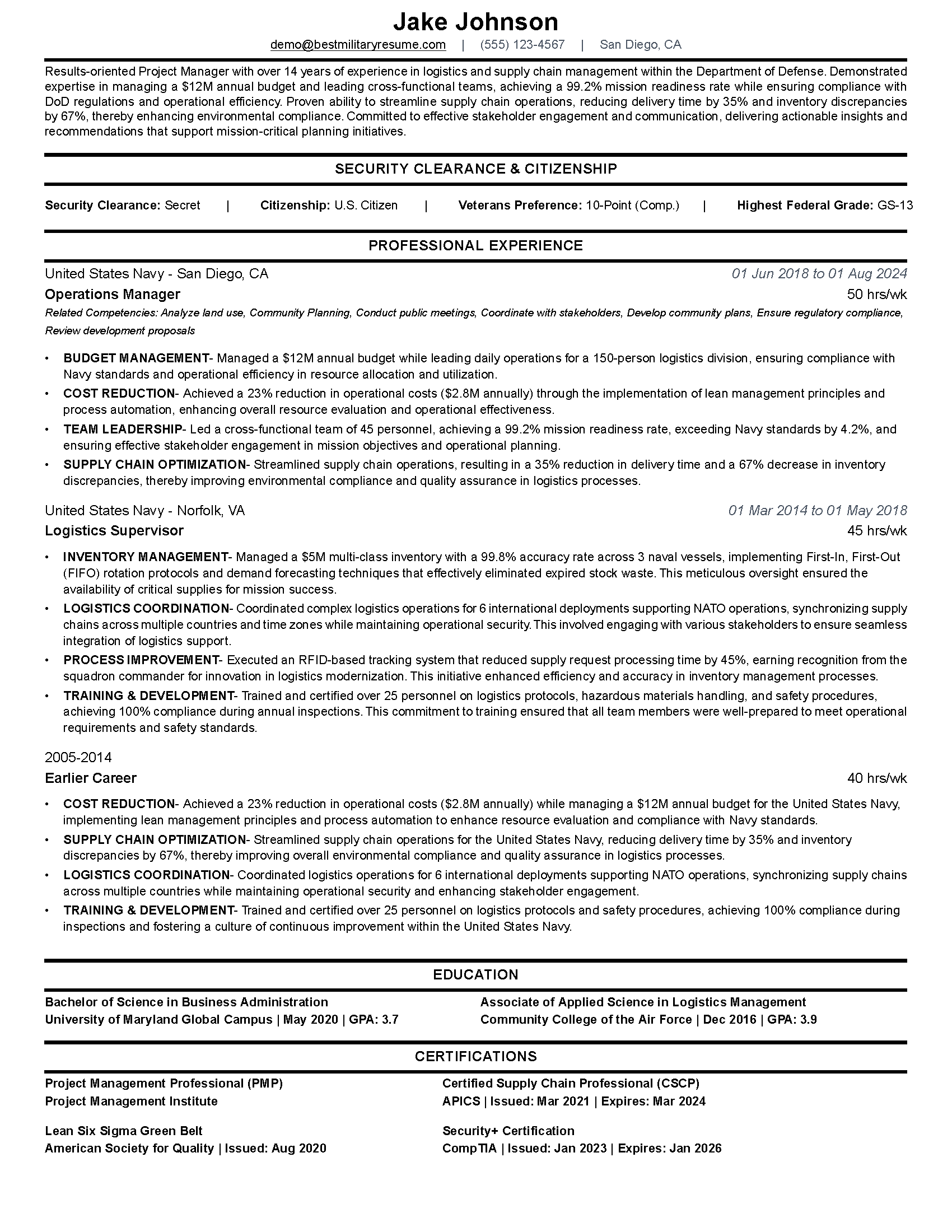
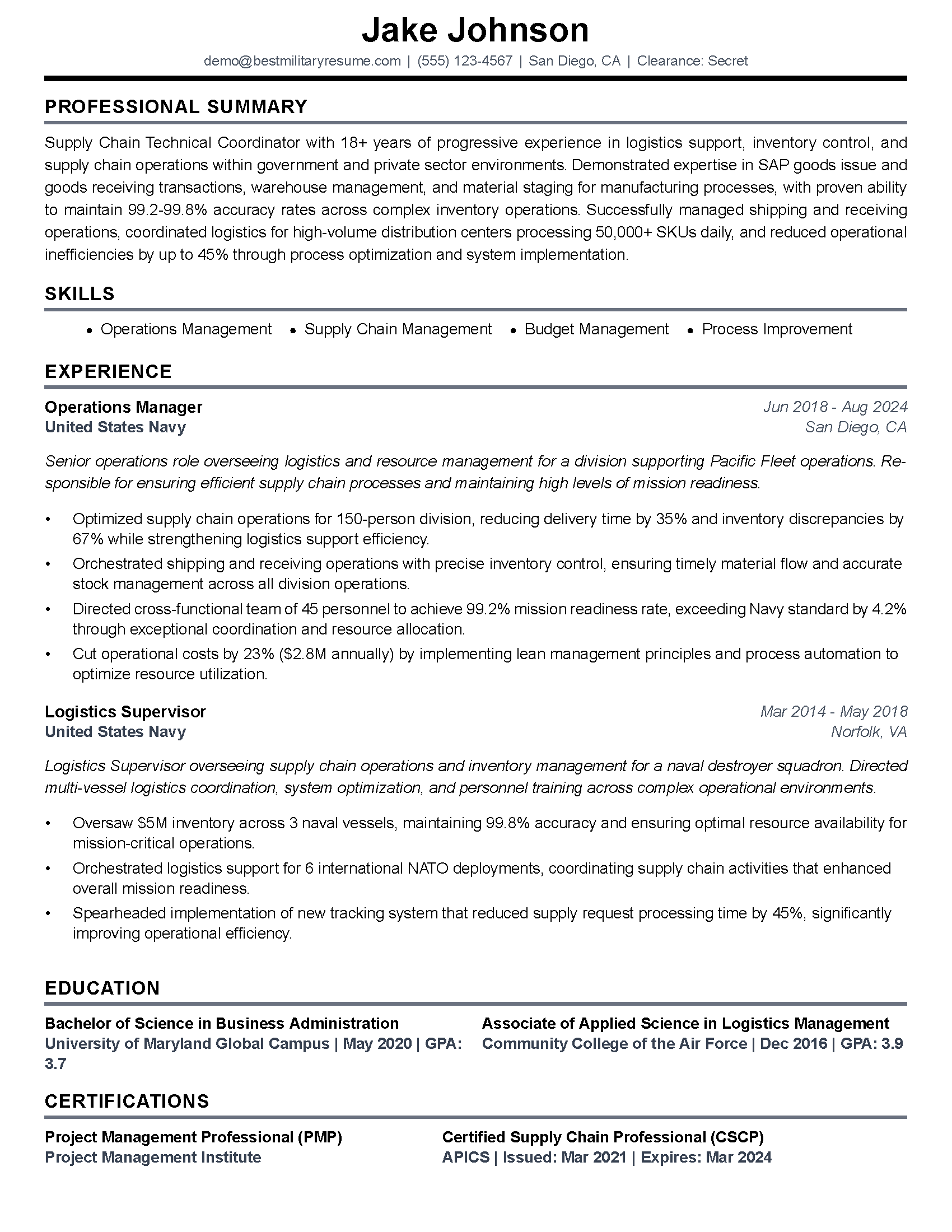
A clinic hiring in a new state looks for that block near the top. Build it in BMR's Resume Builder, where 79,061 resumes have been made so far. Two tailored resumes cost a spouse nothing: one aimed at a federal job, one at a private employer.
Every fee, state and quote above came off a primary source in November 2026. Those are the Counseling Compact site, Arizona's statute, govinfo and O*NET.
Frequently Asked Questions
Can my employer fill out the Counseling Compact application for me?
Will I get a wall certificate for a Counseling Compact privilege?
Can I advertise that I see clients in states where I hold a privilege?
About the author
Brad Tachi is the CEO and founder of Best Military Resume and a 2025 Military Friendly Vetrepreneur of the Year award recipient for overseas excellence. A former U.S. Navy Diver with over 20 years of combined military, private sector, and federal government experience, Brad brings unparalleled expertise to help veterans and military service members successfully transition to rewarding civilian careers. Having personally navigated the military-to-civilian transition, Brad deeply understands the challenges veterans face and specializes in translating military experience into compelling resumes that capture the attention of civilian employers. Through Best Military Resume, Brad has helped thousands of service members land their dream jobs by providing expert resume writing, career coaching, and job search strategies tailored specifically for the veteran community.
