Military Spouse Nail Technician License: The Compact Gap and the Federal Route
Luana, a military spouse, landed a Staff Policy and Procedures Analyst role.
Luana, military spouse, policy and procedures analyst
The cosmetology compact defines a "Cosmetologist" and never names nail technicians. So it may not cover your nail license. Federal law, 50 U.S.C. 4025a, covers any required license in good standing. So a nail tech who moves because of a spouse's military orders can apply today.
This page quotes the compact, names the 13 states that passed it, and maps a three-stage move plan.
Hold a full cosmetology license instead? Read our cosmetology license transfer guide. This page is for the separate nail license.
Military spouse nail technician license: what the compact text says
The Council of State Governments (CSG) runs the Cosmetology Licensure Compact site. It developed the compact in partnership with the Department of Defense. The Future of the Beauty Industry Coalition is also a partner. The site says the model law "is now available to states for enactment."
The model legislation gives two definitions:
- "“Cosmetologist” means an individual licensed in their Home State to practice Cosmetology."
- Cosmetology means "the care and services provided by a Cosmetologist as set forth in the Member State’s statutes and regulations in the State where the services are being provided."
The words "nail" and "manicure" do not appear anywhere in that text. It talks about cosmetologists. It leaves the work itself to each state's laws.
So the text does not settle your case. A state may count a nail license as covered, or it may not. That is a question for the board.
What the compact promises military families
The compact's sheet for military families starts with the home state rule. It says active duty members "or their spouse" can "designate a Home State and keep that designation as long as the service member is on active duty."
Then it gives two "if" lines:
- "If a military family gets assigned to a new duty station in a compact member state, the service member or their spouse can continue to work with their current compact license."
- "If the family gets assigned to a new duty station that is not in a compact member state, the service member or their spouse do not lose access to the compact but would need to get a single-state license in their new state if they wish to continue working in that state."
Both lines assume you hold a compact license. A nail tech should ask the new board one plain question. Does this state treat my nail license as covered by the compact?
What the federal law gives a nail tech right now
The federal route sits in the Servicemembers Civil Relief Act, at 50 U.S.C. 4025a. It applies when your spouse's military orders move your home to another state.
Under section (a), your license "shall be considered valid for the scope of practice" in the new state. That holds once you send the new board the right application.
Scope of practice means the duties your license allows. So a nail license carries nail work with it, and nothing more.
Why a nail license counts
Section (f)(2) defines a license as "any license, certificate, or other evidence of qualification" a person must get before working in "a particular profession." If your state requires a nail license, it fits that wording.
The license must also be clean. Section (f)(1) says it must be in good standing. It can't carry discipline or an open misconduct case in any state.
The packet and the 30 days
The packet has three parts: your orders, your marriage certificate and a notarized affidavit. Our dental hygiene license transfer guide walks through each part of the same packet.
Section (b) covers delays. If the board can't act within 30 days of getting your packet, it "may issue" a temporary license. Note the word "may." The law lets the board do it but does not force it.
One more rule links the two routes. Section (e) covers anyone who holds a license to work in several states under an interstate compact. For them, the compact's requirements or the state's own law apply, and this section does not.
The 13 states that enacted the compact, and 3 still pending
The compact map was last updated on August 25, 2026. It shows 13 states that enacted the compact:
- Alabama, Arizona, Colorado, Delaware and Kansas
- Kentucky, Maryland, Ohio and Pennsylvania
- Tennessee, Virginia, Washington and West Virginia
Three more have bills pending: Massachusetts, New Jersey and New York.
A state can pass the law long before it gives out licenses. The compact site's own FAQ still says the compact "is not yet active." It says activation begins once a 7th state enacts it and "typically takes 18-24 months."
It also says the steps to apply will go online. They go up when member states are ready to issue multistate licenses. Thirteen states have passed it. Still, ask the board before you count on a multistate license.
Use the table to pick which question to ask first.
| Your move | Route to ask the board about first (BMR advice) |
|---|---|
| Both your old and new state enacted the compact | Ask the new board if it treats your nail license as covered. If it says no, file under the federal law. |
| Your new state has a bill pending | A pending bill is not law yet. File under the federal law now and ask the board again later. |
| Your new state is not one of the 13 enacted or 3 pending states | The compact won't help there. File under the federal law, or apply for that state's own license. |
Moving between states with no compact at all? Our state guide to license reciprocity covers the other paths states use.
Some states run their own spouse routes too. Nebraska's license site says a spouse with a nail license from another state "may apply for a 1-year temporary license to practice in Nebraska."
A three-stage move plan for your nail license (BMR advice)
This plan is BMR advice built from the law and the compact above. It is not a rule from either one.
Before orders
- Keep your license active and free of any complaint. The federal route needs a license with no discipline and no open misconduct investigation.
- Find your marriage certificate and keep a copy with your license papers.
- Write down the exact name of your license as your state prints it.
When orders arrive
- Read the permanent change of station (PCS) orders for the new state. Then find the board that licenses nail work there.
- Ask two questions. Is my nail license covered by the compact here? Will you take a 4025a application?
- Get your affidavit notarized and send the packet with a copy of the orders.
The first month in the new state
- Write down the date the board got your packet, and count 30 days.
- No answer by day 30? Ask the board about a temporary license.
- Keep every fee receipt. Our guide on getting license fees paid back explains the claim.
Your next step: a resume that shows each license and your regulars
The work is worth the paperwork. O*NET lists a 2025 median of $35,760 a year for manicurists and pedicurists. It rates growth "Much faster than average."
A salon owner wants three things fast. They want your license, your services and proof that clients come back. These sample lines use tasks from O*NET's profile of the job:
- Licenses: Nail Technician, active in each state you list, with the federal or compact route noted.
- Services: shaped nails and artificial extensions, applied polish and prepped cuticles.
- Business: booked appointments, took payments and kept records of client services.
- Repeat clients: built a book of regulars at each duty station.
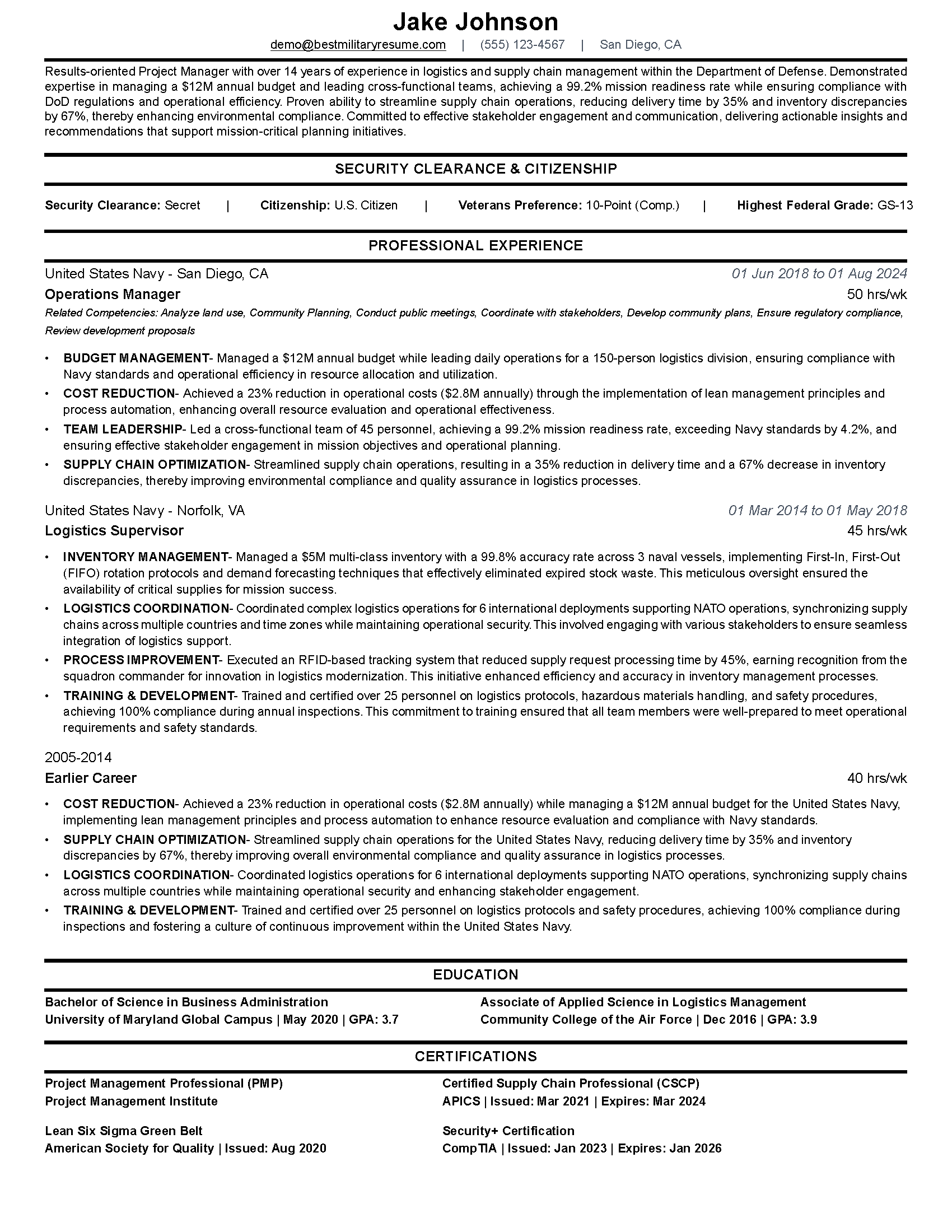
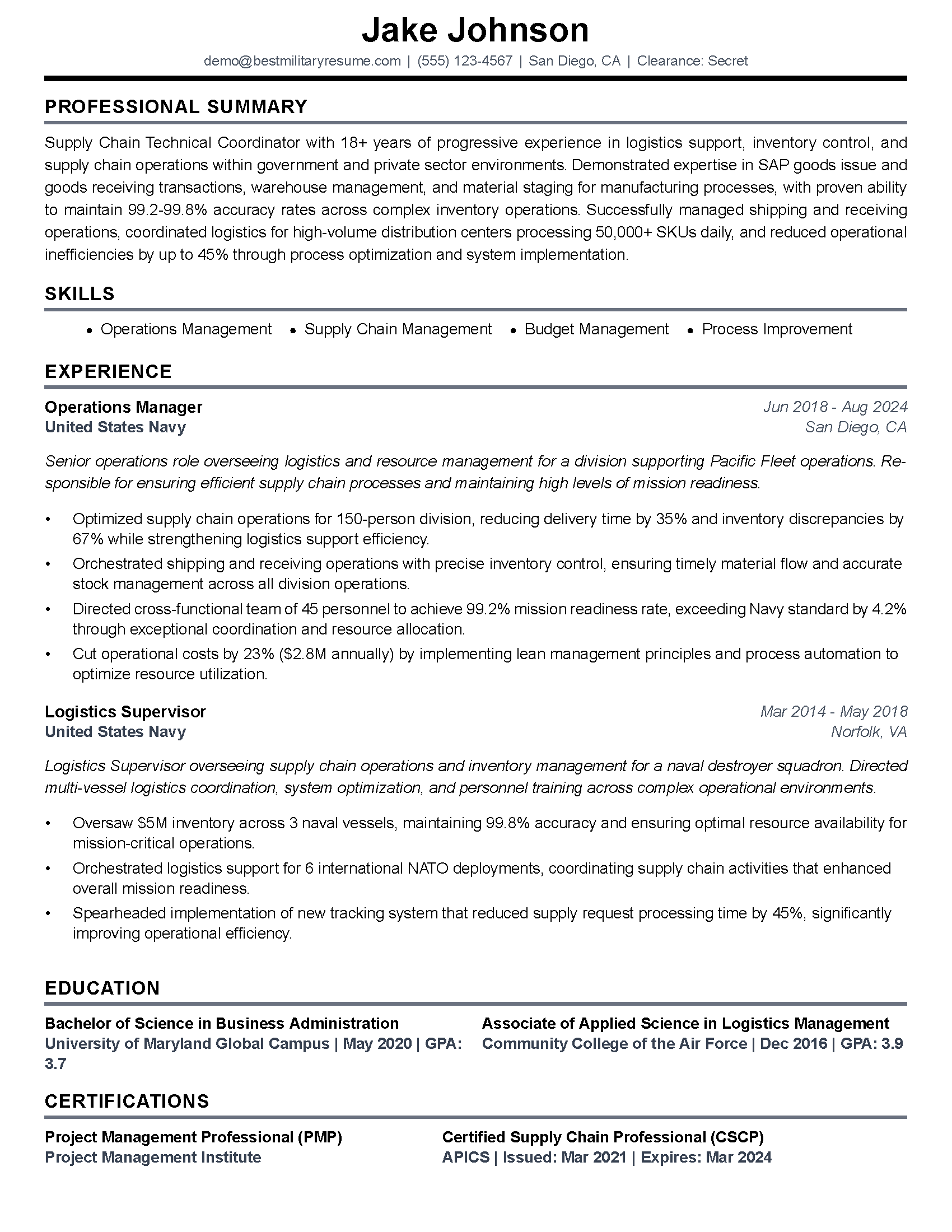
A spouse who moved with a license and a client book should show both on page one. Aim those lines at one salon posting in BMR's Resume Builder. Add your resume to the 79,061 already built on BMR. A free account tailors one resume to a federal job and one to a salon job.
Four sources back every quote: the U.S. Code on govinfo, CSG's compact pages, O*NET and Nebraska's license site. We rechecked all four in November 2026.
Frequently Asked Questions
Can the new board run a background check on me?
Does the compact set the training hours a state requires?
Whose continuing education rules does a cosmetologist with a multistate license follow?
About the author
Brad Tachi is the CEO and founder of Best Military Resume and a 2025 Military Friendly Vetrepreneur of the Year award recipient for overseas excellence. A former U.S. Navy Diver with over 20 years of combined military, private sector, and federal government experience, Brad brings unparalleled expertise to help veterans and military service members successfully transition to rewarding civilian careers. Having personally navigated the military-to-civilian transition, Brad deeply understands the challenges veterans face and specializes in translating military experience into compelling resumes that capture the attention of civilian employers. Through Best Military Resume, Brad has helped thousands of service members land their dream jobs by providing expert resume writing, career coaching, and job search strategies tailored specifically for the veteran community.
