A Army story from the same road
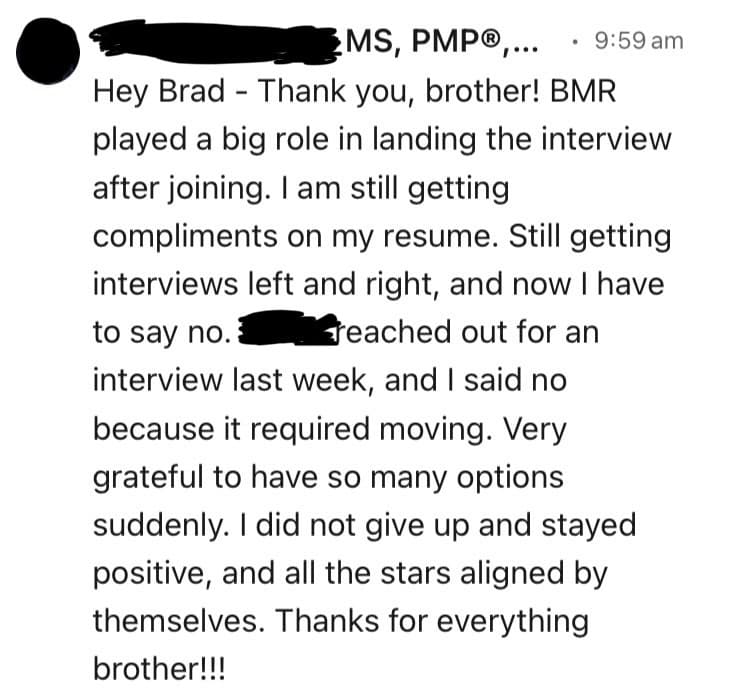
“I am still getting compliments on my resume. Still getting interviews left and right, and now I have to say no. Very grateful to have so many options suddenly.”
Taranjeet · Sergeant (E-5) · Army · Program Management
Home / Military to civilian jobs / Army / 88H
That is Army MOS 88H. Civilian jobs, federal paths, and how the work reads on a resume.
What is in this guide
What the translation looks like
How it reads in service
Maintained 100% inventory accuracy in TC-AIMS II across $4M MILVAN cargo manifests
How a hiring manager reads it
Maintained 100% inventory accuracy in WMS/TMS across $4M in regulated freight manifests
Roles this background maps to
Median pay, BLS OEWS May 2024
Build a resume for a real jobYou pick the job. We write it from your 88H experience. Free to start.
Brad TachiNavy Diver · BMR founder
After the Navy he was hired into six federal career fields and tech sales, and sat on federal hiring panels along the way. The last two years went into rebuilding all of it into BMR, tuned for how resumes get screened today. 71,892 resumes built so far.
One page, built in our template, with the military experience translated into the civilian terms hiring managers and screening software read. Use it as a reference for your own. Leave an email and the download link comes to you.
Free. Occasional job-search tips come with it. Unsubscribe anytime.
Army 88H Cargo Specialists are the people who make sure mission-critical equipment, ammunition, and supplies actually arrive where they're supposed to. After 10 weeks of Basic Combat Training and about seven weeks of AIT at Fort Gregg-Adams (formerly Fort Lee), 88Hs operate at military ports, rail yards, airfields, and water terminals. The day-to-day is heavy: loading and unloading cargo from ships, aircraft, rail cars, and trucks, running material handling equipment (forklifts, RT/RTCH, cranes), conducting joint inspections, building and breaking down pallets, and moving sensitive freight under time pressure.
The systems experience matters more than many veterans realize. 88Hs work in TC-AIMS II (Transportation Coordinators' Automated Information for Movements System II), GATES (cargo manifest), and ITV (in-transit visibility) every day. They handle MILVAN/CONEX inventories, hazmat documentation, and deployment loading exercises. That means a former 88H steps into civilian logistics with documented experience in regulated cargo handling, equipment operations, and time-critical execution — three things every 3PL, port operator, and distribution center is hiring for.
This guide walks through the civilian roles that translate directly, BLS salary data so you know what to ask for, the federal GS series that match cargo and distribution work, and the resume language that gets former 88Hs callbacks. If you're also looking at adjacent paths, our 92A Automated Logistical Specialist and 92Y Unit Supply guides cover related supply paths, and our full civilian job crosswalk shows every Army MOS we cover. For the resume side, see our military logistics to civilian supply chain resume guide.
After the Navy I spent years in federal supply, logistics, property management, and contracting. 88Hs come out with the exact background that drops cleanly into GS-2030 Distribution Facilities and GS-2010 Inventory Management — port operations and TC-AIMS II experience reads to federal hiring managers as "already trained," which is the magic phrase. The trick is writing the resume in plain language so the HR specialist doesn't have to translate it for the selecting official. — Brad Tachi, Navy Diver veteran & BMR founder
The number that decides most of this: how does civilian pay compare to what the paycheck looks like now?
Army mid-career
$58K to $82K
E-5 to E-7 total comp: base plus BAH, BAS and the tax advantage.
Civilian Cargo Specialist
$37K to $85K
BLS median across the direct-match civilian roles on this page.
Federal, GS-9 to GS-13
$58K to $120K
7 matching GS series, plus locality pay and step increases.
About 19% lower on average
Civilian base pay for Cargo Specialists runs about $13K below mid-career enlisted total comp, though housing comes out of that number on the military side too.
Military comp is approximate and moves with location and dependents. Civilian is the BLS median. Federal includes locality pay. The real number depends on duty station, family status, GS step and overtime.
The civilian market for 88H skills is deep. Third-party logistics (3PL) is a multi-hundred-billion-dollar industry, port complexes are short on qualified supervisors, and Amazon, FedEx Ground, UPS, and USPS network distribution centers run 24/7. Veterans with regulated cargo experience consistently move faster up the operations ladder than non-veteran hires because they already understand chain of custody, hazmat segregation, and joint inspections.
The biggest hubs for 88H talent are the major U.S. port complexes — Los Angeles and Long Beach, Savannah, Houston, New York and New Jersey, Hampton Roads, Seattle and Tacoma, and Charleston. 3PL networks cluster around Memphis, Louisville, Indianapolis, Columbus, Dallas, and the Inland Empire in California. Amazon fulfillment centers and USPS Network Distribution Centers run hot in nearly every metro. If you have port assignment experience, target Ports America, SSA Marine, Maersk, and Crowley first because they will recognize your background immediately.
For cargo work in adjacent branches, see how the same skills translate for Navy Logistics Specialists (LS), Air Force 2T2X1 Air Transportation, and Marine 0431 Logistics/Embarkation Specialists.
Salary varies by metro, certifications, and clearance status. As reference points (BLS OEWS May 2024): forklift operators run $40-55k, supervisors of material movers $55-75k, cargo agents $42-58k, and logisticians $70-95k. With an active Secret clearance and 3PL or port supervisor experience, total compensation in major hubs reaches $90-110k within 3-5 years.
If you want a step-by-step breakdown of how to write the supply chain resume that actually gets callbacks, read military to supply chain management career guide and military to warehouse management.
| Civilian job title | Industry | BLS median salary | Outlook | Match |
|---|---|---|---|---|
| Warehouse / Distribution Operations LeadO*NET 53-1042.00 | Logistics & 3PL | $59,000 | Average | strong |
| Logistics Coordinator / LogisticianO*NET 13-1081.00 | Logistics & Supply Chain | $80,000 | Faster than average | strong |
| Cargo / Freight AgentO*NET 43-5011.00 | Air & Ocean Freight | $48,000 | Average | strong |
| Forklift / MHE OperatorO*NET 53-7051.00 | Warehousing & Distribution | $45,000 | Stable | strong |
| Port / Terminal Operations SupervisorO*NET 53-1042.00 | Maritime & Port Operations | $85,000 | Average | strong |
| Crane and Tower OperatorO*NET 53-7021.00 | Construction & Maritime | $64,000 | Stable | moderate |
| Material Mover, HandO*NET 53-7062.00 | Warehousing & Logistics | $38,000 | Stable | moderate |
| Stocker / Order FillerO*NET 53-7065.00 | Retail & Distribution | $37,000 | Stable | moderate |
Largest U.S. port terminal operator. Hires veterans into supervisor and operations roles at LA/LB, NY/NJ, Houston, Baltimore, Oakland.
Major marine terminal operator on West Coast and Gulf. Strong fit for 88Hs with port assignment experience.
Global container shipping and integrated logistics. Maersk Line Limited holds U.S. flag carrier contracts with the government.
U.S. flag shipping and logistics. Heavy DoD work and SDDC contracts. Veteran-friendly hiring.
Major 3PL/trucking company with active SkillBridge program for transitioning service members.
One of the largest contract logistics providers in the world. Strong veteran hiring across distribution centers.
Intermodal and dedicated trucking. Active veteran hiring and SkillBridge partner.
LTL freight network with terminal operations roles across the U.S.
Veteran-heavy workforce, strong CDL pathways and SkillBridge partner.
Contract logistics, dedicated fleet, and warehouse operations. Veteran-friendly hiring.
Massive fulfillment and sortation network. Operations supervisor and area manager pathways.
High-volume hub operations and freight terminals. Active veteran recruiting and SkillBridge.
Hub operations, sort supervisor, and management programs. Strong tuition assistance.
Bulk mail processing centers nationwide. Federal employment with Veterans Preference.
Army Service Component of USTRANSCOM. Major civilian employer for distribution and transportation work.
Largest combat logistics support agency. Distribution depots nationwide hire heavily into GS-2030 and GS-2010.
Federal civilian agency providing supply chain solutions across government. Strong GS-2030/2010 footprint.
BMR rewrites your 88H experience for any of the roles above, in the language the people reading actually scan for.
Free to start. 2 tailored resumes included.
Upload it and get a number in about a minute, plus the 88H lines a civilian hiring manager will not follow. No account. Sign up and BMR writes the fix.
Free. Your file is never stored.
“I am still getting compliments on my resume. Still getting interviews left and right, and now I have to say no. Very grateful to have so many options suddenly.”
Taranjeet · Sergeant (E-5) · Army · Program Management
Federal civilian work is the single most underused option for former 88Hs. Veterans' Preference is real, the GS pay tables are public, and the federal supply and distribution workforce hires constantly. Pay grade ranges below reference 2025 GS base pay (locality varies).
The biggest employers of 88H-aligned civilians are SDDC, DLA Distribution (depots at Susquehanna, San Joaquin, Norfolk, and others), USTRANSCOM (Scott AFB), GSA Global Supply, USPS Network Distribution Centers, and the Air Mobility Command civilian workforce at aerial ports. Many positions are advertised under DEU (open to the public) announcements that close fast — set USAJobs alerts the day you decide to apply.
Veterans' Preference does not guarantee a job. It guarantees you cannot be passed over without documented justification, and on category-rating announcements you are placed at the top of your category. Combined with VEOA eligibility, it lets you apply to many merit-promotion announcements that civilians cannot. Upload a DD-214 (Member 4 copy), VA disability letter if 30%+, and SF-15 if claiming 10-point preference.
For the federal resume side, build your application document with the BMR federal resume builder — it handles the hours-per-week, supervisor info, and detailed duties HR specialists need to qualify you. For more on the federal hiring process and the format expectations, see how to convert NCOER bullets into civilian resume language. Ready to start? Build your federal resume on BMR for free.
| Series | Federal job title | Typical grades | Match | Explore |
|---|---|---|---|---|
| GS-2030 | Distribution Facilities and Storage Management | GS-7, GS-9, GS-11, GS-12 | 5 of 5 | View details |
| GS-2010 | Inventory Management | GS-7, GS-9, GS-11 | 5 of 5 | View details |
| GS-2150 | Transportation Operations | GS-9, GS-11, GS-12, GS-13 | 4 of 5 | View details |
| GS-1670 | Equipment Services | GS-9, GS-11, GS-12 | 4 of 5 | View details |
| GS-1101 | General Business and Industry | GS-7, GS-9, GS-11, GS-12 | 3 of 5 | View details |
| GS-2050 | Supply Cataloging | GS-5, GS-7, GS-9 | 3 of 5 | View details |
| GS-2102 | Transportation Clerk and Assistant | GS-4, GS-5, GS-6, GS-7 | 3 of 5 | View details |
Federal raters match your record against the announcement's specialized experience statement. BMR writes the federal format for any GS series above, with the hours per week and supervisor detail a rater looks for.
Free to start. Federal and private sector formats included.
Not everyone stays in a related field. These paths run on the transferable half of the job: leadership, risk, logistics, planning.
88Hs lead crews under sustained pressure with strict documentation and safety standards. Those skills translate to plant managers, facility operations, and 24/7 service operations.
Transfers: Crew leadership, Time-critical execution, Process compliance, Equipment operations, Documentation discipline.
How to get there: Operations supervisor or shift lead role first, then promotion to ops manager within 2-4 years. PMP or Lean Six Sigma helps.
BLS OEWS May 2024 · Average
Joint inspections, deployment timelines, and cross-functional coordination at military ports map directly to project management work.
Transfers: Multi-stakeholder coordination, Time-critical scheduling, Change management, Risk assessment, Documentation.
How to get there: Entry as project coordinator or scheduler. Get PMP or CAPM, then move into PM roles.
BLS OEWS May 2024 · Faster than average
88Hs already work hazmat and joint inspection regulations daily. OSHA-30 plus the existing hazmat experience opens EHS roles in warehouses, ports, and manufacturing.
Transfers: Hazmat compliance (49 CFR), OSHA familiarity, Inspection and audit, Incident investigation, Safety training.
How to get there: Get OSHA-30 plus hazmat refresher, target EHS coordinator roles, grow into safety manager.
BLS OEWS May 2024 · Faster than average
Plant operations and warehouse operations share the same DNA: crew, equipment, schedule, safety, output. 88Hs slot in cleanly to manufacturing supervision.
Transfers: Crew supervision, Standard operating procedures, Equipment operations, Quality compliance, Shift management.
How to get there: Lean Six Sigma Green Belt accelerates this. Apply at Tier 1 manufacturers with veteran hiring programs.
BLS OEWS May 2024 · Stable
Brad pivoted from federal supply into federal contracting. With GS-2030 or GS-2010 federal experience, you can lateral into GS-1102 with FAC-C training paid for by the agency.
Transfers: Federal acquisition awareness, Vendor management, Documentation, Compliance, Inventory and accountability.
How to get there: Land a GS-2030/2010 first, then bid on GS-1102 internal announcements. Agency pays for FAC-C certification.
OPM 2025 GS pay tables · Stable
Joint inspection experience translates directly to QA work in manufacturing, food processing, and regulated industries.
Transfers: Inspection and audit, Documentation, Standards compliance, Defect identification, Reporting.
How to get there: Direct application to QA inspector roles. Add ASQ Certified Quality Auditor (CQA) for accelerated growth.
BLS OEWS May 2024 · Stable
Cargo terminals are facilities. The skills that keep a port humming work for corporate facilities, healthcare campuses, and university operations.
Transfers: Equipment maintenance coordination, Vendor management, Compliance, Safety, Documentation.
How to get there: Entry as facilities coordinator or assistant manager. IFMA Facility Management Professional (FMP) credential helps.
BLS OEWS May 2024 (manager-level) · Average
The skills behind the specialty carry further than the specialty. BMR rewrites your bullets for any of the paths above without making it sound like you have never done the work.
Free to start. Try as many angles as you want.
If you're staying in logistics, port operations, warehouse work, or 3PL, your military terminology translates almost directly — civilian recruiters in the industry recognize the systems and equipment names. This section is for 88Hs targeting careers OUTSIDE logistics: project management, operations management outside cargo, manufacturing, customer experience, safety and EHS, and federal generalist roles.
For Project Management roles:
For Operations Management roles:
For Safety / EHS roles:
For Manufacturing / Plant Operations:
For a deeper civilian-translation reference, our 50 military terms civilian equivalents glossary covers the broader vocabulary. Then write the actual resume in the BMR military resume builder — it reads your bullets and rewrites them in civilian language so the hiring manager doesn't have to translate.
Before, in service
Maintained 100% inventory accuracy in TC-AIMS II across $4M MILVAN cargo manifests
After, on the resume
Maintained 100% inventory accuracy in WMS/TMS across $4M in regulated freight manifests
Before, in service
Processed 250+ cargo movements in GATES supporting OCONUS deployment surge
After, on the resume
Processed 250+ air cargo movements in enterprise manifest and clearance system supporting international operations
Before, in service
Monitored ITV for 1,200 short tons of unit equipment across multi-modal movement
After, on the resume
Monitored real-time freight visibility platform for 1,200 short tons of regulated cargo across multi-modal shipments
Before, in service
Operated 10K and 50K MHE moving 80,000 lbs of cargo daily
After, on the resume
Operated heavy-capacity material handling equipment moving 80,000 lbs of regulated freight daily
Before, in service
Qualified RT/RTCH operator certified to move 53,000-lb ISO containers
After, on the resume
Qualified heavy-capacity container handler operator (similar to top-pick / reach stacker) certified for 53,000-lb container moves
Before, in service
Inventoried 220 MILVANs prior to deployment loadout
After, on the resume
Inventoried 220 ISO shipping containers (20ft/40ft) prior to international shipment loadout
Before, in service
Led joint inspections of 1,200 short tons of unit cargo IAW AMC and SDDC standards
After, on the resume
Led regulated cargo quality assurance audits of 1,200 short tons of freight against carrier and federal standards
Before, in service
Built 40+ 463L pallet positions per shift during sustained airlift surge
After, on the resume
Built 40+ standardized air cargo pallet positions per shift during sustained surge operations
Before, in service
Processed MILSTRIP requisitions for $2M in Class IX repair parts
After, on the resume
Processed inventory replenishment requisitions for $2M in repair parts through enterprise procurement system
Before, in service
Certified hazmat handler IAW 49 CFR for sustained deployment loadouts
After, on the resume
DOT-certified hazmat handler (49 CFR compliant) supporting sustained regulated freight operations
Before, in service
Built deployment load plans for company-sized unit move (40+ vehicles, 220 MILVANs)
After, on the resume
Built freight load plans for company-scale movement supporting 40+ pieces of rolling stock and 220 ISO containers
Before, in service
Worked aerial port operations at Yokota AB processing 50+ pallets daily
After, on the resume
Worked air cargo terminal operations processing 50+ pallets daily
BMR turns your 88H duties and accomplishments into civilian bullets aimed at the job you are applying for. No manual translation.
Free to start. Tailored to each posting.
Which ones you need depends on where you are headed.
highCost $0-$150Time 1-2 daysMost warehouses require this. Many 88Hs already qualify based on military MHE training.
highCost $1,295-$1,995Time 3-6 monthsGI Bill eligiblePremier supply chain credential. Strong salary impact for logistician/manager roles.
highCost $1,200-$1,800Time 3-6 monthsGI Bill eligibleMost directly aligned with 88H experience: transportation, warehousing, distribution.
mediumCost $700-$1,500Time 3-5 daysGI Bill eligibleRequired for air cargo dangerous goods handling. Strong for cargo agents and freight forwarders.
mediumCost $400-$900Time 2-3 daysGI Bill eligibleRequired for ocean shipment of dangerous goods.
mediumCost $695-$1,395Time 3-6 monthsGI Bill eligibleIndustry-recognized supply chain credential, alternative or complement to APICS.
mediumCost $1,000-$1,500Time 4-6 monthsGI Bill eligibleStrong if pivoting toward manufacturing or plant operations.
mediumCost $300-$3,000Time 2-3 monthsGI Bill eligibleStrong for operations management and process improvement roles.
mediumCost Free for federal employeesTime 6-24 months on the jobPathway into federal contracting (GS-1102) once you land a federal logistics job. Brad worked federal contracting after Navy.
mediumCost $405-$555 examTime 3-6 months prepGI Bill eligibleUniversal credential. Useful for pivoting out of pure logistics into program management.
mediumCost $150-$300Time 30 hoursStandard credential for safety roles in warehouses, manufacturing, ports.
highCost $0-$5,000 (waived via SkillBridge)Time 4-8 weeksGI Bill eligibleUse Military Skills Test Waiver if you operated similar vehicles. SkillBridge with Schneider/Werner/FedEx covers training.
mediumCost $500-$1,200Time 1-3 weeksGI Bill eligibleStrong fit for 88Hs with crane and RT/RTCH experience.
Placement decides whether a screener ever sees it. BMR knows where each one ranks, what to call it, and how to frame it.
Free to start. Built around your real certs and clearance.
The list below is split into two tracks: staying in logistics, port ops, or warehouse work — and pivoting to careers outside the cargo lane. Pick based on where you actually want to land in five years, not just what's easiest the day you out-process.
Most people do this backwards: wait for terminal leave, then panic. This is the sequence that works. Already out? Same plan, day one is today.
Days 0 to 30
Days 30 to 60
Days 60 to 90
The direct fits are warehouse and distribution operations lead, logistics coordinator, freight operations specialist, forklift and material handling equipment operator, cargo agent, and port or terminal operations supervisor. Third-party logistics (3PL) companies, port operators, and big-box distribution centers actively recruit veterans with regulated cargo experience because you already know joint inspections, hazmat segregation, and time-critical cargo movement.
Per BLS OEWS May 2024 data, industrial truck and tractor operators (53-7051) earn a median of about $45,000, first-line supervisors of material movers (53-1042) earn about $59,000, cargo and freight agents (43-5011) earn about $48,000, and logisticians (13-1081) earn about $80,000. Port hubs and major 3PL networks pay above the national median.
Major port complexes are the top destinations: Los Angeles and Long Beach, Savannah, Houston, New York and New Jersey, Hampton Roads, Seattle and Tacoma, and Charleston. 3PL hubs around Memphis, Indianapolis, Louisville, Columbus, and the Inland Empire (CA) also have heavy demand. Federal civilian jobs cluster around SDDC and DLA Distribution sites.
GS-2030 Distribution Facilities and Storage Management is the cleanest match. Apply on USAJobs, claim Veterans Preference, and target SDDC, DLA Distribution, GSA Global Supply, USPS, and Air Mobility Command civilian roles. A federal-style resume that mirrors USAJobs job announcement language is non-negotiable. Use the BMR federal resume builder so you cover hours per week, supervisor info, and detailed duties the way HR readers expect.
Yes. Some 88Hs move into operations management, project coordination, safety and EHS, manufacturing supervision, and federal contracting. The skills that transfer are time-critical execution, regulated documentation, equipment operations, and crew leadership. The catch is the resume has to be rewritten in civilian language so the hiring manager doesn't have to translate.
Yes. An active or recently active Secret clearance is a real differentiator for SDDC, DLA, USTRANSCOM contractor roles, and defense logistics work at companies like Maersk Line Limited, Crowley, and Bollore Logistics on government contracts. Make sure your resume lists the clearance level, status, and granting agency.
Yes. The GI Bill covers many APICS/ASCM credentials (CSCP, CLTD, CPIM), Lean Six Sigma programs, and full degrees in supply chain management or logistics at accredited schools. Confirm the program is on the WEAMS/VA-approved list before enrolling.
88Hs often qualify for state CDL skills test waivers under the Military Skills Test Waiver Program if they operated equivalent vehicles in service. SkillBridge programs with Schneider, Werner, Stevens, and FedEx Freight cover paid CDL training during your last months on active duty. Pair CDL with hazmat and tanker endorsements to maximize starting pay.
You claim Veterans' Preference on the USAJobs profile (5-point or 10-point) and upload your DD-214 when prompted by the announcement. SDDC and DLA hire heavily through merit-promotion announcements that are open to current and former federal employees plus VEOA-eligible veterans. Read each announcement carefully because eligibility codes vary.
Civilian recruiters scanning resumes don't recognize MILSTRIP or TC-AIMS II. Translate to plain language: TC-AIMS II becomes warehouse management system / transportation management system experience, GATES becomes cargo manifest and air clearance system, MILSTRIP becomes inventory requisition system, and joint inspections become regulated cargo quality assurance audits. Keep the military term in parentheses if you're targeting a defense contractor.
Salary data from the U.S. Bureau of Labor Statistics, Occupational Employment and Wage Statistics (OEWS), May 2024. Career data from O*NET OnLine.
Stop rewriting from scratch every time you apply. BMR turns your military experience into civilian and federal resumes, tailored to each job.
Tailored resumes
Rewritten for each job posting
Cover letters
Matched to the role
LinkedIn optimization
Profile rewrite for civilian recruiters
Elevator pitch generator
For interviews and networking
Company research reports
Know who you are applying to
Job tracker
Every application in one place