Loading...
Loading...
The civilian and federal jobs that hire Air Force Materiel Managements — with real salaries and the resume that gets callbacks.
Every 2S0X1 has more options than a Google search will tell you. Below: career paths, BLS salary data, federal GS series, certifications by target career, and how to translate your experience without losing what made you valuable to the Air Force in the first place.
Free · No credit card · Tailored resume in under 5 minutes
After the Navy I got hired into 6 federal career fields and tech sales, and sat on federal hiring panels along the way. I spent the last 2 years rebuilding everything I learned into BMR, tuned for how AI actually screens resumes today. This is the system I wish I'd had on day one.
One page, built in our template, with your military experience translated into civilian terms hiring managers and ATS systems read. Use it as a reference for your own. Drop your email and we'll send you the download link.
Free. We'll also send occasional job-search tips. Unsubscribe anytime.
Air Force Materiel Management specialists (2S0X1) are the backbone of the Air Force supply chain. They manage the receipt, storage, issue, and distribution of everything from aircraft parts to office supplies across Air Force installations worldwide. The AFSC covers a broad scope: warehouse operations, inventory management, stock control, hazardous materials handling, equipment accountability, and deployment readiness — all tracked through the Standard Base Supply System (SBSS) and other DOD logistics information systems.
2S0X1 personnel work in Base Supply, Logistics Readiness Squadrons (LRS), and Air Logistics Complexes. Some specialize in aircraft parts (bench stock, flight-line supply support), while others manage base-level supply accounts, vehicle parts, or medical materiel. Duty stations span every major Air Force installation — Lackland AFB (TX), Wright-Patterson AFB (OH), Hill AFB (UT), Ramstein AB (Germany), Kadena AB (Japan), and dozens more.
What makes 2S0X1 veterans valuable to civilian employers is the combination of enterprise-level inventory management with hands-on warehouse operations. You have worked with automated logistics systems that track millions of line items, managed hazardous materials documentation, conducted inventories on multimillion-dollar accounts, and maintained supply discipline in environments where a missing aircraft part can ground a fighter jet. That operational urgency and accountability translates directly to civilian supply chain and logistics roles.
Materiel Management is one of the easiest Air Force jobs to translate into a federal career — I worked in federal supply, logistics, and property management for years after the Navy. The 2S0X1 skill set lines up with the GS-2010, GS-2030, and GS-2050 series, and your AFMAN compliance experience is the foundation. — Brad Tachi, Navy Diver veteran & BMR founder
The number that matters when you're deciding what's next: how does civilian pay compare to what you make now?
Military comp is approximate (varies by location/dependents). Civilian is BLS median. Federal includes locality pay. Your real number depends on duty station, family status, GS step, and overtime.
The private sector demand for supply chain and logistics professionals is strong and growing. According to BLS, logisticians earn a median salary of $80,880 (May 2024, O*NET 13-1081.00) with 17% projected growth — much faster than average. For 2S0X1 veterans who move into management, Transportation, Storage, and Distribution Managers earn a median of $102,950 (O*NET 11-3071.00).
Your experience with automated inventory systems, stock control, and supply chain accountability positions you for roles across defense contracting, manufacturing, retail distribution, third-party logistics (3PL), and e-commerce fulfillment. The civilian titles below represent direct career matches — jobs where your Air Force supply chain experience is the core qualification, not just a nice-to-have.
One important note: civilian supply chain titles vary significantly by industry. "Materiel Management" in the Air Force might be called "Inventory Control Analyst," "Supply Chain Coordinator," or "Warehouse Operations Manager" in the private sector. The work is the same — the labels differ. Focus on matching your actual responsibilities to job descriptions rather than searching for your exact AFSC title.
| Civilian Job Title | Industry | BLS Median Salary | Outlook | Match |
|---|---|---|---|---|
Logistician O*NET: 13-1081.00 | Supply Chain / Multiple Industries | $80,880 | 17% (much faster than average) | strong |
Purchasing Agent O*NET: 13-1023.00 | Multiple Industries | $67,620 | 1% (little or no change) | strong |
Purchasing Manager O*NET: 11-3061.00 | Multiple Industries | $136,380 | 4% (about as fast as average) | moderate |
Supply Chain Analyst O*NET: 13-1081.00 | Supply Chain / Manufacturing | $80,880 | 17% (much faster than average) | strong |
Warehouse / Distribution Manager O*NET: 11-1021.00 | Logistics / Retail / Manufacturing | $102,950 | 4% (about as fast as average) | strong |
Inventory Control Specialist O*NET: 13-1023.00 | Multiple Industries | $67,620 | 1% (little or no change) | strong |
Operations Manager O*NET: 11-1021.00 | Multiple Industries | $102,950 | 4% (about as fast as average) | moderate |
Federal Supply Specialist (GS-2001/2003) O*NET: 13-1081.00 | Federal Government | $75,000 | Stable federal demand | strong |
BMR rewrites your 2S0X1 experience for any of the civilian roles above — keywords, achievements, and language hiring managers actually scan for.
Free · No credit card · 2 tailored resumes included
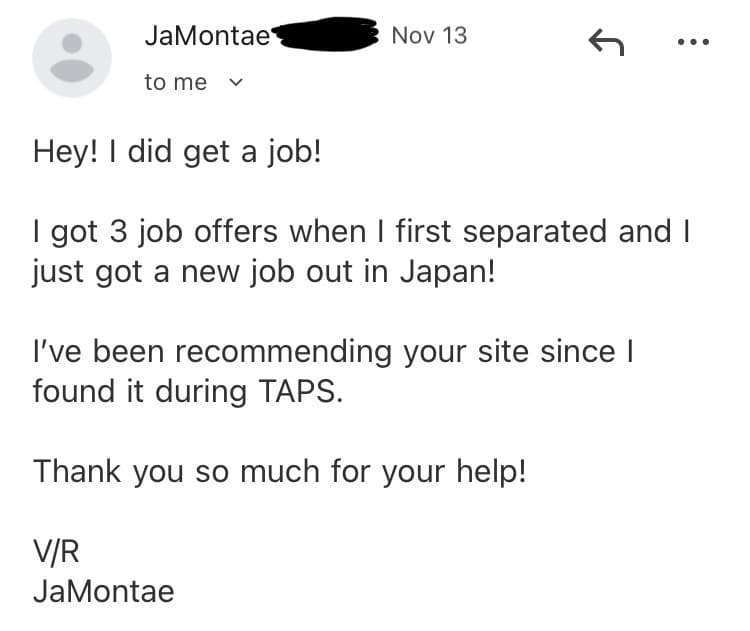
“Hey! I did get a job! I got 3 job offers when I first separated and I just got a new job out in Japan! I’ve been recommending your site since I found it during TAPS. Thank you so much for your help! V/R JaMontae ”
Federal agencies need supply chain and logistics professionals across every department, and 2S0X1 experience maps to several GS series. The 2000-series (Supply Group) is the most direct match, but do not limit your search — Program Management (0340), Logistics Management (0346), and General Business (1101) positions also value your background.
For USAJobs applications, translate your SBSS and DLA experience into federal qualification language. A 2S0X1 who managed a $5M bench stock account is qualified for GS-2010 (Inventory Management) positions. Someone who ran a deployment readiness warehouse has experience directly applicable to GS-2030 (Distribution Facilities and Storage Management). Veterans' Preference gives you 5 or 10 additional points on federal hiring assessments, and many logistics positions use Direct Hire Authority.
Key agencies hiring supply chain professionals: Defense Logistics Agency (DLA), Air Force Materiel Command (AFMC) civilian positions, Department of Veterans Affairs, GSA, and Department of Homeland Security. Start your USAJobs profile 6 months before separation — federal hiring timelines are slow.
| GS Series | Federal Job Title | Typical Grades | Match | Explore |
|---|---|---|---|---|
| GS-2010 | Inventory Management | GS-5, GS-7, GS-9, GS-11 | View Details → | |
| GS-2001 | General Supply | GS-5, GS-7, GS-9 | View Details → | |
| GS-2003 | Supply Program Management | GS-9, GS-11, GS-12 | View Details → | |
| GS-2030 | Distribution Facilities and Storage Management | GS-5, GS-7, GS-9, GS-11 | View Details → | |
| GS-0346 | Logistics Management | GS-7, GS-9, GS-11, GS-12 | View Details → | |
| GS-2050 | Supply Cataloging | GS-5, GS-7, GS-9 | View Details → | |
| GS-0340 | Program Management | GS-9, GS-11, GS-12, GS-13 | View Details → | |
| GS-1102 | Contracting | GS-7, GS-9, GS-11 | View Details → | |
| GS-2032 | Packaging | GS-5, GS-7, GS-9 | View Details → | |
| GS-0301 | Miscellaneous Administration and Program | GS-5, GS-7, GS-9 | View Details → |
Federal hiring uses keyword-matching and structured experience. BMR builds federal-format resumes (USAJobs-ready) with the right keywords, hours/week, and supervisor info — for any GS series above.
Free · No credit card · Federal + civilian resume formats included
Not everyone wants to stay in a related field. These career paths leverage your transferable skills — leadership, risk management, logistics, project planning — in completely different industries.
Materiel managers already forecast demand and translate technical part requirements into dollar figures, which is the core of estimating a job or product cost.
Materiel management is built on audit, reconciliation, and regulatory compliance over money and assets, the same control work financial examiners do for banks and agencies.
Deciding how much risk a shipment or stockpile carries, then pricing the decision against rules, mirrors how underwriters evaluate and price policy risk.
Examining a shipment for damage, valuing it, and documenting a defensible determination is the same investigative-and-documentation loop adjusters run on claims.
Materiel managers forecast demand and turn consumption data into stocking decisions, which is the analytical engine behind market research and demand planning.
Years of HAZMAT storage, segregation, and regulatory compliance give materiel managers the exact hazard-control foundation safety engineers build on.
The skills that made you a good Marine, Sailor, Airman, or Soldier transfer further than you think. BMR rewrites your bullets for any of the pivot careers above — without making you sound like you've never done the work.
Free · No credit card · Try unlimited career angles
If you are applying to logistics, supply chain, or warehouse management companies, much of your terminology translates directly. Civilian logistics managers understand what inventory accuracy rates, stock levels, and distribution operations mean.
This section is for veterans targeting careers outside of supply chain and logistics — project management, operations, business analysis, or other fields where the hiring manager has never heard of SBSS or a Due-In From Maintenance report. The translations below reframe your 2S0X1 experience for audiences who need to understand the skills, not the military-specific systems.
BMR turns your 2S0X1 duties and accomplishments into civilian bullets that match the job you're applying for — no manual translation, no rewriting.
Free · No credit card · Tailored to each job posting
Which certifications you need depends on where you're headed. Find your target career path below.
The wrong placement can sink an otherwise strong application. BMR knows where each cert ranks, what to call it, and how to frame it for ATS keyword matching and hiring manager attention.
Free · No credit card · Built around your real certs and clearance
SkillBridge Programs: Several major logistics and defense companies participate in DOD SkillBridge, allowing you to work a civilian logistics job during your last 180 days of service. Search the SkillBridge database for current openings. Amazon, FedEx, DHL, and multiple defense contractors have historically participated.
APICS/ASCM Certifications: The Association for Supply Chain Management (ASCM) offers the CSCP and CPIM certifications — both recognized industry-wide. Your military supply chain experience gives you a strong foundation for these exams. Many programs accept GI Bill.
Defense Logistics Agency (DLA): DLA is the largest employer of former military supply chain personnel. They understand your background and hire directly into civilian logistics roles. Check USAJobs for DLA positions — many use Direct Hire Authority for veterans.
Industry Associations: Join the Council of Supply Chain Management Professionals (CSCMP) and attend their annual conference. Networking in supply chain management happens through these organizations.
Project Management: The PMP certification (PMI) is the gold standard. Your experience managing supply operations, coordinating across units, and meeting deadlines under pressure directly applies. Cost: ~$555 (PMI member) for the exam. GI Bill covers many prep courses.
Business Analysis: Your data analysis experience from inventory management and supply reporting translates to business analyst roles. Consider the CBAP certification from IIBA if targeting this path.
Federal Employment (USAJobs): Create your USAJobs profile immediately. Use the "Veterans" filter. Key agencies: DLA, AFMC, GSA, VA, and DHS. Federal resumes are 2 pages max — not the 4-6 page myth you will see online. Build yours here.
Veteran Networking: American Corporate Partners (ACP) provides free mentorship from corporate executives — you will get paired with someone in your target industry. ACP is legitimate and completely free for veterans.
Education Benefits: Many certification exam fees and prep courses are covered by the GI Bill. Check with your local VA education office or use the GI Bill Comparison Tool to verify program approval.
Clearance Leverage: If you hold an active Secret or higher, that has real market value with defense contractors. Sites like ClearanceJobs.com list positions requiring active clearances. Do not let yours lapse during transition.
Air Force Resume Guide: AFSC Translation | Complete Military Resume Guide | Top Companies Hiring Veterans | Build Your Resume Free
Most veterans do this backwards — they wait until terminal leave to start, then panic. Here's the actual sequence that works.
Print this. Tape it to your monitor. Veterans who treat the transition like a 90-day op get hired faster than the ones who treat it like an emergency.
Stop rewriting from scratch every time you apply. BMR turns your military experience into civilian and federal resumes — tailored to each job.