Loading...
Loading...
The civilian and federal jobs that hire Marines Scout Snipers — with real salaries and the resume that gets callbacks.
Every 0317 has more options than a Google search will tell you. Below: career paths, BLS salary data, federal GS series, certifications by target career, and how to translate your experience without losing what made you valuable to the Marines in the first place.
Free · No credit card · Tailored resume in under 5 minutes
After the Navy I got hired into 6 federal career fields and tech sales, and sat on federal hiring panels along the way. I spent the last 2 years rebuilding everything I learned into BMR, tuned for how AI actually screens resumes today. This is the system I wish I'd had on day one.
If you held the 0317 Military Occupational Specialty, you were one of a small number of Marines trained to operate forward of friendly lines as a two-Marine team: a shooter and a spotter working together to collect information, report what they saw, and deliver precision fire when ordered. The "scout" half of the title was never an afterthought. You spent more hours building range cards, sketching terrain, estimating distances, and feeding the chain of command accurate reporting than you ever spent behind a trigger. Most of the job was patience, observation, and disciplined movement, not the shot.
The training pipeline ran through the 79-day Scout Sniper Basic Course, taught at schoolhouses tied to Quantico, Camp Lejeune, and Camp Pendleton. You learned known-distance marksmanship out to 1,000 yards, ballistics and wind reading, stalking and concealment graded down to a single graded movement, field sketching, range estimation, and call-for-fire procedures. Weapons familiarity spanned the bolt-action M40 series, the semi-automatic M110, and the .50 caliber Special Application Scoped Rifle (M82/M107) for anti-materiel work. The HOG and PIG culture inside a scout sniper platoon held you to a standard few other infantry billets demanded.
It is worth being direct about where this MOS stands today. Under Force Design, the Marine Corps removed scout sniper platoons from infantry battalions and retired the 0317 MOS, with the final basic course class graduating in December 2023. The precision-shooter capability moved into the Reconnaissance and Marine Special Operations communities under the newer Reconnaissance Sniper path. None of that erases what you did. If you carried the 0317, you hold a verified record of one of the most selective skill sets the Corps produced, and that experience translates directly into a long list of civilian and federal careers covered below. Start by exploring the full military career crosswalk, then compare your path with the Marine Reconnaissance Marine (0321) and Rifleman (0311) transition guides.
A 0317 carries the translation problem in its sharpest form. "Scout sniper" reads to a civilian recruiter as a job with no office and no transferable skill, when the truth is you ran surveillance, reporting, and precision tasks under conditions few managers will ever face. Translate the observation and reporting work, not the trigger time, and the callbacks start. — Brad Tachi, Navy Diver veteran & BMR founder
The number that matters when you're deciding what's next: how does civilian pay compare to what you make now?
Military comp is approximate (varies by location/dependents). Civilian is BLS median. Federal includes locality pay. Your real number depends on duty station, family status, GS step, and overtime.
The strongest direct civilian paths for a former 0317 sit in protective service, investigations, and instruction, where your observation, reporting, and weapons skills carry obvious weight. Use the salary figures below as a planning baseline. They are national medians from the U.S. Bureau of Labor Statistics OEWS survey (May 2024), and your local market, agency, and shift differentials will move the number.
Law enforcement and investigations. Police and sheriff's patrol officers earned a median of $77,270 (BLS, May 2024), and detective and criminal investigator roles pay higher, with federal criminal investigator positions higher still. Departments value your land navigation, surveillance discipline, and ability to write a clear after-action report. First-line supervisors of police and detectives earned a median of $105,980, a realistic ceiling once you promote.
Firearms and tactical instruction. Training and development specialists earned a median of $64,340 (BLS, May 2024). Range instruction, marksmanship coaching for law enforcement academies, and commercial tactical training all draw directly on your time as a HOG teaching shooting fundamentals. This is one of the cleanest translations a 0317 has.
Executive protection and security operations. Corporate security, executive protection, and high-risk site security hire heavily from precision and reconnaissance backgrounds because the threat-assessment mindset is hard to teach. Pay varies widely by client and clearance, so treat advertised ranges with skepticism and confirm against BLS protective-service medians.
Be honest with yourself about the market. Sworn law enforcement requires academy time and a hiring process measured in months. Instruction and executive-protection work reward a network as much as a resume. Veterans with similar reconnaissance and precision skill sets across branches face the same translation challenge, so it is worth reviewing how the Army Cavalry Scout (19D) and Special Forces Weapons Sergeant (18B) position their experience. For the bigger picture on which fields actually hold up, the guide to best careers for veterans in 2026 is a useful gut check, and you can draft a translated version with the military resume builder when you are ready.
| Civilian Job Title | Industry | BLS Median Salary | Outlook | Match |
|---|---|---|---|---|
Police and Sheriff's Patrol Officer O*NET: 33-3051.00 | Law Enforcement | $77,270 | 4% (As fast as average) | strong |
Detective / Criminal Investigator O*NET: 33-3021.00 | Law Enforcement | $99,430 | 1% (Little or no change) | strong |
First-Line Supervisor of Police and Detectives O*NET: 33-1012.00 | Law Enforcement | $105,980 | 3% (As fast as average) | moderate |
Firearms / Tactical Training Specialist O*NET: 13-1151.00 | Education & Training | $64,340 | 7% (Faster than average) | strong |
Security Guard / Protective Officer O*NET: 33-9032.00 | Security Services | $42,470 | 2% (Slower than average) | moderate |
Fire Inspector / Investigator O*NET: 33-2021.00 | Public Safety | $78,060 | 9% (Faster than average) | emerging |
Surveying and Mapping Technician O*NET: 17-3031.00 | Engineering & Construction | $51,940 | 5% (Faster than average) | emerging |
BMR rewrites your 0317 experience for any of the civilian roles above — keywords, achievements, and language hiring managers actually scan for.
Free · No credit card · 2 tailored resumes included
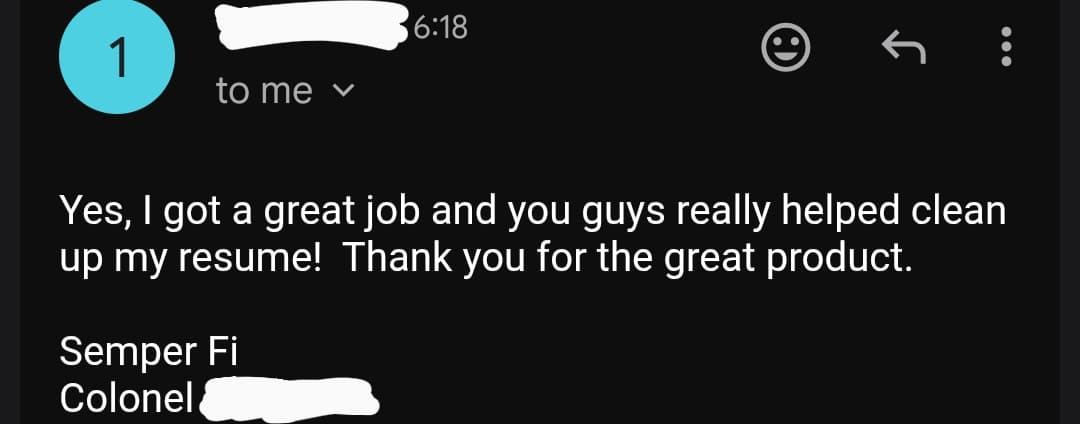
“Hey Brad, Just wanted to send out a quick thank you. You've created something amazing with BMR and your continued advocacy for transitioning service members does not go unnoticed. It was the most effective resource I used in my transition and I know it played a key role in landing a six figure…”
Federal hiring is one of the most overlooked paths for a former 0317, and it rewards exactly the documentation discipline you already have. The work here is matching your record to the right GS occupational series and writing to the qualification standard, not selling yourself in three bullet points.
The most direct fit is the GS-0083 Police series, where federal protective forces at agencies like the Department of Veterans Affairs, the Department of Defense, and the Federal Protective Service hire at the GS-5 through GS-8 range for entry, with supervisory roles higher. The GS-0080 Security Administration series covers physical security, antiterrorism, and force-protection planning, typically GS-7 through GS-11 at entry depending on experience. If your platoon time involved heavy reporting and collection, the GS-0132 Intelligence series is worth a hard look, often GS-7 through GS-9 entry for veterans with collection and reporting backgrounds.
Two more series fit the instructor and program sides of your experience. GS-1712 Training Instruction covers federal range and skills instruction, and GS-1701 General Education and Training is the broader umbrella. For Marines who managed risk and readiness, GS-0018 Safety and Occupational Health Management and GS-0019 Safety Technician map to range-safety and operational-risk work. GS-0089 Emergency Management and GS-0343 Management and Program Analyst round out the planning and coordination paths.
Veterans' Preference matters here in a way it does not in the private sector. Eligible veterans receive 5 or 10 additional points on examined positions and preference in category rating, and disabled veterans may qualify for direct appointment authorities like VRA. Before you apply, read the 10-point Veterans' Preference breakdown and the federal resume tips that get veterans referred, then build a properly formatted version with the federal resume builder. Marines from related billets such as the Military Police (5811) field target several of these same series.
| GS Series | Federal Job Title | Typical Grades | Match | Explore |
|---|---|---|---|---|
| GS-0080 | Security Administration | GS-7, GS-9, GS-11 | View Details → | |
| GS-0132 | Intelligence | GS-7, GS-9, GS-11 | View Details → | |
| GS-1712 | Training Instruction | GS-7, GS-9, GS-11 | View Details → | |
| GS-1896 | Border Patrol Agent | GS-7, GS-9, GS-11 | View Details → | |
| GS-0089 | Emergency Management | GS-7, GS-9 | View Details → | |
| GS-0083 | Police | GS-7, GS-9 | View Details → | |
| GS-0018 | Safety and Occupational Health Management | GS-7, GS-9 | View Details → |
Federal hiring uses keyword-matching and structured experience. BMR builds federal-format resumes (USAJobs-ready) with the right keywords, hours/week, and supervisor info — for any GS series above.
Free · No credit card · Federal + civilian resume formats included
Not everyone wants to stay in a related field. These career paths leverage your transferable skills — leadership, risk management, logistics, project planning — in completely different industries.
The measurement precision, terrain reading, and instrument discipline a scout sniper used for range cards and shooting solutions translate directly into surveying, a field most veterans never consider.
The same patient observation and tracking that made you effective in the field is exactly what wildlife fieldwork demands, a genuine different-industry door few would guess.
Reading wind, atmosphere, and distance, then executing precisely with no margin for error, is the daily reality of both precision shooting and flying. The composure transfers.
You met a brutal physical standard and taught others to reach it. Coaching athletes through conditioning and performance is a direct application of that instructor experience in a completely different setting.
Hours behind a spotting scope and optics taught you composition, light, distance, and the patience to wait for the right frame. That eye transfers cleanly into professional photography.
Assessing terrain, spotting hazards early, and operating for long stretches in the wild are everyday skills for a scout sniper that map onto wildland fire prevention and conservation work.
The mission planning, contingency thinking, and composure under pressure you developed map onto emergency management, where coordinating people and plans during a crisis is the whole job.
The skills that made you a good Marine, Sailor, Airman, or Soldier transfer further than you think. BMR rewrites your bullets for any of the pivot careers above — without making you sound like you've never done the work.
Free · No credit card · Try unlimited career angles
If you are staying in law enforcement, firearms instruction, or reconnaissance-adjacent security work, your terminology already lands. Recruiters in those fields know what a HOG, a stalk, and a call-for-fire are. This section is for the 0317 targeting careers OUTSIDE precision and protective service, where a hiring manager has never heard your job titles and will skim past anything that sounds like jargon.
The goal is to translate the underlying skill, not the trigger time. Lead with observation, analysis, planning, and instruction, because those are the verbs that survive contact with a civilian recruiter. The 50 military terms translated to civilian language glossary is a strong companion to the table below, and the guide to explaining military experience in a civilian interview covers how to say these things out loud.
Before: "Served as scout sniper team leader; conducted stalks and surveillance, built range cards, and reported enemy activity to higher."
After: "Led a two-person field team conducting long-duration observation and data collection in austere conditions, producing structured situation reports that informed senior decision-making with zero reporting errors."
That second version reads as analytical, accountable, and team-led, which is what a project or operations hiring manager is scanning for. When you are ready to convert your whole record this way, the 90-second elevator pitch examples help you say it out loud, and a resume tool walks you through it line by line.
BMR turns your 0317 duties and accomplishments into civilian bullets that match the job you're applying for — no manual translation, no rewriting.
Free · No credit card · Tailored to each job posting
Which certifications you need depends on where you're headed. Find your target career path below.
The wrong placement can sink an otherwise strong application. BMR knows where each cert ranks, what to call it, and how to frame it for ATS keyword matching and hiring manager attention.
Free · No credit card · Built around your real certs and clearance
Use this section as a checklist. It is split between staying in your field and moving outside it, with the internal tools and outside resources that actually move a transition forward.
Staying in precision, protective service, or instruction. Pursue SkillBridge with a law enforcement agency, a defense contractor, or a tactical training company before you separate. The top SkillBridge companies hiring in 2026 list is a good starting point. If a clearance is part of your record, protect it, because it is one of your most valuable assets. The breakdown of what a clearance is worth in salary and the overview of defense contractor jobs for cleared veterans are both worth reading early.
Careers outside the field. American Corporate Partners (ACP) offers free year-long mentorship that pairs you with a corporate professional, which is the fastest way to build the network that protective and corporate roles run on. For self-directed exploration of where your skills map, the MOS to civilian job chart for all branches is a fast reference. For the formal transition timeline, work through your installation's SFL-TAP program.
See also: related Marine paths in the Light Armored Reconnaissance (0313) and Mortarman (0341) guides, plus the Air Force Special Reconnaissance (1Z4X1) page for a cross-branch comparison. When you are ready to apply for real, you can build your resume now.
Most veterans do this backwards — they wait until terminal leave to start, then panic. Here's the actual sequence that works.
Print this. Tape it to your monitor. Veterans who treat the transition like a 90-day op get hired faster than the ones who treat it like an emergency.
Stop rewriting from scratch every time you apply. BMR turns your military experience into civilian and federal resumes — tailored to each job.