Loading...
Loading...
The civilian and federal jobs that hire Marines Water Support Technicians — with real salaries and the resume that gets callbacks.
Every 1171 has more options than a Google search will tell you. Below: career paths, BLS salary data, federal GS series, certifications by target career, and how to translate your experience without losing what made you valuable to the Marines in the first place.
Free · No credit card · Tailored resume in under 5 minutes
After the Navy I got hired into 6 federal career fields and tech sales, and sat on federal hiring panels along the way. I spent the last 2 years rebuilding everything I learned into BMR, tuned for how AI actually screens resumes today. This is the system I wish I'd had on day one.
If you held the 1171 MOS, you kept Marines alive in places with no infrastructure. You ran Tactical Water Purification Systems (TWPS), Lightweight Water Purification Systems (LWPS), and Reverse Osmosis Water Purification Units (ROWPU) to turn river, lake, brackish, or even seawater into potable water that met field health standards. You also installed and repaired field plumbing, shower and laundry units, water storage and distribution systems, and the pumps and hygiene equipment a forward unit depends on. That is real water treatment and field plumbing work, not a checklist job.
The training pipeline runs through the Marine Corps Engineer School at Camp Lejeune, where 1171s learn water purification chemistry, filtration and membrane systems, water quality testing, and the mechanical side of pumps, valves, and distribution. Common duty stations include Camp Lejeune, Camp Pendleton, and Marine Corps Air Ground Combat Center Twentynine Palms, often attached to combat logistics and engineer support units. The work blends a water treatment operator's process knowledge with a plumber's hands-on repair skill.
Civilian employers value this background because the underlying skills are regulated, in demand, and hard to fake. A municipal water plant cares that you understand disinfection, turbidity, membrane fouling, and water chemistry. A mechanical contractor cares that you can install and troubleshoot pumps and piping. Both care that you did it under pressure, kept records, and met a standard every single day. Explore how your skills map across fields with the military career crosswalk, or compare paths with the Marine Corps 1142 Engineer Equipment Mechanic and 1371 Combat Engineer pages. For the language side of the move, our guide on 50 military terms translated to civilian language is a good starting point.
BMR has built more than 60,000 resumes across every branch, and 1171s land water and facilities offers faster than most people expect once the resume names the actual systems. "TWPS operator" means nothing to a hiring manager, but "reverse osmosis and membrane water treatment, daily water quality testing, pump and distribution repair" reads as a licensed-track operator. The work was already there. The translation is what gets the callback. — Brad Tachi, Navy Diver veteran & BMR founder
The number that matters when you're deciding what's next: how does civilian pay compare to what you make now?
Military comp is approximate (varies by location/dependents). Civilian is BLS median. Federal includes locality pay. Your real number depends on duty station, family status, GS step, and overtime.
Your MOS sits at the intersection of two regulated, recession-resistant civilian fields: water and wastewater treatment, and the plumbing and pipefitting trades. Every town needs clean water and working sewers, which is why these roles do not disappear in a downturn.
Water and Wastewater Treatment Plant and System Operators earned a median of $56,260 per year according to BLS OEWS (May 2024), and the Bureau projects faster-than-average demand as the existing operator workforce retires. The catch is licensing: most states require an operator certification by level (Class I through Class IV), and many plants will hire you as a trainee on your military process experience and let you certify on the job. Plumbers, pipefitters, and steamfitters earned a median of $61,550 (BLS OEWS, May 2024), with strong demand in commercial construction and facilities; this path runs through a licensed apprenticeship, and your field plumbing time can shorten it.
For the broader mechanical maintenance route, see how related trades stack up in military to trade careers: welding, HVAC, electrical, plumbing and the military to plumbing apprenticeships guide. Veterans coming from the same equipment world include the Air Force 3E4X1 Water and Fuel Systems Maintenance and Navy UT Utilitiesman, both of which share your civilian targets. Be honest with yourself about geography: treatment-plant jobs cluster around population centers and follow infrastructure spending, while construction plumbing tracks the regional building cycle. When you are ready to write it down, our military resume builder turns your TWPS and ROWPU experience into civilian operator language, or you can build your resume now to get started.
| Civilian Job Title | Industry | BLS Median Salary | Outlook | Match |
|---|---|---|---|---|
Water and Wastewater Treatment Plant Operator O*NET: 51-8031.00 | Water Utilities | $56,260 | 7% (Faster than average) | strong |
Plumber, Pipefitter, or Steamfitter O*NET: 47-2152.00 | Construction & Trades | $61,550 | 6% (Faster than average) | strong |
Stationary Engineer and Boiler Operator O*NET: 51-8021.00 | Facilities | $67,640 | 1% (Little or no change) | strong |
Industrial Machinery Mechanic O*NET: 49-9041.00 | Industrial Maintenance | $62,650 | 13% (Much faster than average) | strong |
Maintenance and Repair Worker, General (Facilities) O*NET: 49-9071.00 | Facilities | $46,700 | 6% (Faster than average) | moderate |
Water and Wastewater System Operator (Distribution) O*NET: 51-8031.00 | Water Utilities | $56,260 | 7% (Faster than average) | strong |
Heating, A/C, and Refrigeration Mechanic and Installer O*NET: 49-9021.00 | Construction & Trades | $59,810 | 9% (Much faster than average) | moderate |
BMR rewrites your 1171 experience for any of the civilian roles above — keywords, achievements, and language hiring managers actually scan for.
Free · No credit card · 2 tailored resumes included
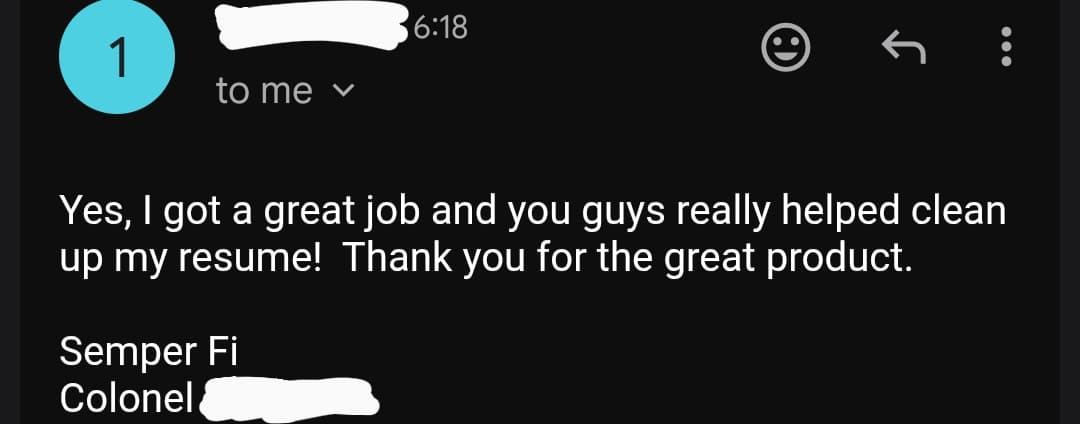
“Hey Brad, Just wanted to send out a quick thank you. You've created something amazing with BMR and your continued advocacy for transitioning service members does not go unnoticed. It was the most effective resource I used in my transition and I know it played a key role in landing a six figure…”
The federal government is one of the largest operators of water and utility systems in the country, from military installations to VA medical centers to Bureau of Reclamation projects, and it hires the people who run them. Your field is split across the General Schedule (GS) for technical and program work and the Federal Wage System (WG) for the hands-on trade roles, so look at both.
On the trades side, the WG-4742 Utility Systems Repair and Operating series is the closest direct match: it covers operating and maintaining water, wastewater, and utility distribution systems on federal installations. GS-1640 Facility Operations Services covers running the utility plant and building systems for a facility, a natural fit for a 1171 who managed water and hygiene systems for a unit. The WG-4749 Maintenance Mechanic and trade series (often filled at the WG level) cover the pump, valve, and plumbing repair side of your work. For the regulatory and quality angle, GS-0028 Environmental Protection Specialist and GS-0018 Safety and Occupational Health Management hire people who understand water quality compliance, sampling, and the standards behind it. Heating and boiler plant work (WG-5309) and air conditioning equipment work (WG-5306) round out the facilities mechanical paths.
Veterans' Preference adds 5 or 10 points to your competitive standing, and for trade and operating positions your documented hands-on experience often matters more than a degree. Read up on how the math works in Veterans Preference Points: 5 vs 10 Points Explained and how to position yourself in the federal series resume guides. Marines from adjacent equipment fields targeting the same installations include the 1141 Electrician. A federal resume is its own format, longer and more detailed than a civilian one. Our federal resume builder handles the structure, or you can start your federal resume directly.
| GS Series | Federal Job Title | Typical Grades | Match | Explore |
|---|---|---|---|---|
| GS-1640 | Facility Operations Services | GS-7, GS-9, GS-11 | View Details → | |
| GS-4742 | Utility Systems Repair and Operating | WG-8, WG-10, GS-7 | View Details → | |
| GS-4749 | Maintenance Mechanic | WG-8, WG-10, WG-11 | View Details → | |
| GS-0028 | Environmental Protection Specialist | GS-7, GS-9, GS-11 | View Details → | |
| GS-5309 | Heating and Boiler Plant Equipment Mechanic | WG-8, WG-10 | View Details → | |
| GS-0029 | Environmental Protection Assistant | GS-7, GS-9 | View Details → | |
| GS-0457 | Soil Conservation | GS-7, GS-9 | View Details → | |
| GS-0018 | Safety and Occupational Health Management | GS-7, GS-9, GS-11 | View Details → |
Federal hiring uses keyword-matching and structured experience. BMR builds federal-format resumes (USAJobs-ready) with the right keywords, hours/week, and supervisor info — for any GS series above.
Free · No credit card · Federal + civilian resume formats included
Not everyone wants to stay in a related field. These career paths leverage your transferable skills — leadership, risk management, logistics, project planning — in completely different industries.
Running a water purification process is the same discipline as running a chemical process unit: monitor instrumentation, dose chemicals, hold the output to a standard, and log everything. The transition is about learning a new process, not a new way of working.
Your water quality testing is exactly the fieldwork an environmental technician does: collect samples, run tests, and document results against regulatory limits. You already think in terms of standards and compliance.
Breweries, dairies, and beverage plants run filtration, tanks, pumps, and strict sanitation, the same equipment family you already know. Water quality and clean-process discipline are central to the job.
You ran equipment that people depended on to stay healthy, monitoring output and adjusting on the fly. Respiratory therapy is the same equipment-and-protocol mindset applied to patient care, and it is one of the fastest-growing healthcare fields.
Sustaining water output for a unit meant balancing production, maintenance, and quality at once, which is the core of production management. Your operator depth gives you credibility on the floor that pure managers lack.
Agencies like the USGS and state water boards employ technicians who measure, sample, and monitor water resources. Your hands-on water and instrumentation experience maps to the fieldwork side of this conservation career.
Managing water support for a unit was a logistics and operations job: keep the equipment running, the people scheduled, and the output meeting standard. That coordination experience transfers to operations management across industries.
The skills that made you a good Marine, Sailor, Airman, or Soldier transfer further than you think. BMR rewrites your bullets for any of the pivot careers above — without making you sound like you've never done the work.
Free · No credit card · Try unlimited career angles
If you are staying in water treatment or the plumbing trades, your terminology already translates. A plant supervisor knows what reverse osmosis is, and a plumbing foreman knows what distribution piping is. This section is for 1171s targeting careers OUTSIDE the water and facilities specialty, where hiring managers have never heard your acronyms and will read "TWPS" as noise.
The skill underneath your MOS is process operation under a strict standard: you ran a regulated treatment process, tested output against a spec, logged results, and fixed equipment when it failed. That signature transfers to manufacturing, quality, and safety roles. The trick is naming the transferable skill, not the gear.
| Military Term | Civilian Translation |
|---|---|
| Operated TWPS / ROWPU producing potable water | Operated a regulated treatment process meeting quality and compliance standards |
| Conducted water quality testing and logging | Performed quality control sampling, testing, and documentation against spec |
| Maintained pumps, valves, and distribution systems | Diagnosed and repaired mechanical and fluid-handling equipment to minimize downtime |
| Managed water storage and field hygiene systems | Managed utility systems and consumable resources for a 200-person operation |
A before-and-after makes the gap obvious. Before: "Operated TWPS to support battalion field operations." After: "Operated and monitored a continuous water treatment process producing 1,500+ gallons per hour, performing hourly quality control tests and maintaining 100% compliance with field health standards." The second version is one a manufacturing quality lead or facilities manager can actually score. For more examples, see hidden military skills civilians don't know you have and avoid the traps in resume mistakes veterans make. Our military resume builder writes these conversions for you.
BMR turns your 1171 duties and accomplishments into civilian bullets that match the job you're applying for — no manual translation, no rewriting.
Free · No credit card · Tailored to each job posting
Which certifications you need depends on where you're headed. Find your target career path below.
The wrong placement can sink an otherwise strong application. BMR knows where each cert ranks, what to call it, and how to frame it for ATS keyword matching and hiring manager attention.
Free · No credit card · Built around your real certs and clearance
Your fastest route to a civilian paycheck is getting your operator certification or apprenticeship credit started before you separate. The American Water Works Association (AWWA) and the Water Environment Federation (WEF) are the industry bodies for treatment operators, and most states run their own operator certification through the state environmental or health agency. For the plumbing trade, United Association (UA) apprenticeships and the Helmets to Hardhats program connect veterans to registered apprenticeships that grant credit for military experience. SkillBridge can place you with a utility or mechanical contractor for your final months on active duty; see the SkillBridge programs list by industry.
If you are leaving water and facilities behind, an OSHA 30 card and a project or quality credential open doors in manufacturing, construction management, and operations. American Corporate Partners (ACP) offers free one-on-one veteran mentorship to help you map a path. Use SFL-TAP and the transition timeline and checklist to stay on schedule, and read the military to HVAC technician career guide if you are weighing the trades against a pivot.
Start with the military resume builder for private-sector roles or the federal resume builder for GS and WG jobs, explore options with the military-to-civilian career crosswalk, or build your resume now.
See also: Coast Guard MK Machinery Technician, Army 91C Utilities Equipment Repairer, and Army 12N Horizontal Construction Engineer career paths.
Most veterans do this backwards — they wait until terminal leave to start, then panic. Here's the actual sequence that works.
Print this. Tape it to your monitor. Veterans who treat the transition like a 90-day op get hired faster than the ones who treat it like an emergency.
Stop rewriting from scratch every time you apply. BMR turns your military experience into civilian and federal resumes — tailored to each job.