Loading...
Loading...
The civilian and federal jobs that hire Marines Bulk Fuel Specialists — with real salaries and the resume that gets callbacks.
Every 1391 has more options than a Google search will tell you. Below: career paths, BLS salary data, federal GS series, certifications by target career, and how to translate your experience without losing what made you valuable to the Marines in the first place.
Free · No credit card · Tailored resume in under 5 minutes
After the Navy I got hired into 6 federal career fields and tech sales, and sat on federal hiring panels along the way. I spent the last 2 years rebuilding everything I learned into BMR, tuned for how AI actually screens resumes today. This is the system I wish I'd had on day one.
One page, built in our template, with your military experience translated into civilian terms hiring managers and ATS systems read. Use it as a reference for your own. Drop your email and we'll send you the download link.
Free. We'll also send occasional job-search tips. Unsubscribe anytime.
The Marine Corps 1391 Bulk Fuel Specialist runs the petroleum logistics tail that keeps every other Marine in the fight. 1391s receive, store, test, and issue bulk fuel through the Tactical Bulk Fuel Delivery System (TBFDS), the Amphibious Assault Fuel System (AAFS), and the Helicopter Expedient Refueling System (HERS). The work covers fuel reception from tanker trucks, rail cars, ships, and pipelines; quality testing in field labs to detect water, sediment, and contamination; bulk storage in collapsible fabric tanks ranging from 10,000 to 50,000 gallons; and transfer or issue to ground vehicles, generators, and forward arming and refueling points (FARPs).
1391s train at the Marine Corps Engineer School aboard Camp Lejeune, North Carolina. The pipeline runs roughly 13 weeks of recruit training at Parris Island or San Diego, then about 5 weeks of MOS school covering fuel system operations, pump and filter maintenance, fuel quality testing, and expeditionary fuels operations. Most 1391s serve in Bulk Fuel Companies inside Engineer Support Battalions tied to the Marine Logistics Group, with billets across Camp Lejeune, Camp Pendleton, Okinawa, and rotational MEU deployments. The job lives at the intersection of mechanical maintenance, hazardous materials handling, and supply accountability — and the people who do it well end up running fuel farms that move millions of gallons a year.
What makes 1391s genuinely valuable on the civilian side is how rare the combination is. Most petroleum workers in the private sector run one type of system in one type of facility. A 1391 has reset bulk fuel infrastructure in austere environments, sampled product against ASTM-equivalent standards, troubleshot pumps and filtration mid-operation, and managed inventory accountability where every gallon is reconciled. Compare that Marine Corps 3043 Supply Administration path or browse the full career translation hub for adjacent specialties.
I worked across federal supply and contracting for years after the Navy, and 1391s have one of the most specialized petroleum supply paths the Marine Corps produces. The Tactical Bulk Fuel Delivery System (TBFDS), Amphibious Assault Fuel System (AAFS), and bulk-fuel quality testing experience translates almost 1:1 to DLA Energy positions, federal facility fuels operations, and commercial bulk fuel handling at airports, refineries, and pipeline operations. — Brad Tachi, Navy Diver veteran & BMR founder
The number that matters when you're deciding what's next: how does civilian pay compare to what you make now?
Military comp is approximate (varies by location/dependents). Civilian is BLS median. Federal includes locality pay. Your real number depends on duty station, family status, GS step, and overtime.
Civilian petroleum work splits into a few real lanes for 1391s: airport fuel operations, refinery and pipeline work, commercial bulk fuel distribution, and industrial fuel system operations at large facilities. The pay range runs from about $50K for entry pump operator roles to $90K+ for senior pipeline operators, refinery technicians, and credentialed fuel quality inspectors. The 1391 toolkit (TBFDS pumps, AAFS pipelines, fuel sampling labs, hazmat-marked transfers) translates without much friction.
Geography matters. Refinery and pipeline work concentrates in Texas, Louisiana, and the Gulf Coast. Airport into-plane fueling lives at every major hub but pays best at the largest contractors (Allied Aviation, Swissport, Menzies). Bulk fuel distribution and federal facility fuels exist at every DoD installation. For salary benchmarks across military-to-civilian paths, see Military to Civilian Salary: What You're Worth.
Cross-branch overlap with the petroleum-supply community runs deep. The Army 92F Petroleum Supply Specialist career path is the closest sister MOS, and the Air Force 2F0X1 Fuels page covers the aviation refueling side that mirrors many 1391 roles. Build a tailored 1391 resume free in under 5 minutes.
| Civilian Job Title | Industry | BLS Median Salary | Outlook | Match |
|---|---|---|---|---|
Pump System Operator O*NET: 53-7072.00 | Petroleum & Pipeline Operations | $60,000 | Stable (Little or no change) | strong |
Stationary Engineer / Boiler Operator O*NET: 51-8021.00 | Industrial Operations | $69,000 | 2% (Slower than average) | strong |
Petroleum Pump System Operator (Refinery) O*NET: 53-7073 | Refining & Pipeline | $80,000 | Stable | strong |
Industrial Truck and Tractor Operator O*NET: 53-7051.00 | Logistics & Distribution | $44,000 | 7% (As fast as average) | moderate |
Fuel Truck Driver (Hazmat-endorsed) O*NET: 53-3032.00 | Transportation & Logistics | $54,000 | 4% (As fast as average) | strong |
Petroleum Tank Inspector (API 653) O*NET: 47-4011.00 | Petroleum Inspection & QA | $67,000 | 3% (Slower than average) | moderate |
Logistics Coordinator / Specialist O*NET: 13-1081.00 | Logistics & Supply Chain | $79,400 | 19% (Much faster than average) | moderate |
Operations Supervisor O*NET: 13-1199.07 | Industrial Operations | $66,800 | 6% (Faster than average) | moderate |
BMR rewrites your 1391 experience for any of the civilian roles above — keywords, achievements, and language hiring managers actually scan for.
Free · No credit card · 2 tailored resumes included
“Hey Brad, Just wanted to send out a quick thank you. You've created something amazing with BMR and your continued advocacy for transitioning service members does not go unnoticed. It was the most effective resource I used in my transition and I know it played a key role in landing a six figure…”
Federal hiring is one of the strongest paths for 1391s because the petroleum, fuels, and bulk-supply work the Marine Corps trained you to do is exactly what the Defense Logistics Agency (DLA Energy), GSA, the Department of Energy, and DoD installation fuels operations need every day. Veterans' Preference plus 1391-specific training stacks well against civilian-only applicants. The catch is the federal resume format and keyword vocabulary — get those wrong and your application sinks before a hiring manager sees it.
DLA Energy is the single largest federal employer for petroleum-trained veterans. They run bulk fuels operations across every DoD installation, manage the Defense Working Capital Fund for petroleum, and contract billions in annual fuel deliveries. Most honorably discharged 1391s qualify for 5-point preference, and disabled veterans qualify for 10-point preference. Apply directly through USAJobs.gov with saved searches for "fuel," "petroleum," and the GS series above.
Other federal hiring lanes that often surprise 1391s: VA hospital and medical center fuels operations, GSA federal facility fuels, NASA test-stand fuels at Stennis and Marshall, and Department of Energy national lab fuels. For the federal resume side, see the Navy LS Logistics Specialist guide for parallel federal logistics paths, or use the BMR federal resume builder directly.
| GS Series | Federal Job Title | Typical Grades | Match | Explore |
|---|---|---|---|---|
| GS-2030 | Distribution Facilities and Storage Management | GS-9, GS-11, GS-12 | View Details → | |
| GS-2010 | Inventory Management | GS-7, GS-9, GS-11 | View Details → | |
| GS-2150 | Transportation Operations | GS-7, GS-9, GS-11 | View Details → | |
| GS-0346 | Logistics Management | GS-9, GS-11, GS-12 | View Details → | |
| GS-1670 | Equipment Services | GS-9, GS-11, GS-12 | View Details → | |
| GS-6907 | Materials Handler | WG-5, WG-7, WG-9 | View Details → | |
| GS-0301 | Miscellaneous Administration and Program | GS-7, GS-9, GS-11 | View Details → | |
| GS-5803 | Heavy Mobile Equipment Mechanic | WG-9, WG-10, WG-11 | View Details → | |
| GS-0028 | Environmental Protection Specialist | GS-9, GS-11, GS-12 | View Details → |
Federal hiring uses keyword-matching and structured experience. BMR builds federal-format resumes (USAJobs-ready) with the right keywords, hours/week, and supervisor info — for any GS series above.
Free · No credit card · Federal + civilian resume formats included
Not everyone wants to stay in a related field. These career paths leverage your transferable skills — leadership, risk management, logistics, project planning — in completely different industries.
Running a treatment plant is operating pumps, valves, and distribution lines while keeping product within spec and inside environmental limits, which is exactly what bulk-fuel work is, minus the fuel. The systems thinking and compliance discipline transfer one-for-one.
Bulk-fuel Marines live inside hazmat protocols, containment, PPE, and spill response, every day. Environmental remediation pays directly for that discipline on asbestos, lead, mold, and chemical cleanup sites.
A chemical plant moves hazardous fluids through pumps, manifolds, and pressurized lines under strict safety control, the same operating picture a 1311 manages on a fuel farm. The product changes, the systems and the safety mindset do not.
Spill prevention and product-quality testing are already part of bulk-fuel work. Environmental technicians do the same sampling and contamination analysis across soil, water, and air for consulting firms and regulators.
Fire departments run hazmat and fuel-spill response constantly, and a 1311 already understands flammable-product behavior, containment, and pump operations better than most recruits. The fire-ground fluid systems are familiar territory.
A 1311 already pulls fuel samples and checks them against spec before product moves. Chemical technicians run that same quality-control process in labs for manufacturers and refiners across industries.
The skills that made you a good Marine, Sailor, Airman, or Soldier transfer further than you think. BMR rewrites your bullets for any of the pivot careers above — without making you sound like you've never done the work.
Free · No credit card · Try unlimited career angles
If you're staying in petroleum, fuels, or bulk-supply work, your terminology translates directly. Refineries, pipeline operators, and airport fuel contractors know what TBFDS, AAFS, and bulk fuel transfer mean. This section is for 1391s targeting careers OUTSIDE the petroleum specialty: operations management, logistics, safety, environmental compliance, or industrial supervision.
The 1391 vocabulary is dense and specialized. Civilian recruiters in operations, logistics, or facility management will not pattern-match on these terms unless they're translated. Key swaps:
Before (Military): Operated TBFDS and AAFS to provide bulk fuel support across MEU deployment.
After (Civilian Operations Supervisor): Operated mobile bulk fuel distribution infrastructure (3,000+ feet of pipeline, six 50,000-gallon storage tanks) supporting expeditionary operations across 7-month deployment. Issued 1.2M+ gallons with zero contamination incidents and full inventory accountability.
Before (Military): Conducted fuel quality surveillance using AEL-equivalent test kits and reported results to senior NCO.
After (Civilian QA Technician): Performed petroleum product quality assurance testing using field laboratory equipment to detect water content, particulate contamination, and product specification compliance. Documented 200+ sample results across 12-month period with zero quality escapes.
Before (Military): Supervised four junior Marines operating fuel pumps and transfer systems during round-the-clock operations.
After (Civilian Crew Lead): Led 4-person crew operating bulk fuel transfer systems on continuous 24/7 operational tempo. Achieved 100% uptime across 90+ shift cycles with zero safety incidents and full hazmat compliance.
For the broader translation playbook, read 50 Military Terms Translated to Civilian Language and Military Logistics to Supply Chain Resume Guide. Or skip ahead and let the BMR military resume builder handle the translation work.
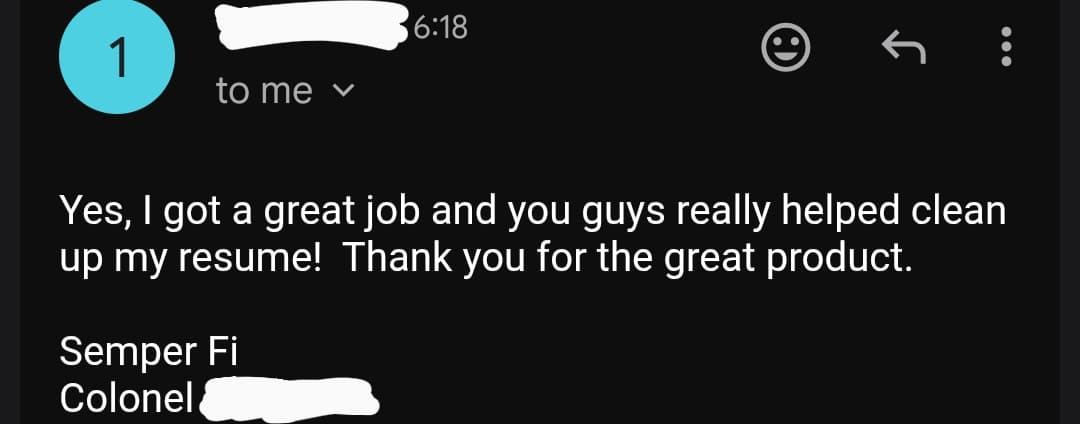
BMR turns your 1391 duties and accomplishments into civilian bullets that match the job you're applying for — no manual translation, no rewriting.
Free · No credit card · Tailored to each job posting
Which certifications you need depends on where you're headed. Find your target career path below.
The wrong placement can sink an otherwise strong application. BMR knows where each cert ranks, what to call it, and how to frame it for ATS keyword matching and hiring manager attention.
Free · No credit card · Built around your real certs and clearance
Most veterans do this backwards — they wait until terminal leave to start, then panic. Here's the actual sequence that works.
Print this. Tape it to your monitor. Veterans who treat the transition like a 90-day op get hired faster than the ones who treat it like an emergency.
Stop rewriting from scratch every time you apply. BMR turns your military experience into civilian and federal resumes — tailored to each job.