Loading...
Loading...
The civilian and federal jobs that hire Marines CBRN Defense Specialists — with real salaries and the resume that gets callbacks.
Every 5711 has more options than a Google search will tell you. Below: career paths, BLS salary data, federal GS series, certifications by target career, and how to translate your experience without losing what made you valuable to the Marines in the first place.
Free · No credit card · Tailored resume in under 5 minutes
After the Navy I got hired into 6 federal career fields and tech sales, and sat on federal hiring panels along the way. I spent the last 2 years rebuilding everything I learned into BMR, tuned for how AI actually screens resumes today. This is the system I wish I'd had on day one.
As a 5711 CBRN Defense Specialist, you owned the chemical, biological, radiological, and nuclear defense mission for your unit. You ran detection sweeps with the M4 JCAD and AN/UDR-13, set up the M8/M9 detection paper and M256A1 kits, operated the M291 and M295 decon systems, and kept the unit MOPP-ready when a hazard was suspected. You managed the IPE and survey gear, ran the decontamination line, and briefed commanders on contamination spread and downwind hazard. After the entry-level CBRN Defense course at Fort Leonard Wood, you were the Marine the company turned to whenever something on the ground might be toxic, radioactive, or biological.
That skill set is a near-exact match for three certifiable civilian lanes: environmental health and safety, hazardous materials response, and emergency management. Civilian employers in those fields spend real money training people to do what you already did under far worse conditions. Knowing how a contaminant moves, how to detect it, how to contain it, and how to protect a workforce from it is the core of the industrial hygiene and EHS professions. The detection instruments change brand names, but the discipline is identical.
If you want to compare paths across the Corps, the 1371 Combat Engineer and 2336 EOD Technician pages share a lot of the same hazardous-environment and safety-credential ground. You can also browse every branch in the military career crosswalk to see where your hazard-management experience lands. For a primer on turning evaluation language into civilian bullets, the guide to converting evals into resume bullets is a good place to start.
I spent years on the federal environmental and engineering side after the Navy, and CBRN is one of the cleanest translations I have seen. You already think in terms of exposure limits, containment, and downwind hazard, which is exactly how an industrial hygienist or an EHS manager thinks. The hard part is not the work, it is proving on paper that your detection and decon experience is the same competency a refinery or a federal agency is hiring for. — Brad Tachi, Navy Diver veteran & BMR founder
The number that matters when you're deciding what's next: how does civilian pay compare to what you make now?
Military comp is approximate (varies by location/dependents). Civilian is BLS median. Federal includes locality pay. Your real number depends on duty station, family status, GS step, and overtime.
The strongest direct match is the environmental health and safety field. Per BLS OEWS May 2024, Occupational Health and Safety Specialists (O*NET 19-5011.00) earn a median of $81,140, with employment growth projected at 5 percent through 2033. Manufacturing plants, construction firms, oil and gas operations, and logistics companies all staff EHS teams that build hazard-control programs, run exposure monitoring, and keep operations inside regulatory limits. Your MOPP, detection, and decon background is a direct line into this work.
Hazardous Materials Removal Workers (O*NET 47-4041.00) earn a BLS median of $50,300, and the role leans on exactly the containment and decontamination procedures you ran in the Corps. The pay scales sharply with certification and specialization, especially in radiological and asbestos abatement. Industrial Hygiene is the higher-credential lane: while BLS reports many industrial hygienists inside the broader Occupational Health and Safety Specialist category, a Certified Industrial Hygienist designation moves you into senior exposure-assessment roles.
Emergency Management Specialists and planners (Emergency Management Directors, O*NET 11-9161.00) carry a BLS median of $87,690. Your experience briefing commanders on contamination spread and coordinating a unit response under a CBRN threat maps cleanly onto hazard planning, continuity-of-operations work, and incident command. Be honest about the market: EHS and hazmat demand is steady but cyclical with construction and energy activity, and the best-paying roles cluster around industrial corridors on the Gulf Coast, the Rust Belt, and major ports. For a wider view of where this experience travels, the military to construction management guide covers an adjacent safety-heavy path.
Veterans coming from the same hazard-management world cross-branch are competing for the same jobs. The Army 74D CBRN Specialist and the Air Force 4B0X1 Bioenvironmental Engineering pages show how the same detection and exposure-control skill set is described in other branches. When you are ready to put it on paper, our military resume builder translates the CBRN vocabulary into EHS and hazmat language hiring managers screen for. You can also build your resume now and start applying this week.
| Civilian Job Title | Industry | BLS Median Salary | Outlook | Match |
|---|---|---|---|---|
Occupational Health and Safety Specialist O*NET: 19-5011.00 | Environmental Health & Safety | $81,140 | 5% (Faster than average) | strong |
Hazardous Materials Removal Worker O*NET: 47-4041.00 | Hazmat & Remediation | $50,300 | 6% (Faster than average) | strong |
Emergency Management Specialist O*NET: 11-9161.00 | Emergency Management | $87,690 | 4% (As fast as average) | strong |
Environmental Scientist and Specialist O*NET: 19-2041.00 | Environmental Science | $80,060 | 7% (Faster than average) | strong |
Health and Safety Engineer O*NET: 17-2111.00 | Engineering & Safety | $103,690 | 6% (Faster than average) | moderate |
Environmental Engineering Technologist and Technician O*NET: 17-3025.00 | Environmental Engineering | $56,640 | 7% (Faster than average) | moderate |
Fire Inspector and Investigator O*NET: 33-2021.00 | Public Safety & Compliance | $74,160 | 5% (Faster than average) | moderate |
Occupational Health and Safety Technician O*NET: 19-5012.00 | Environmental Health & Safety | $58,000 | 5% (Faster than average) | strong |
BMR rewrites your 5711 experience for any of the civilian roles above — keywords, achievements, and language hiring managers actually scan for.
Free · No credit card · 2 tailored resumes included
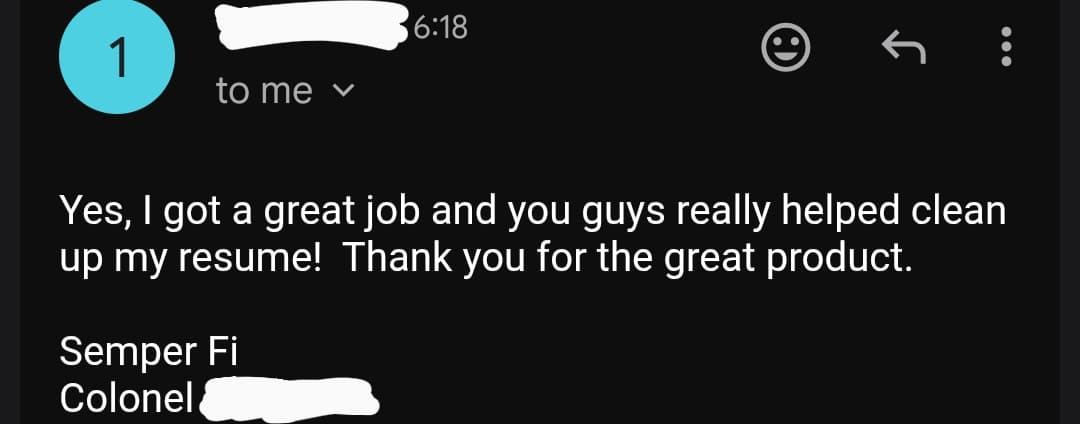
“Hey Brad, Just wanted to send out a quick thank you. You've created something amazing with BMR and your continued advocacy for transitioning service members does not go unnoticed. It was the most effective resource I used in my transition and I know it played a key role in landing a six figure…”
Federal service is the single best lever for a 5711, because the entire safety, industrial-hygiene, and environmental career field exists inside the GS system and your detection and decon experience is qualifying experience. The anchor series is GS-0018 Safety and Occupational Health Management, which covers EHS specialists across DoD, the VA, OSHA, and nearly every agency that runs facilities. Most veterans enter at GS-7 or GS-9 with military hazard-control experience and a degree or equivalent coursework, and move toward GS-11 and GS-12 as they pick up the CSP or CIH credential.
GS-0690 Industrial Hygiene is the technical lane for exposure assessment and is heavily staffed at DoD installations, the VA, and the CDC/NIOSH. GS-0803 Safety Engineering fits if you pair your experience with an engineering degree. GS-0028 Environmental Protection Specialist and GS-0029 Environmental Protection Assistant sit with the EPA, the Army Corps of Engineers, and the Department of Energy, where contamination assessment and remediation are the daily work. GS-0089 Emergency Management covers FEMA, DHS, and installation emergency-management offices, where your CBRN response planning is directly relevant. GS-1306 Health Physics is the radiological specialty for the Department of Energy and the Nuclear Regulatory Commission, and it rewards any radiological-survey background you carried in the Corps.
Veterans Preference adds 5 or 10 points to your eligibility rating, and it matters most at the referral stage. The 5 vs 10 point Veterans Preference breakdown walks through which category you fall into. Because the GS series here overlap with other hazard-management roles, the Air Force 3E9X1 Emergency Management page targets the same GS-0089 and GS-0018 audience. A federal resume is its own format with strict requirements, and our federal resume builder handles the hours-per-week, GS-series, and KSA structure that USAJobs expects. When you are ready to apply, you can start your federal resume here.
| GS Series | Federal Job Title | Typical Grades | Match | Explore |
|---|---|---|---|---|
| GS-0690 | Industrial Hygiene | GS-7, GS-9, GS-11 | View Details → | |
| GS-0018 | Safety and Occupational Health Management | GS-7, GS-9, GS-11 | View Details → | |
| GS-0089 | Emergency Management | GS-9, GS-11, GS-12 | View Details → | |
| GS-1306 | Health Physics | GS-9, GS-11, GS-12 | View Details → | |
| GS-0028 | Environmental Protection Specialist | GS-7, GS-9, GS-11 | View Details → | |
| GS-0029 | Environmental Protection Assistant | GS-5, GS-7, GS-9 | View Details → | |
| GS-0803 | Safety Engineering | GS-9, GS-11, GS-12 | View Details → | |
| GS-0019 | Safety Technician | GS-5, GS-7, GS-9 | View Details → |
Federal hiring uses keyword-matching and structured experience. BMR builds federal-format resumes (USAJobs-ready) with the right keywords, hours/week, and supervisor info — for any GS series above.
Free · No credit card · Federal + civilian resume formats included
Not everyone wants to stay in a related field. These career paths leverage your transferable skills — leadership, risk management, logistics, project planning — in completely different industries.
CBRN work is built on detecting contaminants, reading instruments, and controlling exposure. Municipal water and wastewater operation runs on the same daily skill of testing, treating, and documenting against strict limits.
Any radiological-survey work you did as a 5711 maps to the discipline a control-room operator needs: reading instruments, following procedures exactly, and treating radiation as a managed hazard rather than a fear.
You already detected and identified chemical agents and handled hazardous samples by procedure. A chemical lab technician does the same controlled sampling and measurement work in a production or research setting.
CBRN includes the biological mission, where you collected and handled samples under containment. Research and public-health labs need technicians who can run controlled sampling and follow biosafety procedures without shortcuts.
Keeping detection instruments calibrated and mission-ready is precise, documented technical work. Industrial calibration and metrology roles are that same craft applied to manufacturing and test equipment.
Managing detection, survey, and decon equipment sets is real logistics work: accountability, serviceability, and readiness on a deadline. That experience transfers to civilian supply-chain coordination.
As the unit CBRN training NCO you taught hazard recognition and protective procedures to whole companies. Corporate training and development applies that same instructional skill to onboarding and compliance programs.
The skills that made you a good Marine, Sailor, Airman, or Soldier transfer further than you think. BMR rewrites your bullets for any of the pivot careers above — without making you sound like you've never done the work.
Free · No credit card · Try unlimited career angles
If you are staying in EHS, industrial hygiene, hazmat, or emergency management, your terminology already translates. Detection, decontamination, exposure control, and incident command are the same words those employers use. This section is for the 5711 targeting careers OUTSIDE the hazard-management specialty, where a hiring manager has never heard of MOPP or JCAD and needs the competency named in their language.
The core move is to describe the skill, not the gear. Saying you operated the M4 JCAD means nothing to a logistics director. Saying you ran calibrated instrument monitoring and interpreted real-time readings to make protective-action decisions is something they can score. The 50 military terms translated to civilian language glossary is a useful reference for the rest of your evaluation vocabulary.
Once you have the translations, our military resume builder applies them across the whole resume so the EHS competency is consistent top to bottom. You can also get started here and translate your evals in one pass.
BMR turns your 5711 duties and accomplishments into civilian bullets that match the job you're applying for — no manual translation, no rewriting.
Free · No credit card · Tailored to each job posting
Which certifications you need depends on where you're headed. Find your target career path below.
The wrong placement can sink an otherwise strong application. BMR knows where each cert ranks, what to call it, and how to frame it for ATS keyword matching and hiring manager attention.
Free · No credit card · Built around your real certs and clearance
SkillBridge is the fastest on-ramp, and several EHS and environmental firms host transitioning Marines through it. The SkillBridge program guide covers how to line one up before you separate. For credentialing, the Board of Certified Safety Professionals (BCSP.org) owns the CSP and the OHST, and the American Board of Industrial Hygiene (ABIH.org) owns the CIH. OSHA 30-Hour and the 40-Hour HAZWOPER through any OSHA-authorized provider are the entry credentials most EHS and hazmat employers expect. The American Industrial Hygiene Association (AIHA.org) and the American Society of Safety Professionals (ASSP.org) are the industry associations worth joining for networking and continuing education.
If you are pivoting away from CBRN entirely, the PMP from the Project Management Institute (PMI.org) and a Lean Six Sigma certification open operations and quality roles. The PMP for veterans guide explains how your service time counts toward the experience requirement. For federal applications, the 10 federal job series every veteran should search is a smart starting filter, and American Corporate Partners (ACP) offers free one-on-one veteran mentorship for any field.
Start with these BMR tools: build a civilian resume with the military resume builder, structure a USAJobs application with the federal resume builder, explore matches in the career crosswalk, and use the SFL-TAP transition resources to stay on timeline. When you are ready, build your resume now.
See also: 1371 Combat Engineer and Army 74D CBRN Specialist career paths. For interviews, the federal job interview tips article prepares you for the structured panel format.
Most veterans do this backwards — they wait until terminal leave to start, then panic. Here's the actual sequence that works.
Print this. Tape it to your monitor. Veterans who treat the transition like a 90-day op get hired faster than the ones who treat it like an emergency.
Stop rewriting from scratch every time you apply. BMR turns your military experience into civilian and federal resumes — tailored to each job.