Fractional Executive Roles for Military Retirees: A Guide
Michael got only rejections. Then a $100K facilities manager role.
Michael, E-7, Navy, tried a ton of outside help before BMR
You retired with a pension and a full set of skills. You have no real wish to go back to a 60-hour week. But you're not ready to stop working either. A friend mentions a growing company. It needs someone to fix its operations a couple of days a month. That's a fractional executive role. For a military retiree, it can be a strong fit.
I've written PWS and SOW language and bought outside help from the government side of the table. The outside help that worked had a tight scope and results you could check. A fractional role runs on the same rules. The client is buying a slice of a senior leader, and they need to know which slice.
Many retirees ask the same thing. How do I sell 20 years of leadership as a few days a month? This guide answers it. You'll learn what the role is and which jobs fit. You'll see who buys it and how to package an offer. Then you'll get the steps to land a first client. Last comes the capability profile and LinkedIn headline that sell your offer.
Pricing has its own guide. Read the one on what military retirees should charge for consulting. This post stays on the role itself.
What is a fractional executive, exactly?
A fractional executive is a senior leader who works part-time for a company, on an ongoing basis. You hold a real title, like Fractional COO. You sit in the leadership meetings. You own results, and people may report to you.
The key word is "ongoing." A fractional exec doesn't drop in for one project and leave. You stay with the company for months, often longer. You just don't work there five days a week.
Many fractional leaders work with a small number of clients at once. Each one gets a set share of your time. One client might get four days a month. Another might get one day a week. You decide how many clients you can serve well.
The client gets senior skill they may not be able to afford full-time. You get senior work without the full-time grind. A retirement check can make this easier to try. You may not need every month to be full right away.
How is fractional different from consulting, interim, or a board seat?
These four roles get mixed up a lot. The difference matters, because it changes how you pitch yourself and what the client expects.
- Consultant: You study a problem, give advice, and leave. The client decides whether to act on it. You usually own the report, not the result.
- Interim executive: You fill a full-time seat for a short time, often while the company hires someone. It's full-time work with an end date.
- Board member: You help govern the company from above. You oversee the leaders. You don't run the daily work.
- Fractional executive: You run part of the business, part-time, for as long as it works. You own the outcome, and the team treats you as one of the leaders.
Board work is a different path with its own rules. If that's the goal, read the guide on landing your first board seat after retirement.
The simplest test is this. Ask who gets blamed if the plan fails. If the answer is you, and you're there next month to fix it, it's a fractional role.
The quick test.
Advice and a report means consulting. A full-time seat with an end date means interim. Owning results part-time with no set end date means fractional.
Which fractional roles fit a military retiree?
Some functions line up with military work better than others. These are the ones where your record often reads as direct proof.
Fractional COO or head of operations
This is the most natural fit for a lot of retirees. Small companies often grow faster than their systems. They need someone to build the processes and set the battle rhythm. They need someone to hire the right leads and hold people to a standard. If you ran a unit or a staff section, you did this work. The operations manager resume build guide shows how to put that work in civilian words.
Fractional security leader
Many smaller firms need someone to own physical security and insider risk. They often can't justify a full-time security chief. Retirees from security forces, military police, or force protection roles may fit here. The guide on moving from the military into private security covers that field in more depth.
Fractional chief of staff
A busy founder may need help. Someone has to run meetings and keep the leaders in sync. That's staff work. Maybe you served as an XO or a senior enlisted leader. Then you know how to turn a leader's intent into action.
Program, supply chain, and compliance leads
Program managers keep big efforts on time and on budget. Supply chain leads fix how parts and goods move. Compliance leads build the checklists and audits that keep a firm out of trouble. Each one maps well to logistics, maintenance, and inspection work you may have run in uniform.
Pick one lane to start. "Fractional COO" is an easy offer to understand. "Fractional everything" is hard to buy.
Who actually buys a fractional executive?
Big companies often hire full-time leaders. Your buyers tend to be smaller firms with a real problem and a tight budget. Here are four kinds that often fit a retiree.
- Growth-stage companies: The founder can't keep running everything. They need a senior operator but may not be ready to pay for one full-time.
- Small defense and government contractors: They may need program or security help as they win bigger work. You already know how their customer thinks.
- Family businesses: A second generation may be taking over. They often need structure, training, and clear roles before the handoff.
- Companies after a bad stretch: A key leader left, or growth broke the old way of doing things. They need someone steady who can start fast.
Notice what these buyers share. They have a problem they can name. They don't have the budget or the need for a full-time executive. That gap is where you fit.
If fractional work isn't the right fit, there are other paths. The guide on careers for military retirees under 50 lays out more options.
How do you package a fractional offer?
A buyer can't say yes to a vague promise to help with operations. They can say yes to a clear offer. From the government side, a good statement of work answers a few plain questions. Your offer should answer the same ones.
- Scope: What part of the business do you own? Name it. "Warehouse and shipping operations" is a scope. "Operations" is a wish.
- Outcomes: What will be different in 90 days? Pick two to four results the owner can check, like a written process for every shift.
- Time: How many days a month are you there, and how? On site, remote, or a mix.
- Reporting line: Who do you answer to, and who answers to you?
- Term: How long is the first agreement, and how does either side end it?
Write all five on one page. That page is your offer. It also becomes the first draft of your agreement.
I help growing companies improve their operations and build strong teams.
Fractional COO for your shop floor. Four days a month on site. In 90 days you get written shift procedures and one trained lead per shift.
Let the pension buy you patience
Your retirement pay can change how you run this business. It may let you wait for the right client. It may let you walk away from a bad fit. It should not set your price. Charge for the value of the work, not for what you need to live on.
Set up the business side
Many fractional leaders work as their own small business. The Small Business Administration's guide to business structures explains the choices. It notes that in a sole proprietorship, you can be held personally liable for business debts. It also says an LLC protects you from personal liability in most instances.
Talk to a tax pro before you pick. The veteran's guide to starting a business covers the rest of the setup.
Check the ethics rules first
Former officers face limits on representing a client back to the government. Under 18 U.S.C. 207, some bans last for life. They cover specific-party matters, like a particular contract, that you worked on personally and substantially. Enlisted members are outside that law. But other rules cover every grade. One is 41 U.S.C. 2104. It can bar pay from a contractor for one year. It applies if you held a key role on that firm's contract over $10 million. That includes contracting officers, program managers, and the people who picked the winner.
Retired members also need approval before taking a job or pay from a foreign government. Both your service secretary and the Secretary of State must sign off under 37 U.S.C. 908. Get a written opinion from an ethics counselor before you sign. The guide to post-government ethics rules walks through the details.
How do you find your first fractional client?
Your first client will often come from someone who already knows your work. Owners rarely hand the keys to their operation to someone they've never met. People who served with you or watched you fix things are your best start.
Start with the people you know
Make a list of 30 to 50 people. Include former bosses, peers who got out before you, civilians you worked with, and old friends in business. Add vendors and contractors you dealt with, as long as the ethics rules allow it. Then reach out with a short note.
Don't ask for a job. Tell them what you're doing now and who you help. Then ask one question. Who do you know who's growing fast and short on operations help? People like to make a smart referral. Give them an easy way to do it.
If you're still in uniform, start now. The 12-month networking plan before retirement gives you a month-by-month schedule.
Lead with the problem
Owners don't wake up wanting a fractional COO. They wake up because orders are late, staff keep quitting, cash is tight, or nobody owns the schedule. Talk about those problems first. Then show how you'd fix them.
When you get a meeting, listen more than you talk. Ask what's broken and what they've already tried. Ask what a good month would look like to them. Then send your one-page offer within a day or two. Use their words in it.
Offer a short first term
A new client is taking a risk on you. Lower that risk. Offer a 90-day first term with clear results. If it works, you both renew. If it doesn't, you part on good terms. A short start often makes the first yes much easier.
Watch the free work.
A first meeting to learn the problem is normal. A full plan before they sign is consulting you gave away. Keep the fix for the paid term.
How do you write a fractional capability profile?
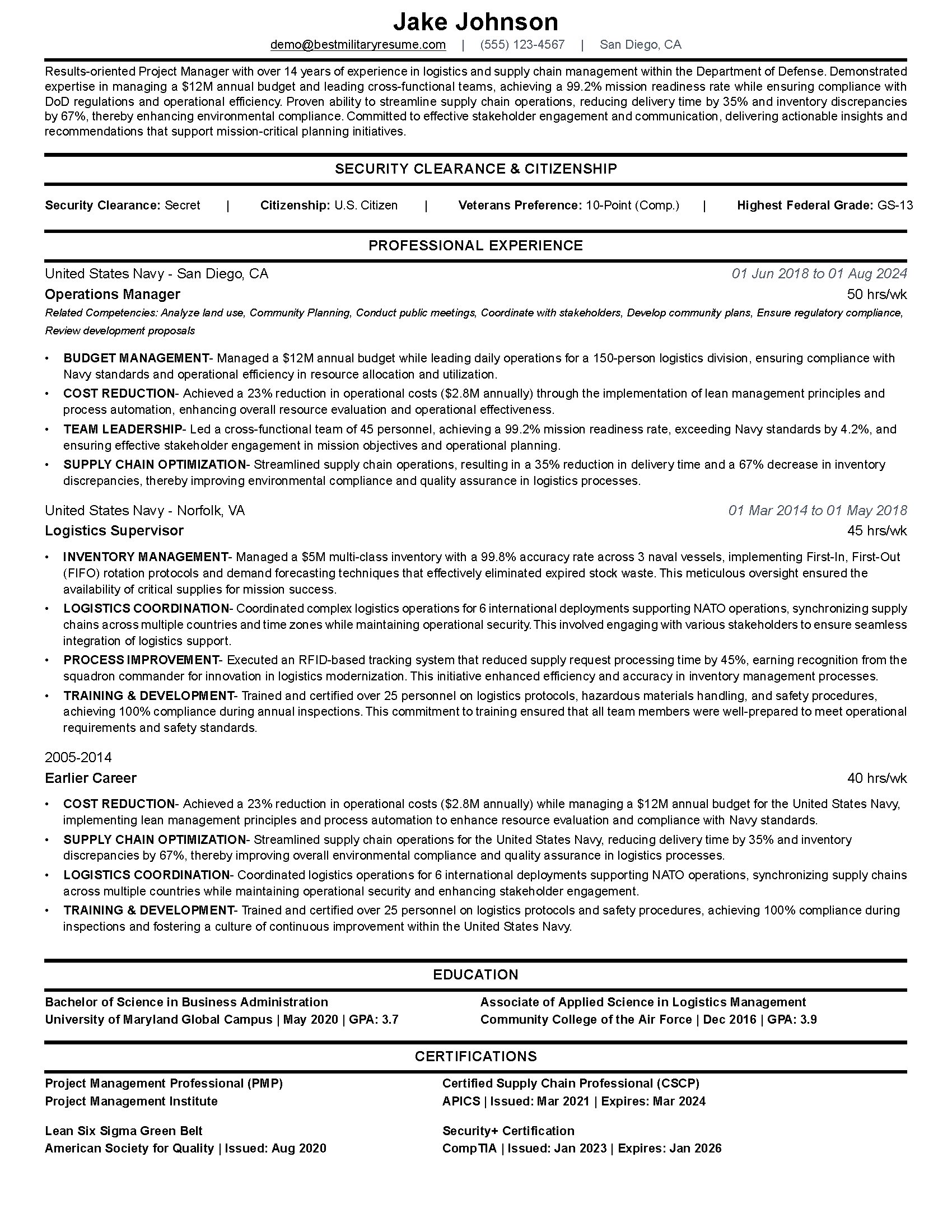
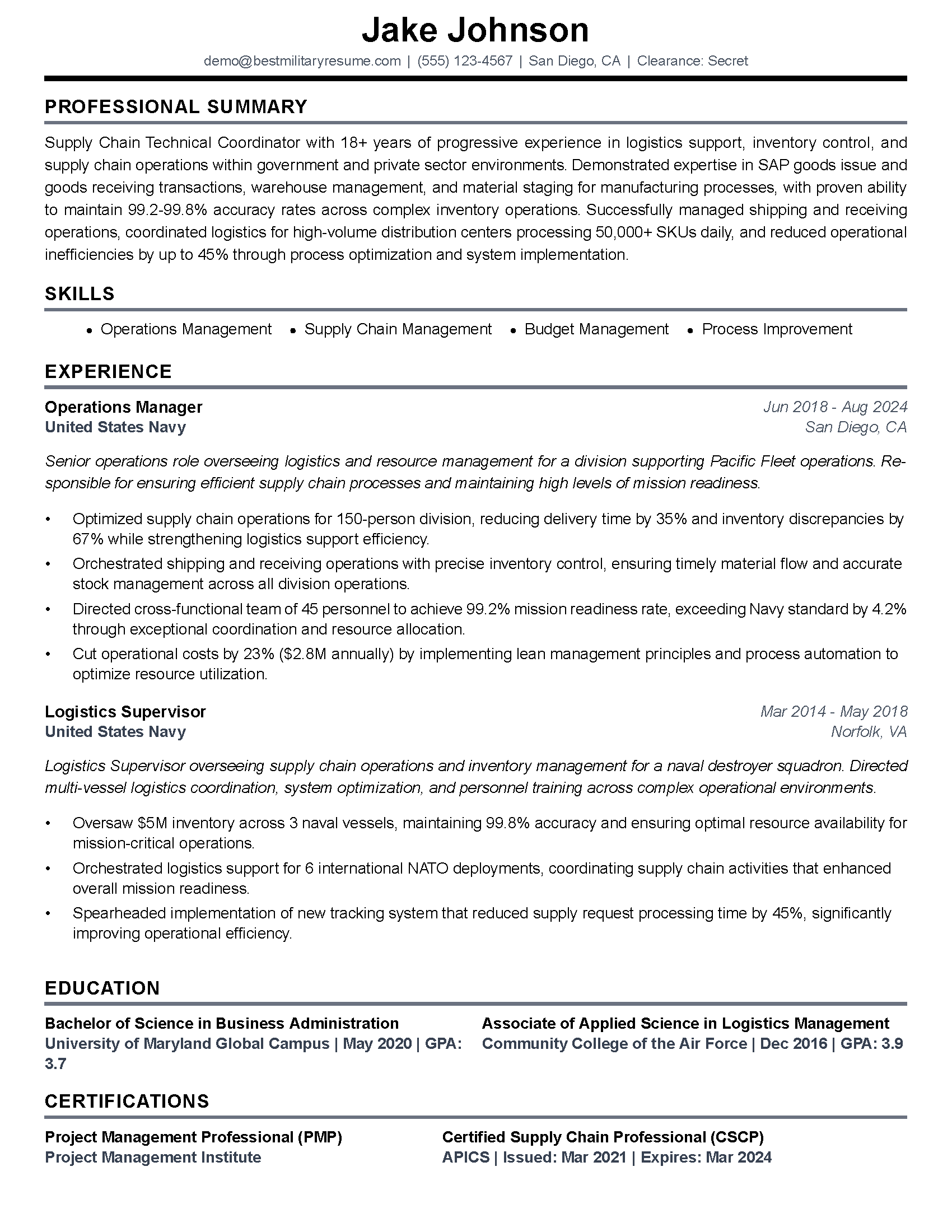
You still need a resume. Many fractional buyers also want a one-page capability profile. They want to see what you fix, how you've fixed it before, and how you work.
Start from a full master resume that holds your whole career. Then cut a one-page profile from it for this offer. The master keeps every fact. The profile shows only what this client needs. The guide on writing a retired military resume after 20 years shows how to build that master.
What goes on the one page
- Header: Your name, your fractional title, and how to reach you. "Fractional COO" sits right under your name.
- Two-line summary: Who you help and what changes. Keep it plain.
- Capability areas: Two to five areas you own, each with one line of proof.
- Selected results: Your best outcomes, with the size of what you ran. People, budget, gear, sites.
- How you work: One line on your model, like days per month and on site or remote.
Leave off the full job history. Leave off every course and award. If a client wants the long version, send it later.
Translate the scope, drop the rank
The rank comes off. The size of what you ran stays on. A civilian owner may not know what a battalion S4 does. They do know what it means to manage supply for hundreds of people across several sites. If your record is officer-heavy, the O-3 to O-6 officer resume guide covers that translation.
Here's a line written the military way.
Served as Battalion S4 responsible for logistics support to subordinate units.
Here's the same work, written for a fractional buyer.
Ran supply, maintenance, fuel, and transport for [number] people across [number] sites. Cut late deliveries by [percent] in [time] by building a weekly parts review.
Fill the brackets with your real numbers. If you can't back a number up, leave it out.
What should your LinkedIn headline say?
Your LinkedIn profile is often the first thing a referral checks. If your headline still says "Retired Army Colonel," it tells them where you were. It doesn't tell them what you do now.
A simple headline formula works well. Put your fractional title, then who you help, then the result.
- Fractional COO: Fractional COO for growing manufacturers | Shop floor systems that scale.
- Security lead: Fractional Security Director for small defense firms | Insider risk programs.
- Chief of staff: Fractional Chief of Staff for founders | Meetings and follow-through that stick.
- Supply chain: Fractional Supply Chain Lead | Fewer stockouts for service companies.
These are examples. Swap in your own buyer and your own result. For more patterns, see these LinkedIn headline examples for veterans.
Then fix the About section. Open with the problem you solve. Add two short proof points from your service. Close with how a client can start, like a short call. The guide on writing a LinkedIn summary as a veteran has full examples.
Last, make your profile and resume match. Use the same title and the same results on both. A referral who sees two different stories may hold back.
What to Do Next
Pick one fractional title and one kind of buyer. Write your one-page offer with scope, outcomes, time, reporting line, and term. Then build the two things every referral will check. One is a one-page capability profile. The other is a LinkedIn profile that says the same thing.
BMR can help with the resume behind the profile and with LinkedIn. Build your master resume in the BMR Resume Builder, which translates military work into civilian terms. Then paste a role description for the seat you want, like an operations leader posting. BMR cuts a tailored version from it. The free tier also includes LinkedIn optimization, so your headline and About section can match your new offer.
Start with one client. Do great work. Let that client tell the next one.
Frequently Asked Questions
What is a fractional executive?
Is a fractional executive the same as a consultant?
Which fractional roles fit military retirees?
Who hires fractional executives?
Do I need a resume for fractional work?
Do post-government ethics rules apply to fractional work?
How do I find my first fractional client?
About the Author
Brad Tachi is the CEO and founder of Best Military Resume and a 2025 Military Friendly Vetrepreneur of the Year award recipient for overseas excellence. A former U.S. Navy Diver with over 20 years of combined military, private sector, and federal government experience, Brad brings unparalleled expertise to help veterans and military service members successfully transition to rewarding civilian careers. Having personally navigated the military-to-civilian transition, Brad deeply understands the challenges veterans face and specializes in translating military experience into compelling resumes that capture the attention of civilian employers. Through Best Military Resume, Brad has helped thousands of service members land their dream jobs by providing expert resume writing, career coaching, and job search strategies tailored specifically for the veteran community.
