What Are You Looking for in Your Next Role? Veteran Answers
Taylor sent 200+ applications for 5 interviews. With BMR, 20 resumes all hit.
Taylor, E-7, Army, defense industry
A strong answer to "What are you looking for in your next role?" names three things. Say the work you want next, why you chose this field, and how this role gives you both.
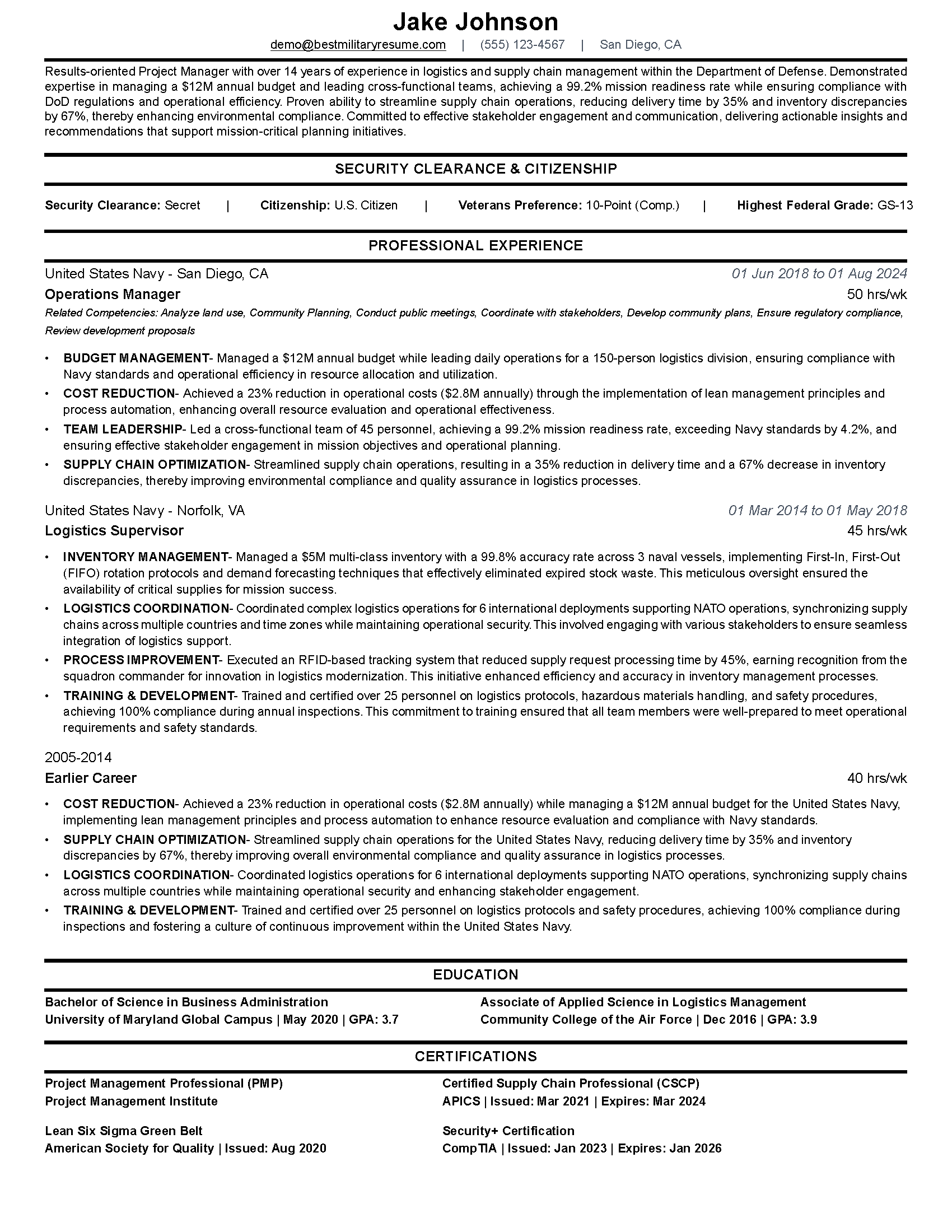
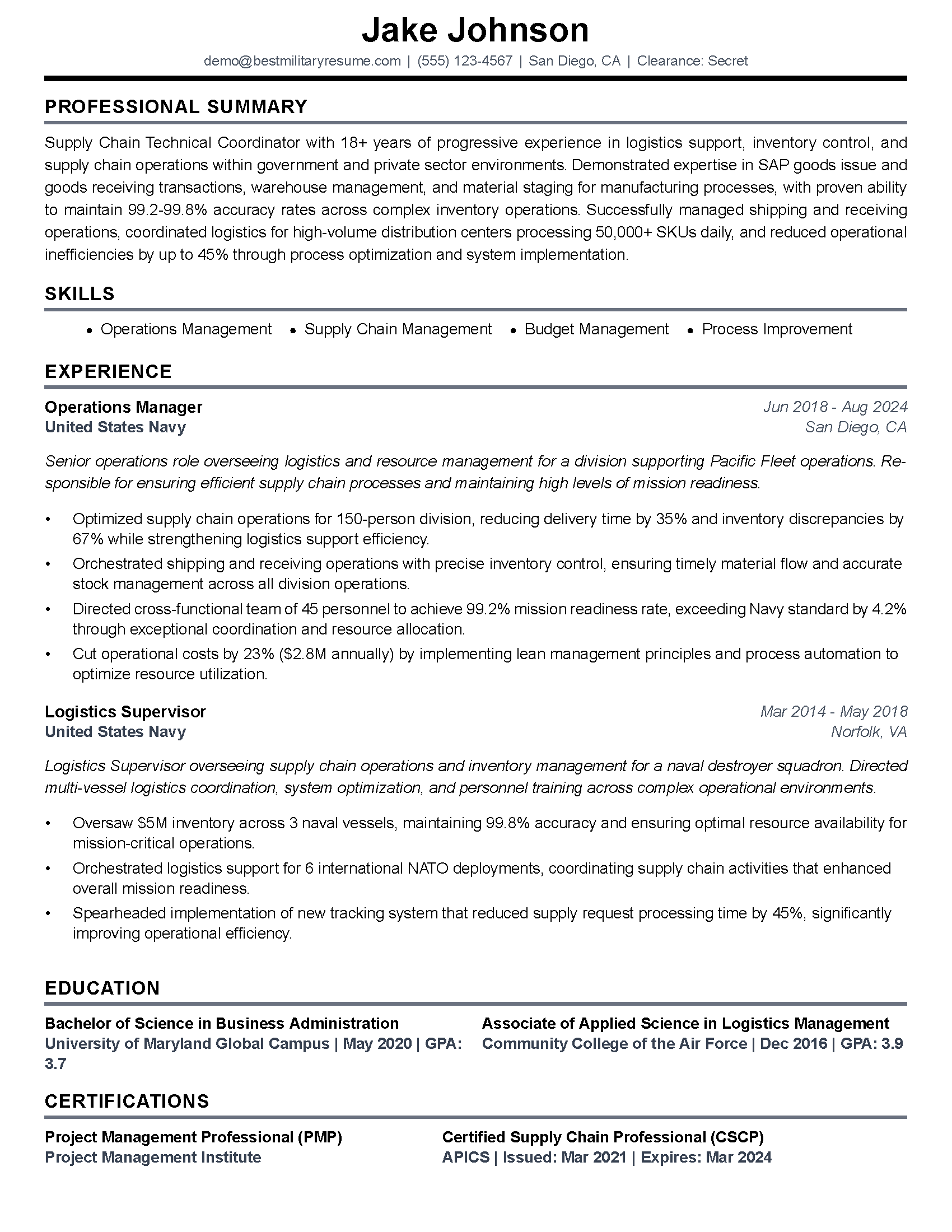
If you've been out for years, the hard part is different now. You have to explain why you're leaving a civilian job you picked, and the military is old news. Your resume has to tell the same story your answer tells, so build them together. 79,689 resumes have been built on BMR, a resume builder for veterans.
The four answers below are made-up samples. Each one shows the method for a different kind of later career change. Each runs 100 to 150 words, the length BMR's mock interview uses when it writes a stronger answer.
Four sample answers for a veteran changing careers again
Sample 1: An operations supervisor moving into project work
A former Army sergeant, a few years into a warehouse job, applying for a project coordinator role.
"I'm looking for a role where I plan the work, and someone else runs the shift. For the last few years I've supervised a warehouse floor. The part I liked most was fixing our scheduling problems. So I finished a project management course and asked to lead our system upgrade. This project coordinator role puts that work at the center. Your posting asks for someone who tracks tasks across teams and keeps vendors on schedule. I did that on the upgrade. I also did it in the Army, leading a team that moved equipment on tight deadlines. What I want next is to grow into a project manager. I'd like to do that at a company that runs as many projects as yours does."
Sample 2: A retired officer leaving a defense contractor for the commercial side
A retired Navy commander, years into defense contractor work, applying for a commercial program manager role.
"I'm looking for a role where I build products that commercial customers use. Since I retired, I've managed programs for a defense contractor. That work taught me how to run a budget and keep a demanding customer happy. My customer has always been the government, though, and the buying cycle is long. I want to see my work reach users sooner. That's what draws me to this program manager role. Your team sells to hospitals. The posting says you need someone who can run several launches at once. I've run more than one program at a time for years. I'm looking for a place to use that skill in a faster market. I want a team that measures success by what customers actually use."
Sample 3: A federal employee moving to a private company
An Air Force veteran, several years into a federal logistics job, applying for a supply chain analyst role.
"I'm looking for a role where I can fix supply problems and see the change stick. I've spent the last several years as a logistics specialist at a federal agency. I know how parts move, where they get stuck, and why. What I want next is the private side, where a better process can roll out fast. This supply chain analyst role is close to my current work, so I can help early. Your posting mentions vendor delays. I tracked vendor delays across my whole region and fixed how my office placed orders. The delays dropped after that. I'm looking for a team where I own a fix like that from start to finish."
Sample 4: A sales rep leaving over the culture
A Navy veteran, a few years into software sales, applying for a customer success role.
"I'm looking for a role where I keep working with a customer after the deal closes. I've spent the last few years in software sales, and I hit my numbers. But the part I cared about most came after the sale. I spent extra time helping new customers get set up, and they stayed. That's what pulled me toward customer success. Your posting says this role owns onboarding and renewals for mid-size accounts. I was already doing that part on my own time. In the Navy, I trained new sailors until they could do the job without me. I want a role where that kind of follow-through is the job itself."
Notice what none of them do. None of them starts with the day they enlisted. None of them complains about the current boss.
How do you build your own answer in three lines?
This is a motivation question. A behavioral question asks for a story with a result. This one asks why you want the move, so you don't need a STAR story. BMR's mock interview judges an answer like this on three things. They are genuine interest, knowledge of the company, and career alignment.
MOAA's interview advice puts the employer's real questions in plain words. Can you do the job? Will you do the job? Are you a good fit for the team? This answer carries the last two.
Write one line for each part. Then join them.
- What you want: Name the work you want more of. Pull it from your current job. Think of the task you'd keep if you could drop the rest.
- Why this field: Name the moment that pulled you toward it. A project, a problem you fixed, or a duty you took on by choice all work. If the field is new to you, read its profile in the BLS Occupational Outlook Handbook. Then you can name the real work, and not just the title.
- How this role gives it: Quote one duty from the posting. Then name one time you've already done it.
Close on what you want to grow into at this company. That shows you plan to stay.
Other questions in the same interview get their own answers. See tell me about yourself, where you see yourself in five years, and why should we hire you.
How do you explain leaving a civilian field you chose?
Years after separation, the question is rarely why you left the military. If it still comes up, use our guide to answering why you left the military. Interviewers ask why you're leaving the work you went into after it. That job was your choice, so the move needs a reason that points forward.
After my federal moves, I pivoted into tech sales on the civilian side. Every move like that raises the same question in the next interview. Why this, and why now?
Three things make the reason land:
- Name what you learned there. Your civilian job counts as experience. Say one skill it gave you that this role needs.
- Name the pull, and skip the push. Talk about the work you want more of. Leave out the work you want to escape.
- Show you tested the move. A course, a side project, or a duty you asked for proves the interest is real. Sample 1's course and Sample 4's extra onboarding work both prove it.
Connect your moves since the military. Pick the thread that runs through each one. Sample 1's thread is keeping work on schedule. Sample 4's is training people until they don't need you.
What should you not say when you're changing careers?
- A shot at your current employer. "My boss doesn't value anyone" makes the interviewer wonder what you'll say about them. Say what you want more of, the way Sample 4 does.
- Pay as the only reason. MOAA flags this answer as bad. "The salary was in the right range, and I'm looking to escape my current employer." It fails twice in one sentence.
- A stepping-stone answer. "This gets me in the door until a manager spot opens" tells them you plan to leave.
- A military history lesson. Starting at boot camp uses up your time on old news. Our page on why veterans talk too long shows how to cut it. Years out, they want the last few years. Use one military line only if it backs this role.
- "I'm open to anything." It sounds flexible, but it answers nothing. Name the work.
- "We" for your own work. "We cut vendor delays" hides what you did. Say "I."
How do you check your answer before the interview?
Write your answer out. Then run it against this list. These checks come from how BMR's mock interview scores an answer.
- Did I answer what they asked? The question is about what you want next. Your answer should open there.
- Is it concrete? Look for a real task, tool, or duty. Cut lines like "a challenging role with growth."
- Does it tie to this role? At least one line should quote or match the posting.
- Do I know the company? Name one thing about what they sell or who they serve.
- Is it "I," not "we"? Every line about your work should show your part.
- Are military terms translated? A civilian may not know AOG, FITREP, or COR. Say the plain version.
- Does it sound like a story? Drop the briefing cadence. No BLUF, no situation, no recommendation. Talk the way you would to a new coworker.
- Is it the right length? It should not be too short or rambling. BMR's stronger answers run 100 to 150 words.
Sources: BMR's mock interview scoring rules, MOAA's interview article, and the BLS Occupational Outlook Handbook. We checked them in November 2026.
What to Do Next
Write your three lines tonight. Cover what you want, why this field, and how this role gives it. Join them into one answer. Then say it out loud until it sounds like you and not a script.
Ryan, a Marine Sergeant (E-5), spent years as a contractor moving between companies. He used BMR's interview prep tool to get ready and landed a network operations role at $135,000.
Practice in the BMR mock interview before the real one. It asks you questions, and you answer each one in your own words. It scores the answer, shows what was missing, and writes a stronger version from your own background. You can start with a free account.
Frequently Asked Questions
What if I was laid off from my last job?
What if they ask it in a phone screen?
Is it okay to say I want more money?
What if the new role is a step down in title?
About the author
Brad Tachi is the CEO and founder of Best Military Resume and a 2025 Military Friendly Vetrepreneur of the Year award recipient for overseas excellence. A former U.S. Navy Diver with over 20 years of combined military, private sector, and federal government experience, Brad brings unparalleled expertise to help veterans and military service members successfully transition to rewarding civilian careers. Having personally navigated the military-to-civilian transition, Brad deeply understands the challenges veterans face and specializes in translating military experience into compelling resumes that capture the attention of civilian employers. Through Best Military Resume, Brad has helped thousands of service members land their dream jobs by providing expert resume writing, career coaching, and job search strategies tailored specifically for the veteran community.