Military Career Fair Prep Checklist
 Brad Tachi10 min read
"Still getting interviews left and right. Now I have to say no."
Taranjeet, E-5, Army, optimized her LinkedIn and resume with BMR
Why Do Most Veterans Leave Career Fairs Empty-Handed?
Career fairs designed for veterans and transitioning service members happen every month across the country. Hiring With Heroes, military base transition fairs, veteran-specific hiring events run by DAV and American Legion chapters. The opportunities are real. The employers showing up genuinely want to hire veterans.
But most veterans walk out with a handful of business cards, zero interviews scheduled, and a vague promise to "check the website." That gap between showing up and actually landing something comes down to preparation. The veterans who walk out with interviews lined up did their homework before they walked in.
When I moved from federal logistics into tech, career fairs were part of my strategy. The difference between my first career fair (where I collected brochures like a tourist) and my second one (where I walked out with two scheduled interviews) was entirely about preparation. I treated the second one like a mission brief: research the targets, prepare my materials, rehearse my pitch, and have a follow-up plan before I even parked my car.
This checklist covers everything you need to do before, during, and after a military career fair so you walk out with real momentum instead of just a bag of free pens.
What Should You Bring to a Military Career Fair?
Your materials are the first impression. Showing up with a single generic resume and nothing else signals to recruiters that you did zero prep. Here is what your career fair kit should include.
Multiple Resume Versions
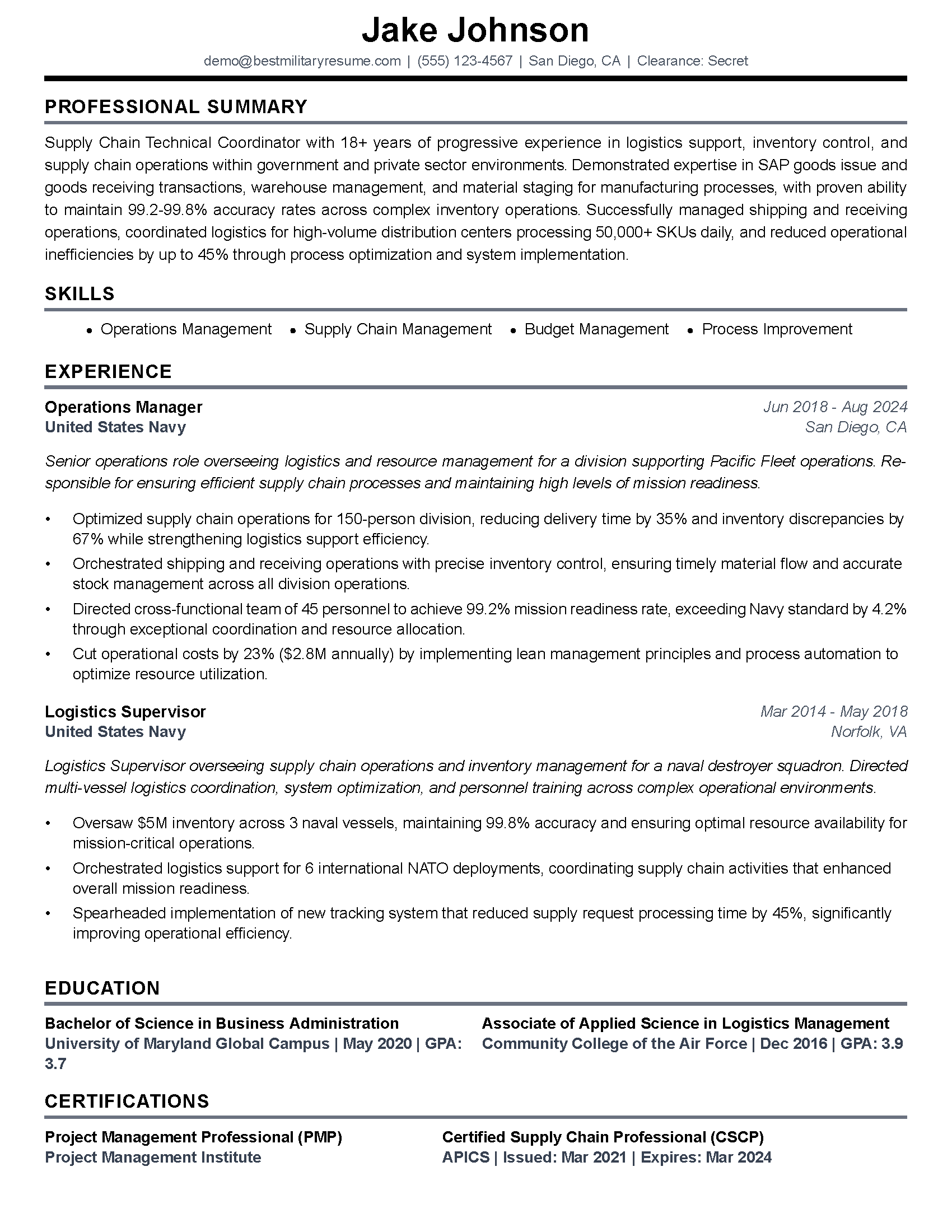
Bring at least four or five printed copies of your resume, but not just one version. If you are targeting both federal and private-sector roles, bring copies tailored to each. A resume written for a GS-12 logistics position reads completely differently from one targeting a supply chain manager role at a private company. Recruiters notice when a resume speaks their language versus when it looks like a generic template.
Use BMR's Resume Builder to generate tailored versions for different job types. The free tier gives you two tailored resumes, which is enough to cover your top two target roles. Print five copies of each version on quality paper (24-lb resume paper, not standard printer paper).
Business Cards
Yes, you need business cards even if you are still transitioning. A simple card with your name, phone number, email, and LinkedIn URL gives recruiters something tangible to keep. Services like Vistaprint or Canva let you design and print 250 cards for under $20. Skip the military rank on the card. Use a civilian title that reflects what you are targeting: "Supply Chain Professional" or "Project Manager" works better than "Former E-7."
Your Portfolio Folder
Carry a professional padfolio or portfolio folder. Inside: your resume copies, business cards, a notepad, a working pen, and a printed list of companies you want to visit at the fair. This keeps you organized and signals professionalism. Do not carry a backpack stuffed with random papers.
1 Tailored Resume Copies
2 Business Cards
3 Professional Padfolio
4 Target Company Research

How Should You Dress for a Military Career Fair?
This trips up a lot of veterans. You spent years where your clothing decision was made for you. Now you are staring at a closet wondering if you should wear your dress uniform, business casual, or a full suit.
The answer: business professional. That means a suit or blazer with slacks for men and a suit, blazer with slacks, or professional dress for women. Dark, neutral colors. Conservative. Think "meeting with the CEO" not "Friday at the office."
Do not wear your uniform. While it signals your service, it also creates a barrier. Recruiters want to see you as the civilian professional you are becoming, not the service member you were. Wearing civilian business attire shows you are ready to make the transition. It also puts you on equal footing with other candidates instead of creating a dynamic where the recruiter feels they need to thank you for your service before talking about the job.
Military dress uniform, casual clothes (jeans, sneakers, polo shirts), anything with unit logos or military branding, wrinkled clothing
Dark suit or blazer with slacks, conservative tie, polished dress shoes, minimal accessories, pressed and clean clothing
If you do not own a suit, look into organizations like Dress for Success or local veteran service organizations that provide professional attire. Many military installations also have transition closets with donated business clothes. A well-fitting blazer and slacks from a thrift store beats an expensive suit that does not fit right.
How Do You Build a 30-Second Elevator Pitch?
You will introduce yourself dozens of times at a career fair. Each conversation starts the same way: the recruiter asks what you do or what you are looking for. If your answer is "I was an E-6 in the Navy and I'm looking for a job," you have already lost their attention.
Your pitch needs to answer four questions in under 30 seconds: Who are you? What did you do (in civilian terms)? What are you targeting? What value do you bring?
"Hi, I'm John. I was a Staff Sergeant in the Army for 12 years. I did logistics. I'm looking for anything in supply chain or operations."
"Hi, I'm John. I spent 12 years managing supply chain operations for the Army, including a $14M equipment account across two continents. I'm targeting supply chain manager or operations lead roles where I can bring that large-scale logistics experience to your team."
Notice the difference. The strong pitch translates military experience into civilian business language, includes a specific dollar figure, and states a clear target. It gives the recruiter something to grab onto and ask follow-up questions about.
Practice your pitch out loud at least 10 times before the fair. Record yourself on your phone. You want it to sound natural, not rehearsed. Time it. If it runs over 30 seconds, cut words. Recruiters talk to hundreds of people at these events. Respect their time and you stand out.
How Do You Work the Room at a Career Fair?
Most veterans walk in, start at the first booth near the door, and work their way down the line. That is the least effective approach. Here is how to work a career fair strategically.
Arrive Early and Scout
Get there when doors open. Do a lap of the entire floor before stopping at any booth. Identify where your target companies are located. Check which booths have long lines and which are quiet. Some of the best conversations happen at booths with shorter lines where the recruiter has time to actually talk.
Hit Your Priority Companies First
Go to your top five target companies while you are fresh and the recruiters are not yet fatigued. Introduce yourself with your pitch, hand them the resume version that matches their industry, ask a specific question about the role you are targeting. Having done your research beforehand (checking their job postings online, understanding the company mission) makes a noticeable difference.
Take Notes Immediately After Each Conversation
Step away from the booth and write down the recruiter's name, what you discussed, any follow-up actions they mentioned, and the best way to reach them. Do this on your notepad right after the conversation, not two hours later when all the conversations blur together. These notes are critical for your follow-up emails.
Ask Questions That Show Research
Do not ask "what does your company do?" That signals zero preparation. Instead, ask questions like "I saw you have a supply chain analyst opening in your Dallas office. What does the first 90 days look like in that role?" or "What qualities do your strongest hires from the military community share?" These questions show you did your homework and give you useful information.
"At my first career fair after leaving the Navy, I stood in line for 20 minutes at the biggest booth only to get a 90-second generic conversation. My second career fair, I hit four smaller booths first, had real conversations, and walked out with two phone screens scheduled for the following week."
What Is the Follow-Up Strategy After a Career Fair?
This is where most veterans drop the ball. The career fair is not the finish line. It is the starting line. What you do in the 24-48 hours after the event determines whether those conversations turn into interviews.
Same-Day Email
Send a follow-up email to every recruiter you spoke with on the same day as the fair. Reference something specific from your conversation so they remember you. Keep it short: remind them who you are, what you discussed, and restate your interest in the specific role. Attach the resume you handed them in case they misplaced the physical copy.
LinkedIn Connection
Connect with every recruiter on LinkedIn within 24 hours. Include a personalized connection note that references the career fair. "Great meeting you at the Hiring Heroes fair today. I enjoyed learning about the operations manager role at [Company]." Generic connection requests without a message get ignored.
Apply Online That Night
Even if the recruiter said they would "pass your resume along," apply through the company's official careers page that same evening. Many companies require an online application to enter their system regardless of what happens at career fairs. Having both a personal connection and an official application puts you ahead of candidates who only did one or the other.
Same-Day Follow-Up Email
Send a personalized email within hours of the fair. Reference your specific conversation and attach your resume.
LinkedIn Connection
Connect with each recruiter on LinkedIn with a personalized note referencing the event and your conversation.
Apply Online
Submit your application through the company careers page that same evening, even if the recruiter took your resume.
One-Week Check-In
If you have not heard back after a week, send a brief follow-up email reaffirming your interest and asking about next steps.
What Are the Biggest Career Fair Mistakes Veterans Make?
After helping 15,000+ veterans through BMR, patterns emerge. The same mistakes show up over and over at career fairs. Here are the ones that cost veterans the most opportunities.
Showing up without researching the companies. Walking up to a booth and asking "so what do you guys do?" wastes your time and the recruiter's. Spend 30 minutes the night before looking up every company on the attendee list. Know what they do, what roles they are hiring for, and what question you want to ask.
Bringing one generic resume. A resume that tries to fit every job fits none of them. If you are talking to a defense contractor and a tech startup, those are two completely different resume versions. Your professional summary alone should change based on the industry and role.
Talking too long. Recruiters at busy fairs have about two minutes per candidate. If you are telling your entire military career story, you have lost them. Stick to your 30-second pitch, ask one question, listen to their answer, and move on with a business card exchange. Quality of interaction beats quantity of words.
Not following up. This is the biggest one. According to hiring data, most candidates who meet a recruiter at a career fair never follow up. A same-day email takes five minutes and puts you in a small minority of serious candidates.
Skipping the smaller companies. Everyone crowds the big-name booths (Amazon, Lockheed, Booz Allen). Meanwhile, mid-size companies with real openings and faster hiring timelines sit with empty lines. Some of the best veteran-friendly employers are companies you have never heard of. Give them a chance.
Key Takeaway
A career fair is a mission, not a field trip. Research your targets, prepare your materials, rehearse your pitch, dress like a professional, work the room strategically, and follow up the same day. The veterans who do this consistently walk out with scheduled interviews while everyone else walks out with brochures.
Related: How veterans actually get hired on LinkedIn and the complete military resume guide for 2026.
Browse openings: Search veteran-friendly job postings on the BMR Job Board.
Practice yours: Build your elevator pitch with the free BMR Elevator Pitch Generator.
Frequently Asked Questions
Should I wear my military uniform to a career fair?
How many copies of my resume should I bring to a career fair?
What is the best elevator pitch length for a career fair?
Should I bring business cards as a transitioning veteran?
How soon should I follow up after a military career fair?
What questions should I ask recruiters at a career fair?
Is it worth visiting smaller company booths at career fairs?
Can I use BMR to prepare resumes for a career fair?
About the Author
Brad Tachi is the CEO and founder of Best Military Resume and a 2025 Military Friendly Vetrepreneur of the Year award recipient for overseas excellence. A former U.S. Navy Diver with over 20 years of combined military, private sector, and federal government experience, Brad brings unparalleled expertise to help veterans and military service members successfully transition to rewarding civilian careers. Having personally navigated the military-to-civilian transition, Brad deeply understands the challenges veterans face and specializes in translating military experience into compelling resumes that capture the attention of civilian employers. Through Best Military Resume, Brad has helped thousands of service members land their dream jobs by providing expert resume writing, career coaching, and job search strategies tailored specifically for the veteran community.
