Prepare Your Resume Before a Reorg Hits: A Veteran's Guide
"Still getting interviews left and right. Now I have to say no."
Taranjeet, E-5, Army, optimized her LinkedIn and resume with BMR
BMR's advice: update your resume and copy your own records before any notice, because it may be short. The Worker Adjustment and Retraining Notification (WARN) rule, 20 CFR 639.2, says: "WARN requires employers who are planning a plant closing or a mass layoff to give affected employees at least 60 days' notice of such an employment action."
That notice is not promised to everyone, though. A reorg may not trigger it.
What should I gather to prepare my resume before a reorg?
| What to gather | Why it matters | Where it lives | BMR advice |
|---|---|---|---|
| Your current resume, updated with recent results | A good posting can open any week. A ready resume lets you apply that day. | Your own device and your own accounts | Add your latest results now, while you can still check the numbers. |
| Reviews and results you are allowed to keep | A Muse article, reposted by the University of Denver, warns: "Once you're laid off, you won't have access to any company materials." | Your employer's systems | Check your employer's policy first. Keep only what is not confidential. Leave company-owned data where it is. |
| Your contacts | People who know your work can point you to openings and speak for you. | Your phone and your own network | Save the personal details people chose to share with you. Do not export a company contact list. |
| Federal readers: your official position description (PD) | In a reduction in force (RIF), agencies group jobs by the official PD, not by your personal skills. | Your supervisor or HR office | Ask for a copy now. It also lists the duties your resume can build on. |
| Federal readers: your last three performance ratings | RIF credit uses an average of your recent ratings of record. | Your agency's HR or performance system | Check that each one is on file and correct. |
| Veterans: the military records you already hold | Federal RIF credit counts creditable military service. Some retirees with 20 or more years get credit only for war or campaign time. | Your own files at home | Keep copies of your DD-214 and other papers where you can reach them. Your resume comes from your work, not from these papers. |
The same article says to review your contract and your company's policies before you gather anything. Do the resume work quietly, on your own device. The internal promotion guide shows how to update your resume without signaling a job search.
Will my employer have to give me WARN notice?
Maybe, if the employer and the cut are big enough. WARN covers a business with "100 or more employees, excluding part-time employees". It also covers one with "100 or more employees, including part-time employees, who in the aggregate work at least 4,000 hours per week, exclusive of hours of overtime." Nonprofits of that size count too.
A plant closing counts when a shutdown causes job losses "during any 30-day period at the single site of employment for 50 or more employees, excluding any part-time employees."
A mass layoff counts at one site within a 30-day period. It must hit "At least 33 percent of the active employees, excluding part-time employees," and at least 50 employees, not counting part-time workers. One rule changes that. "Where 500 or more employees (excluding part-time employees) are affected, the 33% requirement does not apply".
Regular government employers are out. The rule says: "Regular Federal, State, local and federally recognized Indian tribal governments are not covered." Separately run public entities that do business can still be covered. Federal workers fall under Office of Personnel Management (OPM) rules instead.
The rule also says: "Not all plant closings and layoffs are subject to the Act, and certain employment thresholds must be reached before the Act applies." A reorg spread across sites may stay under those lines. Cuts within any 90 days can count together. Your state may have its own rules. Check them.
What if I work for a federal agency?
OPM sets the rule in its reduction in force summary. An agency "must give an employee at least 60 days specific written notice before the employee is released from the competitive level by a RIF action." With OPM approval, an unforeseen event can cut that to "less than 60 days, but at least 30 days".
The records in the table matter here. Competitive levels are "based on employees' official position descriptions". Ratings credit uses "the average of their last three annual performance ratings of record". And "Retention service credit includes all creditable Federal civilian and military service." For the full list, check your RIF retention standing now.
Rules checked November 2026 on the eCFR (20 CFR part 639) and OPM's RIF summary.
What if notice comes before I am ready?
Then apply with what you gathered. A federal notice has its own parts, so learn how to read a federal RIF notice. To leave government work, turn a federal resume into a private-sector resume. In any sector, a cover letter after a layoff can explain the gap in one line.
How do I have a resume ready the day a job posts?
"I did finally get picked back up for a job and start 13 Jul!" Darrell, Air Force Master Sergeant (E-7), after time out of work. He tailored a resume for each role he chased.
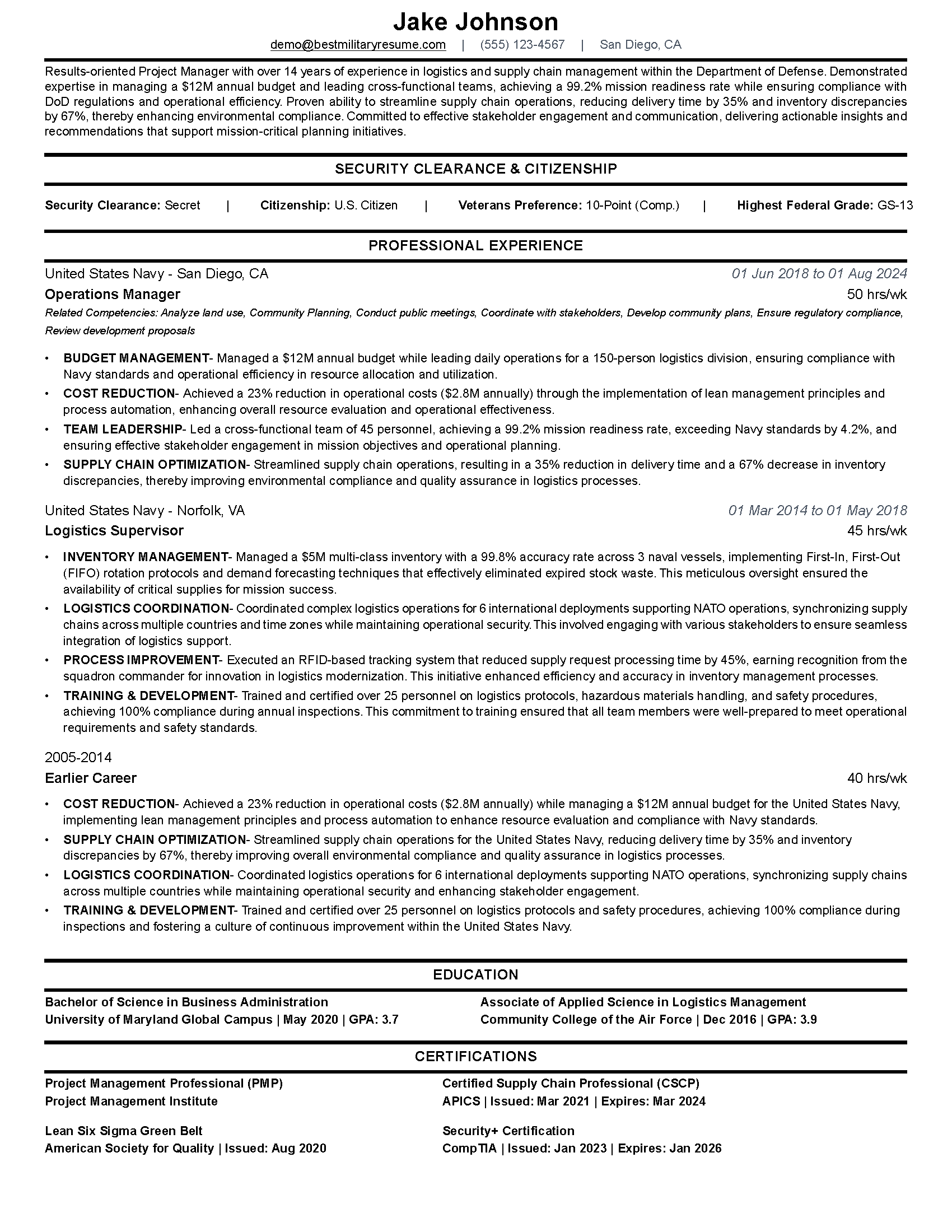
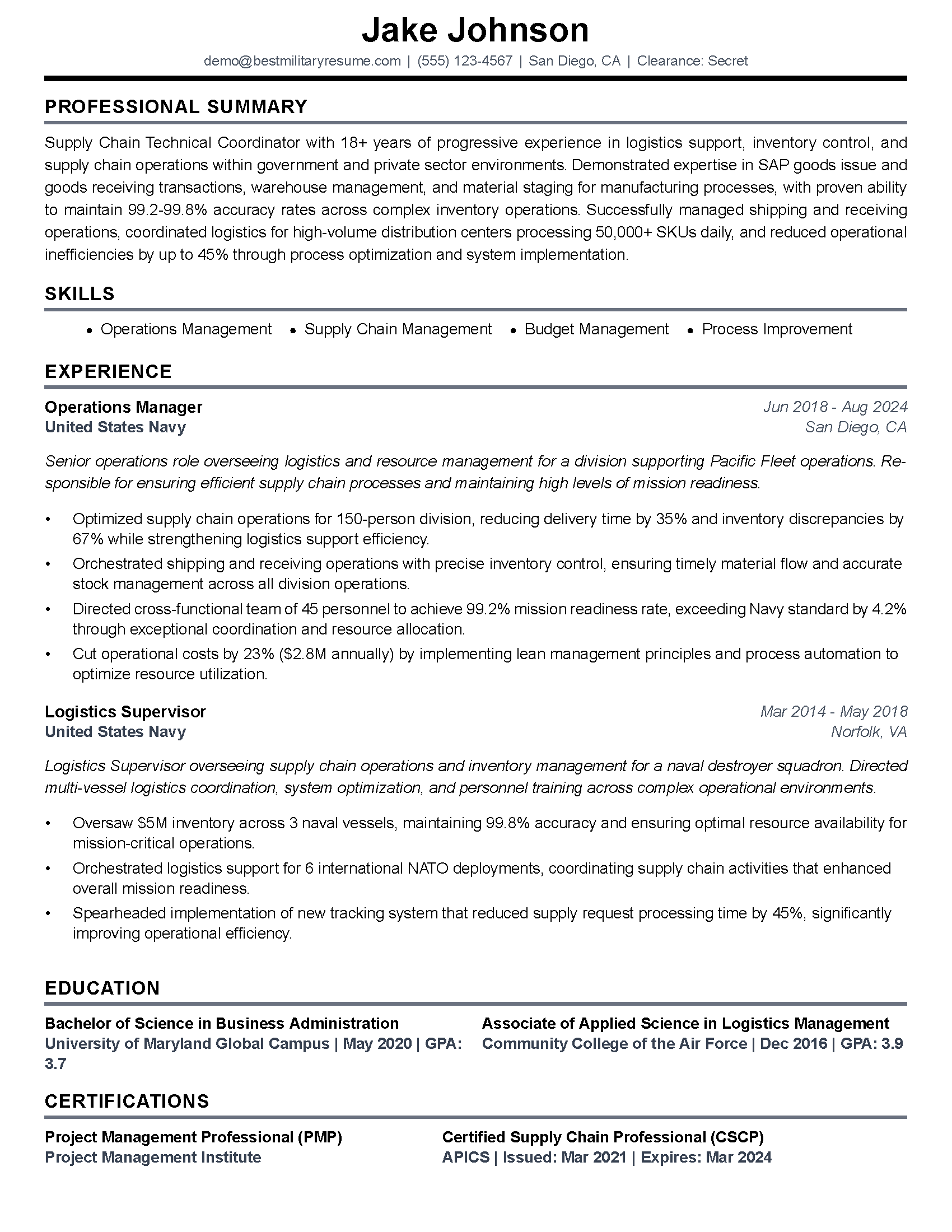
Park your updated resume inside the Resume Builder. When an opening fits, hand it that posting. BMR edits a duplicate. It redoes three parts in the ad's terms: the opening summary, the bullets and the skill list. A check then pulls any claim that a past job did the posted work without doing it. The saved resume stays unchanged.
Frequently Asked Questions
What does a WARN notice have to tell each worker?
Is a federal reorganization a reason for a RIF?
Does a WARN notice say if the layoff is permanent?
About the author
Brad Tachi is the CEO and founder of Best Military Resume and a 2025 Military Friendly Vetrepreneur of the Year award recipient for overseas excellence. A former U.S. Navy Diver with over 20 years of combined military, private sector, and federal government experience, Brad brings unparalleled expertise to help veterans and military service members successfully transition to rewarding civilian careers. Having personally navigated the military-to-civilian transition, Brad deeply understands the challenges veterans face and specializes in translating military experience into compelling resumes that capture the attention of civilian employers. Through Best Military Resume, Brad has helped thousands of service members land their dream jobs by providing expert resume writing, career coaching, and job search strategies tailored specifically for the veteran community.
