Air Force 3D0X2 Cyber Systems to Civilian IT Careers
Desiree landed a $135K hybrid senior financial consultant role.
Desiree, E-5, Army National Guard, the interviewer loved the resume from the top down
If you served as an Air Force 3D0X2 Cyber Systems Operations specialist, you spent your career managing servers, maintaining networks, and keeping critical Air Force IT infrastructure running. That experience maps directly to civilian systems administration, cybersecurity, and cloud engineering roles — you just need to translate the Air Force terminology into language that civilian tech recruiters actually understand. The good news is that 3D0X2 was one of the most directly translatable AFSCs in the entire Air Force, because the technologies you worked with — Windows Server, Active Directory, Linux, VMware, Cisco networking — are the same tools that civilian enterprises use every day.
First, a quick update on the AFSC itself. 3D0X2 no longer exists. The Air Force merged the work into 1D7X1 effective 1 November 2021, and on 31 October 2025 that career field was retitled 1D7X1 Information Technology (IT) Systems. If you separated as a 3D0X2, that page covers the current home of your old career field. None of this changes how your experience translates. It only changes what recruiters and current Airmen call the job.
The civilian IT market is starving for qualified systems administrators, cybersecurity analysts, and cloud engineers. According to industry data, hundreds of thousands of cybersecurity positions remain unfilled across the United States, and companies are willing to pay significant premiums for candidates who have hands-on experience managing enterprise IT environments. As a 3D0X2, you have exactly that experience. The challenge is formatting your resume so the right keywords surface during the screening process and your military-specific acronyms do not confuse recruiters who have never worked with DoD systems.
I built BMR specifically because I watched too many technically skilled veterans struggle with this exact problem. Your capabilities are real — it is just the packaging that needs work. A 3D0X2 who managed 50 servers, maintained 99.9% uptime, and kept a base-wide network secure should not be losing job opportunities to civilian candidates with less experience just because the resume uses terminology that does not scan well in an applicant tracking system.
What Civilian Jobs Match the 3D0X2 AFSC?
The 3D0X2 career field covered a broad range of IT responsibilities, and your civilian career path depends on which aspects you want to emphasize. Here are the strongest matches:
Systems Administrator. This is the most direct translation. You managed Windows and Linux servers, maintained Active Directory environments, handled user account management, configured group policies, and ensured system availability. Civilian sysadmin roles pay $70K-$100K+ depending on location and scale. If you managed servers at a base communications squadron supporting thousands of users, you have enterprise-scale experience that most civilian candidates in this salary range cannot match.
Cybersecurity Analyst. Every 3D0X2 performed information assurance functions: STIG compliance, vulnerability scanning with ACAS (Tenable Nessus), patch management, and incident response. These map directly to civilian SOC analyst and cybersecurity analyst roles paying $80K-$120K. Your experience maintaining DoD STIG compliance gives you a head start on understanding civilian compliance frameworks like NIST, SOC 2, and HIPAA because the underlying principles — access control, vulnerability management, audit logging, and incident response — are identical. In fact, many civilian organizations are still catching up to the security maturity level that the DoD has required for years. When you walk into a civilian SOC and they describe their vulnerability management process, it will sound familiar because you have been doing it — just under a different name. That experience with disciplined, compliance-driven security operations is something civilian-trained analysts often lack, and it gives you a meaningful edge in interviews and on the job.
Cloud Engineer / DevOps Engineer. If you worked with VMware, Hyper-V, or any cloud migration projects, you have a foundation for the fastest-growing segment of IT. Cloud engineering roles start at $85K-$110K and senior positions reach $150K+. Even if your cloud experience was limited in the Air Force, your server and networking fundamentals transfer directly — you just need to add cloud-specific certifications (AWS, Azure) to validate the crossover.
Network Administrator. 3D0X2s who focused on network infrastructure — configuring switches, managing VLANs, troubleshooting connectivity, and maintaining WAN/LAN environments — can target network administration roles. These positions pay $75K-$105K and are in high demand, particularly at defense contractors and federal agencies that prefer candidates with DoD network experience. If you managed base-level network infrastructure, coordinated with DISA for WAN connectivity, or handled network security monitoring, those experiences translate directly to enterprise network operations roles where you are managing routers, switches, firewalls, and load balancers for a corporate or government customer base.
3D0X2 to Civilian Career Paths
Server / AD Focus → Systems Administrator
Windows Server, Active Directory, Group Policy, DNS/DHCP, PowerShell. Salary: $70K-$100K+.
IA / STIG Focus → Cybersecurity Analyst
Vulnerability management, STIG compliance, incident response, ACAS/Nessus. Salary: $80K-$120K.
Virtualization Focus → Cloud / DevOps Engineer
VMware, Hyper-V, cloud migration, infrastructure as code. Get AWS/Azure certs. Salary: $85K-$150K+.
How Should 3D0X2 Veterans Translate Their Resume?
The biggest mistake 3D0X2 veterans make is listing duties using Air Force acronyms and system names that civilian recruiters do not recognize. Here are the critical translations:
"ACAS vulnerability scanning" becomes "Tenable Nessus vulnerability assessment and compliance scanning." "STIG compliance and remediation" becomes "DoD security hardening standards and remediation (equivalent to CIS Benchmarks)." "DISA STIGs" translates to "security configuration baselines and compliance standards." "AFNet" becomes "enterprise-wide Air Force network supporting 500,000+ users globally" — that scale impresses civilian hiring managers immediately because very few civilian organizations operate at that size.
For PowerShell scripting experience, do not just say "wrote scripts." Describe what the scripts accomplished: "Developed PowerShell automation scripts that reduced server provisioning time from 4 hours to 30 minutes" or "Created automated compliance reporting scripts that scanned 50+ servers weekly and generated remediation reports for the IA team." Quantified automation results are exactly what civilian IT managers want to see because they demonstrate you can make their teams more efficient.
For your experience section, lead with the technologies rather than the Air Force context. Instead of "Maintained servers at 366th Communications Squadron," write "Administered 45 Windows Server and 12 Linux server environments supporting 4,500+ users across a distributed campus network." The technology, scale, and outcome are what matter — the squadron number is irrelevant to civilian employers.
Your technical skills section should list specific versions and platforms: Windows Server 2016/2019, Red Hat Enterprise Linux, VMware vSphere, Cisco IOS, Active Directory, Group Policy, PowerShell, SCCM, and any other tools you used regularly. Be specific — "Windows Server" is good but "Windows Server 2019 with Hyper-V clustering" is better because it matches the exact keyword strings that recruiters and applicant tracking systems search for. When a recruiter types "Windows Server 2019" into their ATS, your resume needs to contain that exact phrase to surface in the results. Vague technology references rank lower than specific ones, and in a competitive field like IT, that ranking difference can be the gap between getting a phone screen and getting overlooked.
Also include any scripting or automation experience. If you wrote PowerShell scripts, Bash scripts, or Python scripts as part of your duties — even simple ones — list those languages in your technical skills section. Automation skills increasingly separate mid-level IT candidates from entry-level ones, and your military scripting experience counts.
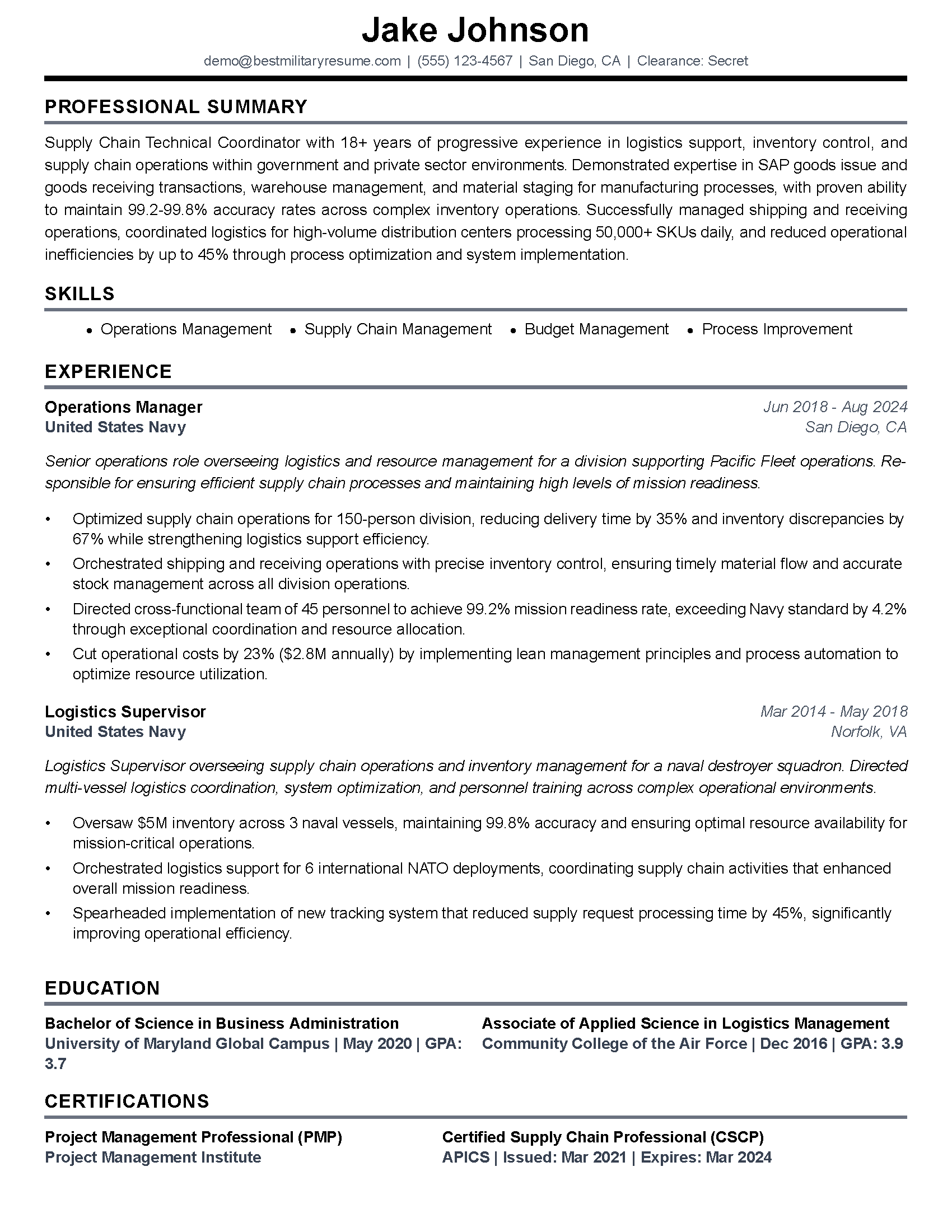
"Managed base comm squadron server room. Ran ACAS scans and applied STIGs. Maintained SIPR and NIPR tokens and accounts. Supported Wing CC IT requirements."
"Administered 50+ server environment (Windows Server 2019, RHEL 8) supporting 4,500 enterprise users. Executed monthly vulnerability assessments using Tenable Nessus and remediated critical findings within SLA. Managed PKI certificate infrastructure and enterprise identity management for classified and unclassified networks."

What Certifications Give 3D0X2 Veterans the Biggest Career Boost?
Most 3D0X2s left the Air Force with Security+ at minimum, since it was required for DoD 8570 IAT Level II compliance. That alone qualifies you for many entry and mid-level IT positions. Here is what to add based on your target career path:
For systems administration: Microsoft Certified: Azure Administrator Associate or Windows Server Hybrid Administrator Associate. These validate your server management skills in the current Microsoft ecosystem and are increasingly required as organizations migrate to hybrid cloud environments. Red Hat Certified System Administrator (RHCSA) if you worked with Linux environments — and many 3D0X2s did, since DoD systems increasingly run on RHEL. These Microsoft and Red Hat certifications validate your hands-on experience in a format that civilian hiring managers and HR screening tools recognize, bridging the gap between what you actually did and what their job posting requires on paper.
For cybersecurity: CompTIA CySA+ for analyst roles, or CEH (Certified Ethical Hacker) for penetration testing paths. If you have 5+ years of experience, start working toward CISSP — it is the gold standard for cybersecurity professionals and your Air Force experience counts toward the required years. CISSP-holders earn $110K-$140K on average, with cleared professionals earning even more.
For cloud engineering: AWS Solutions Architect Associate is the most in-demand cloud certification. If your environment was Microsoft-heavy, Azure Administrator Associate makes more sense. Either certification combined with your enterprise systems experience positions you for cloud roles that start at $90K+ and scale rapidly with experience. Cloud is one of the few IT specialties where demand consistently outpaces supply, which means salaries keep climbing and employers are willing to invest in candidates who have strong systems fundamentals but need to build cloud-specific experience. Your 3D0X2 background gives you exactly those fundamentals.
If you are still serving, your AFSC is 1D7X1 now, and the same playbook applies. Take advantage of Air Force COOL (Credentialing Opportunities On-Line) and the transition timeline to schedule certifications before you separate. Testing is often funded while you are still in, and the same certifications cost $300-$700+ on the civilian side. Plan your certification timeline at least 6 months before separation — some exams require study time, and scheduling at military testing centers can have wait lists. Getting certified while still in uniform means you hit the civilian job market with credentials already in hand rather than spending your first months of transition studying and testing on your own dime.
Your 3D0X2 experience already covers 80% of what civilian IT employers need. Certifications fill the remaining 20% by validating your skills in a format that civilian hiring processes recognize. Prioritize one or two certs that match your target role rather than collecting certifications without a clear career direction.
Which Employers Should 3D0X2 Veterans Target First?
The employer landscape for 3D0X2 veterans splits into three tiers based on transition difficulty and salary potential:
Tier 1 — Easiest transition: Defense contractors (Booz Allen, Leidos, SAIC, ManTech, General Dynamics IT). These companies understand your background, value your clearance, and often have contracts at the same bases where you served. Resumes can retain more military terminology because their hiring managers speak the language. Starting salaries: $75K-$110K+ depending on clearance level and location.
Tier 2 — Moderate transition: Federal civilian IT (DoD civilian, DHS, VA, other agencies). Federal resumes require USAJOBS-specific formatting but your military experience directly qualifies you for GS-9 through GS-12 positions depending on experience level. Federal IT offers excellent stability, benefits, and retirement — plus veterans preference in hiring.
Tier 3 — Highest ceiling: Private sector tech companies (Amazon, Microsoft, Google, financial institutions, healthcare systems). These require the most resume translation but offer the highest long-term salary growth. Starting salaries: $85K-$130K for mid-level roles, with senior positions reaching $150K-$200K+ at major tech companies. Use BMR's resume builder to create industry-specific versions for each employer tier.
Many 3D0X2 veterans start with Tier 1 defense contractors to build civilian experience and credentials, then move to Tier 2 or Tier 3 employers within 2-3 years for higher compensation and broader career options. That progression is common and effective — there is no shame in using defense contracting as a bridge while you build out your civilian resume and certifications. The defense contractor experience actually strengthens your private sector candidacy because it demonstrates you can perform in both military and civilian environments, and the clearance premium you earn during that bridge period helps you build financial stability during your transition. Use BMR's career crosswalk tool to explore which roles match your specific 3D0X2 experience and see salary ranges across different markets.
Related: The complete military resume guide for 2026 and how to list military experience on a resume.
Frequently Asked Questions
Is 3D0X2 still an active Air Force AFSC?
What is the civilian equivalent of 3D0X2?
Do I need additional certifications beyond Security+ to get hired?
How much can 3D0X2 veterans earn in civilian IT?
Should I target defense contractors or private sector companies?
How do I translate ACAS and STIG experience for civilian employers?
Is the 3D0X2 to cloud engineer transition realistic?
What should I list in the technical skills section of my resume?
How does my Air Force experience count toward CISSP requirements?
About the Author
Brad Tachi is the CEO and founder of Best Military Resume and a 2025 Military Friendly Vetrepreneur of the Year award recipient for overseas excellence. A former U.S. Navy Diver with over 20 years of combined military, private sector, and federal government experience, Brad brings unparalleled expertise to help veterans and military service members successfully transition to rewarding civilian careers. Having personally navigated the military-to-civilian transition, Brad deeply understands the challenges veterans face and specializes in translating military experience into compelling resumes that capture the attention of civilian employers. Through Best Military Resume, Brad has helped thousands of service members land their dream jobs by providing expert resume writing, career coaching, and job search strategies tailored specifically for the veteran community.
