SLP License for Military Spouses: Keep Practicing Through Every PCS
Luana, a military spouse, landed a Staff Policy and Procedures Analyst role.
Luana, military spouse, policy and procedures analyst
A speech-language pathologist (SLP) in good standing in a compact state will be eligible to work in others "via a 'compact privilege,' which is equivalent to a license." Registration is open in Louisiana, Mississippi, Missouri, Ohio, Tennessee and West Virginia. In all, 37 jurisdictions have passed the compact law.
Enacted is not the same as issuing. A state can pass the law and still not be live. So check the six before you move. Your state may not be one yet. That changes your plan.
We cover the live states, the spouse rule, the law, two state routes and the resume step.
Military spouse speech language pathology license: the six live states
The pact is the Audiology and Speech-Language Pathology Interstate Compact (ASLP-IC). Its home page names the six states. It says, "Missouri and Mississippi are now live." The site moved to a new web address on October 30, 2026. We read it in November 2026.
A state goes live in three steps. It passes the law. It joins CompactConnect, the compact's online system. Then it "can begin issuing and receiving privileges to practice." The other enacted states are still on that path. The site says to ask your home state board when it will start. Its state map shows which states have passed the compact law.
What counts as your home state
Your home state must be a member state. For most SLPs, it is where you live, pay taxes and hold a driver's license. Spouses get a special rule, shown in the next section.
What a privilege costs
The compact FAQ says the cost is "the $50 ASLP-IC administrative fee and state fees for each compact privilege." So each new state means a new fee. The compact also covers audiologists. Physical therapy and occupational therapy each have their own compact. Our PTA and OTA license guide covers them.
How a spouse keeps one home state through every PCS
A permanent change of station (PCS) can mean a new state. Commission Rule Chapter 9 deals with this. The commission adopted it June 29, 2026. It took effect July 29, 2026.
Read the commission's spouse rule. It says a spouse "shall designate a home state where the individual has a current license in good standing." You "may retain" that home state while your service member is on active duty. To change it, you apply for a license in the new state.
So your home license can stay put while you move. You add privileges in each live state you work in.
The military ID check
You may be asked to prove your status. The rule says you "must verify that status upon request." Some applicants get picked for an audit. If you don't upload a valid military ID in time, the commission "may revoke or deny" your privileges.
Fee breaks for spouses
Spouses still pay the $50 compact fee for each request. But the FAQ adds, "Some states may waive the state fee(s) for active duty and spouses." Ask each board. Some of your costs may also come back to you. See our license fee reimbursement guide.
Moving to a state that has not started issuing privileges
Many enacted states are not live yet. Some states have not joined at all. Then the federal law is your tool. It is 50 U.S.C. 4025a, part of the Servicemembers Civil Relief Act. Read the full text on govinfo. Pub. L. 118-159 amended it on December 23, 2024.
What the law says
- Part (a): when orders move you, your license "shall be considered valid for the scope of practice" once you apply.
- Part (b): a board that can't act within 30 days "may issue" a temporary license. May is not a promise.
- Part (d): the board "may conduct a background check" first.
The papers in part (c)
- Proof of your service member's orders.
- A copy of your marriage certificate.
- A notarized affidavit. It swears you are in good standing in every state where you hold or held a license. It also says you read the new state's rules.
When the law steps aside
Part (e) covers people who work through a compact. For them, "this section shall not apply." So use the federal law when your new state isn't issuing privileges. Our state guide to spouse license reciprocity covers other licenses.
Texas and California: two states off the live list
Neither state is on the compact's list of six live states. Both have spouse routes. This table uses each board's own page, checked November 2026. Texas SLPs are licensed by the Texas Department of Licensing and Regulation (TDLR).
| Item | Texas (TDLR) | California |
|---|---|---|
| The route | Apply by mail as a spouse. TDLR says your application can be expedited. You "may still be required" to pass exams and pay fees. | A 12-month temporary license under Assembly Bill (AB) 107, from July 1, 2023, per the board. Your spouse must be on active duty and stationed in California. Domestic partners count too. |
| What you send | Your dependent ID (DD-1173) or marriage license. For your service member: a DD-214, NGB-22 or orders with their name. | An application package for SLPs licensed in another state. Your current license must be active and unrestricted. |
| The no-fee letter | A Letter of Recognition with "No application fee" and "No examination." It is valid while your service member is stationed in Texas. | No such letter is listed. Ask the board about fees before you apply. |
| Limits | After a divorce, a former spouse "may continue to engage in the business or occupation until the third anniversary of the date the former spouse received the confirmation." | It cannot be renewed. It ends after 12 months, when a full license is issued, or when the full license is denied. A past discipline rules you out. |
| Time | TDLR's pages give no set number of days. | The board has 30 days once it has all papers. Your Department of Justice and FBI check must clear first. |
Our advice is to confirm the SLP package with each board before you mail it.
Three kinds of move and the route for each
This part is BMR advice built from the sources above. It is not a board rule.
Moving between two live states
- Keep your home license current. Your privileges hang on it.
- Ask for a privilege in the new state through CompactConnect.
- Ask the new state if it waives its fee for spouses.
- Keep a copy of your military ID on hand for an audit.
Moving to a state that is not live yet
- Send the part (c) papers with your license application.
- Write down the date the board got them. The 30-day clock in part (b) starts there.
- Ask the board when it plans to start issuing privileges.
Moving to Texas or California
- Texas: ask for the Letter of Recognition. Include the notarized affidavit and the PCS orders.
- California: start the full license at the same time. The temporary one ends after 12 months.
- Both: keep your out-of-state license in good standing the whole time.
Your SLP resume after a move: licenses, settings and caseloads
O*NET lists SLPs at a $97,870 median for 2025. It rates growth from 2025 to 2035 as "Much faster than average (7% or higher)." So the work is out there. Your resume has to show you can start.
Each move means new employers. Show your state licenses and privileges near the top. Then show where you worked and who you treated. Our guide to portable healthcare careers has more on moving with a health job.
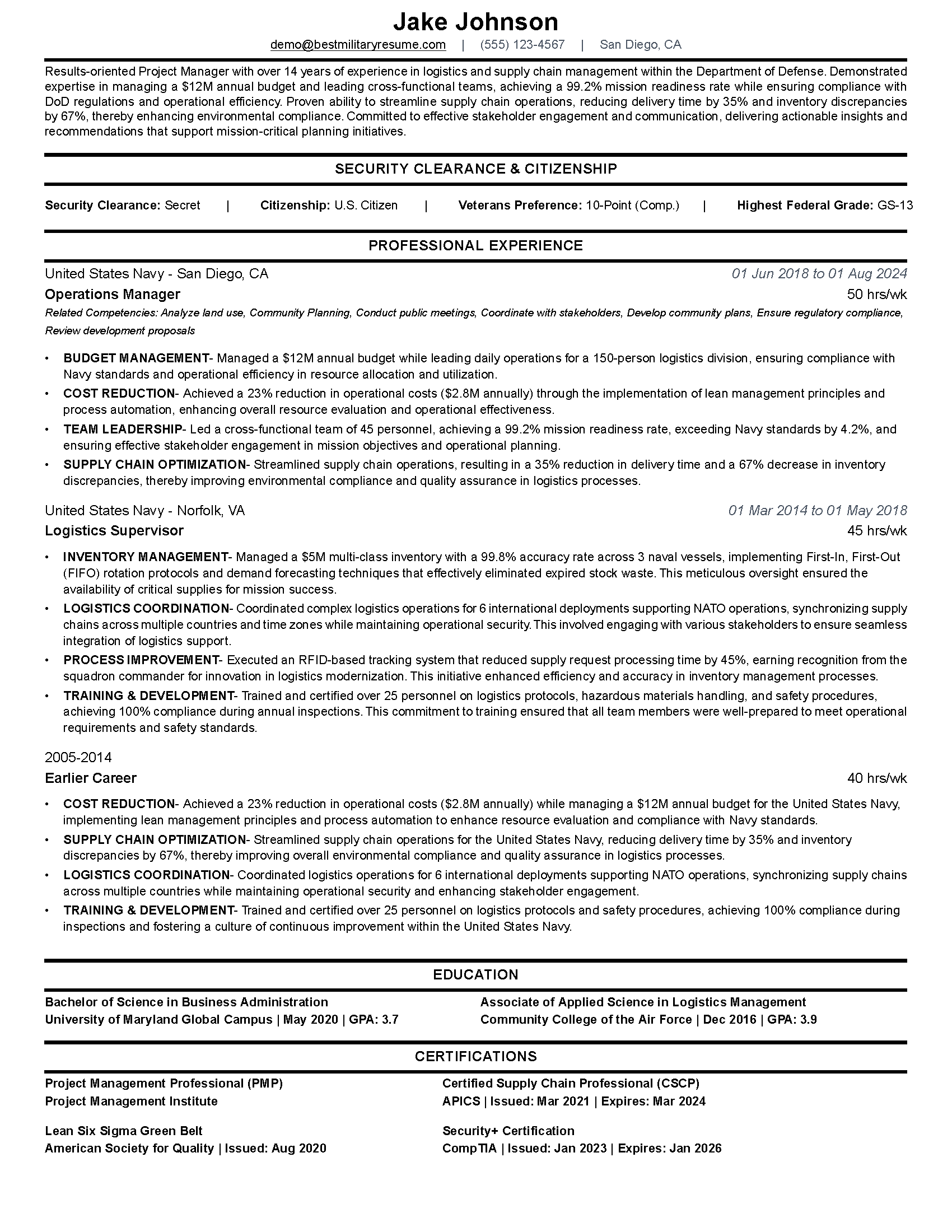
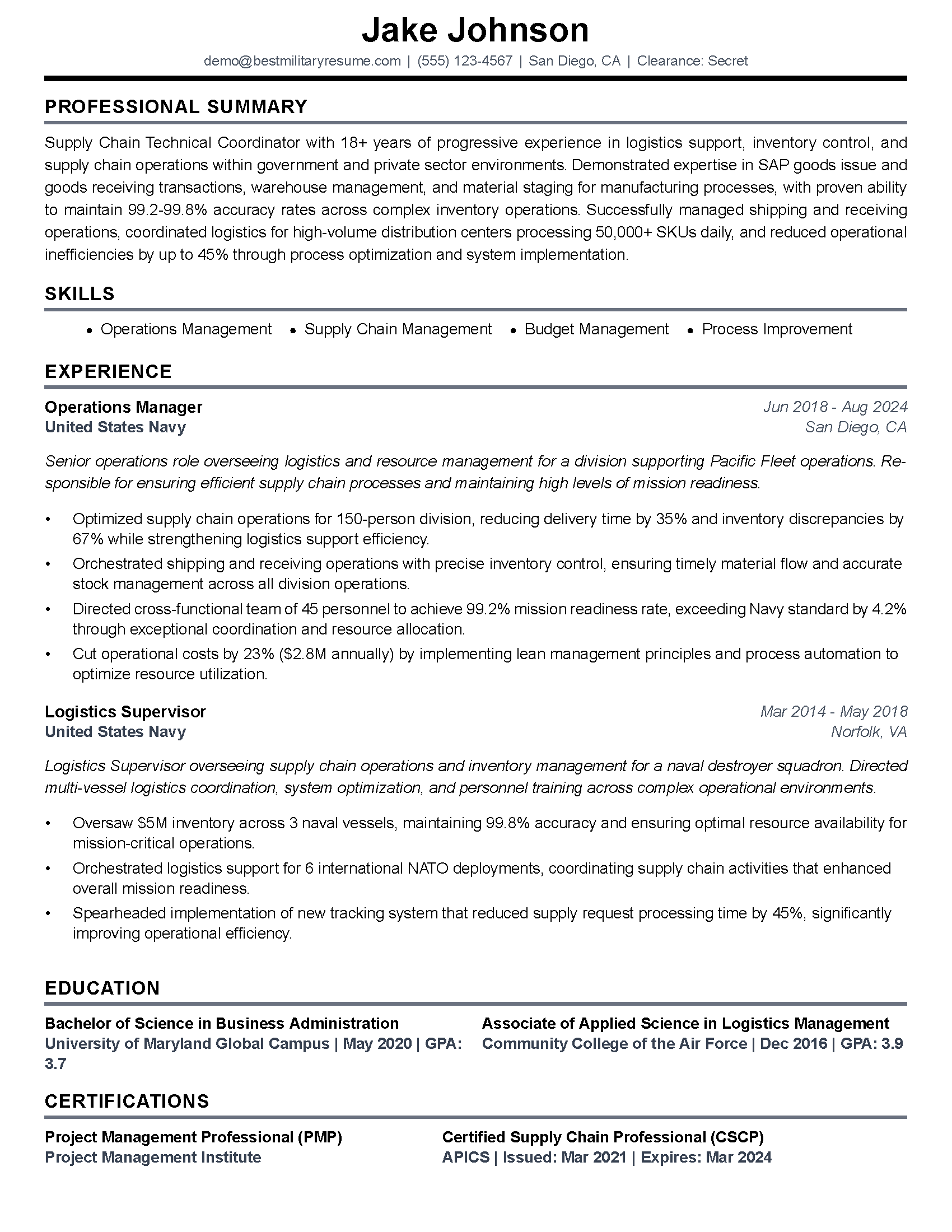
When orders come, start a resume in BMR's Resume Builder. Through BMR, 79,061 resumes have been built. List each state license and compact privilege by state. Add your American Speech-Language-Hearing Association (ASHA) certification if you hold it. Name each setting, like schools or clinics, and your caseload types. Spouse accounts include two tailored resumes free, one federal and one private.
Every link above goes to the page we used, as it stood in November 2026.
Frequently Asked Questions
Do I need continuing education in every state where I hold an SLP compact privilege?
How long does an ASLP-IC compact privilege last?
Does a Guard or Reserve spouse count as active duty under the ASLP-IC spouse rule?
About the author
Brad Tachi is the CEO and founder of Best Military Resume and a 2025 Military Friendly Vetrepreneur of the Year award recipient for overseas excellence. A former U.S. Navy Diver with over 20 years of combined military, private sector, and federal government experience, Brad brings unparalleled expertise to help veterans and military service members successfully transition to rewarding civilian careers. Having personally navigated the military-to-civilian transition, Brad deeply understands the challenges veterans face and specializes in translating military experience into compelling resumes that capture the attention of civilian employers. Through Best Military Resume, Brad has helped thousands of service members land their dream jobs by providing expert resume writing, career coaching, and job search strategies tailored specifically for the veteran community.
